Welcome to Hyperion Records, a British classical label devoted to presenting high-quality recordings of music of all styles and from all periods from the twelfth century to the twenty-first.
Hyperion offers both CDs, and downloads in a number of formats. The site is also available in several languages.
Please use the dropdown buttons to set your preferred options, or use the checkbox to accept the defaults.

| The Tallis Scholars, Peter Phillips (conductor)» More |
| The Tallis Scholars, Peter Phillips (conductor)» More |
| The Tallis Scholars, Peter Phillips (conductor)» More |
| Westminster Cathedral Choir, Martin Baker (conductor)» More |
| Westminster Cathedral Choir, James O'Donnell (conductor)» More |
| Winchester Cathedral Choir, David Hill (conductor)» More |
| Laudibus, Michael Brewer (conductor)» More |
| Armonico Consort, Christopher Monks (conductor)» More |
| Jesus College Choir Cambridge, Mark Williams (conductor)» More |
| The Girls and Men of Canterbury Cathedral Choir, David Newsholme (conductor)» More |
| The Saint Thomas Choir of Men and Boys, Fifth Avenue, New York, Jeremy Filsell (conductor)» More |
| King's College Choir Cambridge, Sir Stephen Cleobury (conductor)» More |

from notes by John Milsom © 2014
extrait des notes rédigées par John Milsom © 2014
Français: Hypérion
aus dem Begleittext von John Milsom © 2014
Deutsch: Viola Scheffel
 All in the April evening All in the April eveningCDH55243Download only  ‘It's a delightful disc … if there was a 'Critics' Fancy' it would be there sure enough’ (Gramophone) ‘This is a delightfully nostalgic trip through English part-singing from the first half of the 20th century. The programme is deftly chosen and Laudib ...» More |
 Byrd & Britten: Choral works Byrd & Britten: Choral worksStudio Master: SIGCD481Download onlyStudio Master FLAC & ALAC downloads available  Jesus College Choir continues its much-praised series of recordings with a new album of works by Britten and Byrd.» More |
 Byrd: Mass for five voices Byrd: Mass for five voicesCDH55348Download only Recorded in the magnificent acoustic of Winchester Cathedral, this is a welcome revisiting of one of Byrd’s crowning musical achievements, his beautiful third and final setting of the Mass, an unashamedly Catholic celebration of the Feast of Corpu ...» More |
 Byrd: Motets Byrd: MotetsStudio Master: KGS0024-DDownload onlyStudio Master FLAC & ALAC downloads available  Eighteen of William Byrd's most perfect motets illuminate a journey through the Church's year in the company of perhaps the world's most famous choir.» More |
 Byrd: Playing Elizabeth's Tune Byrd: Playing Elizabeth's TuneStudio Master: CDGIM992Download onlyStudio Master FLAC & ALAC downloads available  Peter Phillips directs The Tallis Scholars in sacred music by William Byrd, recorded while filming for the BBC in Tewkesbury Abbey.» More |
 Byrd: Sacred Works Byrd: Sacred WorksSIGCD7762CDs Download only This fine set offers an opportunity to experience the rich liturgy of Saint Thomas Fifth Avenue, a showcase for the music of William Byrd, and the welcome unearthing of a pioneering recording of The Great Service from 1981 and not previously avail ...» More |
 Byrd: The Tallis Scholars sing William Byrd Byrd: The Tallis Scholars sing William ByrdCDGIM2082CDs for the price of 1 — Download only "England has never produced a greater composer than William Byrd. His music for the Anglican Church has been sung without interruption since the 16th century. In stark contrast his Catholic music was not heard for over 300 years. This specially pr ...» More |
 Byrd: The three Masses Byrd: The three MassesCDGIM345Download only The original release on CD of this classic recording of the three Masses by William Byrd.» More |
 Byrd: The three Masses Byrd: The three MassesStudio Master: CDA68038Studio Master FLAC & ALAC downloads available A recording of the most perfect of Tudor masterpieces, Byrd’s three Mass-settings, from the cradle of their nineteenth-century rehabilitation. Westminster Cathedral Choir is enjoying a vintage period, and here we hear its trademark sound in all it ...» More |
 Exultate Deo Exultate DeoCDA66850 ‘The answer to many prayers; a blockbusting survey of choral masterpieces performed by a choir of exceptional calibre’ (Classic FM Magazine) ‘For anyone eager to sample varied music from the Golden Age of polyphony this is a perfect disc’ (Classic CD)» More |
 Great Cathedral Anthems Great Cathedral AnthemsStudio Master: SIGCD514Download onlyStudio Master FLAC & ALAC downloads available Infusing the hallowed spaces of Canterbury Cathedral with their singing for the first time in 2014, the Girls here join the Men of the Cathedral Choir in a sequence of anthems from Tallis and Byrd to Howells and Leighton.» More |
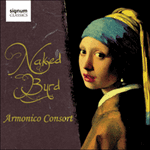 Naked Byrd, Vol. 1 Naked Byrd, Vol. 1SIGCD180Download only Crossing several centuries, from the sixteenth to the present day this album displays how every generation has been inspired to use both sacred and secular music as a powerful medium to express their personal emotions.» More |
 Sacred Music in the Renaissance, Vol. 1 Sacred Music in the Renaissance, Vol. 1GIMBX3014CDs Boxed set (at a special price) — Download only The first of three volumes featuring The Tallis Scholars' finest recordings, one for each decade, and each offering over five hours of the award-winning performances that helped establish Renaissance Polyphony as one of the great repertoires of we ...» More |
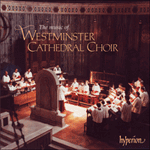 The music of Westminster Cathedral Choir The music of Westminster Cathedral ChoirWCC100Super-budget price sampler 'A wonderful programme. Westminster Cathedral Choir excite, enthral and electrify under both James O'Donnell and his predecessor David Hill. It would make an ideal gift for any lover of the tradition' (Cathedral Music) 'Bargain of the month' ( ... » More |
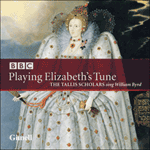 Byrd: Playing Elizabeth's Tune Byrd: Playing Elizabeth's TuneGIMDN902SOLD OUT!This album is not available for download NTSC FORMAT DVD. Filmed performances of sacred music by William Byrd together with a documentary on the troubled times that produced some of the most intimate and passionate sacred music ever written.» More |
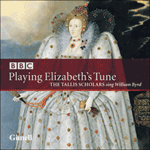 Byrd: Playing Elizabeth's Tune Byrd: Playing Elizabeth's TuneGIMDP901SOLD OUT!This album is not available for download PAL FORMAT DVD. Filmed performances of sacred music by William Byrd together with a documentary on the troubled times that produced some of the most intimate and passionate sacred music ever written.» More |
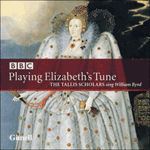 Byrd: Playing Elizabeth's Tune Byrd: Playing Elizabeth's TuneGIMSA592SOLD OUT!This album is not available for download SACD. Peter Phillips directs The Tallis Scholars in sacred music by William Byrd, recorded while filming for the BBC in Tewkesbury Abbey.» More |