Welcome to Hyperion Records, a British classical label devoted to presenting high-quality recordings of music of all styles and from all periods from the twelfth century to the twenty-first.

Hyperion offers both CDs, and downloads in a number of formats. The site is also available in several languages.

Please use the dropdown buttons to set your preferred options, or use the checkbox to accept the defaults.
Click cover art to view larger version
Track(s) taken from CDA68167

Greater love hath no man

First line:
Many waters cannot quench love
composer
1912; SB soli; SATB divisi + organ; commission for Charles Macpherson, sub-organist of St Paul's Cathedral
author of text
Song of Solomon 8: 7, 6; John 15: 13; 1 Peter 2: 24; 1 Corinthians 6: 11; 1 Peter 2: 9; Romans 12: 1

Daniel Livermore (treble), Jonathan Brown (bass), Westminster Abbey Choir, James O'Donnell (conductor), Daniel Cook (organ)
Studio Master FLAC & ALAC downloads available
CD-Quality:
Studio Master:
CD-Quality:
Studio Master:
Recording details: February 2016
Westminster Abbey, London, United Kingdom
Produced by Adrian Peacock
Engineered by David Hinitt
Release date: February 2017
Total duration: 6 minutes 18 seconds

Cover artwork: Westminster Abbey, Morning Sun in the South Ambulatory (Watercolour on paper 22 ins x 30 ins). Alexander Creswell (b1957)
© Alexander Creswell 2016
 

Other recordings available for download

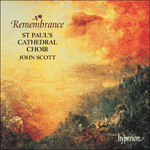
St Paul's Cathedral Choir, Thomas Kelly (treble), Martin Oxenham (baritone), John Scott (conductor), Huw Williams (organ)
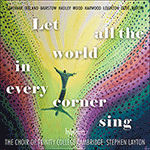
The Choir of Trinity College Cambridge, Stephen Layton (conductor), Helena Paish (soprano), Sam Newton (bass), Jonathan Lee (organ)
St Paul's Cathedral Choir, John Scott (conductor), Andrew Lucas (organ)
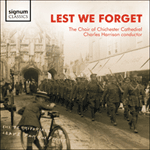
Chichester Cathedral Choir, Charles Harrison (conductor), Jago Brazier (treble), Richard Paterson (baritone), Timothy Ravalde (organ)
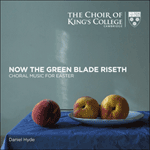
King's College Choir Cambridge, Daniel Hyde (conductor), Samuel Hodson (treble), Henry Brearley (bass), Matthew Martin (organ)

Reviews

‘It’s good to see Bax’s comparatively neglected anthems getting some attention’ (Gramophone)

‘A superb achievement … the choral singing is of the highest standard … a special word must be reserved for sub-organist Daniel Cook, who accompanies throughout with impeccable musicianship and sensitivity’ (Choir & Organ)» More

‘The boy choristers … grasp their moment with a confident display of crystalline tonal quality, an informed awareness of textual meaning, and the ability to vary dynamics convincingly’ (BBC Music Magazine)» More
PERFORMANCE
RECORDING

‘James O’Donnell and his Westminster Abbey forces have delivered a more than worthy … disc’ (Limelight, Australia)» More

‘[This worldes joie] is a chromatic piece and its complexity must make it ferociously difficult to sing. Indeed I can only wonder at the sheer technique of these singers … the singing is splendid with superb impact en masse … recording in the very ample, highly reverberant acoustic of Westminster Abbey must present significant challenges to performers and engineers alike … Hyperion's engineers have recorded the choir in this acoustic several times in the past to much acclaim. They succeed here as well … a pleasant listening experience’ (MusicWeb International)

'Er zit veel Engelse schoonheid in deze opname. Het koor van Westminster Abbey klinkt fraai in de ruime akoestiek van de beroemde kapel, een belangrijk deel van de charme van deze opname … je moet er van houden' (Luister, Netherlands)» More
The anthem Greater love hath no man was commissioned in 1912 for Charles Macpherson, the sub-organist of St Paul’s Cathedral. Intended as a meditation for Passiontide, Greater love hath no man drew its text from a compilation of scriptural passages in Daily Light on the Daily Path, a series of booklets containing Bible readings which Ireland used to observe on a regular basis. The anthem rapidly gained currency in cathedrals and church choirs and, with the outbreak of war in 1914, its text gained a special resonance as the casualties from the front mounted. Indeed, with Alice Meynell’s poem Summer in England, 1914, which contrasted the slaughter of Flanders’ fields with the tranquil scenes of England, and the subject of sacrifice emanating from pulpits throughout the land, Ireland discovered that his anthem inadvertently resonated with a wider national mood. Although Greater love might outwardly seem to be influenced by the English verse anthem, in reality it has the scope and narrative redolent of a small cantata in its manner of continuity and ‘dialogue’ between soloists and chorus (the latter indeed assuming the role of ‘turba’ in contrast to its more normal role of reflective commentary). Here Ireland adroitly assigns the words of Peter (1 Peter 2: 24), presented in the first person plural (‘that we, being dead to sins’), to the chorus, as if they were the people of the church. Similarly, Paul’s words from Romans 12: 1, ‘I beseech you brethren’, used to epitomize the anthem’s theme of self-sacrifice, are given initially to altos and tenors in unison before they are joined by a ‘willing body of believers’. And even when reflective commentary is operative, passages such as the opening twenty bars are afforded greater impact by the method of solo voices (tenor) being affirmed by full chorus.

from notes by Jeremy Dibble © 2017

Other albums featuring this work

Lest we forget
Studio Master: SIGCD562Download onlyStudio Master FLAC & ALAC downloads available
Let all the world in every corner sing
Studio Master: CDA68454Studio Master FLAC & ALAC downloads available

Now the green blade riseth
Studio Master: KGS0065-DDownload onlyStudio Master FLAC & ALAC downloads available
Remembrance
CDA67398
The English Anthem, Vol. 1
CDA66374Download only
Waiting for content to load...