Welcome to Hyperion Records, a British classical label devoted to presenting high-quality recordings of music of all styles and from all periods from the twelfth century to the twenty-first.

Hyperion offers both CDs, and downloads in a number of formats. The site is also available in several languages.

Please use the dropdown buttons to set your preferred options, or use the checkbox to accept the defaults.
Click cover art to view larger version
Track(s) taken from CDA68116

Intermezzos, Op 117

composer
1892

Sir Stephen Hough (piano)
Studio Master FLAC & ALAC downloads available
CD-Quality:
Studio Master:
CD-Quality:
Studio Master:
Recording details: December 2018
St Silas the Martyr, Kentish Town, London, United Kingdom
Produced by Rachel Smith
Engineered by David Hinitt
Release date: January 2020
Total duration: 13 minutes 39 seconds

Cover artwork: Interior, Strandgade 30 (1901) by Vilhelm Hammershøi (1864-1916)
AKG London
 

Other recordings available for download

Llŷr Williams (piano)
Marc-André Hamelin (piano)
Garrick Ohlsson (piano)

Reviews

‘Listening to Hough, I was constantly delighted by the freshness of his phrasing, so different from many of his colleagues, yet never just for the sake of it. Few make the case for these elusive masterpieces as well as Hough’ (The Mail on Sunday)» More

‘One of the finest accounts of Brahms’s late piano works on record, one that stands head and shoulders above most contenders in an ever-growing catalogue … in his natural, unmannered freedom, Hough can be ranged alongside Radu Lupu … both join hands with the treasurable few Brahms recordings that have survived from Ilona Eibenschütz, friend of the composer who gave the private premieres of Op 118 and Op 119’ (Gramophone)

‘Stephen Hough’s profoundly poetic interpretation of Brahms’s piano works is an antidote to the self-indulgent sentimentality that has long dominated accounts of these works: a real palate-cleanser. As appropriate for a renaissance man like Hough, the release is a multi-sensory pleasure. From the cover to Hough’s booklet note to, of course, his sublime musicianship’ (Gramophone)

‘From the exciting Capriccio that opens the Op 116 set to the concluding grand Rhapsodie of Op 199, Stephen Hough is alive to the poetry, passion, sentiment and emotion that Clara Schumann described on receiving 11 of these late pieces from Brahms in 1892. The full-bodied sound of his Yamaha piano is well suited to these multi-faceted compositions that are more varied in mood than the title ‘late’ might suggest’ (Gramophone)

‘I was mesmerised by the veiled quality of sound and almost timeless approach to rubato that characterises his interpretations of the more introverted pieces, such as the E major Intermezzo, Op 116 No 4 and the B minor Intermezzo, Op 119 No 1. At the opposite end of the dynamic spectrum, Hough brings a powerful almost percussive edginess to turbulent pieces such as the D minor Capriccio, Op 116 No 1, the G minor Ballade, Op 118 No 3 and the extraordinarily defiant battle that rages through the Rhapsodie, Op 119 No 4. Most compelling of all, perhaps, is Hough's searingly intense and dramatic interpretation of the E flat minor Intermezzo, Op 118 No 6. There are undoubtedly many worthy recordings of this repertoire in the current catalogue, but Hough has something special to say about the music, and this recording certainly warrants an enthusiastic recommendation’ (BBC Music Magazine)» More
PERFORMANCE
RECORDING

‘He’s really made me reassess this music I thought I knew so well; nothing is taken for granted … Hough takes Brahms at his word with his tempo indications … there are ravishingly beautiful lullabies interrupted by outbursts of volcanic emotion, soulful introspection twisting into agonizing torment, and Hough’s playing melts into the recorded acoustic … I think, end-to-end, this is some of the most refreshing, surprising and emotionally fulfilling late Brahms I’ve heard in a modern piano recording … a New Year treat that will still, I think, be in some of the ‘best of the year’ lists in December’ (BBC Record Review)

‘Being Stephen Hough, he is playing with immense sensitivity, weighting phrasings and dynamics just so, never pushing too hard or too soft, always maintaining the intimate tone that Brahms’s private, sad musings need … thanks to composer and interpreter, this is never just a recital of beautiful music; it also offers precious consolation’ (The Times)

‘The four sets of piano works, Opp 116-119, form a kind of postscript to Brahms’s composing career, written when friends were dying and he was conscious of his own mortality. Minor keys predominate—13 out of 20—but the vigour of the youthful composer who impressed the Schumanns is still present in the Op 116 Capriccios, the Op 118 Ballade and the swan-song Op 119 Rhapsodie. Hough is master of all he surveys here, combining technical elan with deeply satisfying musical insights’ (The Sunday Times)

‘Hough calls these 20 pieces 'salon music to the nth degree' and says he does not imagine anybody else in the room with Brahms, just the composer alone at the piano. This makes his playing more intimate than most and he captures the strain of songful resignation very beautifully. The touching theme of the Intermezzo Op 116, No  5 (a repeated dying fall) is exquisitely voiced. The favourite, Intermezzo Op  118, No  2, is like a tender song without words. Most radiant of all are the Op  117 Intermezzos, glowing here with quietly rapturous colours’ (Financial Times)

‘Brahms referred to the three Op 117 Intermezzos as 'the cradle songs of my grief' and they form the backbone of this collection. Hough plays them lovingly and reflectively, with never a hint of false emotion. There is more muscle to be found in the 10 Op 116 Fantasias, especially in the agitated Capriccios, and the triumphant Rhapsodie which closes the Klavierstücke Op 18 set and this disc, and here Hough finds the right level of emotion and never overcooks the material … Hough guides us through this final chapter of piano works with an unerring sense of taste’ (Limelight, Australia)» More

‘Hough finds just the right sound to catch the music’s unruly emotions and its carefully crafted musical subtleties. Among this album’s many highlights are the amazing First Intermezzo of the third set, which comes across as a pure rush of energy, and the G minor Ballade, which takes on a massive granitic strength’ (The Telegraph)» More

‘I haven’t made specific reference to the performance of every one of the twenty pieces in this collection but I can assure readers that every single one of these late works receives an excellent and insightful performance. These piano pieces are as fine as they are concise and I found Stephen Hough completely convincing throughout his traversal of them. He seems to me to have captured the essence of every piece and his playing evidences great musical integrity and thoughtfulness. The recordings were made in two separate locations but the same engineer, David Hinitt, was at the controls for all the sessions. He’s done a first-rate job; the sound of the Yamaha CFX piano comes over very well indeed. Misha Donat contributes a valuable set of notes. This is a top-class survey of Brahms’ last compositions for solo piano’ (MusicWeb International)» More

‘Hough’s phrasing brings out the improvisational nature of many of these pieces, and his skill at clarifying what are frequently highly complex textures is quite exemplary. The breadth of his approach can be gauged by listening to the second and third pieces of the Op 118 set. The Intermezzo is marked to be played tenderly; it would be a challenge to find a pianist who responds to that indication more readily than does Hough here. The playing is, in many respects, straightforward and communicative, but the difference between the piano of the opening and the pianissimo of the repeat of the theme at the eighth bar is very affecting indeed. The opening of the following Ballade is marked energico. Hough’s brilliant staccato touch is just what is required … Hough’s playing has been beautifully recorded in two different venues. In addition to the pianist’s own short introduction, the booklet also contains an excellent listening guide by Misha Donat’ (MusicWeb International)» More

‘Hough—pianist, composer, painter, and prolific writer of great charm and intelligence—comes to these late Brahms works equipped with considerable brain-power, sensitivity, and a profound understanding of the composer. His interpretations are often moving, haunting, poignant, and simply beautiful … a most impressive Brahms recording’ (The Arts Fuse, USA)» More

‘It would be rash, and indeed irresponsible, to claim this recording as the best that Stephen Hough has ever made, or the best version of Brahms’ late piano pieces ever released. Yet Hough’s complete technical mastery, fresh musical insights, and deep stylistic sympathy constantly yield revelatory results … if you want all of Brahms’ late piano pieces together, Stephen Hough crowns the list. Hyperion’s engineering captures the sonorous impact of Hough’s Yamaha grand from bottom to top, thereby clinching this release’s reference status’ (Classics Today)» More

„Das äußerst feine Nuancieren, ein tief empfundenes Rubato, spontan wirkende Akzente, all das lässt diesen ‘Zeitvertreib im Dämmerlicht’ in herbstlichen Farben sowie einer Mischung von Resignation und Nostalgie sehr schön und für den Hörer auch sehr beruhigend werden. Ich muss weit in meiner Schallplattensammlung zurückgehen, um etwas ähnlich Bezauberndes zu finden. Am ehesten wohl zu Radu Lupu“ (Pizzicato, Luxembourg)
The Three Intermezzi Op 117 are products of the final phase of Brahms’s creativity. They belong to the astonishing late harvest of short piano pieces that he composed in 1892–3 and published in four collections, Opp 116 to 119. Like the quartets they were written very much with Clara Schumann in mind, for she was destined as the first pianist to see them; but their moods are autumnal, as befits the utterances of nearly forty years of love and friendship. Op 117 could be considered a triptych of lullabies. The first, in E flat, is headed by lines from an actual Scots lullaby (the Border Ballad ‘Lady Anne Bothwell’s Lament’) in the German translation of Johann Gottfried Herder—and its unforgettable tune, a middle voice gently rocked within a repeated octave span, fits the words like a glove. (This wordless setting of a Scots original parallels Brahms’s early D minor Ballade, Op 10 No 1, after the Scots ballad ‘Edward’). The central section descends to a dark E flat minor tonality which increases the poignancy of the lulling reprise, with its cunningly interwoven imitation.

The second Intermezzo, in B flat minor, wrings music of plaintive delicacy from a simple falling arpeggio figure that melts, with fluid grace, through a succession of tonalities: and the piece traces a miniature sonata design, with a more smoothly flowing second subject in D flat. Development and reprise merge into one another through spiralling arpeggio figuration: the coda finally imposes tonal stability in the shape of an uneasy pedal F, over which the second idea dies away.

Like the first piece the third Intermezzo, in C sharp minor, evokes a ballad character, though this time without a specifically indicated subject. This is a comparatively spacious movement, beginning sombrely and sotto voce with a quintessentially Brahmsian theme presented in severe octaves. On later appearances this melody becomes an inner voice against a rich harmonic background; there is a strongly contrasting middle section in A major, whose gently syncopated figuration and octave displacements create a twilit world of almost impressionistic gleams and half-lights. At once one of the darkest and most beautiful of Brahms’s late piano pieces, it is now believed to be an unacknowledged setting of another of Herder’s translations of Scottish poems, a love-lament beginning ‘Oh woe! Oh woe, deep in the valley …’, which Brahms had copied out on the same sheet as ‘Lady Anne Bothwell’s Lament’. But all three of these pieces seem to have had some secret significance for him: they were, he told his friend Rudolf von der Leyen, ‘three lullabies for my sorrows’.

from notes by Calum MacDonald © 2006

Les Intermezzi op. 117 proviennent de l’ultime phase créative de Brahms. Ils appartiennent à cette moisson, étonnamment tardive, de courtes pièces pour piano composées en 1892–3 et publiées en quatre recueils (opp. 116 à 119). Comme les quatuors, ils furent écrits en pensant énormément à Clara Schumann, la première pianiste qui devait les voir; mais leurs ambiances sont automnales, comme il sied à quelque quarante ans de déclarations d’amour et d’amitié. Corpus de trois intermezzi, l’op. 117 pourrait être envisagé comme un triptyque de berceuses. La première, en mi bémol, porte en épigraphe des vers d’une authentique berceuse écossaise (la Border Ballad «Lady Anne Bothwell’s Lament»), dans la traduction allemande de Johann Gottfried Herder—et sa mélodie inoubliable, une voix médiane bercée au creux d’octaves répétées, colle parfaitement au texte. (Cette «mise en musique sans paroles» d’un original écossais trouve un pendant dans la Ballade en ré mineur, op. 10 no 1, une œuvre de jeunesse que Brahms écrivit d’après la ballade écossaise «Edward».) La section centrale plonge dans un sombre mi bémol mineur, qui accuse le caractère poignant de la reprise berçante, avec son imitation astucieusement entremêlée.

Le deuxième Intermezzo, en si bémol mineur, extorque une musique plaintivement délicate à une simple figure d’arpège descendant qui fond, avec une grâce fluide, au gré d’une succession de tonalités; la pièce dessine une forme sonate miniature, avec un second sujet en ré bémol, au flux plus régulier. Développement et reprise se fondent l’un dans l’autre via une figuration en arpèges vrillés: la coda impose finalement une stabilité tonale en un ardu fa pédale, par-dessus lequel la seconde idée se meurt.

Comme la première, la troisième Intermezzo en ut dièse mineur évoque une ballade, mais sans qu’aucun thème spécifique soit mentionné. C’est un mouvement relativement spacieux, qui s’ouvre sombrement et sotto voce sur un thème tout brahmsien présenté en d’austères octaves. Quand elle reparaît, cette mélodie devient une voix intérieure disposée contre un riche fond harmonique; il y a une section médiane puissamment contrastée en la majeur, dont la figuration doucement syncopée et les déplacements en octaves créent un univers crépusculaire, aux lueurs et aux clairs-obscurs presque impressionnistes. Cette pièce, à la fois l’une des plus sombres et l’une des plus belles œuvres pour piano du Brahms dernière manière, est considérée aujourd’hui comme la mise en musique inavouée d’un autre poème écossais traduit par Herder, une lamentation d’amour commençant par «Las! Las! en bas dans la vallée …» que Brahms avait copiée sur le même feuillet que «Lady Anne Bothwell’s Lament’». Quoi qu’il en soit, ces trois pièces semblent avoir revêtu une importance secrète pour Brahms, qui confia à son ami Rudolf von der Leyen: elles furent «trois berçeuses de mes peines».

extrait des notes rédigées par Calum MacDonald © 2006
Français: Hypérion

Die Drei Intermezzi op. 117 stammen aus Brahms’ letzter Schaffensphase. Sie gehören zur erstaunlichen und späten Ernte kurzer Klavierstücke, die Brahms 1892–93 komponierte und in vier Sammlungen veröffentlichte, als op. 116 bis op. 119. Wie bei den Quartetten schwebte Brahms beim Komponieren Clara Schumann vor Augen, da sie die erste Pianistin sein sollte, die die Werke zu Gesicht bekam. Die hier herrschende Stimmung ist herbstlich, wie man das von Reflexionen über eine fast vierzigjährige Liebe und Freundschaft erwarten würde. Die drei als Intermezzo bezeichneten Stücke op. 117 können als ein Triptychon von Wiegenliedern bezeichnet werden. Das erste, in Es-Dur, ist mit Zeilen aus einem echten schottischen Wiegenlied überschrieben (es handelt sich hier um die von Johann Gottfried Herder als „Wiegenlied einer unglücklichen Mutter“ ins Deutsche übersetzte Ballade aus dem Grenzland zwischen England und Schottland, „Lady Anne Bothwell’s Lament“). Diese unvergessliche Melodie, eine mittlere Stimme, die sich innerhalb eines Oktavintervalls mehrmals sanft auf- und abwiegt, passt auf die Worte wie angegossen. (Eine „wortlose Vertonung“ eines schottischen Originals findet man schon in Brahms’ früher Ballade in d-Moll op. 10, Nr. 1, der die schottische Ballade „Edward“ zugrunde liegt). Der Mittelteil steigt in die dunkle Tonart es-Moll hinab, wodurch die beschwichtigende Rückkehr des sich durch geschickt verflochtene Imitationen auszeichnenden Anfangsmaterials deutlicher hervortritt.

Das zweite Intermezzo, in b-Moll, destilliert Musik von klagender Raffinesse aus einer einfachen fallenden Arpeggiofigur, die mit fließender Grazie durch eine Folge von Tonarten rinnt. Das Stück folgt den Konturen einer Sonatenform en miniature und stellt ein sanft gleitendes zweites Thema in Des-Dur vor. Die Durchführung und Reprise verschmelzen ineinander durch spiralförmige Arpeggios. Die Coda schafft schließlich tonale Stabilität in Form eines nervösen Orgelpunkts auf F, über dem der zweite musikalische Gedanke nach und nach verklingt.

Das letzte Stück aus op. 117, das Intermezzo in cis-Moll, beschwört wie das erste eine Balladenstimmung. Diesmal wird allerdings keine konkrete Vorlage angegeben. Man hat es hier mit einem vergleichsweise großatmigen Satz zu tun. Er beginnt düster und sotto voce mit einem unverwechselbaren Thema von Brahms, das in Oktaven vorgestellt wird. Bei späteren Auftritten verwandelt sich die Melodie zu einer inneren Stimme auf einem satten harmonischen Hintergrund. Es gibt einen stark kontrastierenden Mittelteil in A-Dur, dessen sanft synkopierte Gesten und Oktaversetzungen eine zwielichtige Welt aus fast schon impressionistischem Schimmern und abgeblendeten Lampen schaffen. Dieses Intermezzo ist sowohl eines der dunkelsten und zugleich schönsten späten Klavierstücke von Brahms. Heutzutage nimmt man an, dass auch diesem Klavierstück ein von Herder übersetztes schottisches Gedicht zugrunde liegt (auch wenn Brahms keine konkreten Angaben hinterließ), nämlich die als „O weh! O weh, tief im Tal“ übersetzte Liebesklage, die im Englischen mit „Oh woe! Oh woe, deep in the valley“ beginnt. Brahms hatte nämlich dieses Gedicht zusammen mit dem „Wiegenlied einer unglücklichen Mutter“ auf dem gleichen Stück Papier abgeschrieben. Alle drei Intermezzi scheinen darüber hinaus für Brahms eine gewisse geheime Bedeutung gehabt zu haben. Sie seien, erzählte er seinem Freund Rudolf von der Leyen: „drei Wiegenlieder meiner Scherzen“.

aus dem Begleittext von Calum MacDonald © 2006
Deutsch: Elke Hockings
Other albums featuring this work

Benjamin Grosvenor plays Schumann & Brahms
Studio Master: 4853945Download onlyStudio Master FLAC & ALAC downloads available
Brahms: Early and late piano works
Studio Master: SIGCD9162CDs Download onlyStudio Master FLAC & ALAC downloads available
Brahms: Late Piano Works
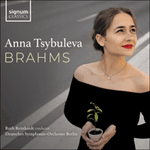
Studio Master: CDA68226Studio Master FLAC & ALAC downloads available
Brahms: Piano Quartets
CDA67471/22CDs
Edwin Fischer - The complete Brahms, Schubert & Schumann studio recordings, 1934-1950
APR73143CDs Download only
Brahms: Piano Concerto No 2, Capriccios & Intermezzos
Studio Master: SIGCD674Download onlyStudio Master FLAC & ALAC downloads available
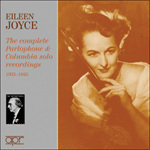
Eileen Joyce - The complete Parlophone & Columbia solo recordings
APR75025CDs Download only
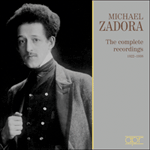
Michael Zadora - The complete recordings
APR60082CDs for the price of 1 — Download only
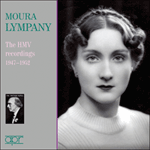
Moura Lympany - The HMV Recordings, 1947-1952
APR60112CDs for the price of 1 — Download only
Myra Hess - The complete solo and concerto studio recordings
APR75045CDs Download only
Olga Samaroff & Frank La Forge - The complete recordings
APR60442CDs for the price of 1 — Download only
Waiting for content to load...