Welcome to Hyperion Records, a British classical label devoted to presenting high-quality recordings of music of all styles and from all periods from the twelfth century to the twenty-first.
Hyperion offers both CDs, and downloads in a number of formats. The site is also available in several languages.
Please use the dropdown buttons to set your preferred options, or use the checkbox to accept the defaults.

| His Majestys Sagbutts & Cornetts» More |
from notes by Ian Carson © 1996
aus dem Begleittext von Ian Carson © 1996
Deutsch: Ute Mansfeldt
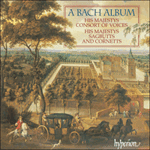 A Bach Album A Bach AlbumCDA67247  ‘A beguiling and brilliantly conceived programme, brilliantly performed. A special recommendation for a most delightful and unusual disc’ (Gramophone) ‘An engaging programme’ (BBC Music Magazine)» More |
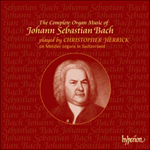 Bach: The Complete Organ Works Bach: The Complete Organ WorksCDS44121/3616CDs Boxed set (at a special price) — Download only ‘Let me say without hesitation that Herrick’s performances are models of clarity, accuracy, precision and musicality … this is a complete Bach th ... ‘Herrick is one of the few organists who does justice to these difficult, elusive pieces … What a singular joy to hear the organ played with such ...» More |