Welcome to Hyperion Records, a British classical label devoted to presenting high-quality recordings of music of all styles and from all periods from the twelfth century to the twenty-first.
Hyperion offers both CDs, and downloads in a number of formats. The site is also available in several languages.
Please use the dropdown buttons to set your preferred options, or use the checkbox to accept the defaults.
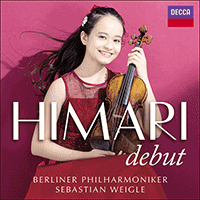


Yet this famously virtuosic concerto carries a further significance for Himari. In its melding of extreme technical challenges with profound human expression it also embodies a deeper musical journey that Himari feels she has undertaken over the past five years: to become a violinist who on the one hand remains rightly famed for the prodigious technical skills that saw her play her first concertos with professional orchestras aged just six years old, but who regards that technique merely as a tool through which to bring out a musical work’s narrative and expressive depths.
Himari and Wieniawski would no doubt have had a lot to say to each other, too. The latter was born in 1835 in the Polish city of Lublin, entered the Paris Conservatory aged eight, and three years later emerged as its youngest-ever graduate, winning its first prize and gold medal. He was still only 17 when in 1853 he performed the premiere of his Violin Concerto No 1 with the Gewandhausorchester in Leipzig under the baton of Ferdinand David. Inevitably, this work became notorious for the blistering technical virtuosity it demands of its soloist in its ardently dramatic first movement and dancing final Allegro giocoso: a veritable assault course of rapid passage-work full of consecutive double-stops and upper-register acrobatics requiring all manner of uncomfortable finger positions, all brought off within a cornucopia of similarly formidable bowing techniques. Yet it has always been equally admired for Wieniawski’s maturity of expression, not least over the sudden, low-register, songful simplicity of its central Larghetto “Prayer”.
Back to Japan-born Himari. In 2022 she mirrored Wieniawski by becoming, aged 10, one of the youngest students ever to be admitted to the prestigious Curtis Institute of Music in Philadelphia. She studies there with Ida Kavafian, who in fact had been contemplating retirement before Himari’s teacher in Japan, Koichiro Harada, brought Himari to her attention. As soon as Kavafian heard Himari, she realised that her plan to retire would have to be put on hold for this once-in-a-lifetime talent, and that conviction has since quietly altered the course of Himari’s next chapter. Kavafian consequently set about nurturing the human, musical and emotional side of Himari’s music-making. Or, as Himari herself puts it:
Ms Kavafian has always encouraged me to take emotional risks in performance and to express myself more freely on stage.
The result is that, while Himari agrees that the concerto is very technically demanding, what she loves most of all is its passion, energy and emotional range:
I feel deeply connected to this concerto. As with all the works on this album, it’s music that is often very virtuosic and romantic, but which for me is also very personal and expressive. I’m also just very drawn to the Polish style in general, with its sense of melancholy; and its combination of lyricism with strong character also suits the sound of the violin beautifully.
To then record the concerto live with the Berlin Philharmonic and Sebastian Weigle was an experience she describes as particularly meaningful:
That concert remains one of the most memorable moments of my musical life so far. The energy of a live performance is very special anyway, and I felt incredibly honoured to perform with such an extraordinary orchestra. From the very first rehearsal, I was inspired by the richness of their sound and by how naturally they listened and responded; and working with Maestro Weigle was also wonderful, as musically he gave me both support and freedom.
She speaks with equal warmth of the natural musical connection she felt with pianist Chelsea Wang in the duo recital that completes the album.
Selecting these pieces, it was clear to Himari that Wieniawski’s 1865 Fantasia on Themes from Gounod’s Faust had to be in the mix. Because, while he wasn’t the only virtuoso violinist who capitalised on the success of Gounod’s 1859 grand opera by penning variations on its popular themes, the lyrically expressed, technical fireworks-show he came up with is particularly dazzling and sophisticated:
This is one of the great showpieces for the violin. I love its brilliance and excitement, but also the way Wieniawski transforms the opera’s memorable melodies into something completely his own. It is always a thrilling piece to perform.
The remainder of the programme continues in celebration of Poland’s musicians and music through the pens of some of the 20th century’s great virtuoso violinists. On Russian-American virtuoso Jascha Heifetz’s 1943 transcription of Chopin’s Nocturne in E flat major, Op 55 No 2, she comments:
This piece has such elegance. I love the way the melody flows so naturally and how the emotions are expressed in a very subtle way. It requires a different kind of control and sensitivity to the more virtuosic works on the album.
It’s a different flavour again with Heifetz’s 1932 transcription of Leopold Godowsky’s Alt-Wien:
I enjoy this piece’s charm and playfulnes. It paints a picture of old Vienna that feels both graceful and warm. The music is full of beautiful details; each time I play it, it shows me different colours.
It was equally during the 1930s that Russian-American violinist Nathan Milstein began performing his own transcription of Chopin’s Nocturne in C sharp minor, into which he inserts a soulful little solo cadenza.
Decades earlier, Sibelius’s first wish was to be a violin virtuoso, and although he eventually had to accept that his greatest strengths lay in composing, he channelled his skills at the instrument into creating some of its most beautiful and complex 20th-century repertoire. His 5 Pieces for Violin and Piano, Op 81, were composed between 1915 and 1918, and the opening Mazurka’s language is fascinating: faithful to the traditional Polish folk dance’s three-time lilt and off-beat accents while sounding unmistakably Finnish and Sibelius-flavoured—and with such a finesse-filled virtuoso flamboyance that it’s surely a homage to the virtuosos of the past, Wieniawski included.
All in all, for Himari this is a programme that has offered a tremendous range of stylistic and emotional possibilities—which was precisely what she wanted:
I hope this album reflects both my love for the violin and my curiosity about music and expression. This is what I enjoy: to explore the finest details of phrasing and sound, while expressing myself freely.
Charlotte Gardner © 2026
しかしHIMARIにとってこの名高い技巧的 な協奏曲はそれ以上の意味をもつ。それは、 技巧的な難しさと深遠な人間の表現を融合 する点において、自分がこの5年間に体験し てきたより深いレベルでの音楽の旅を体現す る曲だという。すなわち、彼女がこの間目指し てきたのは、6歳でプロ・オーケストラとの協 奏曲デビューを果たすほどの驚異的な技巧 で知られつつも、その一方ではその技巧とは 楽曲の物語上・表現上の深みを引き出すた めのツールにすぎないとみなすヴァイオリニ ストなのである。
HIMARIとヴィエニャフスキがもし出会ったな ら、きっと話に花が咲いたことだろう。ヴィエ ニャフスキは1835年にポーランドのルブリン に生まれ、8歳でパリ音楽院に入学し、3年後 には同音楽院史上最年少の卒業生として、プ ルミエ・プリと金メダルを獲得した。1853年、 フェルディナンド・ダヴィッド指揮ライプツィヒ・ ゲヴァントハウス管弦楽団との共演で、自身 のヴァイオリン協奏曲第1番を初演した際、彼 は弱冠17歳だった。当然ながら、この作品は、 ソリストに求められる驚異的な技巧で知られ るようになった。ドラマティックな第1楽章、そし て躍動感あふれる終楽章アレグロ・ジョコー ソは、まるで障害物コースのような重音の連 続や高音での曲芸的なパッセージに満ちて いて、難しい指使いや卓越したボウイング・テ クニックが要求される。その一方で、本作はヴ ィエニャフスキの成熟した表現力の点でも高 く評価されており、とりわけ中間楽章のラル ゲット「祈り」における、突如として低音域で現 れる歌心あふれる素朴さが際立っている。
他方、日本生まれのHIMARIも、ヴィエニャ フスキに倣って、2022年に最年少の10歳で フィラデルフィアの名門カーティス音楽院に 入学、アイダ・カヴァフィアンに学んでいる。実 は、カヴァフィアンは、HIMARIの日本での先 生である原田幸一郎から彼女のことを聞くま で、引退するつもりでいた。でもHIMARIの 演奏を耳にした途端、この稀代の才能のため に引退を延期することにしたのだという。そ の決意が、HIMARIの人生の軌道を変え、カ ヴァフィアンは彼女の演奏における人間的、 音楽的、そして感情的な側面を育んでいった。 「カヴァフィアン先生はいつも、思い切って感 情を出し、もっと自由に自分を表現するよう励 ましてくれます」とHIMARIは話す。
その結果、たしかに技巧的に難しい部分もあ るけれど、曲のいちばんの魅力はその情熱 とエネルギー、表現の幅の広さなのだという。 「この協奏曲に深い愛着を感じています。ア ルバムの他の曲と同じく、とても技巧的でロマ ンティックな音楽ですが、私にとってはきわめ てパーソナルで表情豊かな曲なのです。そも そも私は、物悲しさを感じさせるポーランドの 作風に強く惹かれます。その叙情性と力強い 個性の融合が、ヴァイオリンの音色と見事に 調和していると思うのです」
本協奏曲をベルリン・フィルおよびセバスティ アン・ヴァイグレとライヴ録音できたことは、と りわけ意義深い体験だったと話す。 「あのコンサートは、これまでの人生でもっと も思い出に残る体験でした。ライヴ演奏での エネルギーはそもそも特別なものですが、こ のようなすばらしいオーケストラと共演できた ことを、たいへん光栄に思いました。最初のリ ハーサルから、彼らの豊潤な音色や、お互い に自然に耳を傾け、反応し合う姿に、深い感 銘を受けました。また、マエストロ・ヴァイグレ の指揮も最高で、私をサポートしつつ、音楽的 な自由を与えてくれました」
また、当アルバムのデュオの曲目で共演した ピアニストのチェルシー・ワンについても、自 然と音楽的な親和性を感じた、と称賛する。
これらの曲目を選ぶにあたって、ヴィエニャフ スキの《「ファウスト」の主題による華麗なる幻 想曲》(1865年)はぜひとも入れたい一曲だ った。1859年に初演されたグノーのグランド・ オペラの人気を利用して変奏曲を書いたヴァ イオリンの名手はヴィエニャフスキだけでは なかったが、彼が編み出した詩情あふれる技 巧性は、とりわけ見事で洗練されている。
「ヴァイオリンのために書かれた最大のショ ーピースのひとつだと思います」とHIMARI。 「その華麗さや躍動感はもちろんですが、オ ペラの印象的なメロディをヴィエニャフスキ ならではの表現へと変えていく手法が好きで す。弾くたびにワクワクする作品です」
その他の曲目も、やはりポーランドの音楽家 や音楽を、20世紀の偉大なヴァイオリニストた ちの筆を通して讃える内容となっている。ロシ ア系アメリカ人のヤッシャ・ハイフェッツが1943 年に編曲したショパンの《夜想曲》変ホ長調作 品55の2について、HIMARIはこう語る。 「とても優美な曲だと思います。メロディがと ても自然で、感情がさりげなく表現されてい るのが好きです。アルバムのより技巧的な曲 とは異なるタイプのコントロールや繊細さが 必要です」
ハイフェッツが1932年に編曲したレオポルト・ ゴドフスキーの〈古きウィーン〉は、また違った 風情の曲だ。 「魅惑的で遊び心にあふれ、曲が描く古きウ ィーンの情景には優美さとあたたかみを感じ ます。美しいディテールがあちこち散りばめら れていて、弾くたびに異なる色合いを見せて くれます」
アメリカ人ヴァイオリニスト、ナタン・ミルシテイ ンがショパンの《夜想曲》嬰ハ短調を自ら編曲 して弾き始めたのも、同じく1930年代のこと だった。哀愁を帯びた短いソロ・カデンツァが 挿入されている。
遡ること数十年、シベリウスは初めヴァイオリ ニストを夢見ていたが、やがて自分の本当の 才能は作曲にあることを認めざるを得なくな った。そこで自身の技術を活かして、20世紀 のヴァイオリン・レパートリーにおけるもっとも 美しく、複雑な作品をいくつか手がけた。《ヴ ァイオリンとピアノのための5つの小品》作品 81は1915年に作曲されたが、冒頭のマズル カの音楽語法は実に興味深い。伝統的なポ ーランド舞曲に特有の3拍子の軽快なリズム や弱拍のアクセントを忠実に再現しつつも、 その響きは紛れもなくフィンランド的であり、 シベリウス風である。その洗練された華麗な 技巧は、過去のヴィルトゥオーソたち——ヴィ エニャフスキを含めて——へのオマージュに ちがいない。
総じて、このプログラムは様式的にも感情的 にもきわめて幅広い可能性を示すものとなっ ており、それはHIMARI自身が望んだことで もある。 「このアルバムが、私のヴァイオリンへの愛 と、音楽と表現に対する好奇心を反映してい ることを願っています。私にとって、フレージン グや音色の細部にこだわりつつ、自分を自 由に表現することが何よりも楽しいのです」
シャーロット・ガードナー 日本語訳:後藤菜穂子
Charlotte Gardner © 2026