Welcome to Hyperion Records, a British classical label devoted to presenting high-quality recordings of music of all styles and from all periods from the twelfth century to the twenty-first.
Hyperion offers both CDs, and downloads in a number of formats. The site is also available in several languages.
Please use the dropdown buttons to set your preferred options, or use the checkbox to accept the defaults.

Movement 3: Tempo primo
[8'36]
|
||
Part 1: Adagio ma non troppo
[5'30]
|
||
Part 2: Un poco più animato
[4'48]
|
||
Part 1: Lento moderato
[8'31]
|
||
Part 2: Allegro moderato
[5'19]
|
||
Part 3: Andante moderato
[7'59]
|
||
No 1: Prayer
[5'04]
|
||
No 2: Supplication
[3'12]
|
||
No 3: Jewish Song
[2'38]
|
||

The Saint-Saëns Cello Concerto is a piece I was drawn to as a child, and it was one of the first concertos I learned. Its story feels so clearly drawn, with such potential as a fantasy in my head, with that dramatic opening scene. Plunged immediately into a storm at sea with huge waves all around, thunder and lightning, it’s as if the whole piece is about escaping this, via different means and methods: dream-like elegance, passionate singing and determined virtuosity. The short second movement is balletic in comparison to the first and third movements, with a light and reflective surface and an unease below, before the storm returns in its gale force. The third movement finds cello and orchestra almost tormenting each other before finally reaching a climax when calm returns and the sun arrives, from nowhere familiar.
It would be impossible not to include Saint-Saëns’ “The Swan” here, and it exists on this programme simply as a piece of sheer beauty in amongst others that contain a great deal of darkness. Its appeal never wanes; I would think every cellist plays it or has dreams of doing so.
Bruch’s Kol Nidrei (All Vows) uses the cello as cantor for this work, using two Jewish themes traditionally recited on Yom Kippur. For me the most precious moment comes at the end, where there are three ascending D major scales and arpeggios; the first one reaches the middle register of the cello, the second a little higher, and the final is all the way to the very top of the instrument. It’s like a bird flying ever higher into the sky—a beautiful musical image of looking upwards for light and the most perfect way to end a piece that begins so solemnly.
Because of the way it’s written, with the melody repeating in tones rather than bigger intervals, Ravel’s Kaddisch has always felt to me more like speech than song. It’s orchestrated with so many layers of strings that it feels heavy and powerful and exquisite all at once. I particularly love this combination that we hear throughout: of cello strings and harp combined with all the strings split into so many parts, lending a texture of brilliant richness. There is a magical contrast when the double basses play their lowest and the violins’ harmonics shimmer in the light above. I find it the most intimate and singularly voiced work on this album. It’s the closest you get to the core of the instrument itself, delivering its purest message.
Throughout Bloch’s Schelomo, a “Rhapsody” which falls into three sections, the cello is being used as a voice speaking to the world. The extreme orchestration conjures vivid images of chaos and tragedy, and it musically voices King Solomon’s thoughts. By contrast the cello seems to debate and decry his further torments: “Nothing is worth the pain it causes” and “Vanity of vanities, all is vanity!”. A voice within the voice, the intense despair in the sound of the cello perfectly describes the texts on which this piece is based. I don’t know of another piece that has such extreme orchestral moments, and there are often three or four different musical images being painted at the same time! It ends in complete darkness right at the depths of the cello—one of its lowest notes—which is joined by the sombre resonance of the double basses, bassoon and contrabassoon.
Next is an incredible suite of three pieces From Jewish Life, again by Bloch. I’ve always loved the way he uses singing melodies in this work, and it contains some of the most beautiful and touching music I know. I first learned “Prayer” when I was about nine years old for my Grade 8 exam, and I remember just being in love with the music and with the idea of what the cello could sound like. It’s a piece that was inspirational; a whole universe of soul and sound was revealed to me via this one piece of music.
The story of Schindler’s List is one of hope, but set against the shadow of a tragedy on the scale of the Holocaust it seems a very tiny grain. John Williams’ theme is so moving; Itzhak Perlman’s violin captures the scene exquisitely; and his violin sound is one of my favourites, as he is an artist who captures the sound of any music he plays. It’s my small offering to include it here to conclude this collection of works.
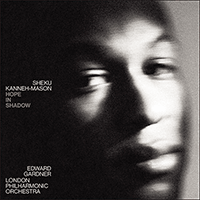
This album is made up of music that I’ve loved for a long time, first as a listener and now with the thrilling experience of performing it. All the works feel as if they stretch the boundaries of sound in extreme and different ways. In embodying the stories the pieces tell, and the multiple characters within the music, we can travel on the paths of extreme suffering and drama, reaching pinnacles of hope through the complexity of the music. This is the first recording I have made with Ed Gardner and the LPO, and it’s a collaboration I really enjoyed and one I feel proud to have been a part of. The feeling in all the sessions was one great freedom, determination and detail. There was an ever-present intensity and such inspiring spirit and energy. Thank you all.
Sheku Kanneh-Mason © 2026
Le Concerto de Saint-Saëns est une œuvre qui m’attirait quand j’étais enfant, et c’est l’un des premiers concertos que j’ai appris à jouer. Sa trame me semble très nettement définie, avec cet immense potentiel de fantaisie qu’il fait naître dans mon imagination, avec cette saisissante scène d’ouverture … D’entrée de jeu, on est plongé dans une tempête en mer, avec d’énormes vagues de tous les côtés, le tonnerre et les éclairs, comme si le but de tout le morceau était d’en réchapper par différents moyens, différentes méthodes: une élégance onirique, un chant passionné et une inébranlable virtuosité. Comparé au premier ou au troisième mouvements, le deuxième évoque un ballet, avec une surface légère et miroitante qui recouvre une sorte de malaise, avant que l’orage ne redouble soudain. Dans le troisième mouvement, on dirait presque que le violoncelle et l’orchestre se torturent l’un l’autre avant d’atteindre enfin un paroxysme, puis le calme retombe et le soleil survient, comme de nulle part.
Impossible de ne pas inclure ici «Le Cygne» de Saint-Saëns, et il existe sur ce programme simplement comme un morceau de pure beauté parmi d’autres qui contiennent une forte dose d’obscurité. Son attrait ne se tarit jamais; à mon avis, tous les violoncellistes le jouent, ou alors ils rêvent de le jouer.
Kol Nidrei (Tous les voeux) de Bruch utilise le violoncelle comme un chantre, avec deux thèmes judaïques qui sont récités traditionnellement pour Yom Kippour. Selon moi, le moment le plus précieux se trouve à la fin, avec trois gammes et arpèges de ré majeur ascendants; la première atteint le registre central du violoncelle, la deuxième est un peu plus haute, et la dernière va chercher le registre le plus aigu de l’instrument. On dirait un oiseau qui s’envole de plus en plus haut vers le ciel—une magnifique image musicale d’un regard qui s’élève vers la lumière et la façon la plus parfaite de conclure un morceau qui a débuté de manière si solennelle.
À cause de son écriture qui voit la mélodie se répéter par tons plutôt que par intervalles plus larges, Kaddisch de Ravel m’a toujours fait l’effet de la langue parlée plutôt que du chant. Il est orchestré avec une telle quantité de lignes de cordes superposées qu’il semble simultanément pesant, puissant et ravissant. J’apprécie tout particulièrement cet alliage qu’on entend tout du long: les cordes du violoncelle et la harpe conjuguées à toutes les cordes divisées en de nombreuses parties, ce qui donne une texture d’une somptueuse richesse. Il y a un contraste féerique quand les contrebasses jouent dans leurs notes les plus graves tandis que les harmoniques des violons scintillent dans la lumière qui les surplombe. À mon sens, il s’agit du morceau le plus intimiste de cet album, doué d’une voix singulière. On ne saurait se rapprocher davantage du cœur même de l’instrument pour en délivrer le plus pur message.
Pendant toute la durée de Schelomo de Bloch, une «Rhapsodie» qui s’articule en trois sections, le violoncelle est utilisé comme une voix s’adressant au monde. Extrêmement dense, l’orchestration évoque de saisissantes images de chaos et de tragédie, et elle exprime en musique les pensées du roi Salomon. Par contraste, le violoncelle semble dénoncer et déplorer son surcroît de tourments: «Rien ne vaut la douleur que cela cause» et «Vanité des vanités, tout est vanité!» Comme une voix à l’intérieur de la voix, l’intense désespoir des sonorités du violoncelle illustre à la perfection les textes sur lesquels se fonde cette pièce. Je ne connais aucun autre morceau qui contient des passages orchestraux aussi paroxystiques, et il y a souvent trois ou quatre images musicales différentes qui sont dépeintes en même temps! Il s’achève dans l’obscurité la plus totale, dans les profondeurs mêmes du violoncelle—l’une de ses notes les plus graves—qui est rejoint par la sombre résonance des contrebasses, du basson et du contrebasson.
Ensuite, il y a la formidable suite de trois pièces de Jewish Life, elles aussi composées par Bloch. J’ai toujours aimé sa manière de faire chanter les mélodies dans cette œuvre, et elle contient certaines des pages les plus belles et touchantes que je connais. J’ai d’abord appris «Prayer» quand j’avais environ neuf ans, pour mon examen de huitième niveau, et je me rappelle être tombé complètement amoureux de cette musique et de l’idée des capacités sonores du violoncelle. Ce morceau a été une source d’inspiration, et tout un univers d’âme et de son m’a été révélé rien qu’à travers lui.
L’histoire de La Liste de Schindler est porteuse d’espoir, mais comme sa sombre toile de fond est une tragédie de l’ampleur de l’Holocauste, elle ressemble à un tout petit grain de sable. Le thème écrit par John Williams est profondément émouvant; le violon d’Itzhak Perlman retranscrit la scène de façon captivante et son timbre est l’un de ceux que je préfère, car c’est un artiste qui sait justement capter le son de tout ce qu’il joue. Telle est la petite contribution que je veux apporter en l’incluant ici pour conclure cette sélection de morceaux.
Cet album est constitué de pages que j’aime depuis longtemps, d’abord en tant qu’auditeur, et désormais avec l’expérience électrisante de celui qui l’interprète. Toutes ces œuvres me semblent transcender les limites du son par des voies à la fois extrêmes et diverses. En incarnant les histoires que racontent ces pièces, avec les multiples personnages qui les habitent, nous pouvons parcourir des chemins de souffrances et de tragédies extrêmes pour atteindre des sommets d’espoir, tout cela grâce à la complexité de leur musique. Ceci est le premier enregistrement que j’ai réalisé avec Ed Gardner et l’Orchestre philharmonique de Londres, une collaboration qui m’a enthousiasmé et dont je suis fier d’avoir fait partie. Au cours de toutes nos sessions, j’ai ressenti une grande liberté, une immense détermination et un profond souci du détail, avec une intensité de tous les instants et un élan et une énergie galvanisants. Merci à tous!
Sheku Kanneh-Mason © 2026
Français: David Ylla-Somers
Das 1. Cellokonzert von Saint-Saëns ist ein Werk, zu dem ich mich schon als Kind hingezogen gefühlt habe, und es war auch eines der ersten Konzerte, die ich gelernt habe. Seine Handlung scheint so klar umrissen, und sein Potenzial für Fantasie erweckt meine Vorstellungskraft mit dieser dramatischen Eröffnung. Man findet sich unmittelbar in stürmischer See, umgeben von riesigen Wellen, Blitz und Donner, es ist, wie wenn das ganze Werk versuchen würde, dem mit unterschiedlichen Mitteln und Methoden zu entkommen: träumerischer Eleganz, leidenschaftlichem Gesang und entschlossener Virtuosität. Der kurze Mittelsatz wirkt im Vergleich zu den Außensätzen wie ein Ballett, mit einer schimmernden, reflektierenden Oberfläche, die eine innere Unruhe verbirgt, ehe der Sturm dann mit voller Kraft zurückkehrt. Im dritten Satz drangsalieren sich Cello und Orchester beinahe, ehe dann endlich ein Kulminationspunkt erreicht wird, an dem Ruhe einkehrt und die Sonne herauskommt, gleichsam aus dem Nichts.
Es wäre ein Unding, hier nicht auch Saint-Saëns’ „Der Schwan“ mit aufzunehmen; das Werk dient in diesem Programm schlichtweg als ein Stück von reiner Schönheit inmitten anderer Werke, die von großer Dunkelheit geprägt sind. Sein Reiz nimmt niemals ab; ich denke, dass eigentlich jeder Cellist es spielt oder zumindest davon träumt, es zu tun.
In Kol Nidrei (Alle Gelübde) verwendet Bruch das Cello gewissermaßen als Kantor, wobei er sich zweier jüdischer Themen bedient, die traditionell am Vorabend des Versöhnungstages Jom Kippur rezitiert werden. Der schönste Moment für mich kommt ganz am Ende des Werkes, wo Bruch drei aufsteigende D-Dur Skalen und Arpeggios schreibt: die erste erreicht die Mittellage des Cellos, die zweite geht schon etwas höher, und die letzte steigt dann in die allerhöchste Lage des Instruments. Es ist, wie wenn ein Vogel immer höher in den Himmel fliegt—ein wunderschönes musikalisches Bild für den auf der Suche nach Licht nach oben gerichteten Blick und ein wirklich perfekter Schluss für ein Werk, das so getragen beginnt.
So, wie es geschrieben ist, mit der Melodie, die sich in Tönen statt größeren Intervallen wiederholt, habe ich Ravels Kaddisch stets mehr als Sprache, denn als Gesang empfunden. Es ist mit so vielen Lagen von Streichern orchestriert, dass es sich schwer, kraftvoll und erlesen zugleich anfühlt. Besonders mag ich dieses durchweg zu hörende Zusammenspiel von Cello, Streichern und Harfe, wobei die Streicher eben in so viele Stimmen geteilt sind, was dem Werk eine brillante Fülle verleiht. Und dann ist da dieser magische Kontrast, wenn die Bässe in ihrer tiefsten Lage spielen und die Violinen dazu schimmernde Flageoletts im Licht darüber intonieren. Für mich ist es das intimste und am individuellsten getönte Werk dieses Albums. Es kommt dem Kern des Instrumentes selbst am denkbar nächsten und vermittelt so eine gänzlich unverstellte Aussage.
In Blochs Schelomo, einer dreiteiligen „Rhapsodie“, wird das Cello durchweg als eine Stimme genutzt, die sich an die Welt wendet. Die extreme Orchestrierung beschwört lebhafte Bilder von Chaos und Tragik herauf und verleiht musikalisch den Gedanken König Salomos Ausdruck. Das Cello hingegen scheint seine noch anstehenden Qualen zu debattieren und anzuprangern: „Nichts ist das Leid wert, das es verursacht“ und „Eitelkeit der Eitelkeiten, alles ist eitel!“. Als Stimme in der Stimme umschreibt die intensive Verzweiflung im Klang des Cellos perfekt den Text, auf dem das Stück basiert. Ich kenne kein anderes Werk, das über so extreme orchestrale Momente verfügt, und bisweilen sind da drei oder vier verschiedene musikalische Bilder, die zur selben Zeit gemalt werden! Das Werk endet in kompletter Dunkelheit in den Tiefen des Cellos—eine seiner tiefsten Noten—, der die düsteren Klänge von Kontrabässen, Fagott und Kontrafagott hinzutreten.
Es folgt eine wunderbare Suite dreier Stücke Aus jüdischem Leben, wiederum von Bloch. Es hat mir immer gefallen, wie er gesungene Melodien in diesem Werk verwendet, und es gibt darin Passagen, die für mich zum Schönsten und Berührendsten in der Musik überhaupt zählen. Zuerst lernte ich „Prayer“ fürs Abschlussexamen der 8. Stufe (Grade 8), als ich etwa neun war, und ich erinnere mich, wie sehr ich diese Musik und die damit verbundenen Klangmöglichkeiten des Cellos liebte. Es war eine inspirierende Erfahrung; ein ganzes Universum von Seele und Klang, das sich mir durch dieses eine Stück offenbarte.
Die Geschichte von Schindlers Liste ist eine der Hoffnung. Da sie sich aber vor dem Schatten einer Tragödie vom Ausmaß des Holocaust abspielt, erscheint sie wie ein winziger Samenkorn. Das Thema von John Williams ist tief bewegend, und die Violine Itzhak Perlmans fängt die Handlung unübertroffen ein. Perlmans Klang ist einer meiner liebsten, denn er ist ein Künstler, der es versteht, jede Musik die er spielt, festzuhalten. Das Stück hier als Schlusspunkt dieser Sammlung mit aufzunehmen ist mein kleiner Beitrag dazu.
Dieses Album vereint Musik, die ich seit Langem schon liebe, zuerst als Hörer und nun mit der packenden Erfahrung, sie aufführen zu können. Alle diese Werke fühlen sich für mich an, wie wenn sie Klanggrenzen auf ebenso extreme wie unterschiedliche Art und Weise sprengen. Durch die Verkörperung der Geschichten, die diese Stücke erzählen und die mannigfachen Charaktere innerhalb der Musik, können wir uns auf Wegen extremer Leiden und Dramen bewegen und dabei Gipfel der Hoffnung über die Komplexität der Musik erreichen. Dies ist meine erste Aufnahme mit Ed Gardner und dem LPO, und es war eine Zusammenarbeit, die mir sehr viel Freude bereitet hat und auf die ich stolz bin, ein Teil davon gewesen zu sein. Die Aufnahmesitzungen waren von einem Gefühl großer Freiheit, Zielstrebigkeit und Genauigkeit erfüllt, es herrschte eine allgegenwärtige Intensität und eine unglaublich inspirierende Grundstimmung und Energie. Dank dafür Euch allen.
Sheku Kanneh-Mason © 2026
Deutsch: Matthias Lehmann
