Welcome to Hyperion Records, a British classical label devoted to presenting high-quality recordings of music of all styles and from all periods from the twelfth century to the twenty-first.
Hyperion offers both CDs, and downloads in a number of formats. The site is also available in several languages.
Please use the dropdown buttons to set your preferred options, or use the checkbox to accept the defaults.
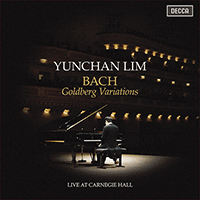


Sold out months in advance, Yunchan Lim’s much-heralded ‘Goldbergs’ from Carnegie Hall are now available for all to hear. A remarkable performance by a talent with far to go.


Whenever anybody asks me if there is one attribute that is shared by all great artists, my answer is humility. Of course, it goes without saying that every interpretive artist needs talent, dedication, passion for their art, insight, curiosity, a powerful vision of the music they are seeking to interpret, and much more. However, without humility in front of the music, the insights they offer through their music-making, and thus the inspiration they bring to their audiences, will be limited; humility allied to curiosity are central to continuous development. The greatest artists are never satisfied with their performances and no matter how extraordinary their talents, they never stop learning, asking questions of themselves and others, and seeking greater insights. Of all the artists I have most admired in my 60 plus years in music, this is the one thing they have in common, although humility in front of the music does not always translate into humility as a human being. Yunchan clearly has both.
His focus is totally on the music and what the composer was seeking to express, and he completely understands that performers are the conduit from the composer to their audiences. As Rostropovich said: “When you interpret a musical work, the most important thing is what you think about while you play it. The musician is the link from the composer to the audience. If you wish to use music to express your own emotions, then you had better become a composer yourself. However, once you decide to play Mozart, Beethoven, Tchaikovsky, Shostakovich, you must be a different person in each of these works. The color of your sound should be different, so the listener can hardly recognize your own style. That quality distinguishes a true artist from just a good instrumentalist.” When I spoke to Yunchan after his first recital at Carnegie Hall and asked him about his ambitions in life, his answer was simple: “I have two ambitions: to spend my life practicing the piano so I can play it and interpret the music as well as possible, and to perform a two-piano recital with Evgeny Kissin.” That says it all.
Now, to the Bach Goldberg Variations, the subject of this recording and Yunchan’s remarkable recital at Carnegie Hall last season, which this performance captured for posterity. Many artists would have rested on the day of such a demanding concert, but Yunchan played through the entire piece earlier in the day, for the sound and camera teams.
Before addressing his Goldberg Variations performance, it is important to start from Bach’s place in the world of music. Of all the greatest instrumentalists I’ve known, virtually every one of them has considered Bach to be the ultimate musical challenge; even an artist like Pablo Casals was still practicing the Bach cello suites until his death at the age of 96. Exploring the music of Bach is a lifelong journey of discovery to which there is never an end. Thus, one of the most fascinating privileges for audiences is to travel this journey throughout the life of a great artist. Their interpretation will continue to grow and develop throughout their lifetime, and there is nothing more wonderful than to follow this personal journey of exploration. This never means that an early interpretation is less valid than a later one; simply, that with every great artist, their interpretation will reflect who they were as an artist at any given time. Hence, this remarkable interpretation by Yunchan is a portrait of him as an artist today, or at least as he was a few months ago!
Following Yunchan’s winning performance at the Cliburn Competition, our artistic planning team made one of our easiest decisions ever in immediately offering him a solo recital in our main hall, Stern Auditorium / Perelman Stage. Many artists make their debuts in our smaller halls and work their way up, but we did not even consider this possibility. We knew we were listening to a very special artist at the start of what will undoubtedly be an extraordinary career, an artist who will bring inspiration to audiences worldwide for a very long time. His debut recital featured the complete Chopin Etudes, offering a deep and profound exploration of Chopin’s music and creating an important statement from the very start of his performing life at Carnegie Hall.
Yunchan has a very special and personal dedication to every note of music he plays, and like the greatest artists, he already has his own voice at the piano. Of course, his technique is extraordinary as well as immaculate, but many pianists today can play all the notes. That is not what matters; what matters is what an artist communicates through the notes. Yunchan has a sensitive and beautiful touch that makes us, his listeners, wonder if he is touching the keys at all, or just magically inspiring them to play. His Goldberg performance brought a sense of wonder, discovery, and humility to his interpretation that expressed the fact that he is at the start of his own musical journey, and through this he managed to communicate his own sense of revelation and privilege at sharing this extraordinary music so early in his life.
As the Cliburn Jury Chair Marin Alsop expressed: “Yunchan is that rare artist who brings profound musicality and prodigious technique organically together.”
All of us at Carnegie Hall look forward to a long and inspiring journey with Yunchan in the years to come. He is an artist we already feel privileged to consider as a central member of the Carnegie Hall musical family.
Clive Gillinson © 2026
Executive and Artistic Director of Carnegie Hall
Chaque fois qu’on me demande s’il existe un attribut commun à tous les grands artistes, je réponds que c’est l’humilité. Bien sûr, il va sans dire qu’à tout interprète il faut du talent, de la persévérance, de la passion pour son art, de la pénétration, de la curiosité, une vision puissante de l’œuvre qu’il vise à interpréter, et bien plus encore. Néanmoins, sans l’humilité face à la musique, les éclairages qu’apportent les musiciens à travers leur art et, partant, l’inspiration qu’ils suscitent chez leurs auditeurs, seront limités; alliée à la curiosité, l’humilité est essentielle pour qu’un artiste continue à évoluer. Les plus grands ne se satisfont jamais de leurs interprétations, et ils ont beau être extraordinairement doués, ils ne cessent jamais d’apprendre, de se poser des questions et d’en poser aux autres, et de creuser toujours plus profond. C’est là le point commun de tous les musiciens que j’ai le plus admirés au fil de plus de soixante ans passés dans leur orbite, même si l’humilité face à la partition n’entraîne pas toujours l’humilité chez l’individu lui-même. De toute évidence, Yunchan est doté des deux.
Il se focalise entièrement sur la musique et sur ce que le compositeur a cherché à exprimer, et il comprend parfaitement que les interprètes sont le vecteur qui relie le compositeur aux auditeurs. Comme le disait Rostropovitch, «quand on interprète un morceau de musique, le plus important est ce à quoi on pense pendant qu’on le joue. Le musicien est le pont entre le compositeur et le public. Si on souhaite utiliser la musique pour exprimer ses propres émotions, alors mieux vaut devenir soi-même compositeur. Néanmoins, une fois que vous décidez de jouer Mozart, Beethoven, Tchaïkovski ou Chostakovitch, il vous faut devenir une personne différente dans chacune de ces œuvres. Il faut que la couleur de votre timbre soit différente, de façon à ce que l’auditeur ait du mal à identifier votre style propre. C’est cette qualité qui distingue un véritable artiste d’un bon instrumentiste.» Quand j’ai discuté avec Yunchan après son premier récital au Carnegie Hall et que je lui ai demandé quelles étaient ses ambitions dans la vie, sa réponse a été simple: «J’ai deux ambitions: passer ma vie à travailler le piano afin de pouvoir en jouer et interpréter la musique aussi bien que possible, et donner un récital à deux pianos avec Ievgueni Kissine.» Tout est dit.
Parlons maintenant des Variations Goldberg de Bach, le sujet de cet enregistrement et le remarquable récital de Yunchan au Carnegie Hall lors de la dernière saison, que cette captation restitue pour la postérité. Nombreux sont les artistes qui se seraient reposés à la date d’un concert si exigeant, mais plus tôt dans la journée, Yunchan a joué l’intégralité de l’ouvrage pour les équipes son et image.
Avant de traiter de son interprétation des Variations Goldberg, il est important de commencer par évoquer la place de Bach dans l’histoire de la musique. Presque tous les immenses instrumentistes que j’ai connus considéraient Bach comme le défi suprême; un artiste comme Pablo Casals, par exemple, a repris les suites pour violoncelle jusqu’à sa mort à quatre-vingt-seize ans. L’exploration de l’œuvre de Bach représente le voyage d’une vie, un infini parcours de découverte. Ainsi, l’un des privilèges les plus fascinants pour le public est d’accompagner un grand artiste au fil de ce voyage pendant toute son existence. Son interprétation continuera de progresser et de se développer toute sa vie durant, et rien n’est plus merveilleux que de suivre l’évolution de cette exploration personnelle. Cela ne signifie absolument pas qu’une interprétation plus ancienne est moins valable que celles qui la suivent; c’est juste qu’avec chaque grande personnalité artistique, l’interprétation reflétera l’artiste qu’il était en un point donné de son parcours. Cette remarquable interprétation de Yunchan est donc un portrait de l’artiste qu’il est aujourd’hui, ou du moins qu’il était il y a quelques mois!
Suite à la prestation victorieuse de Yunchan au Concours Cliburn, notre équipe de planification artistique a pris l’une de ses décisions les plus évidentes en lui proposant sur-le-champ de donner un récital soliste dans notre grande salle, le Stern Auditorium / Perelman Stage. De nombreux artistes font leurs débuts dans nos salles plus réduites et se fraient un chemin vers la grande, mais nous n’avons même pas envisagé cette possibilité. Nous étions conscients d’entendre un artiste vraiment exceptionnel à l’aube de ce qui va assurément être une carrière extraordinaire, un interprète qui sera pendant très longtemps une inspiration pour les auditeurs du monde entier. Son tout premier récital présentait l’intégrale des Études de Chopin, offrant une profonde et intense exploration de la musique du compositeur et créant un important précédent dès le tout début de sa carrière d’interprète au Carnegie Hall.
Yunchan fait preuve d’un dévouement très particulier et personnel envers chaque note de musique qu’il joue, et comme les plus grands artistes, il a déjà sa propre voix au piano. Bien entendu, sa technique est aussi extraordinaire qu’impeccable, mais les pianistes capables de jouer toutes les notes sont légion aujourd’hui. Ce n’est pas là ce qui compte: ce qui compte, c’est ce qu’un interprète communique à travers les notes. Le toucher de Yunchan est si beau et sensible que nous, les auditeurs, nous demandons s’il entre vraiment en contact avec le clavier ou s’il l’amène à jouer de lui-même, comme par magie. Sa lecture des Variations Goldberg offre une interprétation mêlant émerveillement, découverte et humilité, témoins du fait qu’il se trouve au début de son propre parcours musical ; à travers elle, il est parvenu à communiquer son propre sentiment de révélation et à quel point il se considère privilégié de partager cette musique extraordinaire alors que sa vie ne fait que commencer.
Ainsi que l’a exprimé Marin Alsop, la présidente du jury du Concours Cliburn: «Yunchan est de ces rares artistes qui allient de manière organique une profonde musicalité à une prodigieuse technique.»
Nous tous ici au Carnegie Hall nous réjouissons du long et exaltant voyage entrepris avec Yunchan pour les années à venir. Voilà un artiste que nous nous sentons déjà honorés de considérer comme un membre primordial de la famille musicale du Carnegie Hall.
Clive Gillinson © 2026
Directeur exécutif et artistique du Carnegie Hall
Français: David Ylla-Somers
Immer, wenn man mich nach einer Eigenschaft fragt, die alle großen Künstler miteinander verbindet, lautet meine Antwort „Demut“. Natürlich benötigt jeder interpretierende Künstler fraglos Eigenschaften wie Talent, Hingabe, Leidenschaft, Verständnis, Neugier, eine deutliche Vorstellung von der Musik, die es zu interpretieren gilt und anderes mehr. Aber ohne Demut vor der Musik wird das Verständnis, das sie mit ihrem Spiel anbieten und somit die Inspiration, die sie ihrem Publikum dadurch vermitteln, auch etwas eingeschränkt; Demut im Verbund mit Neugier ist zentral für eine fortdauernde Entwicklung. Die größten Künstler sind letztlich niemals vollkommen mit ihren Darbietungen zufrieden, ganz gleich wie außergewöhnlich talentiert sie auch sein mögen. Sie hören niemals auf, zu lernen, stellen sich und anderen beständig Fragen und sind auf der Suche nach einem noch größeren Verständnis. Bei allen Künstlern, die ich in meinen mehr als 60 Jahren in der Welt der Musik am meisten bewundert habe, ist es eben diese Eigenschaft, die alle miteinander gemein haben, obschon Demut vor der Musik nicht in jedem Falle mit Bescheidenheit an sich einhergeht. Bei Yunchan ist dies freilich der Fall.
Sein Fokus liegt vollkommen auf der Musik und dem, was der Komponist auszudrücken trachtete und ihm ist vollkommen klar, dass Interpreten die Vermittler zwischen dem Komponisten und dem Publikum darstellen. Wie Rostropowitsch es formulierte: „Wenn man ein Musikwerk interpretiert, ist am wichtigsten das, was man denkt, während man es spielt. Der Musiker ist die Verbindung zwischen Komponist und Publikum. Wenn man mit Musik seine eigenen Emotionen ausdrücken möchte, sollte man besser selbst komponieren. Aber wenn man sich einmal dafür entschieden hat, Musik von Mozart, Beethoven, Tschaikowsky oder Schostakowitsch zu spielen, so muss man in jedem dieser Werke eine andere Person sein. Die Klangfarben sollten sich voneinander unterscheiden, so dass ein Zuhörer kaum Deinen eigenen Stil erkennen kann. Diese Qualität unterscheidet einen wahren Künstler von einem guten Instrumentalisten.“ Als ich mit Yunchan nach seinem ersten Solorezital in der Carnegie Hall sprach und ihn nach seinen Lebenszielen fragte, war seine Antwort einfach: „Ich verfolge zwei Ziele: mein Leben damit zu verbringen, das Klavierspiel so weit zu verfeinern, dass ich Musik so gut wie irgend möglich spielen und interpretieren kann und außerdem ein Rezital für zwei Klaviere gemeinsam mit Jewgeni Kissin zu geben.“ Das sagt eigentlich schon alles.
Aber nun zu den Goldberg-Variationen, dem Gegenstand dieser Aufnahme und Yunchans bemerkenswertem Solorezital in der Carnegie Hall in der zurückliegenden Spielzeit, das diese Aufnahme für die Nachwelt konserviert. Viele Künstler hätten sich am Tag eines solch anspruchsvollen Konzertes ausgeruht. Yunchan aber hat das gesamte Werk für die Toningenieure und das Kamerateam früher am Tag komplett durchgespielt.
Ehe ich auf seine Interpretation der Goldberg-Variationen eingehe, halte ich es für wichtig, einen Blick auf die Bedeutung von Bach innerhalb der Musikwelt zu werfen. Von all den großen Instrumentalisten, die ich kennenlernen durfte, haben eigentlich alle Bach als die größte musikalische Herausforderung empfunden; selbst ein Künstler wie Pablo Casals hat die Suiten für Solocello bis zu seinem Tod im Alter von 96 Jahren noch regelmäßig geübt. Die Musik von Bach zu erkunden, ist eine Lebensaufgabe, eine niemals endende Entdeckungsreise. Und so gehört es wohl zu den faszinierendsten Privilegien des Publikums, einen großen Künstler dabei auf seiner Reise begleiten zu können. Seine Interpretation wird sich über sein gesamtes Leben hinweg entwickeln und wachsen, und es gibt kaum etwas Schöneres, als ihn bei dieser persönlichen Entdeckungsreise zu begleiten. Dies bedeutet allerdings niemals, dass eine frühe Interpretation weniger Wert hat als eine spätere; vielmehr ist es bei jedem großen Künstler einfach so, dass die Interpretation reflektiert, wo sie zum jeweiligen Zeitpunkt künstlerisch stehen. Und so stellt auch diese bemerkenswerte Interpretation von Yunchan ein Porträt des Künstlers dar, der er heute ist, oder zumindest des Künstlers, der er vor einigen wenigen Monaten war!
Nachdem Yunchan den Cliburn Wettbewerb gewonnen hatte, konnten wir als künstlerischer Planungsstab eine unserer bisher einfachsten Entscheidungen treffen und ihm sofort ein Solorezital auf unserer Hauptbühne, dem Stern Auditorium / Perelman Stage anbieten. Viele Künstler geben ihr Debüt in einer unserer kleineren Säle und arbeiten sich dann allmählich hoch. Aber in diesem Falle haben wir diese Möglichkeit gar nicht erst erwogen. Wir wussten, dass wir einen sehr besonderen Künstler am Anfang einer unzweifelhaft außergewöhnlichen Karriere gehört hatten, einen Künstler, der sein Publikum weltweit über einen sehr langen Zeitraum wird inspirieren können. In seinem Debüt-Rezital spielte er sämtliche Etü-den Chopins und lotete dabei ebenso tiefgründig wie fundiert die Musik Chopins aus, wodurch er schon ganz zu Anfang seiner künstlerischen Laufbahn einen starken Eindruck in der Carnegie Hall hinterlassen hat.
Yunchan behandelt jede Note, die er spielt mit sehr spezieller und persönlicher Hingabe, und wie alle großen Künstler verfügt er bereits über eine eigene Stimme am Klavier. Natürlich ist seine Technik ebenso außergewöhnlich wie makellos, aber einfach alle Noten spielen: das können heute sehr viele Pianisten. Das ist es nicht, worauf es ankommt; worauf es ankommt, ist, was ein Künstler durch diese Töne zum Ausdruck bringt. Yunchan verfügt über einen sehr sensiblen und schönen Anschlag, der uns, sein Publikum, vor die Frage stellt, ob er denn die Tasten überhaupt berührt, oder ob er sie nicht vielmehr wie durch Zauberhand zum Spiel inspiriert. Bei seiner Aufführung der Goldberg-Variationen war seine Interpretation von jenem Zauber, von Entdeckergeist und Demut geprägt, die unterstreichen, dass er am Anfang seiner eigenen musikalischen Reise steht, und dadurch gelang es ihm, seine eigene Empfindung der Offenbarung und das Privileg, diese außergewöhnliche Musik so früh in seinem Leben teilen zu können, mitzuteilen.
Wie die Vorsitzende der Cliburn Wettbewerbskommission Marin Alsop es formulierte: „Yunchan ist eine jener seltenen Künstlernaturen, in denen tiefgründige Musikalität und überragende Technik organisch zusammenfinden.“
Wir alle hier in der Carnegie Hall freuen uns auf eine lange, inspirierende Reise mit Yunchan in den kommenden Jahren. Wir empfinden es als ein Privileg, ihn als Künstler bereits jetzt als ein zentrales Mitglied innerhalb der musikalischen Carnegie Hall Familie bezeichnen zu dürfen.
Clive Gillinson © 2026
Geschäftsführender und künstlerischer Leiter der Carnegie Hall
Deutsch: Matthias Lehmann
위대한 아티스트들이 공통적으로 가지고 있는 특징이 무엇인지 누군가 물어올 때마다 나는 언제나 예외 없이 ‘겸손’이라고 답한다. 모름지기 음악을 연주하는 예술가에게는 재능과 헌신, 자신의 예술에 대한 열정, 통찰력과 호기심, 해석하려는 작품에 대한 분명한 구상을 비롯한 수많은 덕목들이 요구된다. 그러나 음악을 대하는 겸허한 마음이 없다면 그들이 연주하는 작품에 담길 통찰과 관객들이 느끼는 감동은 이윽고 한계에 봉착하고 만다. 겸손함은 지속적인 발전을 가능케 하는 핵심 동력인 호기심과 긴밀히 연결되어 있다. 가장 위대한 예술가들은 자신의 연주에 결코 만족하는 법이 없으며, 아무리 뛰어난 재능을 가졌더라도 배움을 멈추지 않는다. 그들은 항상 스스로와 타인에게 질문을 던지며 자신의 통찰을 더욱 예리하게 벼려낸다. 음악계에 몸담아 온 60여 년의 시간을 통틀어 나를 진정으로 탄복시킨 예술가들은 하나같이 이러한 공통점을 지니고 있었다. 물론 음악을 대하는 겸손한 태도가 항상 인격적인 겸손함으로 이어지지는 않지만, 임윤찬은 의심의 여지없이 양쪽 모두를 갖춘 인물이다.
임윤찬의 관심사는 언제나 음악 그 자체와 작곡가가 표현하고자 하는 바가 무엇인지에 고정되어 있다. 그는 연주자의 소임이 작곡가와 관객들 사이를 잇는 전달자의 역할이라는 사실을 명확하게 이해하고 있다. 일찍이 로스트로포비치는 이런 말을 남겼다. “음악 작품을 연주할 때 가장 중요한 것은 연주하면서 무엇에 집중할지 정하는 것이다. 연주자는 작곡가와 관객을 연결하는 다리와 같다. 만일 당신이 스스로의 감정을 표현하고자 한다면 직접 곡을 쓰는 작곡가가 되는 편이 낫다. 그러나 모차르트와 베토벤, 차이콥스키나 쇼스타코비치의 곡을 연주하기로 결정했다면 당신은 각각의 작품을 연주할 때마다 다른 사람이 되어야 한다. 사용하는 음색 역시 명확히 구별하여 관객들이 연주자 본인의 스타일을 알아차리기 어려울 정도가 되어야 한다. 이러한 차이가 진정한 예술가와 고만고만한 연주자를 판가름한다.” 카네기홀에서의 첫 공연을 마친 후 임윤찬과 대화를 나누며 살면서 꼭 이루고픈 목표가 무엇인지 물었을 때, 그의 대답은 실로 단순했다. “제겐 두 가지 소망이 있습니다. 하나는 평생 피아노를 연주할 수 있도록 꾸준히 연습하며 가능한 많은 음악을 연주하는 일이고, 다른 하나는 예프게니 키신과 두 대의 피아노를 위한 공연을 함께하는 것입니다“. 이 대답은 많은 것들을 시사한다.
이제 본격적으로 음반의 주제인 바흐의 골드베르크 변주곡과 이번 녹음으로 영원히 후대에 기록될 지난 시즌 카네기홀에서의 임윤찬 리사이틀에 대해 이야기해보자. 대부분의 아티스트들은 이렇게 부담이 큰 콘서트를 앞두고 으레 하루 종일 휴식을 취하겠지만, 임윤찬은 공연 당일 음향 및 영상 팀을 위하여 일찌감치 무대에 올라 곡을 처음부터 끝까지 한 번 더 연주했다.
그의 골드베르크 변주곡 연주에 대해 논하기에 앞서 음악계에서 바흐가 차지하는 위상에 대해 짚고 넘어갈 필요가 있다. 내가 아는 모든 위대한 연주자들은 거의 한 사람의 예외도 없이 최후에 마주하게 될 궁극의 음악적 관문으로 바흐를 꼽았다. 파블로 카살스는 96세를 일기로 사망하는 순간까지 바흐의 무반주 첼로 모음곡을 손에서 놓지 않았다. 그만큼 바흐의 음악을 연주하는 것은 그야말로 평생에 걸쳐 이어지는 끝이 없는 탐구의 연속이다. 위대한 아티스트가 평생을 바쳐 걸어온 이러한 여정의 발자취를 따라가는 건 음악을 사랑하는 애호가들이 누릴 수 있는 최고의 특권이다. 이들의 해석은 그들의 삶과 더불어 끊임없이 자라고 발전하며, 이들의 개인적 탐구의 여정을 복기하는 것은 다시없을 호사다. 그러나 이는 결코 그들의 초기 해석이 나중 것만 못함을 의미하지 않는다. 경지에 오른 아티스트에게 있어 각각의 연주는 그저 당시의 그가 어떤 연주자였는지를 고스란히 보여주는 결과물일 따름이다. 이 앨범에 담긴 임윤찬의 놀라운 연주 역시 예술가로서 그의 현재, 적어도 몇 달 전의 모습을 담은 자화상이라 할 수 있다.
반 클라이번 콩쿠르에서 우승을 거머쥔 임윤찬의 연주를 목격한 직후 우리 홀의 예술 기획 팀은 여태껏 내린 것 중 가장 쉬운 결정을 통과시켰는데, 우리 홀의 메인 무대인 아이작 스턴 오디토리움 / 페렐먼 스테이지에서 솔로 리사이틀을 갖도록 그를 초청한 것이다. 대부분의 아티스트들은 우리 홀의 보다 작은 공연장에서 데뷔 무대를 가진 후 점진적으로 큰 무대로 옮겨가지만 이번 경우는 그런 가능성을 고려조차 하지 않았다. 그만큼 우리 모두는 지금 우리가 장차 세계 전역의 관객들에게 오랫동안 감동을 선사하며 탁월한 커리어를 쌓아 나갈 것이 분명한 특별한 예술가의 첫 발자국을 목도하고 있다는 사실을 분명하게 실감하고 있었다. 데뷔 리사이틀 무대에서 쇼팽의 연습곡 전곡을 연주한 임윤찬은 쇼팽의 음악에 대한 깊고 심오한 혜안을 보여주며 앞으로 이어질 카네기홀에서의 연주 경력의 첫 시작부터 자신의 예술관을 가감 없이 드러냈다.
임윤찬은 자신이 연주하는 모든 음들 하나마다 혼신의 노력을 기울이며, 위대한 아티스트들이 응당 그러하듯 벌써부터 피아노를 연주하는 자신만의 고유한 목소리를 간직하고 있다. 물론 그는 실로 탁월하고 흠잡을 데 없는 기교를 갖고 있지만 단순히 모든 음을 빠짐없이 연주하는 것은 오늘날 많은 피아니스트들에게 그리 어려운 일이 아니다. 중요한 것은 그저 음을 연주하는 것이 아니라 아티스트가 그 음을 통하여 무엇을 이야기하는지에 달려 있다. 지극히 섬세하고 아름다운 임윤찬의 터치는 음악을 듣는 청자들로 하여금 그가 과연 건반을 건드리긴 한 것인지, 혹여 어떤 마법을 부려서 건반이 스스로 연주하게 만든 건 아닌지 되묻게 한다. 새로운 발견과 경탄, 해석에 대한 겸손함이 녹아있는 임윤찬의 골드베르크 연주는 이 음악가가 자신의 음악적 여정을 비로소 시작하는 단계에 있음을 잘 보여주며, 그는 이 연주를 통하여 이 탁월한 작품을 인생의 비교적 이른 시기에 나눌 수 있게 된 자신이 받은 특권과 일종의 계시에 대해 이야기한다.
당시 반 클라이번 콩쿠르의 심사위원장을 맡았던 마린 알솝은 이렇게 평했다. “임윤찬은 심오한 음악성과 경이적인 테크닉이 유기적으로 조화를 이룬 대단히 희귀한 아티스트입니다”.
카네기홀에서 일하는 우리 모두는 이런 임윤찬의 감명 깊은 여정에 앞으로도 오랫동안 함께 할 수 있기를 고대한다. 그는 이미 우리 카네기홀 음악 가족의 핵심 인물이자, 함께 하는 것이 오히려 영광으로 느껴질 정도의 아티스트이기 때문이다.
Clive Gillinson © 2026
카네기홀 대표 겸 예술감독
Korean: 김지훈