Welcome to Hyperion Records, a British classical label devoted to presenting high-quality recordings of music of all styles and from all periods from the twelfth century to the twenty-first.
Hyperion offers both CDs, and downloads in a number of formats. The site is also available in several languages.
Please use the dropdown buttons to set your preferred options, or use the checkbox to accept the defaults.


| Ivana Gavrić (piano)» More |

Shaw had succeeded E Belfort Bax (uncle of Arnold Bax) as chief critic of The Star in February 1889 and, in need of a pseudonym, had alighted on ‘Corno di Bassetto’. It was only a month after acquiring this nom de plume that he welcomed Grieg to London, albeit admitting that hitherto he had not been a great admirer of the Norwegian. ‘He is a “national” composer; and I am not to be imposed on by that sort of thing’, he admonished. ‘I do not cry out “How Norwegian!” whenever I hear an augmented triad … nor “How Scottish!” when somebody goes to the piano and drones away on E flat and B flat with his left hand, meanwhile jigging at random on the other black notes with his right … Grieg is very fond of the augmented triad; but his music does not remind me of Norway, perhaps because I have never been there.’
The first part of Shaw’s/Corno di Bassetto’s report entitled ‘The Grieg Concert’, at which he heard the Holberg Suite (The Star, 21 March 1889, unsigned), is worth quoting at length:
The Grieg concert yesterday afternoon at St James’s Hall is an event which the musical world of London may look back upon with considerable pleasure and satisfaction. The Norwegian composer and his wife will also, no doubt, carry back with them the pleasantest recollections of their enthusiastic reception at the hands of a highly appreciative St James’s Hall audience. It is, indeed, a rare occurrence to be present at a concert the programme of which not only consists wholly of one composer’s works, but which is performed by the composer himself and his wife. The concert opened with his Holberg Suite, or ‘Suite in old style’, as it was called on the programme. This suite was composed on the occasion of the Holberg Jubilee in 1884, when the Danes and Norwegians celebrated in great style the 200th anniversary of the birth of Ludwig Holberg, the father of the literature of those countries, and who, by the bye, is a townsman of Mr Grieg. The composer has succeeded in reproducing with much fidelity the spirit of those ‘good old times’, and it is almost unnecessary to say that he rendered his own composition in his elegant and attractive manner. The suite has already been performed at one of the Popular Concerts this season, but it was yesterday again received with hearty applause.
To which it only remains to add that Ludvig Holberg (born like Grieg, as Shaw intimated, in Bergen) lived from 1684 to 1754. A prolific poet, playwright and philosopher, he spent most of his time in Copenhagen; at the university there he was in turn a professor of metaphysics then rhetoric and later history. He wrote more than thirty classic comedies for the newly opened Danish theatre in Copenhagen (1722-27) and then turned to historical books with biographies and histories of Denmark, the Church and the Jews.
The Holberg Suite named for him—more properly From Holberg’s time and subtitled ‘Suite in old style’—is a happy fusion of the old and the then-new, with old dance forms dressed in Nordic harmony, and many critics drawing attention to its anticipation of the later neo-classical trend in music. Andrey Gugnin plays the work in its original (1884) form for solo piano. Grieg made his better-known orchestral transcription the following year.
from notes by Jeremy Nicholas © 2024
Shaw avait succédé à E Belfort Bax (l’oncle d’Arnold Bax) comme principal critique de The Star en février 1889 et, ayant besoin d’un pseudonyme, il s’était arrêté sur «Corno di Bassetto». C’est seulement un mois après avoir pris ce «nom de plume» qu’il accueillit Grieg à Londres, même s’il admettait qu’il n’avait pas été jusqu’alors un grand admirateur du Norvégien. «C’est un compositeur “national”; et je ne vais pas m’en laisser imposer par ce genre de chose», prévint-il. «Je ne m’écrie pas “Que c’est norvégien!” chaque fois que j’entends un accord de quinte augmentée … ni “Comme c’est Écossais!” lorsque quelqu’un va au piano et produit un bourdonnement en alternant mi bémol et si bémol à la main gauche, alors que la main droite sautille au hasard sur les autres touches noires … Grieg aime beaucoup les accords de quinte augmentée; mais sa musique ne me rappelle pas la Norvège, peut-être parce que je n’y suis jamais allé.»
La première partie de l’article de Shaw/Corno di Bassetto intitulé «Le Concert Grieg», où il entendit la Suite Holberg (The Star, 21 mars 1889, non signé), mérite d’être longuement citée:
Le concert Grieg hier après-midi à St James’s Hall est un événement auquel le monde musical de Londres peut repenser avec beaucoup de plaisir et de satisfaction. Le compositeur norvégien et son épouse ramènerons sûrement avec eux les plus agréables souvenirs de l’accueil enthousiaste d’un auditoire très admiratif de St James’s Hall. En effet, il arrive rarement que l’on assiste à un concert dont le programme se compose non seulement entièrement des œuvres d’un même compositeur, mais interprétées par le compositeur lui-même et sa femme. Ce concert débuta avec sa Suite Holberg, ou «Suite dans le style ancien», comme elle s’appelait sur le programme. Cette suite fut composée à l’occasion du Jubilé de Holberg en 1884, lorsque les Danois et les Norvégiens célébrèrent en grande pompe le bicentenaire de la naissance de Ludwig Holberg, père de la littérature de ces pays, et qui, à propos, est un concitoyen de M. Grieg. Le compositeur a réussi à reproduire avec beaucoup de fidélité l’esprit de ces «bons vieux temps», et il est quasiment inutile de dire qu’il a rendu sa composition dans son style élégant et attrayant. La suite a déjà été exécutée à un Concert populaire cette saison, mais elle a été chaleureusement applaudie à nouveau hier.
Il ne reste qu’à ajouter que Ludvig Holberg (né comme Grieg, ainsi que Shaw le laissait entendre, à Bergen) vécut de 1684 à 1754. Poète prolifique, auteur dramatique et philosophe, il passa la majeure partie de son temps à Copenhague: à l’université, il y fut tour à tour professeur de métaphysique, puis de rhétorique et enfin d’histoire. Il écrivit plus de trente comédies classiques pour le théâtre danois qui venait d’ouvrir à Copenhague (1722-27), puis se tourna vers les ouvrages historiques avec des biographies et des histoires du Danemark, de l’Église et des juifs.
La Suite Holberg qui porte son nom—plus exactement Du temps de Holberg et sous-titrée «Suite dans le style ancien»—est une heureuse fusion de l’ancien et de ce qui était alors nouveau, avec des formes de danse anciennes vêtues d’harmonies nordiques, et de nombreuses critiques soulignèrent son anticipation de la tendance néoclassique en musique qui allait se manifester par la suite. Andrey Gugnin joue cette œuvre dans sa forme d’origine (1884) pour piano seul. Grieg fit sa transcription pour orchestre, plus connue, l’année suivante.
extrait des notes rédigées par Jeremy Nicholas © 2024
Français: Marie-Stella Pâris
Shaw hatte im Februar 1889 die Nachfolge von E. Belfort Bax (der Onkel von Arnold Bax) als Chefkritiker von The Star angetreten und war auf der Suche nach einem Pseudonym auf „Corno di Bassetto“ gestoßen. Nur einen Monat nach dem Erwerb dieses Künstlernamens hieß er Grieg in London willkommen, auch wenn er zugab, dass er bis dahin kein großer Bewunderer des Norwegers gewesen war. „Er ist ein ‚Nationalkomponist‘, und ich lasse mich von so etwas nicht beeindrucken“, mahnte er. „Ich rufe nicht ‚Wie norwegisch!‘, wenn ich einen übermäßigen Dreiklang höre … und auch nicht ‚Wie schottisch!‘, wenn sich jemand ans Klavier setzt und mit der linken Hand einen Bordunklang aus Es und B anschlägt und dazu mit der rechten Hand wahllos auf den anderen schwarzen Tasten herumhüpft … Grieg hat eine große Vorliebe für den übermäßigen Dreiklang, aber seine Musik erinnert mich nicht an Norwegen, vielleicht weil ich noch nie dort war.“
Der erste Teil von Shaws/Corno di Bassettos Bericht mit dem Titel „The Grieg Concert“, bei dem er die Holberg-Suite hörte (The Star, 21. März 1889, ungekennzeichnet), ist es wert, ausführlich zitiert zu werden:
Das Grieg-Konzert gestern Nachmittag in der St. James’s Hall war ein Ereignis, auf das die Londoner Musikwelt mit großer Freude und Genugtuung zurückblicken kann. Der norwegische Komponist und seine Frau werden sicherlich ebenfalls die angenehmsten Erinnerungen an ihren begeisterten Empfang von dem äußerst dankbaren Publikum in der St. James’s Hall mit sich tragen. Es ist in der Tat ein seltenes Ereignis, einem Konzert beizuwohnen, dessen Programm nicht nur ausschließlich aus Werken eines Komponisten besteht, sondern das auch noch vom Komponisten selbst sowie zusammen mit seiner Frau aufgeführt wird. Eröffnet wurde das Konzert mit seiner Holberg-Suite, oder „Suite im alten Stil“, wie sie im Programmheft bezeichnet wurde. Diese Suite wurde anlässlich des Holberg-Jubiläums 1884 komponiert, als die Dänen und Norweger den 200. Geburtstag von Ludwig Holberg, dem Vater der Literatur dieser Länder, der übrigens aus derselben Stadt wie Herr Grieg stammt, in großem Stil feierten. Dem Komponisten ist es gelungen, den Geist jener „guten alten Zeit“ mit großer Treue wiederzugeben, und es ist fast überflüssig zu erwähnen, dass er seine eigene Komposition in seiner eleganten und reizvollen Art wiedergegeben hat. Die Suite wurde bereits bei einem der „Popular Concerts“ dieser Saison aufgeführt, aber gestern wurde sie erneut mit herzlichem Beifall aufgenommen.
Bleibt nur noch hinzuzufügen, dass Ludvig Holberg (wie Grieg ein Sohn der Stadt Bergen, wie Shaw andeutete) von 1684 bis 1754 lebte. Er war ein produktiver Dichter, Dramatiker und Philosoph und lebte vorwiegend in Kopenhagen; an der dortigen Universität war er zunächst Professor für Metaphysik, dann für Rhetorik und später für Geschichte. Er schrieb mehr als 30 klassische Komödien für das neu eröffnete dänische Theater in Kopenhagen (1722-27) und wandte sich dann historischen Büchern mit Biographien und Geschichten über Dänemark, die Kirche und das Judentum zu.
Die nach ihm benannte Holberg-Suite—eigentlich: Aus Holbergs Zeit mit dem Untertitel „Suite im alten Stil“—ist eine gelungene Fusion von Altem und damals Neuem, mit alten Tanzformen im Gewand nordischer Harmonie, und es wird oft auf die Vorwegnahme der späteren neoklassischen Tendenz in der Musik verwiesen. Andrey Gugnin spielt das Werk in seiner ursprünglichen Form für Klavier solo von 1884. Im folgenden Jahr fertigte Grieg seine bekanntere Version des Werks für Orchester an.
aus dem Begleittext von Jeremy Nicholas © 2024
Deutsch: Viola Scheffel
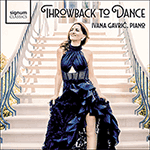 Throwback to dance Throwback to danceStudio Master: SIGCD947Download onlyStudio Master FLAC & ALAC downloads available  As Bryce Morrison put it in Gramophone, ‘Gavrić possesses what I can only describe as a beautiful musical personality’. And it’s a personality which radiates throughout an album which takes as its starting point a meeting between Grieg and Ravel, ...» More |
 Timelapse TimelapseSIGCD662Download only Put aside for one moment such notions as who arranged what by whom written when and enter a world of fantastical invention courtesy of David Le Page and his versatile orchestra.» More |