Welcome to Hyperion Records, a British classical label devoted to presenting high-quality recordings of music of all styles and from all periods from the twelfth century to the twenty-first.

Hyperion offers both CDs, and downloads in a number of formats. The site is also available in several languages.

Please use the dropdown buttons to set your preferred options, or use the checkbox to accept the defaults.

Click cover art to view larger version
Track(s) taken from CDA68029

Rondo in A minor, K511

composer
11 March 1787

Marc-André Hamelin (piano)
Studio Master FLAC & ALAC downloads available
CD-Quality:
Studio Master:
CD-Quality:
Studio Master:
Recording details: July 2013
Henry Wood Hall, London, United Kingdom
Produced by Andrew Keener
Engineered by Simon Eadon
Release date: April 2015
Total duration: 11 minutes 11 seconds

Cover artwork: Wolfgang Amadeus Mozart. Copperplate engraving after silverpoint drawing (1789). Dora Stock (1760-1832)
AKG London
 

Other recordings available for download

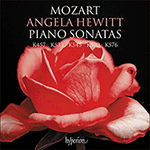
Angela Hewitt (piano)
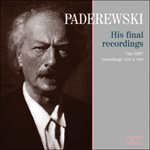
Ignacy Jan Paderewski (piano)
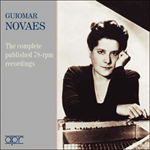
Guiomar Novaes (piano)
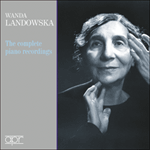
Wanda Landowska (piano)

Reviews

‘Hamelin is never dull. He may not touch the heart through a perfect blend of control and insight, of pulse and flexibility, but his capacity for brilliance, for beauty of sound, and his flawless technical address can amount to pleasures in themselves’ (Gramophone)

‘Hamelin plays, what is to my ears, the technically most brilliant and perfect Mozart’ (Pianist)» More

‘Nowhere does Hamelin permit a gilded, “rococo” sensibility to detract from the vocalism of the Mozart lyricism or the virile character of his outer movements’ (Audiophile Audition, USA)» More

‘Is there no area of piano performance in which Marc-André Hamelin does not excel? Having heard or reviewed some of his excellent performances of Chopin, Brahms, Debussy and Alkan, it is a pleasure to know that he is equally at home in the classics … [his] outstanding recording is up there with the best’ (MusicWeb International)» More

‘Hamelin gives dazzling performances of eight of Mozart’s divinely inspired Piano Sonatas. Two Rondos, a Fantasia, and a decidedly quirky Gigue complete this appealing double album’ (The Northern Echo)

‘Hamelin plays energetically with imaginative splashes of Mozart-inspired musical humour. High production quality and thorough liner notes complete this perfect package. Hamelin’s exquisite Mozart makes this the go-to music of the summer!’ (The Whole Note, Canada)» More

‘A perfect marriage of sublime music and pristine artistry, every note executed by the Montreal-born pianist with finesse’ (Winnipeg Free Press, Canada)» More

«La maîtrise digitale est superlative, et le jeu éclaire les moindres échanges contrapunctiques, ou fait littéralement jaillir du clavier des thèmes pressés d'en découdre» (Diapason, France)» More

«Toujours aussi virtuose dans les mouvements rapides … Marc-André Hamelin privilégie un jeu aérien et ludique non dénué de sécheresse … à travers la transparence du toucher, la variété des nuances, la mise à nu de la structure, il sait débusquer ce qui se cache sur le plan harmonique et polyphonique» (Classica, France)» More

„Ja, man fühlt sich fast an das Spiel eines Barock Orchesters erinnert, wenn man eine Sonate wie die B-Dur-Sonate KV 333 von ihm hört. Dabei ist nichts schwerfällig, sondern aufgrund der stupenden Technik des Pianisten alles von einer charmanten Leichtigkeit durchwirkt, die Mozarts Schreibweise zu einem neuen Erlebnis werden lässt“ (Piano News, Germany)» More
PERFORMANCE
RECORDING
With a Classical composer it is always dangerous to hear music as autobiography. But we do know that Mozart suffered a brief illness in the early spring of 1787, and that his popularity as a composer-virtuoso was on the wane. So perhaps it is not being over-fanciful to link the depressive, almost morbid tone of the Rondo in A minor, K511, dated 11 March 1787, to Mozart’s physical and emotional state. With its yearning appoggiaturas, unquiet chromaticism and rhapsodic ornamentation, the siciliano-style main theme sounds more prophetic of Chopin than anything else in Mozart. Even the two assuaging episodes, in F major and A major, are increasingly tainted by chromaticism. When the A minor theme returns for the last time, its melancholy fatalism is intensified by desultory two-part counterpoint and a final fragmentation of the texture.

from notes by Richard Wigmore © 2015

Il est toujours dangereux d’entendre la musique d’un compositeur classique comme une autobiographie. On sait cependant que Mozart fut brièvement souffrant au début du printemps 1787 et que sa popularité de compositeur-virtuose déclinait. Aussi n’est-il peut-être pas trop fantasque de relier cet état physico-émotionnel à la dépression quasi morbide du Rondo en la mineur, K511, daté du 11 mars 1787. Avec ses appoggiatures languissantes, son chromatisme nerveux et son ornementation rhapsodique, le thème principal en style de sicilienne semble, comme jamais chez Mozart, prophétiser Chopin. Même les deux épisodes apaisants, en fa majeur et en la majeur, sont de plus en plus teintés de chromatisme. Quand le thème en la mineur revient pour la dernière fois, son fatalisme mélancolique est exacerbé par un contrepoint décousu, à deux parties, et par une ultime fragmentation de la texture.

extrait des notes rédigées par Richard Wigmore © 2015
Français: Hypérion

Es ist immer gefährlich, die Musik eines klassischen Komponisten, autobiographisch aufzufassen. Doch man weiß, dass Mozart zu Anfang des Frühjahres 1787 kurze Zeit krank war und dass auch seine Beliebtheit als Komponist und Virtuose abnahm. So ist es vielleicht nicht allzu hergesucht, die bedrückte, düstere Stimmung des Rondos in a-Moll, KV 511, vom 11. März 1787 mit Mozarts physischer und emotionaler Verfassung in Verbindung zu bringen. Mit seinen sehnsuchtsvollen Appoggiaturen, der unruhigen Chromatik und den rhapsodischen Verzierungen nimmt das Hauptthema im Siciliano-Stil mehr von Chopin voraus als irgendein anderes Stück von Mozart. Selbst die beiden besänftigenden Episoden in F-Dur bzw. A-Dur sind zunehmend chromatisch gefärbt. Bei der letzten Wiederkehr des a-Moll-Themas wird der melancholische Fatalismus durch einen nicht zusammenhängenden zweistimmigen Kontrapunkt und ein letztes Texturfragment noch intensiviert.

aus dem Begleittext von Richard Wigmore © 2015
Deutsch: Christiane Frobenius
Other albums featuring this work

Guiomar Novaes - The complete published 78-rpm recordings
APR60152CDs for the price of 1 — Download only
Mozart: Piano Sonatas K457, 533, 545, 570 & 576
Studio Master: CDA68431/22CDsStudio Master FLAC & ALAC downloads available
Paderewski - His final recordings
APR5636Download only
Wanda Landowska - The complete piano recordings
APR73053CDs Download only
Waiting for content to load...