Welcome to Hyperion Records, a British classical label devoted to presenting high-quality recordings of music of all styles and from all periods from the twelfth century to the twenty-first.
Hyperion offers both CDs, and downloads in a number of formats. The site is also available in several languages.
Please use the dropdown buttons to set your preferred options, or use the checkbox to accept the defaults.
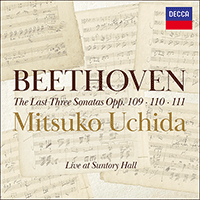


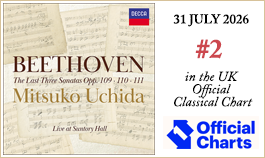
Composed between 1820 and 1822, Beethoven’s final piano sonatas represent the pinnacle of his writing for the instrument, transcending traditional sonata form, through profound introspection and emotional journeys from struggle to serenity.


The two contrasting subjects in the highly concentrated opening movement of Op 109 unfold in radically opposed tempos: a smooth, lyrical Vivace, and an intensely expressive Adagio. The return of the quicker tempo following the first Adagio passage constitutes the movement’s development section, and it presents a new phrase whose descending shape seems to look forward to the melody of the Arioso in the latter half of the Op 110 Sonata.
The middle movement is not a scherzo, as it is in Op 110, but a piece in sonata form with a first subject whose dual strands—treble and bass—assume equal importance independently of each other as the piece progresses. The central development section uses the bass line exclusively, transferring it to the top of the texture, before the music gradually fades into the distance with the aid of the soft pedal, and the recapitulation bursts in impatiently.
The finale’s variation theme, with its stress placed each time on the elongated second beat of the triple-time bar, has the character of a sarabande. Perhaps it was this that led Beethoven’s pupil Carl Czerny to suggest that the entire movement should be played in the style of Handel and Bach. Czerny’s advice may also have been prompted by the strictly linear writing of the third variation, which unfolds in the manner of a fleeting two-part invention, and by the fugal texture of the fifth variation. Variation 1 transforms the theme into a slow, transcendental waltz, while its successor condenses two variations into one by replacing the repeat of each gossamer-textured half with a more sonorous variant—a procedure also found in the fourth variation of Op 111. Again in common with Op 111, the variations culminate in a long-sustained trill which leaves the music as though suspended in time. In Op 109 the trill eventually dissolves into a reprise of the original theme, now shorn of its repeats—an idea that perhaps pays homage to Bach’s “Goldberg” Variations. A final ritardando, not featured in the original theme, enhances the atmosphere of profound calm in which the sonata comes to a close.
The A flat Sonata Op 110 begins with a movement that is both seamless and conspicuously devoid of drama, and even its brief development section unfolds in a single mood—albeit one of suppressed tension. In other respects, however, the piece is a close cousin of Op 109’s first movement: just as the opening bars in the earlier sonata are made up of rising thirds and falling fourths, so the same two melodic intervals appear in the first subject of Op 110, only this time in mirror form, as descending thirds and rising fourths. The fourths clearly anticipate the fugue subject that is to come later in the sonata. The recapitulation contains a surprising excursion into E major, as though Beethoven were deliberately recalling the radiant key of the preceding sonata.
For all its apparent seriousness, the scherzo-like middle movement quotes two good-humoured folk songs—the first of them about new-born kittens and the second a conversation between two down-and-outs. While the scherzo itself falls into repeated halves, the central trio section is through-composed. Its spiralling phrases for the player’s right hand come tumbling down from the keyboard’s top register at the same time as the left hand rises in syncopated gasps, so that the two are in continual danger of colliding at the point where they cross over each other.
The remainder of the sonata plays continuously, in an alternation of two distinct movements. One of them is a tragic aria preceded by a deeply expressive recitative, while the other is a fugue whose subject could have stepped straight out of Bach’s Well-Tempered Clavier. The spirit of Bach is again invoked in the Arioso dolente (mournful song) as Beethoven calls it, whose melody recalls the aria “Es ist vollbracht!” from the St John Passion. When the Arioso returns following the first fugue, it does so in a weakened form, with its phrases broken up as though the music were panting for breath. The melodic line is now decorated and intensified, and the music’s key has sunk down by a semitone, from the A flat minor of the first Arioso into an even more world-weary G minor. As the music draws to a close, and Beethoven instructs the pianist to apply the soft pedal, a full-blooded chord of G major is struck no fewer than ten times, each time more forcefully than the last, and with the sustaining pedal additionally held down. It is out of this sonorous death-knell that the return of the fugue emerges. Here, Beethoven indicates that the music should come gradually back to life, and the music, now in the more radiant key of G major, carries its own built-in element of acceleration. The fugue subject, in inversion (with the fourths falling, rather than ascending) is presented first in the note-values familiar from the first fugal section, but when the subject reappears in its original shape, it does so in notes one-third of their previous value—in other words, the subject sounds three times as fast as hitherto. Eventually, the accelerated form of the fugue leads the music back to the home key for the sonata’s exultant closing pages.
No work by Beethoven presents a stronger juxtaposition of opposites than the C minor Sonata Op 111: its first movement in the minor—turbulent, dark and intense—and the second a valedictory series of variations in a luminous C major. If the two preceding sonatas had begun in an atmosphere of radiant calm, this one opens in a mood of high drama, with a series of dissonant chords hurled forth in brutal fashion. The Maestoso introduction dissolves into an Allegro whose heading includes the word appassionato—a term Beethoven used only rarely (it is notably absent from the so-called “Appassionata” Sonata, Op 57) and nowhere else for the opening movement of a work. So determined is he to maintain the atmosphere of highly strung tension that he curtails the consolatory second subject to a mere half-dozen bars before a cascading arpeggio leads back to the turbulence of the main subject, whose transmutation from minor to major has done nothing to rob it of its former violence. Beethoven had sketched the subject some 20 years earlier as a fugue theme, and in the development section he treats it briefly in the form of a subdued double fugue. At the end, the piece sinks to an exhausted close in the major, and the unexpectedly calm conclusion forms a natural transition to the serene variations that follow.
Early in the year 1819, Beethoven had begun work on his “Diabelli” Variations, Op 120, composing approximately two-thirds of that monumental piece before he set the project aside in order to write his Missa solemnis, Op 123. By the time he returned to the variations, towards the end of 1822, he had completed not only the Mass, but also his last three piano sonatas. Anton Diabelli’s little waltz tune seems, however, to have lingered in his mind, and the Arietta theme of the concluding variations in the Op 111 Sonata is like a sublimated version of it in slow-motion—almost as though Beethoven were intent on showing what Diabelli could have written had he been a composer of genius rather than a purveyor of pedagogical sonatinas. Conversely, the delicate latticework at the top of the keyboard in the fourth variation of Op 111 seems to look forward to those portions of the “Diabelli” set that were still to come, and in particular to the transcendental minuet that draws that work to a close.
If the variations of Op 109 had invoked strong contrasts of tempo, those of Op 111 unfold at the same basic pulse, though their successively diminishing note values give the impression of a progressive acceleration. At the same time, the static harmony of both the intricate fourth variation and the sonata’s closing pages paradoxically imparts a feeling of enhanced stillness. Eventually, the Arietta theme is heard in its original note values against the background of a long-sustained trill—stillness within motion exemplified. Although Beethoven does not this time provide a reprise of the theme itself, the valedictory closing bars—recalling both the theme’s rhythm and, in a deeply yearning form, its initial falling interval—seem to round the melody out. At the same time they bring the sonata to a pianissimo close on a weak beat of the bar, so that the silence following the last chord speaks as eloquently as the phrases that have preceded it.
Misha Donat © 2026
Les deux thèmes contrastants du mouvement initial extrêmement concentré de l’opus 109 se déploient dans des tempos radicalement différents: le premier dans un Vivace lyrique fluide, le deuxième dans un Adagio d’une grande intensité expressive. Le retour du Vivace après le premier passage Adagio constitue le développement du mouvement, lequel présente une nouvelle phrase dont le contour descendant semble préfigurer l’Arioso dolente de l’opus 110.
Le mouvement central n’est pas un scherzo, comme dans l’opus 110, mais une forme sonate dont le premier thème se caractérise par deux lignes de même importance qui évoluent, l’une dans l’aigu, l’autre dans le grave, de manière indépendante au fil du morceau. Le développement central utilise exclusivement la ligne grave, qu’il transfère vers l’aigu, puis la musique s’estompe progressivement, avec l’aide de la pédale douce, avant que la réexposition, impatiente, fasse son entrée fracassante.
Le thème à trois temps du finale à variations, avec son accent systématique sur le deuxième temps prolongé, a le caractère d’une sarabande. C’est peut-être pour cela que Carl Czerny, élève de Beethoven, a suggéré qu’il fallait jouer tout le mouvement dans le style de Haendel et de Bach. Cette idée lui est peut-être aussi venue de l’écriture strictement linéaire de la troisième variation, qui se déploie à la manière d’une invention à deux voix véloce, ou encore du caractère fugué de la cinquième variation. La première variation transforme le thème en une valse lente transcendante, tandis que la suivante condense deux variations en une seule en remplaçant, dans la répétition de chacune des deux parties, la fine texture de toile d’araignée par une variante plus sonore—un procédé que l’on retrouvera dans la quatrième variation de l’opus 111. Comme ce sera également le cas dans l’opus 111, le mouvement culmine dans un long trille qui semble laisser la musique suspendue dans le temps. Le trille se résout finalement dans le retour du thème initial, présenté cette fois-ci sans reprises, retour qui est peut-être un hommage aux Variations «Goldberg» de Bach. Le ritardando final, qui ne figurait pas dans la première présentation du thème, renforce le calme profond dans lequel s’achève la sonate.
La Sonate en la bémol op.110 s’ouvre sur un mouvement à la fois fluide et ostensiblement dépourvu de drame. Même son bref développement baigne dans une seule et même atmosphère—faite de tension réprimée cependant. Par d’autres aspects, pourtant, ce morceau s’avère un cousin rapproché du premier mouvement de l’opus 109: si le thème de ce mouvement était construit sur des tierces ascendantes et des quartes descendantes, les deux mêmes intervalles mélodiques apparaissent dans le premier thème de l’opus 110, mais inversés: tierces descendantes et quartes ascendantes. Ces quartes annoncent clairement le sujet de la fugue à venir. On notera que la réexposition renferme une excursion surprenante en mi majeur, comme si Beethoven voulait délibérément rappeler la tonalité radieuse de la sonate précédente.
Malgré son apparence sérieuse, le mouvement central, de type scherzo, cite deux chansons populaires pleines de bonne humeur: l’une sur une chatte qui a donné naissance à des chatons, l’autre sur des personnages dissolus. Si le scherzo proprement dit s’articule en deux parties reprises, le trio central est d’une seule traite. Dans celui-ci, les phrases de la main droite descendent en spirales depuis l’extrême aigu tandis que la partie de main gauche s’élève en halètements syncopés, si bien que les deux mains encourent sans cesse un risque de collision lorsqu’elles se croisent.
Le reste de la sonate fait alterner deux mouvements distincts en un seul flux continu. Le premier des deux est un air tragique (Arioso dolente, comme le nomme Beethoven) précédé d’un récitatif d’une grande profondeur d’expression; le deuxième, une fugue dont le sujet pourrait s’être échappé du Clavier bien tempéré de Bach. L’esprit de Bach est déjà invoqué dans l’Arioso, dont la mélodie rappelle l’air «Es ist vollbracht!» de la Passion selon saint Jean. Quand il revient après la première fugue, c’est sous une forme affaiblie, ses phrases sont hachées comme si la musique, haletante, cherchait son souffle. La mélodie est maintenant ornée et intensifiée, désormais un demi-ton plus bas—on est passé de la bémol mineur, dans le premier Arioso, à un sol mineur encore plus désenchanté. Après que la mélodie s’est tue—Beethoven requiert à cet endroit la pédale douce—, un riche accord de sol majeur se fait entendre, repris pas moins de neuf fois, à chaque fois de manière plus énergique, la pédale forte étant maintenue enfoncée. C’est de ce glas sonore qu’émerge le retour de la fugue. Ici, Beethoven indique que la musique doit progressivement revenir à la vie. Désormais dans un sol majeur plus radieux, elle porte en elle son propre vecteur d’accélération. En effet, si le sujet est d’abord exposé, inversé (les quartes descendent au lieu de monter), avec les mêmes valeurs de note que lors de la première version de la fugue, lorsqu’il est repris «à l’endroit», comme dans sa forme originelle, c’est avec des notes équivalant à un tiers de leur valeur précédente, autrement dit il sonne de manière trois fois plus rapide. Cette forme accélérée de la fugue ramène finalement la tonalité de départ pour conclure la sonate dans une atmosphère d’exultation.
Aucune oeuvre de Beethoven ne présente une plus puissante juxtaposition de contraires que la Sonate en ut mineur op.111: à un premier mouvement turbulent, sombre et intense s’oppose en guise d’adieu une série de variations dans un lumineux ut majeur. Si les deux sonates précédentes s’étaient ouvertes dans un calme radieux, celle-ci débute dans un climat on ne peut plus dramatique par une succession d’accords dissonants qui s’abattent brutalement. L’introduction Maestoso s’enchaîne imperceptiblement à un Allegro qualifié d’appassionato—un terme que Beethoven n’utilise que rarement, qui ne figure notamment pas dans la Sonate op.57 surnommée «Appassionata», et dont c’est ici la seule occurrence dans un premier mouvement de sa plume. Le compositeur est tellement déterminé à maintenir le climat d’extrême tension qu’il n’accorde au deuxième thème consolateur qu’une piètre demi-douzaine de mesures avant qu’une cascade de doubles croches ne ramène le turbulent thème principal, lequel n’a rien perdu de sa violence malgré le passage au mode majeur. Ce thème, que Beethoven avait esquissé une vingtaine d’années auparavant en forme de sujet de fugue, fait l’objet d’une brève et paisible double fugue dans le développement. Le mouvement finit par s’effondrer dans une conclusion exténuée en majeur, cette fin d’un calme inattendu formant une transition naturelle vers les sereines variations qui suivent.
Au début de l’année 1819, Beethoven avait commencé à travailler sur ses Variations «Diabelli» op.120 et achevé environ deux tiers de cette oeuvre monumentale avant de la mettre de côté pour se lancer dans sa Missa solemnis op.123. Lorsqu’il reprend sa partition des Diabelli, vers la fin de 1822, il a non seulement achevé sa Messe mais aussi ses trois dernières sonates pour piano. Le petit thème de valse d’Anton Diabelli, prétexte à ses Variations op.120, semble cependant être demeuré dans son esprit durant tout ce temps car l’Arietta de la Sonate op.111 (thème sur lequel se déploient les variations du deuxième mouvement) en est comme une version sublimée au ralenti—presque comme si Beethoven avait eu l’intention de montrer ce que Diabelli aurait pu avoir écrit s’il avait été un compositeur de génie et non un simple pourvoyeur de sonatines pédagogiques. Inversement, les délicates arabesques qui se déploient dans l’aigu du clavier dans la quatrième variation de l’opus 111 semblent annoncer les variations encore non écrites des Diabelli, en particulier le menuet transcendant sur lequel s’achève cette oeuvre.
Si les variations de l’opus 109 avaient présenté de forts contrastes de tempo, celles de l’opus 111 se déploient sur la même pulsation de base, même si la diminution progressive des valeurs de note donne l’impression d’une accélération. En même temps, l’harmonie statique de la complexe quatrième variation et des dernières pages de la sonate procurent paradoxalement un sentiment de grande tranquillité. À la fin, le thème de l’Arietta revient avec ses valeurs de note originelles, accompagné en arrière-plan par un long trille continu. Si Beethoven ne fait pas de reprise du thème cette fois-ci, les trois dernières mesures, qui rappellent son rythme et, d’une manière profondément nostalgique, son intervalle descendant initial, semblent le parachever. En outre, elles concluent la sonate pianissimo sur un temps faible, si bien que le silence qui suit le dernier accord est aussi éloquent que les phrases qui l’ont précédé.
Misha Donat © 2026
Français: Daniel Fesquet
Die beiden kontrastierenden Themen im hochkonzentrierten Kopfsatz von op. 109 entfalten sich in äußerst gegensätzlichen Tempi: einem sanften lyrischen Vivace und einem ausdrucksstarken Adagio. Die Wiederkehr des schnelleren Tempos nach der ersten Adagio-Passage konstituiert den Durchführungsteil des Satzes, und dieser bietet eine neue Phrase mit einer absteigenden Figur, die die Melodie des Arioso in der letzten Hälfte der Sonate op. 110 vorausahnen lässt.
Der mittlere Satz ist kein Scherzo wie in op. 110, sondern steht in Sonatensatzform mit einem ersten Thema, dessen zwei Stränge, Oberstimme und Bass, im Verlauf des Stückes unabhängig voneinander die gleiche Bedeutung erlangen. In der zentralen Durchführung wird ausschließlich die Basslinie verwendet und an die Spitze der Textur transferiert, bis die Musik allmählich mittels des Leisepedales in der Ferne verklingt und die Reprise drängend einsetzt.
Das Thema der Variationen im Finalsatz, bei dem die Betonung jedes Mal auf dem verlängerten zweiten Schlag des Dreiertaktes liegt, hat den Charakter einer Sarabande. Dies könnte Beethovens Schüler Carl Czerny zu der Annahme gebracht haben, dass der ganze Satz im Stil von Händel und Bach zu spielen sei. Czernys Vorschlag könnte auch auf den streng linearen Stil der dritten Variation, die sich wie eine kurze zweistimmige Invention entfaltet, sowie auf die Fugenstruktur der fünften Variation zurückzuführen sein. Die erste Variation formt das Thema in einen langsamen, transzendentalen Walzer um, während in der zweiten zwei Variationen zu einer verdichtet werden, indem die Wiederholung jeder der fi ligran strukturierten Hälften durch eine klangvollere Variante ersetzt wird; dieses Vorgehen fi ndet sich auch in der vierten Variation von op. 111. Wieder wie in op. 111 kulminieren die Variationen in einem langgehaltenen Triller, bei dem die Musik in der Zeit zu schweben scheint. In op. 109 löst sich der Triller endlich in einer Reprise des Ausgangsthemas auf, nun ohne Wiederholungen; dieser Gedanke könnte eine Hommage an die Goldberg-Variationen von Bach sein. Ein letztes Ritardando, das im Ausgangsthema nicht erscheint, betont die Stimmung tiefer Ruhe, in der die Sonate endet.
Die As-Dur-Sonate op. 110 beginnt mit einem Satz, der wie aus einem Guss und auffallend undramatisch ist; und selbst die kurze Durchführung entfaltet sich in einer einzigen Stimmung, freilich der einer verhaltenen Spannung. In anderer Hinsicht ist der Satz jedoch eng verwandt mit dem Kopfsatz von op. 109: Gerade wie die Anfangstakte der früheren Sonate aus aufsteigenden Terzen und fallenden Quarten bestehen, so erscheinen die gleichen melodischen Intervalle im ersten Thema von op. 110, nun allerdings spiegelbildlich, als absteigende Terzen und aufsteigende Quarten. Die Quarten antizipieren deutlich das später in der Sonate erscheinende Fugenthema. Die Reprise wechselt überraschend nach E-Dur, als wolle Beethoven bewusst an die leuchtende Tonart der vorherigen Sonate erinnern.
Bei aller offensichtlichen Ernsthaftigkeit zitiert der scherzohafte Mittelsatz auch zwei skurrile Gassenhauer—der erste handelt von neugeborenen Kätzchen, der zweite gibt eine Unterhaltung zwischen zwei „liederlichen Leuten“ wieder. Während das Scherzo in zwei wiederholte Hälften aufgeteilt ist, ist das mittlere Trio durchkomponiert. Die Läufe in der rechten Hand des Pianisten winden sich spiralförmig aus der obersten Lage der Tastatur herunter, während die linke Hand gleichzeitig in synkopierten Seufzern aufsteigt, so dass beide wiederholt Gefahr laufen, an dem Punkt zusammenzustoßen, an dem sie sich überkreuzen.
Der letzte Satz der Sonate wechselt kontinuierlich zwischen zwei verschiedenen Satztypen. Der eine ist eine klagende Arie, der ein ausdrucksvolles Rezitativ vorausgeht, der andere eine Fuge, deren Thema direkt aus Bachs Wohltemperiertem Clavier stammen könnte. Bach wird wieder im von Beethoven so bezeichneten „Arioso dolente“ evoziert, dessen Melodie an die Arie „Es ist vollbracht!“ aus der Johannes-Passion erinnert. Das Arioso kehrt nach der ersten Fuge in abgeschwächter Form wieder, wobei die Phrasen aufgebrochen werden, als ringe die Musik um Luft. Die Melodielinie ist nun verziert und intensiviert, und die Tonart sinkt hier um einen Halbton vom as-Moll des ersten Arioso in ein noch stärker ermattetes g-Moll. Wenn diese Passage ihrem Ende zustrebt (Beethoven schreibt hier una corda vor) wird ein kraftvoller G-Dur-Akkord nicht weniger als zehn Mal crescendo angeschlagen, wobei das rechte Pedal zusätzlich durchgehalten wird. Aus diesem klangvollen Totengeläute hebt sich wiederum die Fuge hervor. Hier lautet Beethovens Angabe: „nach und nach wieder auflebend“; die Musik steht nun in der eher strahlenden Tonart G-Dur und bringt das ihr eigene Element der Beschleunigung. Das Fugenthema erscheint in Umkehrung (wobei die Quarten eher ab- als aufsteigen) zuerst in den aus dem ersten Fugen-Abschnitt vertrauten Notenwerten, jedoch bei der Wiederkehr des Themas in seiner ursprünglichen Form in auf ein Drittel verkürzten Notenwerten—anders gesagt, das Thema klingt dreimal schneller als zuvor. Schließlich führt die beschleunigte Form der Fuge zurück zur Grundtonart und den hymnischen Schlusstakten der Sonate.
Kein Werk von Beethoven bietet stärkere Gegensätze als die c-Moll-Sonate op. 111: Der erste Satz steht in Moll und ist aufgewühlt, düster und intensiv; der zweite bietet eine Reihe von Variationen in leuchtendem C-Dur, eine Musik des Abschieds. Haben die beiden vorausgehenden Sonaten in einer Stimmung von strahlender Ruhe begonnen, so setzt diese hochdramatisch mit schroff en dissonanten Akkorden im forte ein. Dieses einleitende Maestoso geht in ein Allegro con brio ed appassionato über; den Begriff appassionato hat Beethoven nur selten verwendet bemerkenswerterweise fehlt er in der Sonate op. 57, der sogenannten „Appassionata“) und sonst nie für den Kopfsatz eines Werkes. Er will die hochgespannte Stimmung entschieden aufrechterhalten, so dass er das tröstliche zweite Thema auf bloße sechs Takte verkürzt, bis ein kaskadierendes Arpeggio zum aufgewühlten Hauptthema zurückführt, dessen Wechsel von Moll zu Dur es keineswegs seiner früheren Wildheit beraubt. Beethoven hatte das Thema rund 20 Jahre zuvor als Fugenthema skizziert und in der Durchführung behandelt er es kurz in der Form einer verhaltenen Doppelfuge. Am Ende verklingt das Stück ermattet in Dur, und dieser unerwartet ruhige Schluss geht ganz natürlich in die anschließenden ruhigen Variationen über.
Anfang 1819 hatte Beethoven mit der Arbeit an den Diabelli-Variationen op. 120 begonnen und fast zwei Drittel des monumentalen Werkes geschrieben, bis er das Projekt beiseitelegte, um die Missa solemnis op. 123 zu komponieren. Als er sich gegen Ende 1822 wieder den Variationen zuwandte, hatte er nicht nur die Messe abgeschlossen, sondern auch seine drei letzten Klaviersonaten. Anton Diabellis kleine Walzermelodie scheint ihm jedoch im Kopf herumgegangen zu sein, und das Thema der Arietta in den abschließenden Variationen der Sonate op. 111 mutet wie eine sublimierte Version davon in Slow Motion an—fast als wolle Beethoven zeigen, was Diabelli hätte schreiben können, wäre er ein genialer Komponist und nicht ein Lieferant pädagogischer Sonatinen gewesen. Umgekehrt weist das feine Gefl echt der vierten Variation von op. 111 in der hohen Lage des Klavieres auf jene Teile der Diabelli-Variationen voraus, die noch folgen sollten, und insbesondere auf das überirdische Menuett, mit dem das Werk endet.
Zeigen die Variationen von op. 109 starke Tempokontraste, so entfalten sich jene von op. 111 im selben Grundimpuls, obgleich ihre nach und nach verringerten Notenwerte den Eindruck einer fortschreitenden Beschleunigung geben. Gleichzeitig vermittelt die statische Harmonie der komplizierten vierten Variation wie auch der Schlusstakte der Sonate paradoxerweise ein Gefühl verstärkter Ruhe. Schließlich erklingt das Thema der Arietta in den ursprünglichen Notenwerten vor dem Hintergrund eines lang gehaltenen Trillers—ein Beispiel von Stillstand innerhalb der Bewegung. Obgleich Beethoven diesmal keine Reprise des Themas vorsieht, scheinen die abschiednehmenden Schlusstakte, die an den Rhythmus des Themas wie auch voller Sehnsucht an dessen fallendes Intervall vom Anfang erinnern, die Melodie zu umspielen. Gleichzeitig endet damit die Sonate im pianissimo auf der schwachen Zählzeit des Taktes, so dass die Stille nach dem letzten Akkord so beredt ist wie die vorhergehenden Passagen.
Misha Donat © 2026
Deutsch: Christiane Frobenius