Welcome to Hyperion Records, a British classical label devoted to presenting high-quality recordings of music of all styles and from all periods from the twelfth century to the twenty-first.
Hyperion offers both CDs, and downloads in a number of formats. The site is also available in several languages.
Please use the dropdown buttons to set your preferred options, or use the checkbox to accept the defaults.
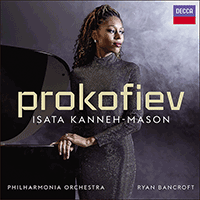


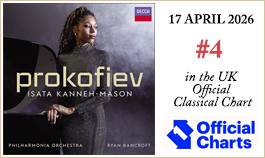
At the heart of this album we have Prokofiev’s Piano Concerto No 3, the work Isata Kanneh-Mason performed to considerable acclaim at her BBC Proms debut in August 2023. Ryan Bancroft reprises his role as conductor here, and the solo piano works chosen to complete the album encompass the full range of this composer’s richly varied output.

Prokofiev (1891-1953), erstwhile admirer of Rachmaninoff—as a student the former attended the Russian premiere of the latter’s Third Concerto, with the composer as soloist—continued the emerging trend for restless thematic development and often highly percussive rhythmic writing. This is already present in early works including the Toccata (1912), composed while he was still a student at the St Petersburg conservatoire; the Ten Pieces for Piano (1906-13); and the blistering Sonata No 3 (1917), derived from teenage sketches. Squirreling away ideas for future use became a hallmark of Prokofiev’s technique: the original material for the third piano concerto can be traced back to 1913, shortly after the composer had finished his first and as he was preparing the second.
Piano Concerto No 3 follows a traditional three-movement format (No 1, like that of Prokofiev’s teacher Rimsky-Korsakov’s only piano concerto, comprises a single continuous movement; the reworked No 2 is in four, as is No 4, which is for left hand only—commissioned by Paul Wittgenstein, who had lost his right arm during the First World War—while No 5 has five). The brief Andante that opens the first movement lulls the unsuspecting listener into hazy reflection. The orchestra yawns, stretches—and then, spurred on by a theatrical flute glissando, the piano is catapulted across the strings in a series of acrobatic—and occasionally aggressive—dances.
The second movement is a theme and variations, moving from the stately to the sublime. This is an example of Prokofiev’s “neoclassical” style; reimagining the precise development of previous centuries with articulate—and sometimes abstract—incarnations of the original melodic material. It is a wild ride for the pianist, who, during the five variations is required to be exact, ethereal and deeply expressive amid ongoing technical challenges. The bassoon solo at the start of the finale foreshadows the motif heard in the later work Peter and the Wolf (1936), where the instrument is used to represent the Grandfather. It is quickly furnished with bold, bombastic additions from the piano, and a heated conversation between soloist and strings. The lingering tension is tinged with excitement, as another sleepy section gives way to an encircling pianistic scamper, spooling into a thrillingly spiky finale.
Prokofiev worked on the third piano concerto from 1917 to 1921, during the first part of his life as a peripatetic musician living in the US and Europe. He was the soloist in the 1921 premiere, performing with the Chicago Symphony Orchestra under Frederick Stock. The piece was the first of Prokofiev’s concertos to be recorded—by the composer himself in 1932 with the London Symphony Orchestra under Piero Coppola. An initially cool reception towards the third concerto has warmed in the intervening decades, helped by Martha Argerich, who recorded the work in 1967 with the Berlin Philharmonic and conductor Claudio Abbado (DG). Today, the piece is the most popular of Prokofiev’s piano concertos, and, with her own captivating performance, Isata Kanneh-Mason ensures its legacy is in good hands.
As he laboured over the third piano concerto, Prokofiev simultaneously composed his opera The Love for Three Oranges. This would also be premiered in Chicago, in 1921. As a French-language satire it was not well received. One reviewer opined: “The work is intended, one learns, to poke fun. As far as I am able to discern, it pokes fun chiefly at those who paid money for it.” While the opera is yet to enter the repertoire, the piano transcriptions of the percussively persuasive March and skittish Scherzo made around the same time have proved more successful.
A comparably pointed style can be heard in the kinetic whirl of the spring and autumn fairy dances from Cinderella, contrasting with the woozy, twirling comfort of their summer and winter counterparts. The 10 Pieces from Cinderella, Op 97 (the seasonal fairies comprise Nos 1-4) were transcribed from the ballet in real time and completed in 1943 (one year before the full ballet). Isata Kanneh-Mason’s characterful portrayals bring to mind the enduring illustrations by Prokofiev’s British contemporary Cicely Mary Barker (the Flower Fairies of the Spring, Summer and Autumn were published 1923-26).
The co-creation of the full score and piano transcriptions was pragmatic—and had a precedent. Prokofiev completed the ballet Romeo and Juliet after having returned to the USSR in 1936, only for Moscow’s Bolshoi Theatre to cancel the production. In his customarily enterprising creativity, Prokofiev derived orchestral suites and a set of ten pieces for solo piano, published as Op 75; he gave the first performance in 1937. It would be incorrect to relegate the collection as secondary to the ballet; consider the harmonic development in No 4 “Young Juliet”, and the evolution of the iconic striding theme in No 6 “Montagues and Capulets”, recognisable to UK listeners as the theme tune to BBC TV show The Apprentice.
Similarly, the jaunty main melody in “Troika”—referencing the Russian three-horse drawn sleigh of the same name—was sampled in Greg Lake’s 1975 festive pop song I believe in Father Christmas. The piano version comes from Prokofiev’s sound track to Soviet film Lieutenant Kijé in 1934, which would, with Prokofiev’s indomitable repurposing spirit, eventually be reimagined as an orchestral suite.
Claire Jackson © 2026
Prokofiev (1891-1953), jadis admirateur de Rachmaninov—étudiant, il avait assisté à la première russe du Troisième Concerto de Rachmaninov avec le compositeur en soliste—poursuivit la tendance grandissante d’un développement thématique incessant et d’une écriture rythmique souvent très percussive. Cette tendance est déjà présente dans ses premières œuvres, notamment la Toccata (1912), composée alors qu’il était encore au Conservatoire de Saint-Pétersbourg, les Dix Pièces pour piano (1906-1913), et la foudroyante Sonate nº 3 (1917), composée à partir d’esquisses datant de son adolescence. La mise de côté d’idées en vue d’une utilisation future deviendra une caractéristique de la technique de Prokofiev: le matériau original du Concerto pour piano nº 3 remonte à 1913, peu après avoir terminé le premier et alors qu’il préparait le deuxième concerto.
Le Concerto pour piano nº 3 suit la forme traditionnelle en trois mouvements (le Nº 1 est en un mouvement continu tout comme l’unique Concerto pour piano de Rimski-Korsakov, le professeur de Prokofiev; le Nº 2, remanié, est en quatre mouvements, tout comme le Nº 4, écrit pour la main gauche seule—une commande de Paul Wittgenstein qui avait perdu son bras droit pendant la Première Guerre mondiale—tandis que le Nº 5 en compte cinq). Le bref Andante ouvrant le premier mouvement plonge dans une vague rêverie l’auditeur qui ne se doute de rien. L’orchestre bâille et s’étire—puis, poussé par un glissando théâtral à la flûte, le piano est catapulté à travers les cordes dans une série de danses acrobatiques—et parfois agressives.
Le deuxième mouvement est un thème et variations, oscillant entre le majestueux et le sublime. C’est un exemple du style «néoclassique» de Prokofiev, réinventant le développement précis des siècles précédents à travers des incarnations articulées—et parfois abstraites—du matériau mélodique original. C’est un véritable tour de force pour le pianiste qui, pendant les cinq variations, doit être précis, léger et profondément expressif tout en faisant face à des défis techniques permanents. Le solo de basson au début du finale préfigure le motif entendu dans Pierre et le Loup (1936), où l’instrument représente le Grand-Père. Il est bientôt accompagné par des ajouts claironnants et plein d’audace du piano, et un dialogue passionné entre le soliste et les cordes. La tension se teinte d’excitation quand une nouvelle section rêveuse cède la place à une course pianistique tourbillonnante qui s’enroule dans une conclusion palpitante.
Prokofiev travailla au Concerto pour piano nº 3 de 1917 à 1921 pendant la première partie de son existence de musicien itinérant entre les États-Unis et l’Europe. Il tint la partie soliste lors de la création en 1921 avec le Chicago Symphony Orchestra placé sous la direction de Frederick Stock. Ce fut le premier de ses concertos à être enregistré—par lui-même avec le London Symphony Orchestra dirigé par Piero Coppola en 1932. L’accueil initialement froid réservé au concerto s’est modifié pendant les décennies suivantes, notamment grâce à Martha Argerich qui l’enregistra en 1967 avec Claudio Abbado à la tête de la Philharmonie de Berlin (DG). Aujourd’hui, c’est le concerto pour piano le plus populaire de Prokofiev, et grâce à son interprétation captivante, Isata Kanneh-Mason veille à ce que son héritage soit entre de bonnes mains.
Pendant la composition du Concerto pour piano nº 3, Prokofiev travaillait également à son opéra L’Amour des trois oranges, qui sera créé à Chicago en 1921. La partition étant une satire chantée en français, elle fut mal accueillie. Un critique écrivit: «L’œuvre, nous dit-on, se veut moqueuse. Autant que je puisse en juger, elle se moque surtout de ceux qui ont payé pour la voir.» Si l’opéra n’est toujours pas entré au répertoire, les transcriptions pour piano de la percussive «Marche» et du nerveux «Scherzo» réalisées à la même époque ont connu un plus grand succès.
Un style tout aussi mordant se retrouve dans le tourbillon énergique des danses de la Fée Printemps et de la Fée Automne extraites de Cendrillon, contrastant avec l’aisance vaporeuse des pirouettes de la Fée Été et de la Fée Hiver. Les Dix Pièces de Cendrillon, op.97 (les Fées constituent les Nº 1 à 4) furent transcrites en même temps que la composition de la partition complète du ballet, et achevées un an plus tôt, en 1943. Les interprétations pleines de caractère de Isata Kanneh-Mason font penser aux illustrations impérissables de la contemporaine britannique de Prokofiev, Cicely Mary Barker (ses dessins des Fées Printemps, Été et Automne furent publiés entre 1923 et 1926).
La création conjointe de la partition complète et des transcriptions pour piano était pragmatique—et avait un précédent. Prokofiev termina le ballet Roméo et Juliette après son retour en URSS en 1936, mais le Théâtre du Bolchoï de Moscou annula la production. Avec sa verve entreprenante habituelle, Prokofiev en tira des suites pour orchestre et un recueil de dix pièces pour piano seul, publié sous le numéro d’op.75 ; il en donna la première exécution en 1937. Il serait erroné de reléguer cette collection au second plan par rapport au ballet: il suffit de considérer le développement harmonique de la pièce Nº 4 «Juliette, jeune fille», et l’évolution du thème de la pièce Nº 6 «Montaigus et Capulets», reconnaissable par les téléspectateurs britanniques comme étant le générique de l’émission de la BBC The Apprentice.
De même, la mélodie principale enjouée de «Troïka»—faisant référence au traîneau russe à trois chevaux du même nom—fut reprise en 1975 dans la chanson pop festive de Greg Lake I believe in Father Christmas. La version pour piano provient de la bande originale composée par Prokofiev pour le film soviétique Le Lieutenant Kijé en 1934, et comme toujours, son esprit de recréation indomptable en tirera une suite pour orchestre.
Claire Jackson © 2026
Français: Francis Marchal
Prokofjew (1891-1953), der einst ein Bewunderer Rachmaninows war und als Student die russische Erstaufführung von Rachmaninows 3. Klavierkonzert besuchte, bei dem der Komponist selbst als Solist fungierte, setzte die neu aufkommende Tendenz zu unruhiger thematischer Entwicklung und oft stark perkussiver Rhythmik fort. Dies zeigt sich bereits in frühen Werken wie der Toccata (1912), die Prokofjew noch als Student am St. Petersburger Konservatorium komponierte, den Zehn Stücken für Klavier (1906-13), und der mitreißenden 3. Klaviersonate (1917), die auf Skizzen aus seiner Jugendzeit basiert. Das Sammeln von Ideen für eine spätere Verwendung wurde zu einem Markenzeichen von Prokofjews Technik: Das ursprüngliche Material für das 3. Klavierkonzert lässt sich bis 1913 zurückverfolgen, kurz nachdem der Komponist sein 1. Konzert vollendet hatte und das zweite vorbereitete.
Das 3. Klavierkonzert folgt der traditionellen dreisätzigen Form (das Erste besteht, ebenso wie das einzige Klavierkonzert von Prokofjews Lehrer Rimskij-Korsakow, aus einem einzigen, durchgehenden Satz; das überarbeitete 2. Konzert ist viersätzig, ebenso wie das Vierte, das nur für die linke Hand geschrieben ist—ein Auftragswerk von Paul Wittgenstein, der im 1. Weltkrieg seinen rechten Arm verloren hatte—, während Nr. 5 fünfsätzig ist). Das kurze Andante, das den ersten Satz eröffnet, wiegt den ahnungslosen Zuhörer in verträumten Reflektionen. Das Orchester gähnt, streckt sich—und dann wird das Klavier, angetrieben von einem theatralischen Flötenglissando, in eine Abfolge von akrobatischen—und gelegentlich aggressiven—Tänzen über einen Streicher-Klanggrund katapultiert.
Der zweite Satz ist ein Thema mit Variationen, das vom Erhabenen zum Feierlichen führt. Dies ist ein Beispiel für Prokofjews „neoklassischen” Stil. Die stilistische Entwicklung vergangener Jahrhunderte wird getreu neu interpretiert, mit ausdrucksstarken—und mitunter abstrakten—Ausgestaltungen des ursprünglichen melodischen Materials. Für den Pianisten ist es ein wilder Ritt und eine mitreißende Herausforderung, in den fünf Variationen Präzision, ätherisches Spiel und tiefen Ausdruck inmitten ständiger technischer Schwierigkeiten zu beweisen. Das Fagottsolo zu Beginn des Finales deutet bereits das Motiv aus dem späteren Werk Peter und der Wolf (1936) an, in dem das Instrument den Großvater symbolisiert. Das Werk wird rasch durch kühne, bombastische Klavierpassagen und einen hitzigen Dialog zwischen Solist und Streichern ergänzt. Die anhaltende Spannung ist von Erregung durchzogen, als ein weiterer ruhiger Abschnitt einem wirbelnden Klavierspiel weicht, das in ein aufregend scharf punktiertes Finale mündet.
Prokofjew arbeitete von 1917-21 an seinem 3. Klavierkonzert, in der ersten Phase seines Lebens als reisender Musiker, der sich zwischen den USA und Europa bewegte. Er war selbst der Solist bei der Uraufführung 1921 mit dem Chicago Symphony Orchestra unter Frederick Stock. Das Stück war das erste von Prokofjews Konzerten, das eingespielt wurde—im Jahr 1932 vom Komponisten selbst mit dem London Symphony Orchestra unter Piero Coppola. Die anfänglich verhaltene Rezeption des 3. Konzerts hat sich in den darauffolgenden Jahrzehnten gewandelt, nicht zuletzt dank Martha Argerich, die das Werk 1967 mit den Berliner Philharmonikern unter der Leitung von Claudio Abbado (DG) aufnahm. Heute ist das Stück das beliebteste Klavierkonzert von Prokofjew, und mit ihrer fesselnden Interpretation sorgt Isata Kanneh-Mason dafür, dass sein Erbe in guten Händen ist.
Während Prokofjew an seinem 3. Klavierkonzert arbeitete, komponierte er gleichzeitig seine Oper Die Liebe zu den drei Orangen. Auch diese wurde 1921 in Chicago uraufgeführt. Als französischsprachige Satire fand sie wenig Anklang. Ein Kritiker urteilte: „Das Werk soll, wie man erfährt, Spott verbreiten. Soweit ich es beurteilen kann, spottet es vor allem über diejenigen, die dafür bezahlt haben.“ Obwohl die Oper noch nicht zum Repertoire gehört, haben sich die etwa zur gleichen Zeit entstandenen Klavierbearbeitungen des perkussiv-eindringlichen Marsches und des spritzigen Scherzos als erfolgreicher erwiesen.
Einen vergleichbar pointierten Stil hört man im dynamischen Wirbel der Frühlings- und Herbst-Märchentänze aus Cinderella, der einen Kontrast zur beschwingten, wirbelnden Leichtigkeit ihrer Sommer- und Winter-Pendants bildet. Die 10 Stücke aus Cinderella, op. 97 (die Jahreszeiten-Feen umfassen die Nummern 1-4), wurden zeitgleich aus der Ballettmusik transkribiert und 1943—ein Jahr vor dem vollständigen Ballett—fertiggestellt. Isata Kanneh-Masons charaktervolle Darbietungen erinnern an die zeitlosen Illustrationen von Prokofjews britischer Zeitgenossin Cicely Mary Barker (ihre Blumenfeen des Frühlings, Sommers und Herbstes wurden 1923-26 veröffentlicht).
Die gemeinsame Entstehung der Partitur und der Klavierbearbeitung war pragmatisch—und hatte einen Vorläufer. Prokofjew hatte das Ballett Romeo und Julia 1936 vollendet, nachdem er im selben Jahr in die UdSSR zurückgekehrt war, doch das Moskauer Bolschoi-Theater hatte die Aufführung abgesagt. In seiner gewohnt unternehmungslustigen Kreativität entwickelte Prokofjew daraus Orchestersuiten und zehn Stücke für Soloklavier, die als op. 75 veröffentlicht wurden. Die Uraufführung der 10 Stücke fand dann erst 1937 statt. Es wäre nicht korrekt, die Suite und die Klavierstücke als dem Ballett untergeordnet zu betrachten; man denke nur an die harmonische Entwicklung in Nr. 4 „Julia als junges Mädchen” und die Entwicklung des ikonischen, schreitenden Themas in Nr. 6 „Die Montagues und Capulets”, das britischen Hörern als Titelmelodie der BBC-Fernsehsendung The Apprentice bekannt ist.
Die beschwingte Hauptmelodie von „Troika“ – benannt nach dem gleichnamigen russischen Dreispänner-Schlitten – wurde ebenfalls in Greg Lakes Weihnachtslied I believe in Father Christmas von 1975 gesampelt. Die Klavierfassung stammt aus Prokofjews Soundtrack zum sowjetischen Film Leutnant Kijé von 1934, der, dank Prokofjews unermüdlichem Talent zur Mehrfachverwendung, später zu einer Orchestersuite umgearbeitet wurde.
Claire Jackson © 2026
Deutsch: Anne Schneider