Welcome to Hyperion Records, a British classical label devoted to presenting high-quality recordings of music of all styles and from all periods from the twelfth century to the twenty-first.
Hyperion offers both CDs, and downloads in a number of formats. The site is also available in several languages.
Please use the dropdown buttons to set your preferred options, or use the checkbox to accept the defaults.
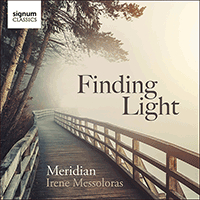

Blending iconic choral works with music by today’s most compelling composers, here is a programme centred on the theme of prayer. Each work offers a distinct meditation on mercy, hope and transcendence, highlights including Randall Thompson’s timeless Alleluia and Stephen Paulus’ Hymn to the Eternal Flame: works which invite listeners into a space of reflection and renewal, where timeless devotions converse with contemporary longings.

The theme of divine protection finds a powerful voice in Vytautas Miškinis’ Angelis suis Deus. Miškinis (b1954), one of Lithuania’s leading choral composers, is celebrated for his luminous harmonic language and sensitive text setting. Drawing on Psalm 91, “He shall give His angels charge over thee”, the work surrounds the listener with flowing, overlapping lines that seem to hover in midair, evoking the presence of angels. Subtle dissonances resolve into radiant sonorities, creating music that feels both reassuring and transcendent—a contemporary expression of humanity’s timeless prayer for safety and peace.
Ukrainian composer Hanna Havrylets (1958-2022) wrote music rooted in spiritual and cultural identity, often marked by a profound sense of longing. Prayer is an intimate and haunting work shaped by rich choral textures and a soprano solo that unfolds gently, like a yearning plea for mercy. Balancing vulnerability and resilience, it embodies prayer as both a personal cry and a collective plea. The final exchange between choir and soloist at the close of the piece leaves a profound impression of faith in the face of adversity.
Latvian composer Rihards Dubra (b1964) is widely recognized for choral music that combines luminous harmonies with a sense of mysticism. In Oculus non vidit, expansive melodic lines and shimmering clusters create an atmosphere of awe and mystery. The music avoids traditional resolution, instead suspending the listener in a timeless sound world that feels both searching and serene.
Miserere mei by Polish composer Henryk Górecki (1933-2010) was written in 1981 as a private protest against government violence in Bydgoszcz. While part of the larger Miserere, this movement stands fully on its own, built on the repeated invocation “have mercy on us”. Originally intended for a large a cappella choir, our performance draws the listener inward, where restraint and transparency reveal the work’s inner light. The music’s unyielding persistence becomes not only a shared cry for mercy, but also a meditation on the vulnerable human spirit.
Benedict Sheehan’s Alleluia—heard in his Liturgy of St John Chrysostom—draws directly on Znamenny chant and is adapted with his own arranging details. A compact chant motive is traded among the voices, accumulating color and weight with each entry. The choral textures thicken, and the dynamic arc climbs to a clear, ringing cadence that crowns the single word—“Alleluia.”
Karl Jenkins’ Agnus Dei is part of The Armed Man: A Mass for Peace. The work was commissioned to mark the new millennium and dedicated to the victims of the 1998 Kosovo conflict. Conceived as a universal call for reconciliation, the larger work weaves together influence from both Western and non-Western traditions to underscore its message of peace. Within this framework, the Agnus Dei offers a moment of stillness and inward reflection. Its stepwise melodies and slowly unfolding harmonies evoke a mood that blends sorrow with solace.
Icelandic composer, Thora Marteinsdóttir’s Nú legg ég þér í lófa (“Now I lay in your palm”) is a tender offering of love and trust. The music begins delicately with the treble voices alone, their clear lines suggesting intimacy and vulnerability. Gradually, the other vocal parts enter, layering warmth and depth until the full ensemble creates a radiant choral sonority. As the texture grows, there is a shared expression that feels both intimate and expansive in its devotion.
The theme of prayer as a plea for guidance and protection takes on a fresh voice in Alexander L’Estrange’s Lighten our darkness. Setting the well-known evening collect from the Book of Common Prayer, L’Estrange weaves gentle dissonances with luminous harmonies to create a texture thatevokes a sense of solemn grace.
Like Jenkins, whose work is written as a call for peace, Stephen Paulus’ Hymn to the Eternal Flame—from his Holocaust memorial oratorio To be Certain of the Dawn—is music of remembrance and healing. A solo voice rises above Paulus’ homophonic choral texture, carrying the image of the eternal flame and reminding us of the human capacity to endure.
Composed in 1940, Randall Thompson’s Alleluia is one of the most beloved American choral works of the 20th century. Written not as a jubilant outpouring but as a meditative response to the outbreak of World War II, the piece transforms a single word of praise into a quiet, prayerful meditation. Its unfolding lines build slowly in intensity before returning to hushed stillness, embodying a sense of reverence and restraint. In its simplicity, Alleluia conveys a profound spiritual depth, reminding us that prayer is often found not in triumph, but in stillness and reflection.
We close with Ubi caritas by American composer Morten Lauridsen (b1943), one of the most influential living choral voices of our time. Written in 1993, the work draws on the flowing contours of the Latin chant, shaping long arching phrases enriched by suspensions that resolve with gentle warmth. Lauridsen achieves a luminous clarity that feels at once modern and timeless. Placed at the end of this album, Ubi caritas serves as a quiet benediction—music of devotion, compassion, and peace.
Irene Messoloras © 2026
Our repertoire spans from Renaissance counterpoint to contemporary writing that marries meditative stillness with luminous sonorities. You’ll hear the purity of Sheppard’s Libera nos alongside the lush harmonies of Lauridsen’s Ubi caritas and Paulus’ Hymn to the Eternal Flame. Composers like Sheehan, Thompson, and Dubra take single words or short texts and expand them into landscapes of color and resonance, while voices such as Jenkins, Górecki, and Havrylets shape their music as meditations that balance contemplation with urgency. Each piece, whether centuries old or newly written, becomes part of a larger journey—a search for light that moves us from shadow into radiance.
What draws all of these works together is their ability to move us inward and outward at the same time: inward, as we reflect on prayer, loss, and longing; outward, as we join in a shared act of expression that spans time, geography, and tradition.
My hope is that listeners will feel the same sense of connection we experienced in rehearsing and recording this music—a reminder that music invites us beyond the present moment, ever in pursuit of finding light and meaning.
Irene Messoloras © 2026


