3 October 2010
The Observer, Fiona Maddocks
Berkeley (M): For you'The skilful MTW ensemble [is] honouring Berkeley's rich orchestral invention' (The Observer)
» More3 October 2010
The Observer, Stephen Pritchard
Metcalf: Paths of Song'Landscape and the spiritual elements of journeying inform much of the music of John Metcalf, particularly the hills and valleys of his native Wales, both literally and when reinterpreted by painters. Paths of Song is a continuous piece for string quartet in five sections, each taken at a walking pace. As with Mapping Wales and Septet, also recorded here, the music is lyrical, melodic, good-natured and benign. That might suggest it's all charm without challenge, but it would be a mistake to assume that. There is some really fine, accessible writing here' (The Observer)
1 October 2010
The Strad, Catherine Nelson
Metcalfe: Constant filter & other works'The result is compelling, and at times extraordinary—Metcalfe’s lyrical, contemplative lines are drawn with infinite care, and the immediacy and tenderness of Barley’s performance makes this music addictive' (The Strad)
» More1 September 2010
Classic FM Magazine, Andrew Stewart
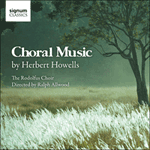
Howells: Choral Music'It's tempting for choirs to programme Herbert Howells's Requiem or his Take him earth for cherishing. Conductor Ralph Allwood charts a less obvious but no less satisfying repertoire course for his latest Signum Classics album. I could listen to the young singers of The Rodolfus Choir all day without tiring or losing my appetite for their collective musicianship and accomplished choral artistry. Listen, for instance, to the ringing intonation and blend in the tricky central section of The summer is coming and to the vigour of Antiphon. Allwood's choristers, the talented youth of austere times, provide good cause for future' (Classic FM Magazine)

1 September 2010
Classic FM, Richard Lawrence
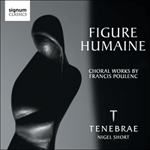
Poulenc: Figure humaine & other choral works'Poulenc rediscovered the Roman Catholicism of his childhood when a close friend was killed in a road accident in 1936. A pilgrimage to Rocamadour in the Pyrenees led to his composing the Litanies à la Vierge Noire and other choral works. The masterpiece here is the double-choir Figure Humaine, a wartime setting of poems by Paul Eluard that culminates in a great cry of 'Liberté'; but the other pieces, too, are all marvellous. It's hard to imagine them being done better: Tenebrae's tone, balance and intonation are superb. All but one are unaccompanied—the organist in the Litanies should have been credited' (Classic FM)