
Welcome to Hyperion Records, a British classical label devoted to presenting high-quality recordings of music of all styles and from all periods from the twelfth century to the twenty-first.
Hyperion offers both CDs, and downloads in a number of formats. The site is also available in several languages.
Please use the dropdown buttons to set your preferred options, or use the checkbox to accept the defaults.

| The Gesualdo Six, Owain Park (director)» More |
| Westminster Abbey Choir, James O'Donnell (conductor)» More |
| Westminster Cathedral Choir, Martin Baker (conductor)» More |
| The Tallis Scholars, Peter Phillips (conductor)» More |
| The Tallis Scholars, Peter Phillips (conductor)» More |
| The Tallis Scholars, Peter Phillips (conductor) This recording is not available for download» More |
| The Tallis Scholars, Peter Phillips (conductor) This recording is not available for download» More |
Unlike most of the Mass-settings of the Continental polyphonists, Byrd’s Masses are not based strictly on a single theme or other unifying material, but rather are freely composed. Many of the movements begin with a similar opening motif, or ‘head motif’, but then go their own way. The Mass for five voices represents something of a distillation of Byrd’s Latin style. It is highly compact and closely argued. The practicalities of liturgical performance in Byrd’s day dictated an economy of style and scale and suggested a restrained, rather than opulent, approach. The vocal texture, constantly varying in scoring, always enables the text to come across with great clarity and closely reflects, and also clarifies, its structure. For example, Byrd adjusts the scoring of each successive invocation of the Agnus Dei; first, three voices are used; then four; finally, all five. In the masterly Credo Byrd seems to place special emphasis on the phrase ‘Et unam sanctam catholicam et apostolicam ecclesiam’, which for the Catholic composer undoubtedly had particular resonance.
from notes by James O'Donnell © 2010
Contrairement aux polyphonistes du continent, Byrd ne fonde pas strictement ses messes sur un thème ou sur tout autre matériel unificateur, mais opte pour une composition libre. Beaucoup de mouvements s’ouvrent sur un motif similaire, ou «motif de tête», mais vont ensuite leur propre chemin. Très compacte et très argumentée, la Messe à cinq voix est un peu comme une distillation du style latin de Byrd, auquel les circonstances pratiques dictèrent un style et une envergure raréfiés, suggérant une approche plus retenue qu’opulente. La texture vocale, à la distribution sans cesse changeante, fait passer avec une grande clarté le texte, dont elle épouse et clarifie la structure. Ainsi Byrd ajuste-t-il la distribution vocale des invocations successives de l’Agnus Dei: trois voix sont d’abord requises, puis quatre et enfin les cinq. Dans le magistral Credo, il semble appuyer sur «Et unam sanctam catholicam et apostolicam ecclesiam», une phrase qui avait indubitablement une résonance particulière pour le compositeur catholique qu’il était.
extrait des notes rédigées par James O'Donnell © 2010
Français: Hypérion
Anders als die meisten Messvertonungen der Polyphoniker vom europäischen Kontinent fußen Byrds Messen nicht unbedingt auf einem einzelnen Thema oder anderem einheitlichen Material, sondern sind frei komponiert. Viele Sätze beginnen mit einem ähnlichen Anfangsmotiv, oder „Kopfmotiv“, werden dann jedoch individuell weitergeführt. Die Messe zu fünf Stimmen repräsentiert eine Art Destillat von Byrds lateinischem Stil. Sie ist sehr kompakt angelegt und dicht gearbeitet. Die praktischen Gegebenheiten einer liturgischen Aufführung zu Byrds Zeiten diktierten eine gewisse Ökonomie des Stils und der Anlage und legten einen eher zurückhaltenden (und nicht zu opulenten) Ansatz nahe. Die vokale Textur—bei einer sich ständig ändernden Besetzung—sorgt für gute Textverständlichkeit; gleichzeitig reflektiert und verdeutlicht sie die Struktur. So gestaltet Byrd zum Beispiel die aufeinanderfolgenden Anrufungen im Agnus Dei alle etwas anders; zuerst setzt er drei Stimmen ein, dann vier und schließlich alle fünf. In dem meisterhaft gearbeiteten Credo scheint Byrd die Worte „Et unam sanctam catholicam et apostolicam ecclesiam“ hervorzuheben, die für den katholischen Komponisten sicherlich von besonderer Bedeutung waren.
aus dem Begleittext von James O'Donnell © 2010
Deutsch: Viola Scheffel
 Byrd: Mass for five voices & other works Byrd: Mass for five voices & other worksStudio Master: CDA68416Studio Master FLAC & ALAC downloads available  The Gesualdo Six perfectly captures all the power and tenderness of Byrd’s glorious five-part Mass and a fine selection of motets.» More |
 Byrd: The three Masses Byrd: The three MassesStudio Master: CDA68038Studio Master FLAC & ALAC downloads available A recording of the most perfect of Tudor masterpieces, Byrd’s three Mass-settings, from the cradle of their nineteenth-century rehabilitation. Westminster Cathedral Choir is enjoying a vintage period, and here we hear its trademark sound in all it ...» More |
 The Feast of Saint Peter the Apostle at Westminster Abbey The Feast of Saint Peter the Apostle at Westminster AbbeyCDA67770 Another fascinating collection from Westminster Abbey, recreating a particular liturgical event. This disc contains music one might hear if visiting the Abbey on its patronal feast, that of St Peter the Apostle. The programme broadly follows the s ...» More |
 Byrd: The Tallis Scholars sing William Byrd Byrd: The Tallis Scholars sing William ByrdCDGIM2082CDs for the price of 1 — Download only  "England has never produced a greater composer than William Byrd. His music for the Anglican Church has been sung without interruption since the 16th century. In stark contrast his Catholic music was not heard for over 300 years. This specially pr ...» More |
 Byrd: The three Masses Byrd: The three MassesCDGIM345Download only The original release on CD of this classic recording of the three Masses by William Byrd.» More |
 Sacred Music in the Renaissance, Vol. 1 Sacred Music in the Renaissance, Vol. 1GIMBX3014CDs Boxed set (at a special price) — Download only The first of three volumes featuring The Tallis Scholars' finest recordings, one for each decade, and each offering over five hours of the award-winning performances that helped establish Renaissance Polyphony as one of the great repertoires of we ...» More |
 The Essential Tallis Scholars The Essential Tallis ScholarsCDGIM2012CDs for the price of 1 — Download only "I am delighted to recommend this selection from our recordings. It is an excellent introduction to our work and to Renaissance music in general." (Peter Phillips)» More |
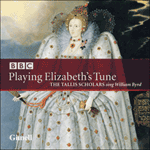 Byrd: Playing Elizabeth's Tune Byrd: Playing Elizabeth's TuneGIMDN902SOLD OUT!This album is not available for download NTSC FORMAT DVD. Filmed performances of sacred music by William Byrd together with a documentary on the troubled times that produced some of the most intimate and passionate sacred music ever written.» More |
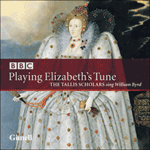 Byrd: Playing Elizabeth's Tune Byrd: Playing Elizabeth's TuneGIMDP901SOLD OUT!This album is not available for download PAL FORMAT DVD. Filmed performances of sacred music by William Byrd together with a documentary on the troubled times that produced some of the most intimate and passionate sacred music ever written.» More |