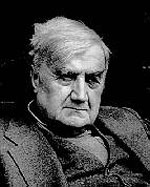
Ralph Vaughan Williams was born at Down Ampney, Gloucestershire, the son of a parson, and the grandson of the celebrated Judge Sir Edward Vaughan Williams, on his father’s side, and Josiah Wedgwood III on his mother’s. His father died when he was only three and consequently his formative years were spent with his mother’s family at Leith Hill Place near Dorking, the country home of the Wedgwoods. A string player—indeed a viola player—from an early age, he went to Charterhouse school when he was fifteen, later to the Royal College of Music, and then to Cambridge to read history. Subsequently he studied with Max Bruch and Maurice Ravel, so that, far from emerging from a narrow background, Vaughan Williams had one of the broadest-based educations of any British composer of his generation.
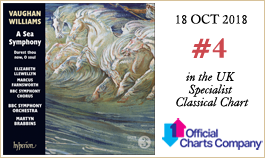
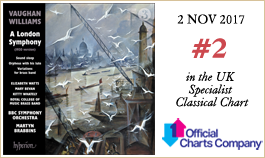
Vaughan Williams took many years finding the voice by which we now recognize him, his achievement only now fully realized as his early music—finished and in many ways impressive—is played again. The appearance of the Songs of Travel and the song Linden Lea in the early 1900s signalled his growing following as a composer, while his reputation was further enhanced as a consequence of his editing The English Hymnal (published in 1906). He collected his first folksong in 1903 and his first surviving orchestral score to use such tunes came the following year: the ‘symphonic impression’ In the Fen Country. Nevertheless, some years ago an American performance of his very early five-movement Serenade in A major (1898), a work pre-dating his documented collecting of folksongs, surprised many by its folksong flavour. He was not seen as a British composer of individuality and stature much before he was forty, but with the appearance of the Fantasia on a Theme by Thomas Tallis and A Sea Symphony in 1910, and A London Symphony in 1914, that dramatically changed.
It has often been noted that Vaughan Williams’s self-confessed agnosticism was ambivalent, masking a contemplative visionary sensibility. He possessed an intimate knowledge of the King James Bible and of five hundred years of English literature, including poets as varied as the Metaphysicals and the American Walt Whitman, and especially Bunyan’s The Pilgrim’s Progress. Such sources are anthologized in his many choral works, these poets providing him with a vocabulary to articulate his deeply humanitarian ethos. He drew upon two hundred years of nonconformist tradition to find unique expression in works ranging from A Sea Symphony and Five Mystical Songs to The Pilgrim’s Progress, the latter the preoccupation of a lifetime.
from notes by Lewis Foreman © 2011
Ralph Vaughan Williams naquit d’un père ecclésiastique à Down Ampney, dans le Gloucestershire; il était le petit-fils de l’illustre juge Sir Edward Vaughan Williams, du côté paternel, et de Josiah Wedgwood III, du côté maternel. Ayant perdu son père à l’âge de seulement trois ans, il passa ses années formatrices dans la famille de sa mère, au domaine de Leith Hill Place, près de Dorking. Joueur d’instruments à cordes—en fait, altiste—dès l’enfance, il intégra l’école Charterhouse à quinze ans puis le Royal College of Music, avant de partir étudier l’histoire à Cambridge. Plus tard, il étudia avec Max Bruch et Maurice Ravel; loin d’émerger d’un milieu étriqué, il fut donc, de tous les compositeurs britanniques de sa génération, parmi ceux qui reçurent l’une des formations les plus larges.
Vaughan Williams mit longtemps à trouver ce style ayant, pour nous, valeur de griffe, et on le comprend seulement maintenant que ses pages de jeunesse—achevées et, à bien des égards, impressionnantes—sont de nouveau jouées. Écrire ses Songs of Travel et son chant Linden Lea, parus au début des années 1900, assit son statut grandissant de compositeur, tandis qu’éditer The English Hymnal (paru en 1906) accrut sa réputation. Il recueillit son premier chant traditionnel en 1903, un an avant d’écrire son «impression symphonique» In the Fen Country, la plus ancienne partition orchestrale que nous ayons de lui et qui utilise ce genre de mélodies. Toutefois, voilà quelques années, une exécution américaine de sa toute jeune Sérénade en la majeur en cinq mouvements (1898)—une œuvre antérieure à sa collecte de chants populaires—en surprit plus d’un par sa saveur folklorisante. Jusqu’à ses quarante ans, il ne fut guère perçu comme un compositeur singulier, d’envergure, mais l’apparition de sa Fantasia on a Theme by Thomas Tallis et de A Sea Symphony, en 1910, puis de A London Symphony (en 1914) changea radicalement les choses.
L’agnosticisme avoué de Vaughan Williams était, on l’a souvent souligné, ambivalent, masquant une sensibilité visionnaire, contemplative. Il était pétri d’une profonde connaissance de la King James Bible et de cinq siècles de littérature anglo-saxonne, où se côtoyaient des auteurs aussi divers que les poètes métaphysiques, l’Américain Walt Whitman et, surtout, Bunyan et son The Pilgrim’s Progress.
Toutes ces sources se retrouvent dans ses nombreuses œuvres chorales, les poètes lui fournissant un vocabulaire pour traduire son éthos profondément humanitariste. Deux cents ans de tradition anticonformiste lui permirent de trouver une expression unique dans des pièces allant de A Sea Symphony et Five Mystical Songs à The Pilgrim’s Progress, l’œuvre de toute sa vie.
extrait des notes rédigées par Lewis Foreman © 2011
Français: Hypérion
Ralph Vaughan Williams kam in Down Ampney in der englischen Grafschaft Gloucestershire als Sohn eines Pfarrers zur Welt. Er war der Enkel des berühmten Richters Sir Edward Vaughan Williams väterlicherseits und von Josiah Wedgwood III mütterlicherseits. Sein Vater verstarb, als er erst drei Jahre alt war, so dass er seine prägenden Jahre in der Familie seiner Mutter auf deren Anwesen Leith Hill Place bei Dorking verbrachte, dem Landhaus der Wedgwoods. Von jungen Jahren an ein Streicher—Bratschist sogar—, besuchte ab dem Alter von 15 Jahren die Charterhouse Schule, später das Royal College of Music in London und studierte dann in Cambridge Geschichte. Danach studierte er bei Max Bruch und Maurice Ravel, so dass Vaughan Williams unter den britischen Komponisten seiner Generation eine der umfassendsten Ausbildungen genossen hatte.
Es dauerte viele Jahre, bis Vaughan Williams die Tonsprache fand, die wir heute mit ihm assoziieren. Und erst jetzt werden seine Errungenschaften ganz gewürdigt, da seine Frühwerke—die vollendet und in vielerlei Hinsicht eindrucksvoll sind—wieder gespielt werden. Mit dem Erscheinen seiner Songs of Travel und des Lieds Linden Lea zu Beginn der 1900er Jahre kündigte sich eine größere Anhängerschaft an. Sein Ruf festigte sich durch die Mitarbeit bei der Herausgabe des English Hymnal (erschienen 1906). 1903 erfasste er sein erstes Volkslied und das älteste überlieferte Orchesterwerk, in dem derartige Melodien verarbeitet waren, stammt aus dem darauffolgenden Jahr—dabei handelt es sich um die „symphonische Impression“ In the Fen Country. Dennoch sorgte vor einigen Jahren eine amerikanische Aufführung seiner sehr frühen fünfsätzigen Serenade in A-Dur (1898) aufgrund ihrer volksliedhaften Färbung für Überraschung—es ist dies ein Werk, das der Zeit, wo er bekanntermaßen Volkslieder sammelte, vorangeht. Erst ab dem Alter von vierzig Jahren wurde er als individueller britischer Komponist von Format betrachtet, der sich mit dem Erscheinen der Fantasia on a Theme by Thomas Tallis und der Sea Symphony im Jahre 1910, sowie der London Symphony 1914 entsprechende Anerkennung sicherte.
Es ist von verschiedener Seite darauf hingewiesen worden, dass Vaughan Williams’ selbsterklärter Agnostizismus mehrdeutig war und wohl eine besinnliche, visionäre Empfindsamkeit maskierte. Er kannte die King James Bibel wie auch viele Werke aus 500 Jahren der englischsprachigen Literatur, darunter so unterschiedliche Schriftsteller wie die Metaphysiker, den Amerikaner Walt Whitman und insbesondere John Bunyan (The Pilgrim’s Progress) sehr genau. Diese Quellen kommen in vielen seiner Chorwerke vor, da diese Dichter ihm das Vokabular zu seinem zutiefst humanen Ethos lieferten. Er schöpfte aus einer über zwei Jahrhunderte währenden nonkonformistischen Tradition, um einen spezifischen Ausdruck zu finden, der sich in Werken wie der Sea Symphony, den Five Mystical Songs bis hin zum Pilgrim’s Progress äußerte—das Letztere beschäftigte ihn sein ganzes Leben lang.
aus dem Begleittext von Lewis Foreman © 2011
Deutsch: Viola Scheffel