Welcome to Hyperion Records, a British classical label devoted to presenting high-quality recordings of music of all styles and from all periods from the twelfth century to the twenty-first.
Hyperion offers both CDs, and downloads in a number of formats. The site is also available in several languages.
Please use the dropdown buttons to set your preferred options, or use the checkbox to accept the defaults.



In marked contrast with Dvořák’s cello concerto and its lengthy exposition, Elgar’s soloist enters at the very beginning; but the initial mood of noble aspiration is almost immediately subdued by an answering phrase of introverted melancholy. This leads into a wan, ashen unaccompanied melody for the orchestral violas alone, soon passed to the cellos. The movement as a whole barely deviates from the home key of E minor or—in the central stages—from its major equivalent. The feeling of an introductory prelude is reinforced when the music subsides onto a low monotone and leads directly into the second movement. This begins with a reference to the concerto’s opening, before launching into what feels like a hectic scherzo. However, the music almost instantly proves reluctant or unable to settle purposefully to anything, desisting in a brief solo cadenza. The subsequent restarting of the rapid music therefore feels untrustworthy, and a more skittish secondary idea, arranged as a respective call and response for soloist and then orchestra, rings hollow. This movement confounds any expectation that its predecessor might have served to introduce a weightier, more substantial statement, and this primes the listener’s receptivity to what follows. In the event, though, the third movement recedes to the remote key of B flat major, replacing skittering, quicksilver agility with a stilled introspection bordering on numbness. Covering under fifty bars and a mere four pages in full score, this sorrowing adagio all but banishes any sense of meter or rhythmic continuity. Scored for a reduced complement of clarinets, bassoons, two of the four horns and strings, the music gives full rein to the solo cello’s capacity for singing inwardness.
The adagio leads cadentially straight into the finale, in effect dividing the concerto into two pairs of movements. Beginning transitionally in the remote key of B flat minor, the finale initially proceeds with much the same type of rhythmic momentum as the celebrated first of the Pomp and Circumstance marches (1901); but any expectation of a triumphally noble secondary theme to match what became known as ‘Land of hope and glory’ is confounded. Once again there is a false start, with the music stopped in its tracks by an appassionato solo cadenza which seems already to threaten a lapse back into melancholy introspection and solitude. The ensuing, ostensibly jaunty allegro ma non troppo unfolds at some length, but its activity feels like that of a man trying to stay busy in order to keep his inner shadows at bay. Their eventual return comes with a sense of inevitability. The laden chromaticism of the slow music that follows seems to inhabit the same world as the Prelude to Act One of Wagner’s Tristan, possibly in conscious acknowledgement of an artistic world previously animated by friendships across the divide of nations. The lamenting heart of the concerto arrives with an ineffably poignant thematic regression to the tranced tenderness of the third movement. Full circle is achieved in a recurrence of the work’s opening, before the terse concluding allegro molto is deliberately outweighed and outlasted by a grief that rises again whenever distraction abates.
In the eloquent words of Elgar’s biographer, the late Michael Kennedy: ‘It is sometimes said that this concerto is Elgar’s war requiem[,] but … he was an egocentric artist, and the requiem here is not so much for the dead in Flanders fields as for the destruction of a way of life … Here … is the elegy for an age.’
from notes by Francis Pott © 2026
En net contraste avec le concerto pour violoncelle de Dvořák et son assez longue exposition, le soliste d’Elgar entre au tout début; mais l’atmosphère initiale de noble aspiration est presque aussitôt contenue par une réponse d’une mélancolie introvertie. Cette phrase mène à une mélodie blême, couleur de cendre pour les altos de l’orchestre seuls, bientôt passée aux violoncelles. L’ensemble du mouvement s’écarte à peine de la tonalité d’origine de mi mineur ou—dans les phases centrales—de son équivalent majeur. L’impression de prélude préliminaire est renforcée lorsque la musique retombe dans un ton monotone grave et mène directement au deuxième mouvement. Celui-ci commence par une référence au début du concerto, avant de se lancer dans ce qui ressemble à un scherzo agité. Cependant, la musique rechigne presque d’emblée à s’installer résolument dans quoi que ce soit ou en est dans l’incapacité, interrompue par une courte cadence du soliste. Le redémarrage de la musique rapide qui suit semble donc peu fiable et une idée secondaire plus capricieuse sous forme de questions-réponses pour le soliste et ensuite l’orchestre, sonne faux. Ce mouvement déjoue toute attente selon laquelle son prédécesseur aurait pu servir à introduire une exposition plus lourde, plus importante, et prépare ainsi la réceptivité de l’auditeur à ce qui suit. Toutefois, en l’occurrence, le troisième mouvement s’écarte vers la tonalité éloignée de si bémol majeur, remplaçant l’agilité voltigeante et très vive par une introspection calme frisant la torpeur. Couvrant moins de cinquante mesures et juste quatre pages de la partition d’orchestre, cet adagio éploré bannit presque toute impression de mesure ou de continuité rythmique. Écrite pour un effectif réduit de clarinettes, bassons, deux des quatre cors et cordes, la musique donne libre cours à la capacité du violoncelle solo de chanter l’intériorité.
L’adagio mène directement au finale par une transition cadentielle, divisant de fait le concerto en deux paires de mouvements. Commençant de manière transitoire dans la tonalité éloignée de si bémol mineur, le finale procède au départ avec un peu le même genre d’élan rythmique que la célèbre première marche des Pomp and Circumstances (1901); mais on attend en vain un thème secondaire d’une noblesse triomphale correspondant à ce que l’on appelle «Land of hope and glory» («Terre d’espoir et de gloire»). Une fois encore, il y a un faux départ, avec la musique arrêtée nette par une cadence appassionato du soliste qui semble déjà menacer un retour dans l’introspection mélancolique et la solitude. L’allegro ma non troppo qui suit se déroule assez longuement, mais son activité ressemble à celle d’un homme essayant de garder son énergie pour tenir à distance ses ombres intérieures. Leur retour final survient comme quelque chose d’inévitable. Le chromatisme chargé de la musique lente qui suit semble issu du même univers que le Prélude de l’acte I de Tristan de Wagner, peut-être une reconnaissance consciente d’un monde artistique animé auparavant par des amitiés surmontant la division des nations. Le cœur pleurant du concerto arrive avec une poignante et ineffable régression thématique à la tendresse extatique du troisième mouvement. Avec une réapparition du début de l’œuvre, on réalise un tour complet avant le retour du sentiment de tristesse qui prend le pas sur le laconique allegro molto conclusif et renait chaque fois que la diversion s’atténue.
Selon les propos éloquents du biographe d’Elgar, le regretté Michael Kennedy: «On dit parfois que ce concerto est le requiem de guerre d’Elgar, mais … c’était un artiste égocentrique, et le requiem n’est pas tant pour les morts dans les Flandres que pour la destruction d’un mode de vie … Ici … est l’élégie d’une époque.»
extrait des notes rédigées par Francis Pott © 2026
Français: Marie-Stella Pâris
Ganz anders als in Dvořáks Cellokonzert mit seiner ausführlichen Exposition setzt bei Elgar der Solist ganz zu Anfang ein; die eingangs noble Haltung trübt sich fast sofort ein durch eine Phrase in sich gekehrter Melancholie. Sie leitet über zu einer fahlen, unbegleiteten Melodie der Bratschen, die sie an die Celli weiterreichen. Insgesamt verlässt der Satz kaum einmal die Grundtonart e-Moll oder—in seinem Mittelteil—E-Dur. Der Charakter eines bloßen Vorspiels verstärkt sich, wenn die Musik auf einem Einzelton zum Stehen kommt und direkt in den zweiten Satz übergeht. Er beginnt mit einem Rückgriff auf den Anfang des Konzerts und stürzt sich dann in so etwas wie ein hektisches Scherzo. Doch stellt sich rasch heraus, dass die Musik sich auf nichts Bestimmtes festlegen will oder kann; kurz weicht sie in eine Solokadenz aus. Wenig verlässlich erscheint das erneute Aufkommen des raschen Tempos; auch ein sprunghafter Nebengedanke, ausgebreitet im Dialog zwischen Solist und Orchester, wirkt trügerisch. Dieser Satz zerstreut jegliche Hoffnung, dass sein Vorgänger Einleitung zu einer gewichtigeren Aussage gewesen sein könnte; umso gespannter mag der Zuhörer auf das sein, was nun folgt. Der dritte Satz jedoch zieht sich zurück auf ein entlegenes B-Dur, und an die Stelle jagender, ruheloser Geschwindigkeit tritt eine tiefe Verinnerlichung, die an Erstarrung grenzt. Mit weniger als fünfzig Takten und gerade einmal vier Partiturseiten lässt dieses Adagio jeden Anschein von Taktschlag und Rhythmus fahren. Das Orchester ist reduziert auf Klarinetten, Fagotte, zwei der vier Hörner und die Streicher; die Musik überlässt sich ganz dem innigen Gesang des Cellos.
Das Adagio leitet mit einer Kadenz direkt ins Finale über; so entsteht der Eindruck, dass das Konzert aus zwei Satzpaaren besteht. Von seinem Anfang im entlegenen b-Moll ausgehend, schreitet der Satz zunächst mit jenem rhythmischen Schwung voran, der auch den berühmten ersten Marsch aus Pomp and Circumstance (1901) kennzeichnet; doch die Erwartung eines edlen zweiten Themas wie jenes, aus dem „Land of hope and glory“ werden sollte, wird enttäuscht. Erneut ereignet sich ein trügerischer Aufbruch, doch die Musik kommt bald zum Stehen in einer appassionato-Solokadenz, die abermals droht, sich einsam nach innen zu kehren. Es schließt sich ein demonstrativ fröhliches Allegro ma non troppo an, das auch eine Weile lang durchhält—wobei es eher an jemanden erinnert, der Geschäftigkeit sucht, um seine innere Dunkelheit in Schach zu halten. Wenn sie dann wiederkehrt, wirkt das unausweichlich. Die lastende Chromatik der nun folgenden langsamen Musik scheint derselben Sphäre anzugehören wie Wagners Tristan-Vorspiel—vielleicht der bewusste Verweis auf eine künstlerische Welt, in der Freundschaften über nationale Grenzen hinweg Raum hatten. Mit dem schmerzlichen Rückzug in die traumverlorene Zartheit des dritten Satzes offenbart sich das klagende Herz des Konzerts. Der Kreis schließt sich, wenn der Beginn des Werks wiederkehrt. Selbst das straffe Allegro molto, welches das Konzert beschließt, vermag nicht den Eindruck von Trauer zu vertreiben, der noch jedes Ablenkungsmanöver überdauert.
Elgars verstorbener Biograf Michael Kennedy fand dazu die Worte: „Es heißt manchmal, dieses Konzert sei Elgars ‘War Requiem’. Doch war er … ein egozentrischer Künstler, und dieses Requiem gilt weniger den in Flandern Gefallenen als der Vernichtung einer Lebenswelt … Es ist … der Abgesang auf ein Zeitalter.“
aus dem Begleittext von Francis Pott © 2026
Deutsch: Friedrich Sprondel
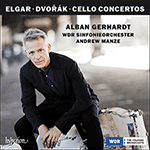 Elgar & Dvořák: Cello Concertos Elgar & Dvořák: Cello ConcertosStudio Master: CDA68486Studio Master FLAC & ALAC downloads available  Alban Gerhardt has been performing Elgar’s iconic cello concerto for over thirty years, but this is the first time he has committed his interpretation to record. And quite an interpretation it is, discarding inherited conventions and returning to ...» More |
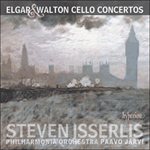 Elgar & Walton: Cello Concertos Elgar & Walton: Cello ConcertosStudio Master: CDA68077Studio Master FLAC & ALAC downloads available Two classic cello concertos in fine new recordings from Steven Isserlis. Full-blooded accompaniment comes from the Philharmonia Orchestra under maestro Paavo Järvi, the programme being completed with shorter works by Holsts Gustav and Imogen.» More |
 Elgar & Walton: Cello Concertos - Vinyl Edition Elgar & Walton: Cello Concertos - Vinyl EditionLPA68077 Vinyl Summer Event Two classic cello concertos in fine recordings from Steven Isserlis. Full-blooded accompaniment comes from the Philharmonia Orchestra under maestro Paavo Järvi.» More |
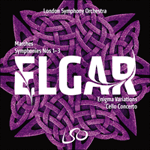 Elgar: Symphonies, Marches, Enigma Variations & Cello Concerto Elgar: Symphonies, Marches, Enigma Variations & Cello ConcertoLSO0572-D4CDs Download only  Over five hours of sumptuous orchestral grandeur in a bargain new set of classic Elgar recordings from the London Symphony Orchestra.» More |
 Hyperion sampler - June 2026 Vol. 2 Hyperion sampler - June 2026 Vol. 2FREE DOWNLOADHYP202606BDownload-only sampler |