
Welcome to Hyperion Records, a British classical label devoted to presenting high-quality recordings of music of all styles and from all periods from the twelfth century to the twenty-first.
Hyperion offers both CDs, and downloads in a number of formats. The site is also available in several languages.
Please use the dropdown buttons to set your preferred options, or use the checkbox to accept the defaults.


| Alexandra Dariescu (piano), Royal Philharmonic Orchestra, Darrell Ang (conductor)» More |
| Nikolai Demidenko (piano), BBC Symphony Orchestra, Alexander Lazarev (conductor)» More |
| Sir Stephen Hough (piano), Minnesota Orchestra, Osmo Vänskä (conductor)» More |
| Vassily Sapellnikoff (piano), Aeolian Orchestra, Stanley Chapple (conductor)» More |
| Egon Petri (piano), London Philharmonic Orchestra, Walter Goehr (conductor)» More |
Deservedly one of Tchaikovsky’s most popular works, this concerto succeeds on every level: the great virtuosity of the piano part is matched by the colourful orchestration, while formal intricacy coexists with a succession of inspired melodies. The first movement begins with a majestic introduction in D flat major, a deceptive move, since the tonal centre of the concerto is actually B flat. This beautiful dithyrambic theme disappears from the scene enigmatically, never to be heard again, although one of its motifs can be found in a lyrical theme at the beginning of the second movement, in D flat, while the ‘apotheosis’ second theme of the finale (again in D flat), is cut from the same cloth. This, indeed, is a characteristic of the work: Tchaikovsky here eschews obvious unifying devices, preferring intricate thematic transformations and subtle correspondences between the movements.
The approach to the Allegro features fleet figures with a strong rhythmic profile that eventually reveal themselves to be an anticipation of the main Allegro theme itself. Tchaikovsky derived the theme from a popular Ukrainian song traditionally performed by wandering hurdy-gurdy players, although he leaves the character of the original far behind. This is another characteristic of the work: various figurations and passagework either flow into the main melodies or flow from them. A similar theme will appear in the finale, but with a different accentuation pattern—the concerto transforms various motifs in this way.
A more virtuosic passage leads into the Allegro’s lyrical second subject. Although different in character to the first theme, this is also based on a syncopated descending figure. Its plaintive appeals, in the woodwind and piano, receive a reassuring response in a new theme, given to the strings. The ascending scale figures of this new string theme again feature shifting and unpredictable accents. The plaintive theme returns again, now flourishing in a new texture, and at this point we might well imagine that the sonata exposition has come to a close, but a new dramatic turn prompts an outburst from the piano that ends in C minor. Only then does the ‘reassurance’ theme round off the exposition in A flat major.
As we enter the development section, the same theme now sounds a note of anxiety, and becomes the main impetus behind dramatic, brooding sequences, that seem to be building towards a climax. But instead the piano stages a diversion with a triumphant torrent of octaves that leads into a brief cadenza, one of several piano monologues with heightened rhetoric. Here the piano presents us with a version of the ‘plaintive’ theme, now well disguised with syncopated triplet figuration. Another approach to a climax, now led by the piano, culminates in an expansive and cathartic new theme in the very remote key of E major, built on a remarkably simple scale figure (its four-note descent mirroring the ascents heard earlier). This provides the development with its final stretch before the recapitulation emerges almost imperceptibly, the original anticipatory figures now replaced with faster passagework. The course of the recapitulation is complicated by a lengthy and symphonic piano cadenza that serves as a second development section, beginning with solemn chords in G flat major, reminding us of the heroic character of the piano at the opening of the movement. A great climax is dissipated eventually as tinkling bell-like figuration leads to the return of the orchestra for the coda.
The second movement is simpler, but wrought with equal care. The main theme is a nobly lyrical ‘aria’ containing reminiscences of the first movement’s prologue. Figures harking back to the Allegro’s first theme plunge us into a scherzo-like passage, which foreshadows the catchy French popular melody that appears in the middle section. Here we find another four-note ascent, together with ambiguous accentuation thanks to a mixture of duple and triple patterns.
The main theme of the finale features another objet trouvé in the shape of a Ukrainian spring song, but Tchaikovsky chose it carefully, since it contains a descending four-note motif that connects it to several other themes of the concerto in addition to the syncopation that has marked earlier passages. The finale’s rondo form is modified, allowing the second subject to expand into a closing apotheosis that evokes the grandeur of the concerto’s opening pages.
from notes by Marina Frolova-Walker © 2010
Ce concerto est à juste titre l’une des œuvres les plus populaires de Tchaïkovski et est une réussite à tous les niveaux: la grande virtuosité de la partie de piano est assortie à l’orchestration aux couleurs vives, alors que la complexité formelle coexiste avec une succession de mélodies inspirées. Le premier mouvement commence par une majestueuse introduction en ré bémol majeur, ce qui est trompeur puisque le centre tonal du concerto est en réalité si bémol. Ce magnifique thème dithyrambique disparaît de la scène de façon énigmatique, pour ne jamais reparaître, même si l’on retrouve l’un de ses motifs dans un thème lyrique au début du deuxième mouvement, en ré bémol, alors que le second thème «apothéose» du final (à nouveau en ré bémol) est de la même étoffe. C’est en réalité une caractéristique de cette œuvre: Tchaïkovski rejette les procédés unificateurs évidents, préférant des transformations thématiques complexes et de subtiles correspondances entre les mouvements.
L’approche de l’Allegro comporte des figures rapides dotées d’un fort profil rythmique qui se révèlent finalement être une anticipation du thème principal de l’Allegro. Tchaïkovski a tiré ce thème d’un chant populaire ukrainien traditionnellement exécuté par des joueurs d’orgue de barbarie itinérants, mais il s’éloigne beaucoup du caractère de l’original. C’est une autre caractéristique de l’œuvre: diverses figurations et traits coulent dans la mélodie principale ou bien en sont issus. Un thème analogue apparaîtra dans le finale, mais avec un schéma d’accentuation différent—le concerto transforme divers motifs de cette façon.
Un passage plus virtuose mène au second sujet lyrique de l’Allegro. De caractère différent de celui du premier thème, il repose néanmoins aussi sur une figure descendante syncopée. Ses appels plaintifs, aux bois et au piano, trouvent une réponse rassurante dans un nouveau thème, confié aux cordes. Les gammes ascendantes de ce nouveau thème des cordes présentent encore des accents changeants et imprévisibles. Le thème plaintif revient à nouveau, maintenant florissant dans une nouvelle texture et, à ce point, on pourrait s’imaginer que l’exposition de forme sonate est terminée, mais une nouvelle tournure dramatique déclenche une éruption du piano qui se termine en ut mineur. C’est alors seulement que le thème «rassurant» conclut l’exposition en la bémol majeur.
Lorsqu’on entre dans le développement, le même thème évoque une certaine anxiété et devient l’élan principal derrière de sombres séquences dramatiques qui semblent s’orienter vers un sommet. Mais à la place, le piano organise une diversion avec un torrent triomphal d’octaves qui mène à une courte cadence, l’un des nombreux monologues du piano avec une rhétorique accrue. Ici, le piano nous présente une version du thème «plaintif», bien déguisé avec une figuration de triolets syncopés. Une autre approche d’un sommet, maintenant conduite par le piano, culmine dans un nouveau thème grandiose et cathartique dans la tonalité très éloignée de mi majeur, construit sur une figure de gamme d’une simplicité remarquable (les quatre notes descendantes étant le reflet des notes ascendantes entendues plus tôt). Cela sert de développement avec son extension finale avant la réexposition qui émerge presque imperceptiblement, les figures originales d’anticipation étant maintenant remplacées par des traits plus rapides. Le cours de la réexposition est compliqué par une cadence du piano longue et symphonique qui tient lieu de second développement; elle commence par des accords solennels en sol bémol majeur, qui nous rappellent le caractère héroïque du piano au début du mouvement. Un grand sommet est finalement dissipé lorsque des effets de tintement de cloche aboutissent au retour de l’orchestre pour la coda.
Le deuxième mouvement est plus simple, mais travaillé tout aussi soigneusement. Le thème principal est une «aria» lyrique noble qui contient des réminiscences du prologue du premier mouvement. Des figures évoquant le premier thème de l’Allegro nous plongent dans un passage comparable à un scherzo, annonçant la mélodie populaire entraînante qui apparaît dans la section centrale. Ici, on trouve une série ascendante de quatre notes, avec une accentuation ambiguë due à un mélange de motifs binaires et ternaires.
Le thème principal du finale présente un autre «objet trouvé» sous la forme d’une chanson printanière ukrainienne, mais Tchaïkovski l’a choisie soigneusement, car elle contient un motif descendant de quatre notes qui la rapproche de plusieurs autres thèmes du concerto en plus de la syncope qui a marqué des passages antérieurs. La forme rondo du finale est modifiée, ce qui permet au second sujet de se gonfler en une apothéose conclusive qui évoque la grandeur des premières pages du concerto.
extrait des notes rédigées par Marina Frolova-Walker © 2010
Français: Marie-Stella Pâris
Dieses Konzert ist zu Recht eines der populärsten Werke Tschaikowskys und ist in jeder Hinsicht gelungen: die große Virtuosität des Klavierparts wird durch die farbenreiche Orchestrierung ergänzt, während formale Komplexität neben einer Reihe von inspirierten Melodien existiert. Der erste Satz beginnt mit einer majestätischen Einleitung in Des-Dur, ein trügerischer Schachzug, da das tonale Zentrum des Konzerts in Wirklichkeit b-Moll ist. Das wunderschön dithyrambische Thema zieht sich in rätselhafter Weise zurück und tritt auch nicht wieder auf, obwohl eines seiner Motive in einem lyrischen Thema zu Beginn des zweiten Satzes (in Des) zu hören ist und das „apotheotische“ zweite Thema des Finales (wiederum in Des) ähnlich geschnitzt ist. Es ist dies ein Charakteristikum des Werks: Tschaikowsky meidet offensichtliche vereinende Merkmale und zieht stattdessen verschlungene thematische Transformationen und subtile Korrespondenzen zwischen den Sätzen vor.
In der Vorbereitung auf das Allegro erklingen flinke Figuren mit einem starken rhythmischen Profil, die sich schließlich als eine Vorwegnahme des Hauptthemas des Satzes erweisen. Tschaikowsky ließ sich dabei von einem ukrainischen Volkslied inspirieren, das traditionsgemäß von wandernden Drehorgelspielern gespielt wird, doch ließ er den Charakter der ursprünglichen Melodie weit hinter sich. Außerdem ist charakteristisch für das Werk, dass verschiedene Figurationen und virtuose Passagen entweder in die Hauptmelodien ein- oder aus ihnen herausfließen. Ein ähnliches Thema erscheint später im Finale, jedoch mit unterschiedlichen Akzentuierungen—in dieser Weise transformiert das Konzert diverse Motive.
Eine virtuosere Passage mündet in das lyrische zweite Thema des Allegros. Obwohl es vom Charakter her anders ist als das erste Thema, basiert es ebenfalls auf einer synkopierten absteigenden Figur. Auf seine klagenden Bitten in den Holzbläserstimmen und im Klavierpart gehen die Streicher mit einer beruhigenden Antwort in einem neuen Thema ein. Die aufsteigenden Tonleiterfiguren dieses neuen Streicherthemas weist wiederum wechselnde und unerwartete Akzente auf. Das klagende Thema kehrt zurück und gedeiht innerhalb einer neuen Textur und diesmal könnte man denken, dass die Exposition zu einem Ende gekommen ist, doch eine neue dramatische Wendung veranlasst einen Ausbruch des Klaviers, der in c-Moll endet. Erst dann bringt das „Beschwichtigungsthema“ die Exposition zu einem Schluss in As-Dur.
Zu Beginn der Durchführung hat dasselbe Thema nun einen Anflug von Angst und wird zum Hauptimpuls hinter dramatischen, grüblerischen Sequenzen, die auf einen Höhepunkt hinzuarbeiten scheinen. Doch stattdessen sorgt das Klavier mit einem Schwall von Oktaven, der in eine kurze Kadenz leitet—einer von mehreren Klaviermonologen mit gesteigerter Rhetorik—für Abwechslung. Hier stellt uns das Klavier eine Version des „klagenden“ Themas vor, das nun durch synkopierte Triolenfigurationen recht verschleiert ist. Ein weiteres Ansteuern auf einen Höhepunkt, das diesmal vom Klavier ausgeht, kulminiert in einem ausgedehnten und kathartischen neuen Thema in der weit entfernten Tonart E-Dur, das auf einer bemerkenswert schlichten Tonleiterfigur aufgebaut ist (sein viertöniger Abstieg ist eine Spiegelung der vorangehenden Aufstiege). Dies liefert der Durchführung ihren letzten Teil, bevor die Reprise fast unmerklich erscheint, wobei die ursprünglich antizipatorischen Figuren nun mit schnelleren Passagen ersetzt werden. Der Verlauf der Reprise wird durch eine lange und symphonische Klavierkadenz, die als zweiter Durchführungsteil fungiert, etwas komplizierter gestaltet und beginnt mit feierlichen Akkorden in Ges-Dur, die uns an den heroischen Charakter des Klaviers zu Beginn des Satzes erinnern. Ein großartiger Höhepunkt löst sich auf, wenn klingelnde Figurationen die Rückkehr des Orchesters für die Coda einleiten.
Der zweite Satz ist schlichter, doch mit ebensoviel Sorgfalt gestaltet. Das Hauptthema ist eine noble lyrische „Aria“, die an den Prolog des ersten Satzes erinnert. Durch Figuren, die sich auf das erste Thema des Allegros beziehen, werden wir in eine scherzoartige Passage befördert, in der die eingängige französische Volksmelodie vorweggenommen wird, die im Mittelteil erscheint. Hier findet sich ein weiterer Vierton-Aufstieg zusammen mit uneindeutiger Akzentuierung, die sich aufgrund einer Mischung von Zweier- und Dreierrhythmen einstellt.
Im Hauptthema des Finales erscheint ein weiteres objet trouvé in Form eines ukrainischen Frühlingsliedes, das Tschaikowsky sorgfältig ausgewählt hatte, da in ihm ein absteigendes Viertonmotiv vorkommt, das eine Verbindung zu mehreren anderen Themen des Konzerts herstellt und ebenso synkopiert ist wie vorangehende Passagen. Die Rondoform des Finales ist etwas abgewandelt, was dem zweiten Thema erlaubt, sich zu einer Schlussapotheose auszudehnen, in der die Grandezza des Beginns des Werks noch einmal aufgenommen wird.
aus dem Begleittext von Marina Frolova-Walker © 2010
Deutsch: Viola Scheffel
В чем тут причины? Трудно назвать их все, но напрашиваются самые очевидные. Чайковский – гений лирической музыки, и многие его сочинения захватывают своей красотой и душевным порывом. Он – русский гений: широта мелодического дыхания необыкновенна в его партитурах. Не забудем также, что до Чайковского не было в нашем музыкальном искусстве ничего подобного Первому фортепианному концерту, да и в мировой концертной литературе (после Бетховена) он тоже ни с чем не сравнится: ни с утонченно-камерным Концертом Шумана, ни тем более с концертами Листа с их театральным пафосом. Спору нет, фортепианная партия у нашего композитора многое впитала и от Шумана, и от Листа, и от Антона Рубинштейна, но повсюду в Концерте она служит искреннему и теплому высказыванию национального художника.
Замечательно еще и то, что партитура Чайковского существенно пополнила «спектр настроений» в тогдашнем отечественном искусстве. Здесь почти нет минорных тонов (и, может быть, поэтому в Концерте всего две минорные темы), зато много музыки праздничной, такой как начало Концерта и его финальная кода. Здесь не чувствуешь тяжелых настроений, характерных, к примеру, для Мусоргского, написавшего своего «Бориса Годунова» незадолго до Концерта Чайковского, или трагических мотивов самого Петра Ильича, наполнивших раннюю увертюру-фантазию «Ромео и Джульетта». Партитура, о которой мы говорим, уравновесила собой темную часть русского музыкального спектра и заслужила вечную славу благодаря своему пленительному мажору.
Необычные стороны знакомого произведения
Верные поклонники классической музыки десятки раз слышали Первый концерт, и удовольствие от слушания не уменьшалось даже тогда, когда этот Концерт звучал несколько раз подряд (как в финальном туре Международного конкурса имени Чайковского): он все равно увлекает, все равно волнует. Так стоит ли «пересказывать» его музыку? Лучше отметим некоторые особенности формы, которые могут остаться без слушательского внимания, но из-за которых Концерт обретает часть своего великолепия. Например: его вступительная тема ни разу не повторяется, а ведь это тема неслыханной мощи и красоты. То же и дивная побочная тема первой части, напоминающая колыбельную: она выпущена в репризе. Мелодическая щедрость Чайковского воистину не знает пределов, и вы безотчетно наслаждаетесь ею, когда слушаете Концерт. А середина второй части: ведь это не что иное, как парафраза популярной французской шансонетки «Il faut s’amuser, dance e rire» («Так будем развлекаться, плясать и улыбаться»). Ее напевали в семье Чайковских, и кто мог подумать, что она придет на помощь, когда композитору в его фортепианном концерте понадобится легкое скерцо? Здесь в который раз вспомнятся строчки А.А. Ахматовой: «Когда б вы знали, из какого сора // Растут стихи, не ведая стыда…».
Особенности Первого концерта, о которых шла речь, относятся не только к его форме. Благодаря им меняется суть классического жанра. Спору нет, именно у Чайковского сказано о фортепианном концерте: «Тут две равноправные силы… могучий… оркестр, с которым борется и которого побеждает… маленький… но сильный духом соперник» (из письма Н.Ф. фон Мекк от 24 ноября 1880 года). Но на самом деле нет никакой «борьбы» и «победы» в Первом концерте, а есть диалог, удивительный по богатству эмоциональных красок. В продолжение того, что сделал Чайковский, открылось большое поле фортепианных концертов Рахманинова, где торжествует «русский концерт» как согласие личных и внеличных духовных сил.
И грандиозное русское фортепиано явилось в партитуре Чайковского. Известно, что Петр Ильич не был профессиональным исполнителем, но в Первом концерте он силой своего композиторского гения сотворил пианизм небывалого разнообразия и блеска. В сегодняшнем мире очень мало публично выступающих пианистов, для которых Первый концерт Чайковского не был бы желанным украшением репертуара, и вместе с тем не создавал бы интригующих артистических проблем.
Странности и уроки
Но при жизни Чайковского многое было по-другому. 34-летний композитор работал над своим Первым концертом не без усилий, пальцы не бегали сами собой (как у композиторов-пианистов) и это оказалось к лучшему: все здесь делалось по разумному выбору. Закончив свой опус, Петр Ильич предложил сыграть его Н.Г. Рубинштейну, что выглядело естественно: Рубинштейн был не только замечательным пианистом, но и близким другом Чайковского. И вдруг… «Концерт никуда не годится… это плохо, пошло, и есть только 2–3 страницы, которые можно оставить» (отзыв Рубинштейна пересказан Чайковским в письме фон Мекк от 21 января 1878 года). Немыслимые слова; в них проявилась не лучшая русская манера «рубить с плеча». Отношения были омрачены, премьера Концерта задержалась и к тому же пришлось обратиться к иностранному музыканту. Им оказался Ганс фон Бюлов, знаменитый пианист, крупный дирижер и просто доброжелательный человек. Первое исполнение Концерта состоялось в Бостоне 13 октября 1875 года. И только через три года его сыграл Н.Г. Рубинштейн, «сменив гнев на милость». Горьким уроком здесь может служить не только нетерпимость, но и недомыслие при знакомстве с творением современника. Ведь можно же было представить себе, что одаренный художник всегда находится впереди своей эпохи.
Когда 28 октября 1893 года в зале петербургского Дворянского собрания Чайковский, в последний раз выступая перед публикой, аккомпанировал американской пианистке Адели Аус дер Оэ, солировавшей в Первом концерте, вряд ли он мог предвидеть будущую немыслимую славу этого сочинения. Он не знал, что через полвека под звуки первых тактов Концерта будут начинаться на киноэкранах многие голливудские шоу. И, уж конечно, не мог и помыслить, что один знаменитый потомок-музыкант напишет в газете, что Чайковский у нас известен всем, хотя не все могут сказать, «кто тогда был царем». Нужно знать и свою культуру, и свою историю. Нужно ценить и оберегать своих гениев – художников – и пытаться постичь смысл тех творений искусства, которым суждено стать символом своей страны.
Leonid Gakkel © 2012
 The Hyperion Romantic Piano Concerto Edition - 1991-2007 The Hyperion Romantic Piano Concerto Edition - 1991-2007CDS44701/5050CDs Boxed set (at a special price) Available Friday 10 April 2026  The first of two box sets celebrating one of the most ambitious, and successful, series in the history of classical recording. This volume features 130 works from 59 composers, performed by 19 different pianists, and all luxuriously presented with ...» More |
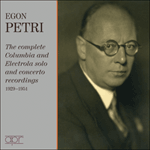 Egon Petri - The complete Columbia and Electrola solo and concerto recordings Egon Petri - The complete Columbia and Electrola solo and concerto recordingsAPR77017CDs Download only  Egon Petri (1881-1962) studied with Busoni and was perhaps his greatest disciple. In his fusion of intellect with an astonishing virtuoso technique he echoed his master and gives us today the clearest idea of Busoni’s own legendary pianism.» More |
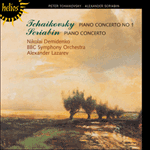 Scriabin & Tchaikovsky: Piano Concertos Scriabin & Tchaikovsky: Piano ConcertosCDH55304Download only ‘It is something of an achievement when one manages to hear afresh such an over-familiar work’ (BBC Music Magazine) ‘Demidenko's inspirational account of the Scriabin Concerto is in a class of its own … a major achievement’ (Classic CD)» More |
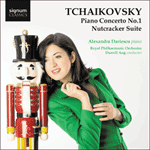 Tchaikovsky: Piano Concerto No 1 & Nutcracker Suite Tchaikovsky: Piano Concerto No 1 & Nutcracker SuiteStudio Master: SIGCD441Download onlyStudio Master FLAC & ALAC downloads available  Alexandra Dariescu has garnered an impressive reputation for her outstanding solo recordings and concert performances. This opulent debut concerto recording on Signum pairs the glorious Tchaikovsky Piano Concerto No 1 with a suite of solo piano ar ...» More |
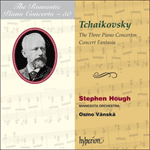 Tchaikovsky: Piano Concertos Tchaikovsky: Piano ConcertosCDA67711/22CDs A stellar cast has been assembled for a two-disc set that includes one of the most famous concertos in the repertoire. Tchaikovsky’s Piano Concerto No 1 has certainly achieved warhorse status—but in the expert hands of Stephen Hough it is a new cr ...» More |
 Vassily Sapellnikoff & Xaver Scharwenka - The complete recordings Vassily Sapellnikoff & Xaver Scharwenka - The complete recordingsAPR60162CDs for the price of 1 — Download only Vassily Sapellnikoff (1868–1941) and Xaver Scharwenka (1850–1924) were among the earliest generation of pianists to record, and on this ground alone it is surprising that their complete recordings have never before been transferred for modern list ...» More |