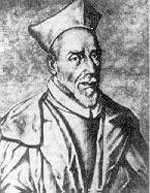
Of the three great composers of sacred music to have emerged from Spain in the sixteenth century, Francisco Guerrero (1528-1599) is describedby the scholar Robert Stevenson as ‘the most purely Spanish’. That he is also the least internationally famous is no coincidence: both of the other two, Cristóbal de Morales (c1500-1553) and Tomás Luis de Victoria (1548-1611), spent considerably more time outside their homeland than Guerrero, in particular in Rome, and in consequence came to the attention of a broader clientele. Their contemporary fame was certainly boosted by the more developed state of the music-printing industry in Italy as compared with Spain at that time: Guerrero in fact found it expedient to travel to Italy more than once in order to have his works printed. Alongside variations in such stylistic matters as dissonance treatment and scoring, Guerrero’s choice of motet subjects differed from those of composers based outside Iberia. Stevenson points out that fewer than half of the texts set by Guerrero are duplicated in the much larger output of either of his contemporaries Palestrina (1525/6-1594) or Lassus (1530/32-1594), and in this regard he may certainly be viewed as embodying a peculiarly Spanish sensibility.
Francisco Guerrero’s first music teacher seems to have been his elder brother Pedro, who also went on to make his living as a singer and composer. This instruction was of a rudimentary nature; the teacher who developed Francisco’s musicianship to higher levels was none other than the above-mentioned Morales, who had returned to Spain in 1545 following a ten-year stint in the Sistine Chapel choir. After several months’ instruction from Morales, Guerrero was said to be ready to take on a chapelmaster’s role, and indeed he did so on Morales’s recommendation in 1546, at the cathedral of Jaén, some 140 miles east of Seville. This proved a relatively short sojourn: having been granted a leave of absence in August 1549 to visit his family, he returned to Seville as a singer. In 1551 he was offered another maestro de capilla position, this time at Málaga. The chapter at Seville took steps to prevent Guerrero from leaving, however, engaging him immediately to teach the choristers and promising him the chapelmastership upon its renunciation by the already rather aged Pedro Fernández. Unfortunately for the younger man, Fernández, who had been in post since 1514 and was thus certainly over sixty at this point, survived another twenty-three years. Guerrero stayed the course, though, finally becoming maestro de capilla on 9 March 1574. In the meantime he had begun to publish his compositions, with volumes appearing in Venice, Seville (one of the earliest music prints in Spain), Leuven and Paris during these years. No other domestically based Iberian composer of the time managed such wide distribution of his work.
Guerrero’s accession to the chapelmastership did not result in an entirely quiet life for the remainder of his career. In 1579 he was granted a year’s leave in order to travel to Rome; he took a great deal more time than this, but eventually arrived in October 1581 and while there arranged to have a book of Masses and another of Vesper music printed. The Mass book would include Missa Ecce sacerdos magnus, even though its use of an external text (see discussion below) sat uneasily with the prescriptions of the new (Tridentine) Roman Use, which had been adopted in Seville in 1575—despite this, the practice persisted across the Iberian peninsula for several decades more. This Mass was dedicated to Pope Gregory XIII (r1572-85), to whom Guerrero was able to present the book during his visit. He reported in a letter to the chapter back home that the Pope had asked him detailed questions concerning the cathedral foundation at Seville, and in particular its finances.
Guerrero also made one highly significant voyage in the later part of his life, namely a pilgrimage to Jerusalem (an account of which he published in a book which continued to be reprinted well into the seventeenth century, and to which we owe much of our knowledge of his life). In 1588 he successfully petitioned the Seville chapter to accompany the Archbishop, Cardinal Rodrigo de Castro (1523-1600), on a trip to Rome. Guerrero thence travelled to Venice where he arranged publication of more compositions: a book of motets and another of Canciones y villanescas espirituales, which were printed there by Giacomo Vincenti the following year. Leaving Venice on 14 August 1588, he reached the Holy Land and visited many Biblical sites, returning on 9 January 1589, but only after having been ambushed twice by pirates, and forced to pay large ransoms. Whether as a result of these depredations, the financial risks of printing his music, or both, Guerrero found himself in a debtor’s prison by 1591, from which he was rescued by the chapter, who paid 280 ducats (nearly a year’s salary) to his creditors. Meanwhile the cathedral had appointed the composer Alonso Lobo (1555-1617) as master of the choristers, a duty which Guerrero had held alongside that of maestro de capilla, but had struggled to fulfil even before his financial problems became overwhelming. After Guerrero’s death, Lobo was to return to Seville in 1604 to take up the more senior role, having been chapelmaster at the primatial cathedral of Toledo from 1593.
Perhaps surprisingly given the unwelcome turn of events during his first voyage, Guerrero was hoping to return to the Holy Land in 1599, but instead fell victim to a plague that swept through Seville that summer. He was buried in the Antigua chapel of the cathedral, with the honours of a prebendary on account of his lengthy service.
from notes by Stephen Rice © 2023
Né en 1528, formé par son frère Pedro, puis, brièvement, par Cristóbal de Morales, Guerrero passa toute sa carrière à servir la cathédrale de Séville. D’abord choriste, il s’avéra un jeune chanteur et compositeur si brillant, maîtrisant une telle diversité d’instruments, qu’il fut nommé maestro à la cathédrale de Jaén à l’âge de dix-huit ans. Trois ans plus tard, le chapitre de Séville le persuada de revenir et il demeura à la cathédrale de 1549 à sa mort. Par deux fois, il fut presque tenté par le poste de la cathédrale de Málaga, mais les chanoines sévillans parvinrent à le faire rester en lui offrant le statut officiel d’assistant de Pedro Fernández, alors vieillissant, avec l’assurance de lui succéder à la fonction de maître de chapelle. Dans les faits, Guerrero fut effectivement maître de musique, mais Fernández ne mourut qu’en 1574 (probablement vers quatre-vingt-dix ans), date à laquelle Guerrero était déjà officiellement assistant depuis vingt-trois ans. Vingt-cinq ans plus tard (en 1591), ce fut Guerrero, devenu incapable de s’occuper efficacement des garçons choristes, qui eut besoin d’un assistant. Plusieurs le secondèrent, dont Alonso Lobo, qui allait être maestro à Tolède, avant de finalement revenir à Séville, en 1604.
Guerrero se rendit à Rome, puis à Venise et en Terre sainte (en 1588), rédigeant un livre à succès sur son Voyage à Jérusalem (imprimé pour la première fois en 1590). Il lui arriva de voyager en Espagne—à Tolède pour présenter sa musique, à Córdoba pour juger une audition—, mais Séville, sa cité natale, fut au centre de toute sa vie. Imprimées à Séville, Paris, Louvain, Venise et Rome, réimprimées jusqu’à Nuremberg et copiées dans des manuscrits en Espagne et dans le Nouveau Monde pendant deux siècles après sa mort, ses compositions furent révérées et imitées. Nombre de ses motets servirent de modèles aux messes d’Alonso Lobo, Duarte Lôbo, Pedro Ruimonte, Juan Esquivel, Géry de Ghersem, etc., jusqu’au XVIIe siècle. À la chapelle royale de Madrid, Juan del Vado écrivit, vers 1650, une messe sur un motet à succès de Guerrero, Ave virgo sanctissima; mentionnons enfin une curiosité ultérieure: un interminable corpus de «mini» canons sur la première phrase de ce motet, dû à un certain Aniceto Baylon, de Valence.
Prêtre-musicien dévot, Guerrero put, contrairement à Morales et à Victoria, composer de ravissantes pièces profanes et de délicats chants religieux en langue vernaculaire (castillan). Son grand legs de musique liturgique est désormais pleinement reconnu pour sa diversité, son flux ininterrompu de mélodies magnifiques et son absolue «chantabilité».
extrait des notes rédigées par Bruno Turner © 1999
Français: Hypérion
Geboren im Jahr 1528, von seinem Bruder Pedro und später kurze Zeit von Cristóbal de Morales ausgebildet, verbrachte Guerrero sein ganzes Berufsleben im Dienst der Kathedrale von Sevilla. Er war Chorknabe gewesen und wurde ein derart brillanter junger Mann—kundig im Umgang mit zahlreichen Instrumenten, Sänger und Komponist—, daß er mit achtzehn zum maestro der Kathedrale von Jaén ernannt wurde. Das Domkapitel von Sevilla bewog ihn drei Jahre später zur Rückkehr, und er blieb dort von 1549 bis zu seinem Tod. Zweimal hätte er sich fast von der Aussicht fortlocken lassen, Kathedralkapellmeister in Málaga zu werden, doch die Kanoniker von Sevilla überredeten ihn zum Bleiben, indem sie das offizielle Amt eines Assistenten für den alternden Pedro Fernández schufen und ihm das Nachfolgerecht auf den Posten des Kapellmeisters selbst zusicherten. Praktisch oblag Guerrero ohnehin die Leitung der Musik, aber Fernández starb wahrscheinlich über neunzigjährig erst im Jahre 1574, als Guerrero bereits runde dreiundzwanzig Jahre offizieller Assistant gewesen war. Weitere siebzehn Jahre später war es Guerrero, der einen Assistenten benötigt, da er immer weniger fähig war, sich effizient um die Chorknaben zu kümmern. Zu seinen Helfern zählte Alonso Lobo, der später maestro in Toledo wurde und schließlich 1604 nach Sevilla zurückkehrte.
Guerrero hat Rom, dann Venedig und (1588) das Heilige Land besucht; er hat ein viel gelesenes Buch über seine Reise nach Jerusalem geschrieben (Erstausgabe 1590). Er reiste gelegentlich innerhalb Spaniens—nach Toledo, um seine Musik vorzustellen, nach Córdoba als Preisrichter beim Vorsingen/Vorspielen—, doch ansonsten war sein Leben völlig auf seine Heimatstadt Sevilla konzentriert. Seine Musik wurde in Sevilla, Paris, Louvain, Venedig und Rom im Druck herausgegeben. Seine Kompositionen, nachgedruckt an so entlegenen Orten wie Nürnberg und noch zwei Jahrhunderte nach seinem Tod in Spanien und in der Neuen Welt handschriftlich kopiert, wurden verehrt und nachgeahmt. Viele seiner Motetten dienten bis weit ins siebzehnte Jahrhundert hinein als Vorbilder der Messen von Alonso Lobo, Duarte Lôbo, Pedro Ruimonte, Juan Esquivel, Géry de Ghersem und anderen.
Guerrero war ein gottesfürchtiger klerikaler Musiker, konnte aber anders als Morales und Victoria auch herrliche weltliche Musik und fein gefügte fromme Lieder in der (kastilischen) Umgangssprache schreiben. Seiner großartigen Hinterlassenschaft liturgischer Musik wird heute wegen ihrer Vielfalt, ihres endlosen Flusses schöner Melodien und ihrer schieren Sanglichkeit höchste Anerkennung zuteil.
aus dem Begleittext von Bruno Turner © 1999
Deutsch: Anne Steeb/Bernd Müller
Nacido en 1528, educado por su hermano Pedro y más tarde, brevemente, por Cristóbal de Morales, Guerrero pasó toda su carrera al servicio de la Catedral de Sevilla. Había sido niño cantorcico y de joven era tal su brillantez como cantor y compositor, amén de poder tocar diversos instrumentos, que a los dieciocho años fue nombrado maestro de la Catedral de Jaén. El cabildo de Sevilla lo convenció para que volviera tres años más tarde y allí permaneció desde 1549 hasta su muerte. En dos ocasiones estuvo casi tentado de irse y ocupar un puesto en la Catedral de Málaga, pero los canónigos sevillanos lo persuadieron para que se quedara con el puesto oficial de ayudante del anciano Pedro Fernández, con la garantía de que sería él quien lo sucedería como maestro de capilla. En la práctica, Guerrero ejercía de hecho como principal responsable de la música, pero Fernández no murió hasta 1574, probablemente ya nonagenario, lo que significa que para entonces Guerrero llevaba siendo oficialmente su ayudante desde hace unos veintitrés años. Más tarde, en 1591, era Guerrero quien necesitaba un ayudante, ya que cada vez se mostraba más incapaz de ocuparse eficazmente de los niños cantorcicos. Entre los diversos ayudantes figuró Alonso Lobo, que se fue para ocupar el cargo de maestro en Toledo y que volvió finalmente a Sevilla en 1604.
Guerrero viajó a Roma, y más tarde a Venecia y a Tierra Santa (en 1588); escribió un libro que se convirtió en un éxito de ventas sobre su Viaje a Jerusalén (editado por primera vez en 1590). Viajó por España ocasionalmente—a Toledo a presentar su música, a Córdoba como jurado de una audición—pero, por lo demás, su vida se centró completamente en Sevilla, su ciudad natal. Su música se publicó en Sevilla, París, Lovaina, Venecia y Roma. Reeditada en lugares tan lejanos como Nuremberg y copiada en manuscritos en España y el Nuevo Mundo durante los dos siglos siguientes a su muerte, sus composiciones fueron objeto de veneración y de emulación. Muchos de sus motetes sirvieron como modelos para Misas de Alonso Lobo, Duarte Lôbo, Pedro Ruimonte, Juan Esquivel, Géry de Ghersem y otros hasta bien entrado el siglo XVII.
Guerrero fue un devoto sacerdote-músico pero, al contrario que Morales y Victoria, también pudo componer una música profana deliciosa y unas delicadas canciones religiosas en lengua vernácula. Su gran legado de música litúrgica está gozando por fin ahora de un pleno reconocimiento por su variedad, su flujo inagotable de hermosas melodías y su perfecta cantabilidad.
extraído de las notas de Bruno Turner © 1999
Español: Luis Gago