
Welcome to Hyperion Records, a British classical label devoted to presenting high-quality recordings of music of all styles and from all periods from the twelfth century to the twenty-first.
Hyperion offers both CDs, and downloads in a number of formats. The site is also available in several languages.
Please use the dropdown buttons to set your preferred options, or use the checkbox to accept the defaults.

The music is typical of Schubert’s elegies of the period – Kosegarten’s Schwangesang (and also originally in F minor) comes to mind. There are the usual sensitive touches one can all too easily take for granted: the word ‘süssen’ elicits a tender and lingering appoggiatura, and mention of the ‘Befreiungsschlacht’ – the War of Liberation – prompts a note of rueful regret rather than self-satisfied jingoism. The semi-staccato chords in the accompaniment under ‘wir graben ihm’ (meant to suggest the sound of a shovel doing its grim work, iron against earth, at a burial) help classify Grablied as one of the composer’s gravedigger songs. The implication is that the singer is not only present at the funeral but actually doing the spade work – often the sad lot of a fellow soldier in the field. In such a manner does the composer take himself to the scene of battle on a magic carpet of sound. The tomb-like depth of the piano in the little postlude as well as the ominous basses in octaves are prophetic of the greatest of all burial songs, written a decade later and without mention of war, Totengräbers Heimweh in F minor. Schubert’s feeling for key does not change over the years; in 1815 F minor was already his key for graveyard ritual.
from notes by Graham Johnson © 1994
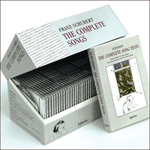 Schubert: The Complete Songs Schubert: The Complete SongsCDS44201/4040CDs Boxed set + book (at a special price) — Temporarily out of stock  ‘This would have been a massive project for even the biggest international label, but from a small independent … it is a miracle. An ideal Christ ... ‘Please give me the complete Hyperion Schubert songs set—all 40 discs—and, in the next life, I promise I'll "re-gift" it to Schubert himself … fo ...» More |