The
Cantique de Jean Racine was Fauré’s graduation exercise at the École Niedermeyer. It is remarkable that it was written by a student who was only twenty years old, and it is just as well for the École Niedermeyer’s reputation that the
Cantique earned Fauré a ‘premier prix’ (a first-class mark). The listener is immediately greeted by a melody that encapsulates everything that is great about Fauré’s best music. First, the tune is fundamentally vocal and its contours generate a line that continues for longer than seems possible, yet still remaining coherent and with direction. And secondly, the intimate romanticism of the melody creates its own resonant textures. Ultimately this student piece (although it stands well enough on its own) marks the starting point for those choral melodies in the Requiem which last that bit longer than the ear expects them to, yet which never outstay their welcome; particularly those of the Kyrie, Agnus Dei, and In paradisum.
from notes by Jeremy Summerly © 2017
Bien qu’il ne fût pas publié avant 1876, c’est le
Cantique de Jean Racine qui valut à Gabriel Fauré le premier prix de composition de l’école Niedermeyer, à Paris, en 1865. L’original était pour chœur et orgue, mais il fut suivi d’une version pour chœur, harmonium et quintette à cordes en 1866, et Fauré orchestra l’accompagnement en 1906. On y retrouve son style sobrement dévotionnel avec une mélodie qui, si elle convient parfaitement à un traitement vertical, se prête également à l’imitation contrapuntique. Le poème de Racine, datant du XVIIe siècle, est une traduction de plusieurs hymnes tirés du bréviaire catholique.
extrait des notes rédigées par Wadham Sutton © 1993
Français: Jean-Paul Metzger
Obgleich es erst 1876 veröffentlicht wurde, war es das
Cantique de Jean Racine, für das Gabriel Fauré 1865 den ersten Preis für Komposition der École Niedermeyer in Paris erhielt. Das Original war für Chor und Orgel, es folgte jedoch 1866 eine Fassung für Chor, Harmonium und Streichquartett und 1906 orchestrierte Fauré die Begleitung. Die Musik ist typisch für seinen leisen, devoten Stil mit einer fließenden Melodie die sich, obgleich sie ausgezeichnet für Akkorddarstellung geeignet ist, genauso für eine Kontrapunkt-Imitation anbietet. Racines aus dem siebzehnten Jahrhundert stammendes Gedicht ist eine Übersetzung von Hymnen aus dem römischen Brevier.
aus dem Begleittext von Wadham Sutton © 1993
Deutsch: Heidi Kerschl



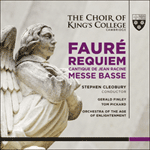 Fauré: Requiem & other choral works
 Panis angelicus