
Welcome to Hyperion Records, a British classical label devoted to presenting high-quality recordings of music of all styles and from all periods from the twelfth century to the twenty-first.
Hyperion offers both CDs, and downloads in a number of formats. The site is also available in several languages.
Please use the dropdown buttons to set your preferred options, or use the checkbox to accept the defaults.
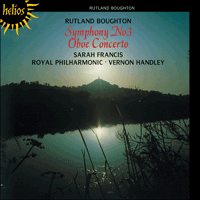



Symphony No 3 in B minor
There seems to have been no particular reason for composing the Symphony in B minor, other than the sheer joy of creation. The score, however, is headed ‘To Steuart Wilson—thanksgiving’: a dedication that marked Boughton’s gratitude to Wilson (who had been a frequent singer at Glastonbury) for financing a short run of The Lily Maid (the third of the Arthurian cycle) at London’s Winter Garden Theatre in January 1937. The Symphony received its first performance at a private concert, organized and paid for by Adolph and Emil Borsdorf (enthusiastic supporters of Boughton’s post-Glastonbury ventures) in celebration of the composer’s birthday. The Borsdorfs assembled an ad hoc orchestra of London’s finest players, led by Jean Pougnet, and the event took place on 1 January 1939, at the Kingsway Theatre before an invited audience which included Ralph Vaughan Williams, Roger Quilter, Alan Bush and Clarence Raybould, but which deliberately excluded the press. Boughton conducted the Symphony himself, while Ernest Irving and Steuart Wilson completed the programme with extracts from The Immortal Hour (recorded on Hyperion CDD22040). Thereafter Boughton seems to have made no attempt to offer the work for performance, and it was not until Edward Downes and the BBC Philharmonic Orchestra broadcast it from Manchester in September 1983 that its qualities could be publicly assessed. That performance proved a revelation.
The Symphony in B minor is Boughton’s third essay in this form. The First Symphony, composed mainly in 1904, is subtitled ‘Oliver Cromwell—a character symphony’ and is overtly programmatic. Apart from a reading by the Royal College of Music Orchestra in 1905, it appears not to have been performed and the composer later withdrew it. The Second Symphony began life in 1926 as a ballet for Ninette de Valois. Recast as a symphony in three movements, it received its first performance on 25 January 1933 by Sir Dan Godfrey and the Bournemouth Symphony Orchestra.
The Third Symphony is therefore Boughton’s only sustained essay in pure symphonic form. Although his musical vocabulary and its formal application are entirely traditional—and somewhat old-fashioned even by English symphonic standards of the time—the way Boughton handles his materials is masterly. This is a symphony in the grand manner: vigorous, closely argued from well-defined thematic units and brilliantly scored for large orchestra. Though somewhat eclectic in style (the benign influence of Elgar is very apparent, while Dvorák’s Slavonic Dances make an unexpected appearance in the third movement), Boughton’s Symphony has a positive and very individual personality of its own. Each movement carries conviction and contributes to a convincing and varied whole that reserves its greatest emotional impact for the glorious peroration that brings the last movement to a triumphant close.
Concerto for oboe and strings No 1 in C
In 1936 Boughton had every reason to write an extended work for the oboe, for his daughter Joy (1913–1963) had begun to be acknowledged as an oboist of exceptional ability (it was for her that Britten was to write his Six Metamorphoses after Ovid in 1951). Accordingly she gave the Concerto for oboe and strings its first performance on 6 May 1937 at a concert with the Boyd Neel String Orchestra in The Guildhall, Oxford. Later that year Boyd Neel took it to Salzburg as part of the programme (27 August) that included the first performance of Britten’s Variations on a theme of Frank Bridge. Leon Goossens was the soloist on that occasion and Boyd Neel was able to report a ‘real triumph for the Concerto. Spontaneous applause after the slow movement … the whole concert went wonderfully’. He had written in similar terms after the Oxford premiere (‘Congratulations! It went simply splendidly and got more applause than any other item!’), and his enthusiasm was confirmed when Boosey & Hawkes accepted the work for publication. Boughton must have been relieved. His income for 1937 scarcely reached £100 and he could not afford to travel to Oxford for the first performance!
As with the Symphony, Boughton uses traditional forms and traditional materials. His manner of writing for the strings, however, explores a degree of intricacy that is a considerable challenge to the players, even if it may not be obvious to the ear. Despite the emphatic influence that folksong has over the thematic material, the solo part pulls no punches: it is virtuoso writing, manifestly designed for virtuoso performers, and as such has ensured that the Concerto has remained a work that major soloists have been glad to include in their repertoire.
Michael Hurd © 1999
Symphonie no3 en si mineur
La Symphonie en si mineur ne semble avoir été composée pour aucune raison particulière, sinon la pure joie de la création. La partition, cependant, porte la dédicace «To Steuart Wilson—thanksgiving», marque de la gratitude de Boughton envers Wilson (lequel avait souvent chanté à Glastonbury), qui avait financé quelques représentations de The Lily Maid (troisième œuvre du cycle arthurien) au Winter Garden Théâtre (Londres), en janvier 1937. La Symphonie fut créée lors d’un concert privé, organisé et payé par Adolph et Emil Borsdorf (enthousiastes défenseurs des aventures «post-Glastonbury» de Boughton), pour l’anniversaire du compositeur. Les Borsdorf mirent sur pied un orchestre ad hoc, constitué des meilleurs instrumentistes londoniens, placés sous la direction de Jean Pougnet, et l’événement eut lieu le 1er janvier 1939, au Kingsway Théâtre, devant un parterre d’invités—parmi lesquels Ralph Vaughan Williams, Roger Quilter, Alan Bush et Clarence Raybould—, dont la presse fut délibérément exclue. Boughton dirigea lui-même la Symphonie, tandis qu’Ernest Irving et Steuart Wilson complétèrent le programme avec des extraits de The immortel Hour (cf. Hyperion CDD22040). Par la suite, Boughton ne semble pas avoir tenté de proposer l’œuvre en concert, et il fallut attendre septembre 1983, et sa diffusion depuis Manchester par Edward Downes et le BBC Philharmonie Orchestra, pour que ses qualités fussent publiquement estimées. Cette exécution fut une révélation.
La Symphonie en si mineur est la troisième symphonie de Boughton. La Première Symphonie, composée essentiellement en 1904 et sous-titrée «Oliver Cromwell—a character symphony», est ouvertement programmatique. À l’exception d’une fois (par le Royal Collège of Music Orchestra, en 1905), elle ne semble pas avoir été jouée et le compositeur la rejeta, plus tard. La Deuxième Symphonie prit vie, en 1926, sous forme de ballet pour Ninette de Valois. Refondue en une symphonie à trois mouvements, elle fut donnée pour la première fois le 25 janvier 1933 par Sir Dan Godfrey et le Bournemouth Symphony Orchestra.
La Troisième Symphonie constitue donc le seul essai soutenu de Boughton dans la forme symphonique pure. Quoique son vocabulaire musical—et l’application formelle qui en est faite—soit entièrement traditionnel, et quelque peu suranné même au regard des normes symphoniques anglaises de l’époque, Boughton traite son matériau d’une main de maître. Il s’agit d’une symphonie grandiose, vigoureuse, née d’unités thématiques bien définies, et brillamment écrite pour grand orchestre. Nonobstant son style légèrement éclectique (la bienveillante influence elgarienne est fort manifeste, tandis que les Danses slaves de Dvorák font une apparition inattendue dans le troisième mouvement), la symphonie de Boughton recèle une personnalité affirmée, des plus individuelles. Chaque mouvement, vecteur de conviction, contribue à l’élaboration d’un tout diversifié, qui réserve son plus grand impact émotionnel à la glorieuse péroraison closant le dernier mouvement de manière triomphale.
Concerto pour hautbois et cordes no1 en ut
En 1936, Boughton eut toutes les raisons d’écrire une grande œuvre pour hautbois, sa fille Joy (1913–1963) commençant d’être reconnue comme une hautboïste exceptionnelle (ce fut pour elle que Britten écrivit ses Six Métamorphoses after Ovid, en 1951). Ce fut donc elle qui assura la première du Concerto pour hautbois et cordes, le 6 mai 1937, lors d’un concert avec le Boyd Neel String orchestra, au Guildhall (Oxford). La même année, Boyd Neel emporta l’œuvre à Salzbourg pour la donner en concert (27 août), dans un programme incluant également la première des Variations on a thème of Frank Bridge de Britten. Le soliste fut alors Leon Goossens, et Boyd Neel put se faire l’écho d’«un réel triomphe du Concerto. Applaudissements spontanés après le mouvement lent … tout le concert s’est merveilleusement déroulé». Il avait eu des mots comparables après la première d’Oxford («Félicitations! Il fut tout simplement splendide et plus applaudi qu’aucun autre morceau!»), enthousiasme que confirma Boosey & Hawkes en acceptant de le publier. Ce qui dut soulager Boughton, lui dont les revenus avaient à peine atteint 100£ en 1937—il n’avait pu se rendre à Oxford pour assister à la première!
Comme dans la Symphonie, Boughton recourt à des formes et matériaux traditionnels. Son écriture pour les cordes, toutefois, explore un degré de complexité qui représente un défi considérable pour les interprètes, même si l’oreille ne le perçoit pas forcément. Malgré l’influence emphatique de la chanson populaire sur le matériau thématique, la partie soliste ne ménage pas les difficultés: il s’agit d’une écriture virtuose, à l’évidence destinée à des interprètes virtuoses, et qui a, en tant que telle, permis au Concerto de demeurer une œuvre que les grands solistes ont été heureux d’inclure à leur répertoire.
Michael Hurd © 1999
Français: Hypérion
Sinfonie Nr. 3 in h-Moll
Wie es scheint, lag für die Komposition der Sinfonie in h-Moll außer der reinen Freude am schöpferischen Tun kein besonderer Grund vor. Die Partitur ist mit den Worten „To Steuart Wilson—thanksgiving“ überschrieben, einer Widmung zum Zeichen der Dankbarkeit, die Boughton gegenüber Wilson empfand (der oft als Sänger in Glastonbury gastiert hatte), weil dieser im Januar 1937 eine kurze Aufführungsserie von The Lily Maid (dem dritten Teil des Artus-Zyklus) am Londoner Winter Garden Theatre finanziert hatte. Die Sinfonie wurde bei einem Privatkonzert uraufgeführt, das Adolph und Emil Borsdorf (begeisterte Anhänger von Boughtons Projekten aus der Zeit nach Glastonbury) zum Geburtstag des Komponisten organisierten und bezahlten. Die Borsdorfs stellten aus den besten Musikern Londons ein Ad-hoc-Orchester unter der Leitung von Jean Pougnet zusammen, und das Ereignis fand am 1. Januar 1939 im Kingsway Theatre vorgeladenem Publikum statt, zu dem Ralph Vaughan Williams, Roger Quilter, Alan Bush und Clarence Raybould zählten, das jedoch Angehörige der Presse bewußt ausschloß. Boughton dirigierte persönlich die Sinfonie, während Ernest Irving und Steuart Wilson das Programm mit Auszügen aus The Immortal Hour (siehe Hyperion CDD22040) vervollständigten. Hiernach unternahm Boughton offenbar nicht den Versuch, das Werk zur Aufführung anzubieten, und seine Vorzüge entzogen sich der öffentlichen Einschätzung, bis Edward Downes und das BBC Philharmonie Orchestra es im September 1983 aus dem Rundfunkstudio Manchester übertrugen. Diese Aufführung erwies sich als Offenbarung.
Die Sinfonie in h-Moll ist Boughtons drittes Bemühen um die Gattung. Die hauptsächlich 1904 komponierte Erste Sinfonie trägt den Untertitel „Oliver Cromwell—a character symphony“ und ist offenkundig programmatisch. Von einer Darbietung des Royal College of Music Orchestra im Jahr 1905 abgesehen scheint sie nie aufgeführt worden zu sein, und der Komponist hat sie später zurückgezogen. Die Zweite Sinfonie begann ihr Dasein 1926 als Ballett für Ninette de Valois. Das zur Sinfonie in drei Sätzen umgearbeitete Werk wurde am 25. Januar 1933 von Sir Dan Godfrey und dem Bournemouth Symphony Orchestra uraufgeführt.
Die Dritte Sinfonie ist somit Boughtons einziger ausgeführter Versuch, die reine sinfonische Form zu ergründen. Sein musikalisches Vokabular und dessen formale Anwendung sind zwar ganz herkömmlich—und selbst nach den Maßstäben englischer Sinfonik der damaligen Zeit eher altmodisch—, doch die Art und Weise, wie Boughton mit seinem Material umgeht, ist meisterhaft. Dies ist eine Sinfonie im großen Stil: kraftvoll, von klar definierten thematischen Einheiten ausgehend prägnant dargelegt und brillant für großes Orchester instrumentiert. Obwohl sie vom Stil her ein wenig eklektisch ist (der positive Einfluß Elgars ist sehr deutlich, während Dvoráks Slawische Tänze unerwartet im dritten Satz auftauchen), hat Boughtons Sinfonie einen positiven und äußerst individuellen Charakter. Jeder Satz wirkt überzeugend und trägt zu einem glaubhaften und abwechslungsreichen Ganzen bei—seine größte emotionale Wirkung spart es bis zum herrlichen Schlußwort auf, das den letzten Satz zum triumphalen Abschluß bringt.
Konzert für Oboe und Streicher Nr. 1 in C-Dur
Im Jahr 1936 hatte Boughton allen Grund, ein umfangreiches Werk für Oboe zu schreiben, denn seine Tochter Joy (1913– 1963) begann sich damals als äußerst fähige Oboistin einen Namen zu machen (für sie sollte Britten 1951 seine Six Metamorphoses after Ovid komponieren). Sie besorgte folgerichtig am 6. Mai 1937 die Uraufführung des Konzerts für Oboe und Streicher bei einem Konzert mit dem Boyd Neel String Orchestra in der Guildhall in Oxford. Im weiteren Verlauf des Jahres nahm Louis Boyd Neel das Stück in ein Konzert (27. August) in Salzburg auf, dessen Programm außerdem die Uraufführung von Brittens Variations on a theme of Frank Bridge umfaßte. Leon Goossens war bei dieser Gelegenheit der Solist, und Boyd Neel konnte einen „echten Trimph für das Konzert“ vermelden: „Spontaner Beifall nach dem langsamen Satz … das ganze Konzert lief wunderbar.“ Ähnlich hatte er sich nach der Uraufführung in Oxford geäußert („Gratuliere! Es ist einfach fabelhaft gelaufen und hat mehr Applaus erhalten als jeder andere Programmpunkt!“) und sein Enthusiasmus wurde bestätigt, als der Londoner Musikverlag Boosey & Hawkes das Werk zur Veröffentlichung annahm. Boughton muß wahrhaft erleichtert gewesen sein. Sein Einkommen hatte im Jahr 1937 kaum hundert Pfund Sterling erreicht, und er hatte es sich nicht einmal leisten können, zur Uraufführung nach Oxford zu reisen!
Wie bei der Sinfonie bedient sich Boughton traditioneller Formen und Materialien. Sein Streichersatz wagt jedoch einen Komplexitätsgrad, der erhebliche Anforderungen an die Musiker stellt, selbst wenn er für das Ohr nicht sogleich erkennbar ist. Trotz des deutlichen Einflusses, den das Volkslied auf das Themenmaterial ausübt, klingt der Solopart nicht zimperlich: Er zeichnet sich durch meisterhafte Stimmführung aus, die offenbar für virtuose Interpreten gedacht ist und sichergestellt hat, daß das Konzert ein Werk geblieben ist, das bedeutende Solisten gern in ihr Repertoire aufgenommen haben.
Michael Hurd © 1999
Deutsch: Anne Steeb/Bernd Müller