Welcome to Hyperion Records, a British classical label devoted to presenting high-quality recordings of music of all styles and from all periods from the twelfth century to the twenty-first.
Hyperion offers both CDs, and downloads in a number of formats. The site is also available in several languages.
Please use the dropdown buttons to set your preferred options, or use the checkbox to accept the defaults.
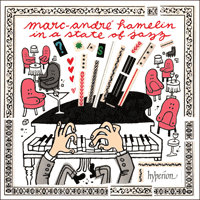

Marc-André Hamelin’s technical and interpretative brilliance over an extraordinarily wide range of repertoire has placed him firmly in the top rank of living pianists. His recent recordings of Alkan and Haydn were universally acclaimed in the highest terms. In this latest recording, Hyperion presents Marc-André Hamelin ‘in a state of jazz’, as he turns his attention to the music of Kapustin, Antheil, Gulda and Weissenberg—all composers who felt keenly that there was a fundamental desire on the part of the concert-going public to hear something different. This wonderful disc is full of surprises—as Hamelin writes in his entertaining yet scholarly liner notes, ‘There is no jazz in this recording. At least not in the traditional sense … there is much to be enjoyed here, and much to be amazed by’.

So why call this a jazz album? I wanted to pay homage to four twentieth-century composers who were particularly successful, each in their own sometimes peculiar fashion, in fusing the spirit or the letter of jazz with music intended for the concert hall. All of the composers featured here felt keenly that there was a fundamental desire on the part of the concert-going public to hear something different; they obviously regarded the jazz world as something which is just as vital, fascinating and necessary as classical music, and definitely not to be looked down upon. I also felt that, imperfect as it is, the jazz ‘excuse’ is the best one—the only one, really—to help bring the work of these composers together, even though each of the creators featured here explores it in a completely different way. It is my hope that grouping them within the confines of this CD will cause them to influence each other synergistically; to my mind, this is clearly a case when listening to a whole disc in one sitting can be a positive experience. If this should result in overload, I hope it’s an overload of the best kind! There is much to be enjoyed here, and much to be amazed by.
It would be difficult to think of a pianist as successful as Friedrich Gulda pursuing two completely different—and simultaneous—musical careers. Initially recognized and respected as an interpreter of the so-called core repertoire ranging from Bach to Debussy, he was bitten by the jazz bug in 1950 and was never the same again, producing a very large amount of music in that idiom, and performing with some of the greatest names, Joe Zawinul and Chick Corea among them.
The ten pieces in the collection entitled Play Piano Play are designated in the score as ‘exercises’ (‘Übungsstücke’ in German). Gulda originally designed the series for didactic purposes as one of the steps within what he once called ‘the long road to freedom’, i.e. a progressive forsaking of all the stylistic strictures of conventionally notated music, along with a freer stylistic approach. One can understand them as ‘exercises’ if one considers that they are very useful in providing classically trained performers with the means to learn how to ‘swing’, and in teaching them how jazz inflections differ from classical music. However, Gulda’s designation of them as ‘exercises’ is overly modest, and should not deter pianists from attempting groups of them in recitals, despite the fact that some of them require a certain amount of improvisation. These ten pieces are wonderfully refreshing, and demand to be much better known.
The Prelude and Fugue has the interesting distinction of having been played and recorded by none other than Keith Emerson, of Emerson, Lake and Palmer, on the album Welcome Back My Friends to the Show That Never Ends. The swinging arpeggio patterns of the prelude pave the way for a highly syncopated fugue subject, developed at a frenetic pace and keeping the performer busy disentangling some rather gnarly four-part writing. At the point of highest excitement, just before the coda, the score breaks off, and Gulda calls on the pianist to improvise the rest of the piece. This is probably the main reason why this tremendously exciting and beguiling work, though several decades old, has not so far entered the repertoire.
It has been an immense pleasure for me to see the growing status that the work of the Russian composer and pianist Nikolai Kapustin has enjoyed over the last few years. Not so long ago it was possible to do a Google search for him and come up completely empty-handed, a situation that has now radically changed. Since then Kapustin’s music has captured the imagination of professional musicians and students alike.
It is easy to see why. The reason for its tremendous appeal lies in the way Kapustin has managed to graft genuinely idiomatic and tuneful jazz writing onto established classical forms. Indeed, most of his works bear the kind of traditional-sounding titles that give no indication of the tenor of their content, his output mainly consisting of sonatas, variations, preludes and fugues, inventions, suites, bagatelles and the like. Thus his compositions provide classically trained musicians with elements they can already relate to, even if they might not be acquainted with the jazz idiom. They also do not involve any kind of improvisation, which makes them more appealing to most musicians, and easier for them to approach. It is true that Gulda had already achieved this kind of fusion of jazz and concert music to some extent, but Kapustin—who had not been aware of Gulda as a composer—developed his own language, entirely independently, and made it into something particularly vital and exciting that truly does not sound like anything else. I well remember my initial excitement at hearing the second Sonata; the work quickly became an obsession, and I urgently wanted to explore Kapustin’s other music, something which at that time (1998) was very difficult to achieve. Now that his output is finally being published outside Russia (at music-trading.co.uk), the music world can have ready access to the production of this unique and wonderful creator; performances are already proliferating.
The Sonata No 2 dates from 1989 and so far constitutes Kapustin’s most extended work in the genre. Written in the bright, sanguine key of E major, it is cast in a traditional four-movement mould. There is, however, nothing at all traditional about the piano writing itself, which teems with interesting and innovative twists and turns, both stylistically and pianistically. Indeed, one remarkable feature of Kapustin’s piano writing is that it is always made to fit the hand beautifully. He always insists on composing at the piano, in order to avoid coming up with figurations which would not fit the hand well. Prokofiev once described one of Nikolai Medtner’s short piano pieces as being so comfortable as to be ‘always right there, under the fingers’. The same can unquestionably be said of Kapustin at any point within the body of his piano works. Indeed, my personal feeling is that, on a purely pianistic level, Kapustin and Medtner tower above any other piano composer in history, as far as pure comfort at the keyboard is concerned.
It is best to leave the listener to discover the many surprises contained in this exuberant work—as well as the various apparent influences—though a couple of features are worth pointing out. The brilliant and overwhelmingly energetic first movement is curiously but very effectively rounded out by a reflective and rather lengthy coda, in great contrast to the ebullience of what came before. And the last movement is unique in its rhythmic framework; it is a perpetual motion set in a repeated pattern of 8+7+8+5 beats, and keeps to this stilted sequence up to the very last bar, resulting in many unexpected accents. Incidentally, this movement is usually thought to have been inspired by the pianism of Art Tatum, but this is because it is often performed too quickly. Kapustin’s stated influence here is the world of country music.
The reputation of Bulgarian-born Alexis Weissenberg as one of the great pianists of the twentieth century is secure and well-documented. What is much less well known is the extent of his activities as a composer and arranger, and the power and individuality of his language. It is true that he has written relatively little (all of it in a popular style), and that what he has produced is hard to come by. I hope that this recording will help to bring attention to a small portion of his uniquely wonderful production. His harmonic language, though entirely tonal, contains a great deal of dissonance, used in what seems at first to be entirely illogical ways. This, with the uncommon density of the writing, makes it fantastically difficult to learn the music. I remember going through several false starts in learning the Sonate en état de jazz … reading a few pages, abandoning the task, getting back to it, giving up again … before ultimately giving a big push, which finally did the trick. Indeed this work belongs to the category of pieces which are so complex that they need to be at least partially learned before they can be evaluated. But I certainly don’t want to give the impression that this sonata is ‘cerebral’. In fact, it has quite the opposite effect on audiences! And I definitely do not want to discourage pianists from taking it on.
The composer’s preface to the score is worth reproducing here in its entirety (my translation):
A sonata in a state of jazz, like someone in a state of inebriation, hysteria, infatuation or inspiration, is not in a normal state. The resulting shock, the consequences, palpitations, excessive enthusiasm and drunkenness of the soul, force it to operate within a cubist logic, which only appears to be lucid when placed in the context of a certain kind of madness.
I have subjected a classically constructed composition to what I would call ‘contamination by jazz’. Four personalities, indigenous to four specific locales—Buenos Aires, New York, New Orleans and Rio de Janeiro—are united by a common language which harks back to 1925 or thereabouts, but whose writing is inspired by the jazz of the 1950s; the Tango, the Charleston, the Blues and the Samba all unquestionably have their own individual personalities, but more significantly they all have specific characteristics which both differentiate and identify them organically, beyond concerns of rhythm or style.
The Tango, usually played by a small group including piano, accordion, drums and violin, is written in four beats to the bar. The intentionally mechanistic repetitiveness and implacability of its pulsating chords give the Tango a somewhat fatalistic character. As if seeking to avoid some kind of eventual imprisonment, the melody charts its own way, as if its existence hinged on the freedom of its own style. The juxtaposition of these two contradictory elements creates a poignant feeling. The steps of the Tango force two bodies entwined and absorbed in one another to bend, bow, break, twist and flip to the sound of a single particular note, word or harmony. The result is never very far from melodrama, but it still remains dramatic.
From this formula, I have retained two elements as basic material: pathos, and a certain declamatory style. The fact that this movement is intentionally written in three-quarter time erases the dominating rhythm. However, if we were to split the measures into groups of four, we would naturally recognize the inexorable pulse of a heart beating in common time; thus this slowing-down effect creates an unreal kind of distant memory, sentimental but temporally frozen.
The Charleston, on the other hand, is a dance which is essentially dependent upon the geometry of its rhythm. Here, melodies and harmonies are made to function more as background, becoming inconsequential. The Charleston is danced individually, both participants being apart from one another. Its syncopations are characteristically mechanistic and seem to evoke, both visually and aurally, the accelerated appearance and the characteristic abruptness of silent films from the same era. There is still room for elegance, but what predominates is thirst for fun and appetite for laughter.
The Blues is above all a cry of solitude, and sometimes a confession of loneliness. A voice, a saxophone, a trumpet or a solo clarinet, attempts to express this while trying to be heard beyond an enclosed space. An aura of melancholy is created by the vague quality of the rhythmic contour, and also by underlying harmonies which, though blurred and troubled, are sophisticated by their very nature. And the melody is like the snake that follows a path as it goes to die in the desert. The Blues is danced by two people, without strict rhythmic precision, but still with a sense of continuity. The dancers glide, hesitate, teeter, falter, freeze and begin again, as if they were nearing a final separation. The mood is one of infinite melancholy, and the tonal color is that of the night.
With the Samba the tropical sun bursts forth. A mixture of paroxystic rhythms and luxurious harmonies give the music a constant light-headed sensuality. The tunes, in tandem with the harmonic climate, evoke, recount, claim or condemn the memory of a recent and distant past—a lost loved one or an exotic beach, real or imagined. This feeling has a specific name in Brazil—saudade. More physical than ‘nostalgia’, and more ambiguous than Sehnsucht (the search for something once seen, in German) the word has no direct English equivalent, the saudade being a tribal state of mind, whose verbal, tangible and aural concept remains enigmatic, even when expressed through ritual. Thus it retains its mysterious and attractive qualities because it can only be felt while in a hypnotic state.
Finally, having placed so much stress on the moods of intoxication, contamination, drunkenness, paroxysm, hysteria, palpitation and madness which fuel this work, I find myself in a state of urgent obligation to swear solemnly that I have written this sonata in a state of indisputable sobriety!
Sometime in the 1950s there appeared on the Lumen label an extended play 45-rpm record called Mr. Nobody Plays Trenet. It contained unusually creative and entertaining piano settings of six songs by the French singer-songwriter Charles Trenet (1913–2001). The identity of ‘Mr. Nobody’ was kept secret until a few years ago, when it was revealed to be Alexis Weissenberg. It is easy to see why Weissenberg chose to adopt a pseudonym for this recording. At that time a serious classical pianist dabbling in such trivialities as popular song would most likely have been compromising his own career. (How times have changed. This kind of thing is welcomed, even encouraged, by record companies now.)
From the moment I was introduced to this recording by a friend, I was anxious to play the arrangements myself. But since Weissenberg never wrote them down, I had to create a score. Luckily, the whole experience of transcribing the songs was pleasant—despite my devoting an entire month to it. Anyone who is familiar with Trenet’s songs in their original form will be delightfully surprised by what Weissenberg has done with them. Unusual touches abound: in Coin de rue, an evocation of the narrator’s childhood, the listener is treated to the sounds of a barrel organ; the ‘oom-pah’ rhythm of Boum! becomes a foxtrot, while the moderately paced Ménilmontant is transformed into a headlong moto perpetuo.
Whatever the musical merits of his production might be, the American George Antheil will at least go down in history as one of the most remarkable of all mavericks. He had a refreshing disregard for conventionality. To get an idea of his vision and willingness to explore extremes, listen to his Ballet mécanique from 1924—with its multiple pianos, percussion arsenal, sirens, bells and aeroplane propeller. Following a disappointing performance of this work in Carnegie Hall in 1927, Antheil greatly toned down his style, eventually producing several film scores in Hollywood. However, the work played here dates from his early tumultuous days as a touring pianist, when he mainly performed his own aggressive and mechanistic piano pieces.
Anyone attempting to talk about the Jazz Sonata on a deeply analytical level isn’t playing with a full deck. Aside from pointing out that it shares a good deal of its material with the very entertaining Jazz Symphony written around the same time, it would be useless to dissect this little ninety-second piece. Suffice it to say that this amusing and intriguing bit of musical nonsense is at least remarkable for being one of the first examples (if not the first) of outright musical collage. There’s no logic whatsoever in the way it’s assembled. It works—somehow.
Marc-André Hamelin © 2008
Alors pourquoi parler d’album jazz? J’ai voulu rendre hommage à quatre compositeurs du XXe siècle qui, d’une manière parfois singulière, réussirent tout spécialement à fusionner l’esprit ou la lettre du jazz avec la musique destinée au concert. Chacun d’eux ressentit vivement le désir fondamental des habitués des concerts, avides d’entendre quelque chose de différent; et, à l’évidence, ils considérènt l’univers du jazz comme tout aussi vital, fascinant et nécessaire que la musique classique—un univers qu’il ne fallait résolument pas négliger. J’ai aussi senti que le «prétexte jazz», aussi imparfait soit-il, était le meilleur moyen—le seul, en réalité—de regrouper la musique de ces compositeurs, même s’ils ont exploité l’idée du jazz de façon complètement différente. J’espère, en les regroupant sur ce CD, que leurs œuvres s’influenceront de façon synergique; selon moi, c’est sans conteste un de ces cas où écouter tout un disque d’une traite peut s’avérer une expérience constructive. Si cela devait se traduire par un excès, alors j’espère que ce sera le meilleur des excès! Car il y a là matière à savourer et à être surpris.
Il serait difficile de nommer un pianiste, à part de Friedrich Gulda, qui ait obtenu autant de succès tout en menant deux carrières aussi différentes à la fois. D’abord reconnu et respecté comme un interprète du grand répertoire, de Bach à Debussy, il attrapa le virus du jazz en 1950 et s’en trouva changé à jamais, composant maintes pièces dans cet idiome et jouant avec les plus grands, notamment Joe Zawinul et Chick Corea.
Les dix morceaux du recueil intitulé Play Piano Play sont qualifiés dans la partition d’«exercices» («Übungsstücke» en allemand). À l’origine, Gulda les conçut dans un but didactique, comme une étape sur ce qu’il appela un jour «la longue route vers la liberté»—un renoncement progressif à toutes les restrictions stylistiques inhérentes à la musique notée de manière conventionnelle, doublé d’une approche stylistique plus libre. On peut les comprendre comme des «exercices» si l’on considère qu’ils aident beaucoup les interprètes de formation classique à apprendre le «swing» tout en leur montrant en quoi les inflexions du jazz se distinguent de celles de la musique classique. Cependant, ce terme d’«exercice» choisi par Gulda est trop modeste et il ne faudrait pas qu’il dissuade les pianistes d’essayer d’en placer plusieurs en récital, même si certains requièrent pas mal d’improvisation. Ces dix pièces, merveilleusement revigorantes, demandent à être bien mieux connues.
Le Prelude and Fugue a cette particularité intéressante d’avoir été joué et enregistré par Keith Emerson (d’Emerson, Lake and Palmer), rien de moins, sur l’album Welcome Back My Friends to the Show That Never Ends. Les modèles arpégés swingants du prélude pavent la voie à un sujet de fugue fort syncopé, développé à une allure frénétique et où l’interprète doit sans cesse démêler une écriture à quatre parties plutôt nouée. Au comble de l’excitation, juste avant la coda, la partition s’arrête brutalement et Gulda demande au pianiste d’improviser le reste du morceau—ce qui pourrait expliquer pourquoi cette œuvre terriblement passionnante et séduisante, déjà vieille de plusieurs décennies, n’est toujours pas entrée au répertoire.
Ce fut pour moi un immense plaisir de constater le prestige grandissant dont a joui, ces dernières années, l’œuvre du compositeur et pianiste russe Nikolai Kapustin. Il n’y a pas si longtemps encore, on pouvait lancer une recherche sur Google et ne rien trouver du tout. Mais cette situation a radicalement changé depuis que l’œuvre de Kapustin a ravi l’imagination des musiciens professionnels comme des étudiants.
Et l’on comprend aisément pourquoi, son immense attrait tenant à la manière dont Kapustin est parvenu à greffer une écriture de jazz authentiquement idiomatique et mélodieuse sur des formes classiques établies. En effet, la plupart de ses pièces portent des titres aux allures traditionnelles (sonates, variations, préludes et fugues, inventions, suites et autres bagatelles), qui ne trahissent rien de leur contenu. Aussi offrent-elles aux musiciens de formation classique des éléments auxquels ils peuvent d’emblée se raccrocher, même si l’idiome jazz ne leur est pas familier. En outre, l’absence d’improvisation les rend, pour nombre de musiciens, plus faciles d’approche et plus séduisantes. Certes, Gulda avait déjà, dans une certaine mesure, fait fusionner le jazz et la musique de concert, mais Kapustin—qui ne connaissait pas le Gulda compositeur—développa son propre langage, en toute indépendance, pour obtenir quelque chose de particulièrement énergique et passionnant, de vraiment à part. Je me rappelle bien mon enthousiasme en entendant la Sonate no 2: cette œuvre est vite devenue une obsession et j’ai alors absolument voulu explorer la musique de Kapustin, ce qui, en 1998, était difficile au possible. Maintenant que sa production a enfin été publiée en dehors de la Russie (sur music-trading.co.uk), le monde de la musique peut avoir directement accès à l’œuvre de ce créateur unique et merveilleux—d’ailleurs, les interprétations prolifèrent déjà.
La Sonate no 2 date de 1989 et constitue, à ce jour, la plus vaste sonate de Kapustin. Écrite dans la tonalité éclatante et confiante de mi majeur, elle est coulée dans un moule traditionnel en quatre mouvements. Mais il n’y a rien de traditionnel dans cette écriture fourmillant de tours et de détours intéressants et novateurs, sur le plan stylistico-pianistique. De fait, l’un de ses traits remarquables est qu’elle est toujours merveilleusement adaptée à la main, Kapustin veillant à composer au piano pour éviter toute figuration malvenue. Un jour, Prokofiev trouva une des courtes pièces pour piano de Medtner si agréable qu’elle était «toujours là, sous les doigts». On peut sans conteste dire la même chose du corpus pianistique de Kapustin. En fait, j’ai le sentiment que, sur le plan purement pianistique, et pour ce qui est du confort au clavier, Kapustin et Medtner dominent de très haut tous les compositeurs pour piano.
Mieux vaut laisser l’auditeur découvrir les nombreuses surprises et les diverses influences apparentes qui émaillent cette œuvre exubérante. Deux caractéristiques valent cependant d’être soulignées. Le premier mouvement brillant, énergique en diable, est curieusement, mais efficacement complété par une assez longue coda méditative, en fort contraste avec le bouillonnement qui précède. Le dernier mouvement, lui, a une trame rythmique unique: c’est un mouvement perpétuel sis dans un schéma répété de 8+7+8+5 temps, une séquence guindée, conservée jusqu’à la toute dernière mesure et source de nombreux accents inattendus. Pour la petite histoire, on considère généralement que ce mouvement a été inspiré par le pianisme d’Art Tatum, mais c’est juste parce qu’il est souvent joué trop vite. Ici, l’influence déclarée de Kapustin est l’univers de la musique country.
Musicien d’origine bulgare, Alexis Weissenberg est l’un des plus grands pianistes du XXe siècle—une réputation établie et bien documentée. Ce que l’on connaît beaucoup moins, c’est l’étendue de ses activités de compositeur et d’arrangeur, ainsi que la puissance et l’individualité de son langage musical. Il est vrai qu’il a relativement peu composé (et à chaque fois dans un style populaire) et que ses œuvres sont difficilement trouvables. J’espère que cet enregistrement concourra à attirer l’attention sur une petite partie de cette production remarquablement merveilleuse. Quoique entièrement tonal, son langage harmonique utilise quand même beaucoup de dissonances, et ce sans logique apparente. Ce qui, ajouté à la densité peu commune de l’écriture, rend l’apprentissage de cette musique extraordinairement difficile. Je me rappelle être passé par plusieurs faux départs en apprenant la Sonate en état de jazz … lisant quelques pages, renonçant, m’y remettant et abandonnant de nouveau … avant d’en mettre un bon coup et d’en venir à bout. Car cette sonate fait partie de ces pièces qui sont si complexes qu’il faut les apprendre au moins partiellement avant de pouvoir les évaluer. Mais je ne veux surtout pas donner l’impression d’une sonate «cérébrale»! En réalité, elle produit l’effet tout à fait inverse sur le public. Et je ne veux absolument pas dissuader les pianistes de s’en emparer.
La préface rédigée par Weissenberg pour la partition vaut d’être reproduite in extenso:
Une sonate en état de jazz, comme une personne en état d’intoxication, d’hystérie, d’amourachement, ou de grâce, n’est pas dans un état normal. Le choc subi, les conséquences, les palpitations, l’excès d’enthousiasme, et la soûlerie du cerveau, l’obligent à fonctionner dans une logique cubiste, qui n’est lucide que dans une certaine folie.
J’ai fait subir la contamination du jazz à une composition construite sur des bases classiques. Quatre tempéraments, influencés par des lieux différents—Buenos Aires, New-York, la Nouvelle-Orléans, et Rio de Janeiro—s’unissent par un langage commun qui évoque les années 25, mais dont l’écriture s’inspire du jazz des années 50. Le tango, le charleston, le blues ou la samba, renferment, certes, leurs pathologies individuelles, mais aussi, et surtout un genre spécifique qui, au-delà d’un rythme ou d’un style, les précise—et diffère—organiquement.
Le tango, joué traditionnellement par une petite formation, composée de piano, accordéon, batterie et violon, s’exerce sur un rythme à quatre temps. L’automatisme voulu des accords répétitifs et implacables, lui confère un accent de fatalité. Semblant vouloir échapper à un éventuel emprisonnement, une mélodie crée son propre parcours comme si son existence dépendait de la liberté de son style. La juxtaposition de ces deux éléments contradictoires crée un effet pathétique. Dansé, le tango oblige deux corps enlacés, absorbés l’un par l’autre, à se plier, se ployer, se casser, se tordre, et se renverser, au seul accent d’une note, d’un mot, ou d’une harmonie, précis. Le mélo n’est jamais loin, mais le résultat reste dramatique.
Comme base d’inspiration, j’ai retenu principalement deux éléments: le pathos, et un certain style déclamatoire. L’annotation de ce mouvement, intentionnellement marqué à trois temps, efface la dominante du rythme. Toutefois si l’on décomposait les mesures par groupes de quatre, on retrouverait naturellement la permanence nécessaire d’un coeur qui bat à quatre temps; ainsi l’effet, au ralenti, crée une certaine irréalité, comme un souvenir ancien, sentimental mais figé.
Le charleston, en revanche, est une danse essentiellement dépendante de la géométrie de son rythme. La mélodie, les mélodies et les harmonies, reléguées au deuxième plan, restent inconséquentes. Le charleston se danse isolément, le couple détaché l’un de l’autre. Son rythme syncopé et systématique, voulu mécanique, a pour effet (sonore et visuel) de rappeler l’accélération, même la brusquerie accidentelle d’images de films muets de la même époque. L’élégance n’en est pas exclue, mais ce qui prédomine est la soif de l’amusement et l’appétit du rire.
Le blues est avant tout un cri de solitude, parfois un aveu d’esseulement. Une voix, un saxophone, une trompette, une clarinette solo cherchent à le dire et à se faire entendre dans un cercle isolant. Un fond rythmique peu articulé, des harmonies sous-jacentes, floues et troubles, mais sophistiquées parce que construites d’une certaine manière, inspirent le vague à l’âme. Pour la mélodie, c’est le chemin que parcourt un serpent dans le désert, pour y mourir. Le blues se danse à deux, sans précision rythmique, mais avec un sens de continuité cadencée. Le couple uni glisse, hésite, titube, chancelle, se fige, recommence, comme s’il était au bord d’une séparation définitive. Le climat est d’une infinie mélancolie. La couleur tonale est celle de la nuit.
Avec la samba, c’est le soleil des Tropiques qui éclate. Un mélange de rythmes à leur paroxysme et d’harmonies luxuriantes la maintient en un vertige sensuel constant. Les mélodies, étroitement liées aux climats harmoniques, évoquent, racontent, revendiquent, ou condamnent le souvenir d’un passé récent, ou lointain, d’un corps aimé et perdu, d’une plage connue ou rêvée. Cette sensation ressentie porte un nom précis au Brésil—saudade. Plus physique que «nostalgie» plus ambiguë que Sehnsucht (la recherche du revoir, en allemand) le mot reste intraduisible, le saudade étant un état d’âme tribal, dont l’aveu, verbal, plastique ou sonore, reste énigmatique, même au niveau d’une expression rituelle. Ainsi il garde son mystère et son attirance à travers un filtre d’hypnose.
Pour conclure, ayant tant insisté sur les états d’âme, d’intoxication, de contamination, de soûlerie, de paroxysme, d’hystérie, de palpitations, et de folie, dont se nourrit cette composition, je me trouve dans l’obligation urgente de devoir jurer sur mon honneur avoir écrit cette Sonate en état de sobriété indiscutable!
Dans les années 1950, un double 45 tours intitulé Mr. Nobody Plays Trenet parut sur le label Lumen. Il proposait des versions pianistiques exceptionnellement créatives et divertissantes de six chansons de Charles Trenet (1913–2001). L’identité de «Mr. Nobody» demeura longtemps secrète et le nom d’Alexis Weissenberg a été révélé voilà seulement quelques années. Ce choix d’un pseudonyme est facile à comprendre: à l’époque, un pianiste classique sérieux donnant dans des futilités comme la chanson populaire aurait très certainement compromis sa carrière. (Les temps ont bien changé et de telles choses sont aujourd’hui bien perçues, voire encouragées par les maisons de disques.)
Dès le moment où un ami m’a fait découvrir cet enregistrement, j’ai absolument voulu jouer ces arrangements moi-même. Mais Weissenberg ne les ayant jamais notés, j’ai dû créer une partition. Par bonheur, la transcription de ces chansons fut une expérience plaisante—qui m’a tout de même pris un mois. Quiconque connaît la version originale des chansons de Trenet sera agréablement surpris par ce que Weissenberg en a fait. Les touches insolites abondent: dans Coin de rue, que évoque l’enfance du narrateur, l’auditeur entend les sonorités d’un orgue de Barbarie; le rythme «oum-pah» de Boum! devient un fox-trot et Ménilmontant, à l’allure modérée, est métamorphosé en un impétueux moto perpetuo.
Quels que puissent être les mérites musicaux de sa production, l’Américain George Antheil restera au moins dans l’histoire pour avoir été un franc-tireur des plus remarquables, mû par un stimulant rejet de tout ce qui était conventionnel. Pour se faire une idée de sa vision des choses et de sa volonté d’explorer les extrêmes, il suffit d’écouter son Ballet mécanique (1924), avec ses multiples pianos, son arsenal de percussions, ses sirènes, ses cloches et son hélice d’avion. Après une exécution décevante de cette œuvre au Carnegie Hall en 1927, Antheil adoucit nettement son style, allant jusqu’à composer plusieurs musiques de films à Hollywood. Toutefois, la pièce jouée ici date de ses débuts tumultueux, lorsqu’il se produisait en tournées, interprétant surtout ses propres œuvres pour piano, agressives et mécaniques.
Tenter une approche très analytique de la Jazz Sonata est très sot. À part souligner qu’elle partage l’essentiel de son matériau avec la fort divertissante Jazz Symphony, écrite vers la même époque, il serait vain de disséquer cette œuvrette de quatre-vingt-dix secondes. Il suffit de dire que cette amusante et intrigante absurdité musicale est au moins remarquable sur un point: elle est l’un des premiers exemples (sinon le premier) de pur collage musical. Il n’y a absolument aucune logique dans son assemblage mais elle fonctionne—sans que l’on sache comment.
Marc-André Hamelin © 2008
Français: Hypérion
Warum soll man hier also von einem Jazz-Album sprechen? Ich wollte vier Komponisten des 20. Jahrhunderts meinen Respekt zollen, die außerordentlich erfolgreich waren—jeder auf seine manchmal sehr spezielle Weise, indem sie den Geist oder die Sprache des Jazz in die für den Konzertsaal bestimmte Musik einfließen ließen. Alle hier vorgestellten Komponisten fühlten tief in ihrem Innern, dass die Besucher von Konzerten ein fundamentales Bedürfnis haben, einmal etwas anderes zu hören. Sie sahen offensichtlich die Welt des Jazz als etwas an, das genauso lebenswichtig, faszinierend und notwendig ist wie klassische Musik und in keiner Weise von oben herab angesehen werden darf. Ich hatte auch das Gefühl, dass bei aller Unvollkommenheit des Begriffs die Bezeichnung „Jazz“ die bestmögliche, die wirklich einzige ist, die Werke dieser Komponisten unter einen Hut zu bringen, auch wenn jeder der hier vorgestellten Komponisten das Problem in ganz verschiedener Weise angepackt hat. Ich habe die Hoffnung, dass sie sich, im engen Rahmen dieser CD vereint, gegenseitig positiv beeinflussen, so dass es, wie ich glaube, eine positive Erfahrung sein könnte, diese CD auf einmal komplett anzuhören. Sollte das zu einer Übersättigung führen, so ist das hoffentlich eine Übersättigung der besten Art! Denn es gibt hier eine Menge zu genießen und auch nebenbei zu staunen.
Nur sehr schwer kann man sich einen Pianisten vorstellen, der so erfolgreich gleichzeitig zwei derart verschiedenartige musikalische Karrieren verwirklichte wie Friedrich Gulda. Anfänglich geschätzt und geachtet als Interpret des so genannten Kernrepertoires von Bach bis Debussy, wurde er 1950 vom Jazz-Virus infiziert. Von da an war er nicht mehr derselbe und produzierte eine riesige Menge Musik in diesem Idiom. Dabei trat er mit einigen der bedeutendsten Leute auf, darunter Joe Zawinul und Chick Corea.
Die Sammlung von zehn Stücken mit dem Titel Play Piano Play ist im Notentext als „Übungsstücke“ bezeichnet. Gulda schrieb die Reihe ursprünglich für didaktische Zwecke, als einen Schritt auf dem, wie er es einmal nannte, „langen Weg zur Freiheit“, d.h. als schrittweisen Abschied von den stilistischen Zwängen der konventionellen, notierten Musik, der begleitet ist von einer stilistisch freieren Herangehensweise. Man kann sie als „Übungsstücke“ ansehen, wenn man sich darüber im Klaren ist, dass sie sehr hilfreich sind, klassisch geschulte Interpreten mit Methoden zum Erlernen des „Swing“ auszustatten und ihnen den Unterschied zwischen Modulationen beim Jazz und in der Klassik beizubringen. Trotzdem ist Gulda äußerst zurückhaltend, wenn er sie als „Übungsstücke“ bezeichnet. Deshalb sollten sich Pianisten nicht davon abhalten lassen, ausgewählte Stücke in ihre Klavierabende aufzunehmen, trotz der Tatsache, dass einige von ihnen eine ordentliche Portion Improvisation benötigen. Diese zehn Stücke sind wunderbar erfrischend und hätten eine größere Bekanntheit verdient.
Prelude and Fugue genießt die interessante Auszeichnung, dass das Werk von keinem Geringeren gespielt und aufgenommen wurde als von Keith Emerson von Emerson, Lake and Palmer, auf ihrem Album Welcome Back My Friends to the Show That Never Ends. Die swingenden Arpeggio-Figuren des Preludes ebnen den Weg für ein extrem synkopiertes Fugenthema, das in einem hektischen Tempo beginnt und den Spieler in Atem hält, wenn er die recht verzwickte Vierstimmigkeit entwirren muss. Auf dem Höhepunkt des Getümmels bricht der Notentext genau vor der Coda ab, und Gulda fordert den Pianisten auf, den Rest des Stückes zu improvisieren. Das ist wahrscheinlich der Hauptgrund dafür, warum dieses ungeheuer aufregende und faszinierende Werk bisher keinen Eingang in das Repertoire gefunden hat, obwohl es schon einige Jahrzehnte existiert.
Es war für mich eine unglaubliche Genugtuung, das wachsende Ansehen zu beobachten, das das Werk des russischen Komponisten und Pianisten Nikolai Kapustin in den letzten paar Jahren gewonnen hat. Wenn man vor noch nicht allzu langer Zeit in Google nach ihm suchte, konnte man mit völlig leeren Händen dastehen. Das hat sich mittlerweile radikal geändert, und seither inspiriert Kapustins Musik die Fantasie von Musikprofis und Studenten.
Warum das so ist, kann man leicht herausfinden. Der Grund für die enorme Attraktivität der Musik liegt in der Art und Weise, wie es Kapustin gelingt, wirklich echte und klangvolle Jazz-Schreibweise mit der klassischen Form zu kombinieren. In der Tat tragen die meisten seiner Werke diese traditionell klingenden Titel, die nichts über die Tendenz des Inhalts aussagen. Sein Werk besteht hauptsächlich aus Sonaten, Variationen, Preludes und Fugen, Inventionen, Suiten, Bagatellen und ähnlichen Titeln, so dass sie auch klassisch ausgebildeten Musikern Elemente bieten, zu denen sie Zugang finden können, selbst wenn sie mit dem Jazz-Idiom nicht vertraut sind. Sie beinhalten auch keinerlei Formen von Improvisation, was sie für die meisten Musiker attraktiv und leichter zugänglich macht. Natürlich hatte schon Gulda in gewisser Hinsicht diese Form der Kombination von Jazz und Konzertmusik verwirklicht; aber Kapustin (der von Gulda als Komponisten nichts wusste) entwickelte seine eigene, völlig eigenständige Tonsprache und verwandelte sie in etwas außergewöhnlich Lebendiges und Aufregendes, das absolut unverwechselbar klingt. Ich erinnere mich noch gut an meine Begeisterung, als ich die zweite Sonate zum ersten Mal hörte; das Werk zog mich schnell in seinen Bann, und ich wollte dringend die übrige Musik kennen lernen. An die war aber zu jener Zeit (1998) nur sehr schwer heranzukommen. Jetzt, da sein Werk endlich auch außerhalb Russlands veröffentlicht wird (music-trading.co.uk), kann die Musikwelt problemlos auf die Kompositionen dieses einmaligen und wundervollen Künstlers zugreifen, ein Umstand, der die Zahl von Aufführungen seiner Werke deutlich gesteigert hat.
Die Sonate Nr. 2 stammt aus dem Jahr 1989 und ist bis jetzt Kapustins umfangreichstes Werk dieser Art geblieben. Geschrieben in der strahlenden und optimistischen Tonart E-Dur, ist sie in traditioneller Form komponiert. Trotzdem finden wir überhaupt nichts Traditionelles im Klaviersatz, der von interessanten und innovativen Vertracktheiten geradezu wimmelt, und zwar sowohl stilistisch als auch pianistisch. Tatsächlich ist es aber eine bemerkenswerte Eigenschaft von Kapustins Klavierstil, dass er stets wunderbar in der Hand liegt. Er legt immer Wert darauf, am Klavier zu komponieren, um zu vermeiden, dass ihm unklaviermäßige Wendungen unterkommen. Prokofiew beschrieb einst eines der kurzen Klavierstücke Medtners als so komfortabel, dass es „immer genau unter den Fingern“ liege. Dasselbe kann man in jedem Fall auch bei Kapustin an jeder Stelle seines Klavierwerkes sagen. In der Tat habe ich das ganz subjektive Gefühl, dass unter rein pianistischen Gesichtspunkten Kapustin und Medtner, soweit es ausschließlich den reinen Komfort des Klaviersatzes betrifft jedem anderen Klavierkomponisten der Musikgeschichte haushoch überlegen sind.
Am besten überlässt man es dem Hörer, die vielen Überraschungsmomente, die dieses schwungvolle Werk enthält, zu entdecken, ebenso die verschiedenen ins Auge fallenden Einflüsse. Trotzdem verdienen einige Besonderheiten Erwähnung. Der brillante und überwältigend dynamische erste Satz wird in ungewöhnlicher Weise, aber sehr wirkungsvoll von einer nachdenklichen und ziemlich ausgedehnten Coda abgerundet, die in großem Kontrast zum Überschwang des Vorhergehenden steht. Der letzte Satz ist einmalig in seinem rhythmischen Grundgerüst: es ist ein Perpetuum mobile mit dem sich wiederholenden Taktschema 8+7+8+5, das diese etwas gekünstelte Sequenz bis zum allerletzten Takt beibehält und das zu vielen unerwarteten Akzenten führt. Übrigens glaubt man allgemein, dass dieser Satz durch die Pianistik Art Tatums angeregt worden sei, vielleicht deshalb, weil die Sonate oft zu schnell gespielt wird. Kapustin war hier nach eigener Aussage von der Country-Musik beeinflusst.
Das Ansehen des gebürtigen Bulgaren Alexis Weissenberg als eines der größten Pianisten des 20. Jahrhunderts ist unangefochten und gut dokumentiert. Weniger bekannt ist das Ausmaß seiner Aktivitäten als Komponist und Bearbeiter und die Kraft und Individualität seiner Musiksprache. Es ist richtig, dass er relativ wenig geschrieben hat (alles davon in einem populären Stil), und dass das, was er produziert hat, nur schwer zu bekommen ist. Ich hoffe, dass diese Aufnahme dazu beiträgt, die Aufmerksamkeit auf einen kleinen Teil seiner einmalig schönen Werke zu lenken. Obwohl seine harmonische Sprache völlig tonal ist, enthält sie eine Menge Dissonanzen, die, wie es auf den ersten Blick aussieht, vollkommen unlogisch verwendet werden. Dieser Umstand zusammen mit der ungewöhnlichen Dichte des Klaviersatzes macht es unwahrscheinlich schwierig, diese Musik zu lernen. Ich erinnere mich, dass ich beim Erlernen der Sonate en état de jazz einige Fehlstarts hingelegt habe. Ich spielte ein paar Seiten vom Blatt, legte das Projekt wieder zur Seite, kam erneut darauf zurück, gab es abermals auf, bevor ich mir endgültig einen Ruck gab und dabei endlich Erfolg hatte. Tatsächlich gehört dieses Werk zu der Kategorie von Stücken, die so komplex sind, dass man sie wenigstens teilweise lernen muss, bevor man über sie urteilen kann. Aber ich will auf keinen Fall den Eindruck erwecken, die Sonate sei „verkopft“. Tatsächlich macht sie auf den Zuhörer den gegenteiligen Eindruck! Und ich will Pianisten keinesfalls entmutigen, sich mit ihr zu befassen.
Das Vorwort des Komponisten zu seinem Werk ist es wert, hier vollständig wiedergegeben zu werden:
Eine Sonate in „Jazz-Stimmung“, wie sich jemand im Zustand der Trunkenheit, der Hysterie, der Verliebtheit oder der Inspiration befindet, ist nicht im Normalzustand. Der daraus resultierende Schock, die Konsequenzen, das Herzklopfen, der exzessive Enthusiasmus und der Rausch zwingen die Seele sich im Rahmen einer unwirklichen Logik zu bewegen, die nur im Zusammenhang mit einer gewissen Art von Wahnsinn einleuchtend ist.
Ich habe eine klassisch aufgebaute Komposition einer, wie ich es nennen würde, „Kontamination durch Jazz“ unterworfen. Vier Charaktere, vertreten durch vier spezifische Örtlichkeiten—Buenos Aires, New York, New Orleans und Rio de Janeiro—sind durch eine gemeinsame Sprache vereinigt, die an die Zeit um 1925 erinnert, aber deren Schreibweise vom Jazz der 1950er inspiriert ist. Der Tango, der Charleston, der Blues und die Samba sind ohne Frage alle unverwechselbar, aber noch deutlicher haben sie ihre spezifischen Charakteristika, die sie grundsätzlich unterscheiden, aber auch jenseits von Rhythmus und Stil identifizieren.
Der Tango, normalerweise von einer kleinen Gruppe mit Klavier, Akkordeon, Trommeln und Violine gespielt, benützt einen Vierer-Rhythmus. Die gewollte mechanische Wiederholung und Unerbittlichkeit der hämmernden Akkorde geben dem Tango einen irgendwie fatalistischen Charakter. Als ob sie einer Art von möglicher Gefangenschaft entkommen wollte, geht die Melodie ihren eigenen Weg, wie wenn ihre Existenz von der Freiheit ihres eigenen Stils abhängen würde. Die Nebeneinanderstellung dieser zwei widersprüchlichen Elemente hinterlässt einen tiefen Eindruck. Die Tangoschritte zwingen zwei Körper, die sich umschlungen halten und ineinander versunken sind, sich zu biegen und zu beugen, abrupt innezuhalten, sich zu verdrehen und zurückzulehnen zum Klang einer einzigen Note, eines Wortes oder einer Harmonie. Alles erinnert fast an ein Melodram, das Ergebnis ist jedenfalls immer dramatisch.
Als Grundlage für meine Inspiration habe ich grundsätzlich zwei Elemente beibehalten: das Pathos und eine Art deklamatorischen Stil. Die Tatsache, dass dieser Satz bewusst im Dreivierteltakt geschrieben ist, hebt den Grundrhythmus auf. Wenn wir aber die Takte in Vierergruppen zusammenfassen, erkennen wir natürlich den unaufhaltsamen Herzschlag im ursprünglichen Rhythmus. So erzeugt der Effekt der Verlangsamung eine gewisse Wirklichkeitsferne, wie eine alte Erinnerung, sentimental und für kurze Zeit eingefroren.
Im Gegensatz dazu ist der Charleston ein Tanz, der grundsätzlich von der Geometrie seines Rhythmus abhängt. Hier dienen die Melodien und Harmonien mehr als Hintergrund und folgen keiner bestimmten Logik. Der Charleston wird individuell getanzt, wobei die Partner voneinander getrennt sind. Seine Synkopen folgen einem charakteristischen Mechanismus und scheinen sowohl visuell als auch akustisch den beschleunigten Ablauf und die typische ruckartige Bildfolge der Stummfilme aus dieser Zeit in Erinnerung zu rufen. Dabei ist immer noch Raum für Eleganz; aber was vorherrscht, ist der Durst nach Vergnügen und die Lust auf Lachen.
Der Blues ist vor allem ein Schrei der Einsamkeit und manchmal ein Eingeständnis der Verlassenheit. Eine Stimme, ein Saxophon, eine Trompete oder eine Solo-Klarinette versuchen dies auszudrücken, während sie über einen begrenzten Raum hinaus Gehör finden wollen. Eine melancholische Stimmung wird durch die Unbestimmtheit der rhythmischen Konturen, aber auch durch die unterlegten Harmonien erzeugt, die, obwohl verschwommen und unruhig, in Wirklichkeit perfekt durchdacht sind und so das Unterbewusstsein anregen. Die Melodie ist wie ein Pfad, dem eine Schlange in die Wüste folgt, um dort zu sterben. Der Blues wird paarweise getanzt, ohne genauen Rhythmus, dabei aber immer mit dem Gefühl eines kontinuierlichen Impulses. Die Tanzenden schweben, stocken, schwanken, zögern, erstarren und beginnen von neuem, als würden sie einer endgültigen Trennung entgegen gehen. Die Stimmung ist die einer unendlichen Melancholie, und die Tonfarbe ist die der Nacht.
Mit der Samba bricht die tropische Sonne durch. Eine Mischung von berauschenden Rhythmen und üppigen Harmonien verleiht der Musik beständig eine benommene Sinnlichkeit. Die Melodik in Verbindung mit dem harmonischen Umfeld weckt, erzählt, begehrt oder verdammt die Erinnerungen an eine nahe oder ferne Vergangenheit, eine verlorene geliebte Person oder einen exotischen Strand, wirklich oder nur geträumt. Dieses Gefühl hat in Brasilien einen speziellen Namen—saudade. Konkreter als „Nostalgie“ und unbestimmter als Sehnsucht (im Deutschen die Suche nach dem einmal Gesehenen) bleibt das Wort unübersetzbar. So ist saudade ein Seelenbezirk, dessen verbale, konkrete oder akustische Ausformungen rätselhaft bleiben, auch wenn sie nach dem gewohnten Ritual verlaufen. Deshalb behält der Begriff seine geheimnisvollen Eigenschaften und seine Anziehungskraft, weil er nur im Zustand der Hypnose erfühlt werden kann.
Zum Schluss sei noch gesagt: Obwohl ich so viel Gewicht auf den Seelenzustand des Rausches, der Ansteckung, der Trunkenheit, des Taumels, der Hysterie, des Herzklopfens und des Wahnsinns gelegt habe, von denen dieses Werk lebt, spüre ich die zwingende Verpflichtung zu dem feierlichen Schwur, dass ich diese Sonate im Zustand unbezweifelbarer Nüchternheit geschrieben habe.
Irgendwann in den 50ern erschien beim Lumen-Label eine 45er Langspielplatte mit dem Titel Mr. Nobody Plays Trenet. Sie enthält ungewöhnlich einfallsreiche und unterhaltsame Klavierbearbeitungen von sechs Liedern des französischen Liedermachers Charles Trenet (1913– 2001). Die Identität des „Mr. Nobody“ blieb bis vor einigen Jahren geheim, bis herauskam, dass es sich um Alexis Weissenberg handelte. Es leuchtet leicht ein, warum sich Weissenberg entschloss, für diese Aufnahme ein Pseudonym anzunehmen. Zu dieser Zeit hätte ein seriöser klassischer Pianist, der sich nebenher mit so trivialen Dingen wie populären Songs beschäftigte, mit größter Wahrscheinlichkeit seiner Karriere geschadet. (Wie haben sich die Zeiten doch geändert. Genau das ist heute bei den Plattenfirmen höchst willkommen, ja, es wird geradezu gefördert.)
Vom ersten Augenblick an, an dem ich von einem Freund auf diese Aufnahme aufmerksam gemacht worden war, hatte ich den unwiderstehlichen Wunsch, diese Arrangements selbst zu spielen. Aber weil Weissenberg sie niemals niedergeschrieben hat, musste ich sie notieren. Glücklicherweise war die ganze Tätigkeit des Transkribierens der Lieder ein großes Vergnügen, obwohl ich einen vollen Monat darauf verwenden musste. Jeder, der Trenets Lieder im Original kennt, wird angenehm überrascht sein von dem, was Weissenberg aus ihnen gemacht hat. Ungewöhnliche Bearbeitungsmethoden, wo man hinsieht: in Coin de rue, einer Beschwörung der Kindheit des Erzählers, macht der Hörer Bekanntschaft mit einer Drehorgel. Der Umpa-Rhythmus von Boum! gerät zum Foxtrott, während Ménilmontant mit seinem gemäßigten Tempo geradewegs zu einem Moto perpetuo mutiert.
Welchen musikalischen Wert sein Werk auch immer haben mag: der Amerikaner George Antheil wird auf jeden Fall in die Musikgeschichte eingehen als der bemerkenswerteste aller Sonderlinge. Seine Missachtung der Konventionen hat etwas Erfrischendes. Um eine Vorstellung von seinen Ideen und seiner Bereitschaft, Extreme auszuloten, zu bekommen, sollte man sich sein Ballet mécanique von 1924 anhören mit zahlreiche Klavieren, dem Schlagzeug-Arsenal, Sirenen, Glocken und sogar einem Flugzeug-Propeller. Als Konsequenz einer enttäuschenden Aufführung dieses Werkes 1927 in der Carnegie Hall mäßigte Antheil seinen Stil stark und produzierte schließlich einige Film-Vertonungen in Hollywood. Das hier gespielte Werk stammt jedoch aus dieser frühen turbulenten Zeit, in der er als herumreisender Pianist vor allem seine aggressiven und motorischen Klavierstücke spielte.
Jeder, der versucht, die Jazz-Sonate tiefsinnig zu analysieren, liegt völlig daneben. Außer dem Hinweis, dass sie einen großen Teil ihres Materials mit der sehr unterhaltsamen und ungefähr zur gleichen Zeit entstandenen Jazz-Symphony teilt, ist jeder tief schürfende Kommentar zu diesem kleinen 90-Sekunden-Stück überflüssig. Es genügt zu bemerken, dass dieses amüsante und faszinierende Bisschen musikalischer Nonsens wenigstens deshalb bemerkenswert ist, weil es eines der ersten Beispiele (nicht das erste!) von musikalischer Collage ist. Man findet keine Logik, wie auch immer man den Aufbau betrachtet. Sie funktioniert—irgendwie.
Marc-André Hamelin © 2008
Deutsch: Ludwig Madlener