Welcome to Hyperion Records, a British classical label devoted to presenting high-quality recordings of music of all styles and from all periods from the twelfth century to the twenty-first.
Hyperion offers both CDs, and downloads in a number of formats. The site is also available in several languages.
Please use the dropdown buttons to set your preferred options, or use the checkbox to accept the defaults.
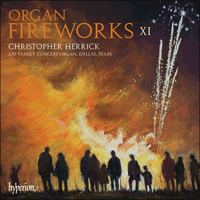

Our pyrotechnic world tour of organs continues apace. Fresh from Volume 10 recorded in Canada, Christopher Herrick now heads south to unleash the power of the Lay Family Concert Organ in Dallas, Texas. One of the largest mechanical concert organs ever built, this 4,535-pipe monster dominates the stage of the Eugene McDermott Concert Hall and proves the perfect vehicle for a wide-ranging programme of unabashed new-world swagger.
Alongside such iconic works as Copland’s Preamble (composed to mark the UN adoption of the Declaration of Human Rights) and the French Americana of Langlais and Widor we have a selection of jazz-infused works which allow both player and instrument to develop a whole new aspect of the organ repertoire. The programme concludes with Joseph Jongen’s epic Sonata eroïca, a veritable landmark in twentieth-century organ-writing and one which leads us out in a thunderous blaze of heroic bravura.

Edwin Lemare (1865–1934) was among the greatest recitalists of his day. He was for a time Organist of St Margaret’s, Westminster, where tradition has it that friction with the clergy (the result, no doubt, of his treating services as concerts) caused him to emigrate to America, where his playing commanded fees previously unimagined by organists. His many organ arrangements of orchestral music are Lemare’s most enduring legacy—one thinks of his Wagner transcriptions and in particular that of the Vorspiel to Die Meistersinger von Nürnberg (recorded by Christopher Herrick on Organ Fireworks VI, CDA66778)—but he wrote a considerable number of original compositions, of which his Andantino in D flat, generally referred to as ‘Moonlight and Roses’, is the best known. Dating from 1884, and introducing the ‘march’ theme of this programme, Lemare’s Marche moderne, Op 2, contains in its opening pages more than an echo of Die Meistersinger. The central trio section, marked cantabile, is of a lighter character: its restatement, on Full Organ, begins the magnificent coda.
The Glagolitic Mass of Leosv Janácek (1854–1928), one of the masterpieces of the choral repertoire, was written two years before the composer’s death. It comprises the usual sequence—Kyrie, Gloria, Credo, Sanctus and Agnus Dei—enclosed by movements for orchestra alone. The Organ Solo, which appears between the Agnus Dei and the final orchestral movement, is a veritable storm of organ tone: it features brief melodic phrases heard over the remorseless grinding of a ten-note pedal ostinato.
Jean Langlais (1907–1991), like César Franck, was Organist of Ste-Clotilde, Paris, and much of his vast output, as one might expect of a Roman Catholic organist, is based on Gregorian melodies. His six American Folk-Hymn Settings, Op 231, are an unusual exception, and Battle Hymn of the Republic, marked Tempo di marcia, continues both the ‘march’ and ‘America’ themes of this programme. The opening is hesitant and sinister-sounding, but Langlais soon builds up to Full Organ, and there then follows an extemporization on certain features of the familiar melody. Only at the end, after the ‘sinister’ music is heard again, does the melody appear in its entirety, sounding triumphantly above the composer’s characteristically abrasive harmonies.
John Behnke (b1953) is a professor at Concordia University in Wisconsin, USA. His Go tell it on the mountain, which comes from a 2003 Bärenreiter collection entitled Jazz Inspirations for Organ, introduces the ‘blues’ theme of this programme. Marked ‘With a detached swing’, this brief number quickly works up to a fortissimo statement of the famous tune.
Composers of organ music have tended to highlight the instrument’s more colourful registers, and the trumpet stop has been an inspiration since at least the eighteenth century, when John Stanley and his contemporaries wrote movements for it. By the end of the nineteenth century, the mildly voiced trumpets of the Baroque organ had been supplanted by heavy-pressure examples, and these created a vogue for pieces in which their stentorian tones are heard against the rest of the organ. The Festive Trumpet Tune of David German (b1954), an American composer, belongs to this tradition and was written for the composer’s wedding. Its form is basically AABA plus a coda, the B section being in the relative minor (D minor), the coda featuring a key-shift up a semitone, from the F major of the A sections to the sparkle of F sharp major.
Matthias Nagel (b1958) held a post as Kirchenmusikdirektor in his native Germany until 2003, when he chose to embrace a freelance career as lecturer, composer and arranger. His Danke-Swingfüglein, a fughetta for the manuals only, is also from Jazz Inspirations for Organ.
Eugène Gigout (1844–1925), the second Parisian organist in this programme, succeeded Guilmant as professor of organ at the Paris Conservatoire. His Grand chœur dialogué, which is among his best-known works, exploits the exciting contrasts available between the various departments of a large organ. Here again the ‘march’ theme of this programme is underlined, for this is music of a bold and strongly rhythmical character. A central section for the manuals only provides respite from the grandeur of the opening and prepares for its re-introduction at the work’s thrilling conclusion.
Alexandre Guilmant (1837–1911), the third Parisian organist in this programme, was born in Boulogne and succeeded Widor as professor of organ at the Paris Conservatoire. From 1871 to 1901 he presided at Ste-Trinité, and he was a founder of the Schola Cantorum. As well as composing prolifically for the organ, he was a widely travelled recitalist, and his work as a musicologist did much to revive interest in French Baroque music. Guilmant’s eight substantial organ sonatas are represented here by Choral et Fugue, the last movement of the fifth, the Sonata in C minor, Op 80. Here again the ‘America’ theme continues, for this particular sonata was written in 1894, in the wake of Guilmant’s Chicago recitals the previous year, and its dedicatee, Clarence Eddy, was a friend from that city. The quiet opening statement of the chorale is immediately followed by the entry of the subject, and Guilmant proceeds to build up a fine fugue. The return of the chorale, in the subdominant, precedes the combination of chorale melody and fugue subject, and increasing animation leads first to a long dominant pedal and finally to the monumental coda with which the sonata draws to its overwhelming close.
Based in Stavanger, Norway, Mons Leidvin Takle (b1942) is an organist–composer who studied in Stockholm, Copenhagen and New York. Festmusikk stands at the end of his collection Våg å leve (‘Dare to live’), a set of extrovert, mostly jazz-inspired works (which includes the Blues Toccata recorded by Christopher Herrick on Organ Fireworks X, CDA67458). Some of this programme plants the listener on the parade-ground; some of it plunges him into the smoky depths of the jazz cellar; here, with repeated notes and chords, ostinato-like figures, and ever-increasing animation, he enjoys a tour of a superb fairground.
Charles-Marie Widor (1844–1937), the fourth Parisian organist in this programme, was at St-Sulpice from 1869 until 1933 and succeeded Franck as professor of organ at the Paris Conservatoire. He wrote not only ten organ symphonies but also a number of orchestral works, including two symphonies and two piano concertos. Marche américaine, Op 31, one of Widor’s shorter works for orchestra, is heard here in the arrangement for organ made in about 1939 by his younger Parisian contemporary Marcel Dupré. It is not generally known that Widor wrote a number of stage works and that there existed a lighter side to this formidable Frenchman. In spite of the title, here, surely, in this marvellously rhythmical music, and especially in the perky second theme, is something of the gaiety and high spirits one associates with Parisian theatre.
Educated at St John’s College, Cambridge, where he was organ scholar, Iain Farrington (b1977) is not only one of the leading organist–composers of his generation but a most accomplished pianist and transcriber as well. Fast Dance is from his seven-movement suite for organ Fiesta! The first movement, Celebration, was a birthday gift to Christopher Herrick (who included it in Organ Fireworks X, CDA67458), and Fast Dance, the fifth, is a grim, snarling toccata: its punchy rhythms and brilliant figurations drive it to a thrilling coda in which the pedals, making their first appearance, free the hands to articulate the stabbing chords that dominate the final bars.
The prelude on Die ganze Welt hast du uns überlassen (‘You have entrusted the whole world to our care’) by Hans-Martin Kiefer (b1956) is also from Jazz Inspirations for Organ. Based on a melody from the German Protestant hymn-book Evangelische Gesangbuch, in traditional blues fashion it features a louche ‘walking’ bass, syncopated left-hand chords, and some amazingly nimble passagework for the right hand.
Born in Liège, Joseph Jongen (1873–1953) spent most of his life in his native Belgium. His Sonata eroïca, Op 94, which dates from 1930 and bears a dedication to Joseph Bonnet, is not only his masterpiece but also a landmark in twentieth-century organ music. Following the example of Liszt’s Sonata in B minor, it is not, as the title might suggest, a multi-movement work but a magnificent single span in which a beautiful and ingenious melody (heard first on string-toned stops) is made the subject of variations which, growing in intensity and animation, conclude with a finely wrought fugato. Here again one thinks of Liszt, for although Jongen’s fugal writing is impeccable, he soon abandons the textbook in favour of the rhapsodic style of writing with which this work reaches its truly heroic conclusion; and with Jongen’s final, blazing chord, underpinned as it is by the same thunderous C sharp that opened Copland’s Preamble (for a Solemn Occasion), the programme comes full circle.
Relf Clark © 2006
Edwin Lemare (1865–1934), qui compta parmi les plus grands récitalistes de son époque, fut un temps organiste de St Margaret’s, à Westminster; mais la tradition veut que des frictions avec le clergé (probablement dues au fait qu’il traitait les services comme des concerts) l’aient fait émigrer en Amérique, où son jeu lui valut des rétributions jusqu’alors inconcevables pour un organiste. L’héritage le plus durable de Lemare est constitué de nombreux arrangements pour orgue de musique orchestrale—l’on songe à ses transcriptions wagnériennes et, notamment, à celle du Vorspiel de Die Meistersinger von Nürnberg (enregistré par Christopher Herrick sur le disque Organ Fireworks VI, CDA66778)—, mais on doit aussi à ce compositeur un nombre considérable d’œuvres originales, la plus célèbre étant l’Andantino en ré bémol, généralement connu sous le nom de «Moonlight and Roses». La Marche moderne, op. 2 (1884), qui inaugure la thématique «marche» de ce programme, renferme dans ses pages d’ouverture plus qu’un écho de Die Meistersinger. La section en trio centrale, marquée cantabile, est d’un caractère plus léger: sa réexposition, au plein-jeu, ouvre la magnifique coda.
Leosv Janácek (1854–1928) écrivit sa Messe glagolitique—l’un des chefs-d’œuvre du répertoire choral—deux ans avant de mourir. La séquence habituelle (Kyrie, Gloria, Credo, Sanctus et Agnus Dei) y est cernée de mouvements destinés à l’orchestre seul. Le solo d’orgue, entre l’Agnus Dei et le dernier mouvement orchestral, est une véritable tempête organistique: de brèves phrases mélodiques se font entendre par-dessus l’implacable grondement d’un ostinato de pédale de dix notes.
Comme César Franck, Jean Langlais (1907–1991) fut organiste de Ste-Clotilde, et son vaste œuvre repose en grande partie sur les mélodies grégoriennes—ce qui est peu surprenant pour un organiste catholique. Ses six American Folk-Hymn Settings, op. 231 sont, à cet égard, une exception et Battle Hymn of the Republic, marqué Tempo di marcia, continue les thématiques de ce programme: la «marche» et l’«Amérique». L’ouverture est hésitante et sinistre, mais Langlais passe bientôt au plein-jeu puis à une improvisation sur certaines caractéristiques de la célèbre mélodie. C’est seulement à la fin, après que la musique «sinistre» s’est faite réentendre, que cette mélodie apparaît dans son intégralité, triomphante par-dessus les harmonies typiquement abrasives du compositeur.
John Behnke (né en 1953) est professeur à Concordia University (Wisconsin). Son Go tell it on the mountain, extrait de Jazz Inspirations for Organ (un recueil paru chez Bärenreiter en 2003) introduit le thème du «blues» dans ce programme. Marquée «With a detached swing», cette brève pièce en vient rapidement à une énonciation fortissimo du fameux air.
Les compositeurs de musique d’orgue ont eu tendance à faire ressortir les registres colorés de l’instrument, et le jeu de trompette les a inspirés depuis au moins le XVIIIe siècle, époque à laquelle John Stanley et ses contemporains lui écrivirent des mouvements. À la fin du XIXe siècle, les douces trompettes de l’orgue baroque avaient été supplantées par les trompettes à haute pression, d’où la vogue des œuvres qui faisaient entendre leurs sonorités stentoriennes contre le reste de l’orgue. Le Festive Trumpet Tune de l’Américain David German (né en 1954) ressortit à cette tradition. Écrit pour le mariage du compositeur, il affiche une forme basique AABA plus une coda: la section B est sise dans le mineur relatif (ré mineur) et la coda présente une transition d’un demi-ton vers le haut, du fa majeur des sections A à l’éclat de fa dièse majeur.
Matthias Nagel (né en 1958) fut Kirchenmusikdirektor avant d’embrasser, en 2003, une carrière indépendante de maître-assistant, de compositeur et d’arrangeur. Sa Danke-Swingfüglein, une fughetta pour manuel solo, est elle aussi extraite des Jazz Inspirations for Organ.
Eugène Gigout (1844–1925), le deuxième organiste parisien de ce programme, succéda à Guilmant comme professeur d’orgue au Conservatoire de Paris. Son Grand chœur dialogué, l’une de ses œuvres les plus connues, exploite les contrastes passionnants entre les différentes parties d’un grand orgue. De nouveau, le thème de la «marche» transparaît dans cette musique hardie et puissamment rythmée. Une section centrale pour manuels solo offre un répit par rapport au grandiose de l’ouverture tout en préparant sa réintroduction lors de la conclusion saisissante de l’œuvre.
Natif de Boulogne, Alexandre Guilmant (1837–1911), le troisième organiste parisien de ce programme, succéda à Widor comme professeur d’orgue au Conservatoire de Paris, présida à la tribune de la Sainte-Trinité (1871–1901) et fut l’un des fondateurs de la Schola Cantorum. Compositeur prolifique pour l’orgue, il donna des récitals dans le monde entier; musicologue, il contribua largement au regain d’intérêt pour la musique baroque française. Ses huit grandes sonates pour orgue sont représentées ici par Choral et Fugue, le dernier mouvement de la cinquième d’entre elles, celle en ut mineur, op. 80. On retrouve ici le thème américain, cette sonate ayant été composée en 1894, dans le sillage des récitals que Guilmant avait donnés à Chicago l’année précédente—le dédicataire, Clarence Eddy, était un ami vivant dans cette ville. La première énonciation, paisible, du choral est immédiatement suivie de l’entrée du sujet, et Guilmant poursuit jusqu’à élaborer une belle fugue. Le retour du choral, à la sous-dominante, précède la combinaison de la mélodie du choral et du sujet de la fugue; une animation croissante mène d’abord à une longue pédale de dominante puis, enfin, à la monumentale coda avec laquelle l’œuvre touche à son écrasante fin.
Établi à Stavanger, en Norvège, l’organiste– compositeur Mons Leidvin Takle (né en 1942) étudia à Stockholm, à Copenhague et à New York. Festmusikk figure à la fin de son recueil Våg å leve («Oser vivre»), un corpus d’œuvres extraverties, pour l’essentiel d’inspirations jazz (qui inclut aussi la Blues Toccata enregistrée par Christopher Herrick sur le disque Organ Fireworks X, CDA67458). Avec ce programme, l’auditeur est tantôt entraîné sur un terrain de manœuvres, tantôt plongé dans les profondeurs enfumées d’une cave de jazz; ici, les notes et les accords répétés, les figures de type ostinato et l’animation toujours croissante lui font faire le tour d’un superbe champ de foire.
Charles-Marie Widor (1844–1937), le quatrième organiste parisien de ce programme, demeura à St-Sulpice de 1869 à 1933 et succéda à Franck comme professeur d’orgue au Conservatoire de Paris. Outre dix symphonies pour orgue, il écrivit plusieurs œuvres orchestrales, dont deux symphonies et deux concertos pour piano. Marche américaine, op. 31, l’une de ses pièces orchestrales les plus courtes, est proposée ici dans l’arrangement pour orgue réalisé vers 1939 par son jeune contemporain parisien Marcel Dupré. On ignore généralement que Widor écrivit des œuvres de scène et qu’il existait chez ce Français redoutable un côté léger. Malgré son titre, cette musique merveilleusement rythmique, et surtout son second thème enjoué, nous renvoie assurément un peu de l’humour et de la gaieté ordinairement associés au théâtre parisien.
Éduqué à St John’s College, à Cambridge, Iain Farrington (né en 1977) est un des organistes– compositeurs majeurs de sa génération, doublé d’un pianiste–transcripteur des plus accomplis. Fast Dance est tiré de sa suite pour orgue en sept mouvements Fiesta!. Le premier mouvement, Celebration, fut offert en cadeau d’anniversaire à Christopher Herrick (qui l’inclut dans Organ Fireworks X, CDA67458); Fast Dance, le cinquième mouvement, est une toccata lugubre, grondante: ses rythmes pleins de punch et ses figurations brillantes la poussent vers une coda saisissante où les pédales font leur première apparition, libérant les mains pour articuler les accords lancinants qui dominent les dernières mesures.
Le prélude sur Die ganze Welt hast du uns überlassen («Tu nous as confié le monde entier») de Hans-Martin Kiefer (né en 1956) provient également des Jazz Inspirations for Organ. Fondé sur une mélodie de l’hymnaire protestant allemand Evangelische Gesangbuch, il présente, à la mode du blues traditionnel, une «walking bass» sombre, des accords syncopés à la main gauche et des passages étonnamment agiles à la main droite.
Originaire de Liège, Joseph Jongen (1873–1953) passa l’essentiel de sa vie dans sa Belgique natale. Sa Sonata eroïca, op. 94 (1930), dédiée à Joseph Bonnet, est non seulement son chef-d’œuvre mais une des œuvres phare de la musique d’orgue du XXe siècle. À l’instar de la Sonate en si mineur de Liszt, elle n’est pas, comme pourrait le suggérer son titre, disposée en plusieurs mouvements mais présente un seul pan magnifique, où une belle et ingénieuse mélodie (entendue d’abord aux jeux de gambe) devient le sujet de variations qui, gagnant en intensité et en animation, s’achèvent sur un fugato finement ciselé. Là encore, on songe à Liszt car, malgré une écriture fuguée impeccable, Jongen abandonne bientôt le manuel de composition pour le style rhapsodique avec lequel cette œuvre atteint sa conclusion véritablement héroïque; et c’est sur cet accord final étincelant, étayé par le même ut dièse tonitruant qui ouvrait le Preamble (for a Solemn Occasion) de Copland, que ce programme s’achève.
Relf Clark © 2006
Français: Hypérion
Edwin Lemare (1865–1934) war einer der größten Konzertorganisten seiner Zeit. Eine gewisse Zeit war er Organist an der Kirche St. Margaret in Westminster, wo, so erzählt man sich, die Spannungen zwischen ihm und dem Pastor (zweifellos das Resultat von Lemares Umfunktionieren der Gottesdienste in Konzerte) dazu führten, dass der Komponist nach Amerika auswanderte, wo sein Spiel mit Gagen honoriert wurde, die sich Organisten bis dahin nicht hätten träumen lassen. Lemares bleibendes Erbe sind vor allem seine zahlreichen Bearbeitungen von Orchesterwerken für Orgel—man denkt da zum Beispiel an seine Wagnertranskriptionen und besonders an die Bearbeitung des Vorspiels zu Den Meistersingern von Nürnberg (die von Christopher Herrick auf der CD Orgelfeuerwerk VI, CDA66778 aufgenommen wurde)—aber er schrieb auch eine beachtliche Anzahl von eigenen Kompositionen, von denen sein Andantino in Des-Dur, das gewöhnlich als „Mondlicht und Rosen“ bezeichnet wird, am besten bekannt ist. Lemares Marche moderne, op. 2 stammt von 1884 und stellt das Marschthema dieser CD vor. Die ersten Seiten dieses Stückes enthalten mehr als nur einen sanften Anklang an Die Meistersinger. Der mit cantabile überschriebene und als Trio fungierende Mittelteil hat einen leichteren Charakter. Die Wiederholung des Marsches, diesmal mit vollem Register, leitet die herrliche Koda ein.
Die Glagolitische Messe von Leosv Janácek (1854– 1928), eines der Glanzstücke der Chorliteratur, entstand zwei Jahre vor dem Tod des Komponisten. Das Werk enthält die üblichen Messteile—Kyrie, Gloria, Credo, Sanctus und Agnus Dei—eingebettet in reine Orchestersätze. Das zwischen das Agnus Dei und den abschließenden Orchestersatz erklingende Orgelsolo ist ein ernsthafter Orgelschwall: Hier erklingen kurze melodische Gesten über der gnadenlosen Mühle eines auf der Fußklaviatur gespielten Ostinatos aus zehn Noten.
Jean Langlais (1907–1991) war wie César Franck Organist an der Pariser Kirche St-Clotilde, und ein Großteil seines riesigen Œuvres beruht, wie man das wohl von einem römisch-katholischen Organisten erwartet, auf gregorianischen Choralmelodien. Seine sechs American Folk-Hymn Settings, op. 231 sind eine ungewöhnliche Ausnahme. Die mit Tempo di marcia überschriebene Battle Hymn of the Republic setzt sowohl das amerikanische als auch das Marschthema dieser CD fort. Der Anfang klingt zögernd und unheilvoll, aber bald zieht Langlais alle Register und lässt nun eine Art Improvisation über einige Motive der bekannten Melodie folgen. Nur am Ende, nachdem die „unheilvolle“ Musik erneut zu hören war, erklingt die Melodie vollständig und triumphierend über für den Komponisten typischen beißenden Harmonien.
John Behnke (geb. 1953) ist Professor an der Concordia University in Wisconsin, USA. Sein Stück Go tell it on the mountain, das dem bei Bärenreiter 2003 veröffentlichten Sammelband mit dem Titel Jazz Inspirations for Organ entnommen wurde, beginnt das Bluesthema der vorliegenden CD. Diese kurze Nummer enthält den Hinweis „mit einem zurückhaltenden Swing“ und kulminiert bald in der berühmten, fortissimo gespielten Melodie.
Komponisten von Orgelmusik haben immer dazu geneigt, die kräftigeren Register des Instruments zu verwenden, und das Trompetenregister faszinierte sie mindestens seit dem 18. Jahrhundert, als John Stanley und seine Zeitgenossen Sätze für dieses Register schrieben. Gegen Ende des 19. Jahrhunderts wurden die mild klingenden Trompeten der Barockorgel endgültig durch die Hochdruckexemplare ersetzt, und die bildeten die Grundlage für eine Mode von Stücken, in denen sich die Stentorstimmen gegen den Rest der Orgel abhoben. Die Festive Trumpet Tune des amerikanischen Komponisten David German (geb. 1954) gehört in diese Kategorie und entstand für dessen Hochzeit. Die musikalische Form gliedert sich im Wesentlichen in AABA plus einer Koda. Der B-Abschnitt beginnt in der verwandten Molltonart (d-Moll). Die Koda zeichnet sich durch eine harmonische Rückung einen Halbtonschritt nach oben aus: vom F-Dur des A-Abschnitts zum funkelnden Fis-Dur.
Matthias Nagel (geb. 1958) hatte bis 2003 eine Stellung als Kirchenmusikdirektor inne, bevor er seine freischaffende Tätigkeit als Dozent, Komponist und Bearbeiter begann. Sein Danke-Swingfüglein, eine Fughetta für ausschließlich Manuale, stammt auch aus dem Sammelband Jazz Inspirations for Organ.
Eugène Gigout (1844–1925), der zweite Pariser Organist auf dieser CD, wurde Guilmants Nachfolger am Pariser Conservatoire als Professor für Orgel. Gigouts Grand chœur dialogué, der zu seinen bekanntesten Werken gehört, holt das Beste aus den spannenden Kontrasten heraus, die zwischen den einzelnen Teilen einer großen Orgel möglich sind. Diese Musik mit ihrem selbstbewussten und stark rhythmischen Charakter nimmt wieder das Marschthema der CD auf. Ein nur auf den Manualen zu spielender Mittelteil schafft Entspannung von der Erhabenheit des Anfangs und bereitet die Wiederaufnahme des A-Teils vor, der das Werk zu einem berauschenden Abschluss führt.
Alexandre Guilmant (1837–1911), der dritte Pariser Organist in diesem CD-Programm, wurde in Boulogne-sur-Mer geboren und übernahm von Widor die Professur für Orgel am Pariser Conservatoire. Von 1871 bis 1901 leitete er die Musik an der Kirche Ste-Trinité. Er gründete auch die Schola Cantorum. Guilmant komponierte nicht nur viele Werke für Orgel, sondern unternahm auch viele Tourneen als Konzertorganist, und seine Arbeit als Musikwissenschaftler trug in hohem Maße dazu bei, dass das Interesse an französischer Barockmusik wiederbelebt wurde. Guilmants acht gewichtige Orgelsonaten werden hier durch den letzten, mit Choral et Fugue überschriebenen Satz der fünften Sonate, in c-Moll, op. 80 repräsentiert. Hier trifft man wieder auf das amerikanische Thema. Diese Sonate wurde nämlich 1894 geschrieben, ein Jahr nach Guilmants Auftritten in Chicago, und ihr Widmungsträger, Clarence Eddy, war ein Freund Guilmants aus jener Stadt. Nach dem ruhigen, einleitenden Choral setzt sofort das Thema ein. Guilmant entwickelt daraufhin eine feine Fuge. Nach der Rückkehr des Chorals, in der Subdominante, werden die Choralmelodie und das Fugenthema kombiniert. Eine zunehmende Geschäftigkeit führt danach zuerst zu einem langen Orgelpunkt auf der Dominante und schließlich zu einer monumentalen Koda, mit der die Sonate überwältigend endet.
Der in Stavanger, Norwegen wirksame Mons Leidvin Takle (geb. 1942) ist Organist und Komponist und studierte in Stockholm, Kopenhagen und New York. Festmusikk steht am Ende seiner Sammlung Våg å leve („Wage zu leben“), eine Reihe von extrovertierten Stücken, die fast alle von Jazz inspiriert wurden (zu dieser Sammlung gehört auch die Blues Toccata, die Christopher Herrick auf der CD Orgelfeuerwerk X, CDA67458 einspielte). Einige Stücke auf der hier vorliegenden CD versetzen den Hörer in eine Paradestimmung, einige führen ihn in die verräucherten Tiefen eines Jazz-Kellers. Hier in diesem Stück mit seinen Ton- und Akkordwiederholungen, ostinatoartigen Gesten und der ständig zunehmenden Aufregung genießt er einen Rundgang auf einem prächtigen Rummelplatz.
Charles-Marie Widor (1844–1937), der vierte Pariser Organist auf dieser CD, war von 1869 bis 1933 an der Kirche St-Sulpice tätig und folgte Franck am Pariser Conservatoire als Professor für Orgel. Widor schrieb nicht nur zehn Orgelsinfonien, sondern auch eine Reihe von Orchesterwerken, einschließlich zwei Sinfonien und zwei Klavierkonzerte. Marche américaine, op. 31, eines von Widors kürzeren Orchesterwerken, erklingt hier in der Bearbeitung für Orgel, die ungefähr 1939 von Widors jüngerem Pariser Zeitgenossen Marcel Dupré angefertigt wurde. Es ist nicht allgemein bekannt, dass Widor auch eine Reihe von Musiktheaterstücken schrieb und dass zu diesem gewaltigen Franzosen auch eine leichtere Seite gehört. Trotz des Werktitels enthält diese wunderbare rhythmische Musik, und besonders das aufgeweckte zweite Thema, doch etwas von dem Frohsinn und der gehobenen Stimmung, die man mit dem Pariser Theater assoziiert.
Iain Farrington (geb. 1977) studierte Orgel am St. John’s College in Cambridge und ist nicht nur einer der führenden Organisten und Komponisten seiner Generation, sondern auch ein äußerst fähiger Pianist und Bearbeiter. Fast Dance stammt aus seiner siebensätzigen Suite für Orgel namens Fiesta!. Der erste Satz, Celebration, war ein Geburtstagsgeschenk für Christopher Herrick (der den Satz auf der CD Orgelfeuerwerk X, CDA67458 aufnahm), und Fast Dance, der fünfte Satz, ist eine grimmige, knurrende Toccata. Ihre akzentuierten Rhythmen und funkelnden Läufe steuern eine spannende Koda an, in der die Pedale, die hier zum erstmal einsetzen, die Hände ablösen, damit diese die stechenden Akkorde spielen können, die die letzten Takte beherrschen.
Das Vorspiel von Hans-Martin Kiefer (geb. 1956) zu Die ganze Welt hast du uns überlassen stammt auch aus dem Sammelband Jazz Inspirations for Organ. Das Stück beruht auf einer Melodie aus dem deutschen Evangelischen Gesangbuch. Das Stück ist im Stile eines traditionellen Blues gehalten und zeichnet sich durch einen dubiosen Laufbass, synkopierte Akkorde in der linken Hand und ein paar erstaunlich vertrackte Läufe für die rechte Hand aus.
Der in Liège/Lüttich geborene Joseph Jongen (1873–1953) verbrachte den Großteil seines Lebens in seinem Heimatland Belgien. Seine 1930 komponierte und Joseph Bonnet gewidmete Sonata eroïca, op. 94 ist nicht nur sein Meisterwerk, sondern auch ein Meilenstein in der Orgelliteratur des 20. Jahrhunderts. Dem Beispiel von Liszts Sonate in h-Moll folgend ist Jongens Sonata nicht, wie man vom Titel erwarten würde, mehrsätzig, sondern ein einziger herrlicher Bogen, bei dem eine schöne und individuelle Melodie (die zuerst in den Streicherklangregistern zu hören ist) als Thema für Variationen herangezogen wird, die an Intensität und Spannung zunehmend in ein fein gearbeitetes Fugato münden. Auch hier denkt man wieder an Liszt, da Jongen, auch wenn seine Fugentechnik nichts zu wünschen übrig lässt, das Schulbuch für einen rhapsodischen Kompositionsstil aufgibt, mit dem er das Werk wirklich heroisch beschließt. Mit Jongens letztem, durchschneidendem Akkord, der vom gleichen donnernden Cis untermauert ist, das Coplands Preamble (for a Solemn Occasion) einleitete, kehrt das Programm zurück zu dem Punkt, von dem es angefangen hatte.
Relf Clark © 2006
Deutsch: Elke Hockings