Welcome to Hyperion Records, a British classical label devoted to presenting high-quality recordings of music of all styles and from all periods from the twelfth century to the twenty-first.
Hyperion offers both CDs, and downloads in a number of formats. The site is also available in several languages.
Please use the dropdown buttons to set your preferred options, or use the checkbox to accept the defaults.
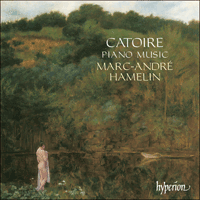

Marc-André Hamelin adds another mystery name to his discography with this album of piano music of the almost unknown Russian Georgy Catoire (a French father explains the inauthentic-sounding surname). Catoire was one of a large number of composers who flourished in pre-Revolutionary Russia at the turn of the century, and his musical style is very much of that period. Primarily a miniaturist, most of his pieces can be described as mood pictures rather than as anything more abstract, his more sophisticated use of harmony giving his style a more cosmopolitan feel than some of his more Russian contemporaries such as Liadov or Arensky. Perhaps he can best be compared to earlier Scriabin but without the neuroticism found in the latter's work.
The modesty of Catoire's output and its irrelevance to Bolshevik Russia have undoubtedly led to its neglect, but just as this music has attracted Marc-André Hamelin's advocacy it will no doubt appeal to a new audience of listeners who can now rediscover it.

Following his graduation, Catoire worked for a time in his father’s business, but the post was uncongenial to him. He took lessons for a time from V I Vilborg, a pupil of Klindworth, and composed a piano sonata (unpublished) and several other short piano pieces. He transcribed Liszt’s ‘Dante’ Sonata for piano duet, and also parts of Tchaikovsky’s first Suite for orchestra—which later so impressed its composer that Tchaikovsky persuaded his publishers to issue it.
Catoire eventually went to Berlin to continue studies with Klindworth, whose other pupils included Lyapunov and Ethelbert Nevin. At this time Klindworth was one of the principal conductors of the Berlin Philharmonic. Later, in St Petersburg, Catoire studied for a time with Lyapunov (who was less than eighteen months his senior). Having made the acquaintance of Tchaikovsky in Moscow—a turning point in the young man’s career—Catoire took further composition lessons in Berlin with Otto Tirsch and the Belgian pedagogue Philippe Rüfer at the Klindworth–Scharwenka Conservatoire (which had been formed on Klindworth’s retirement in 1893, when his school was merged with Scharwenka’s).
On his final return to Russia in 1887, and completing his formal, if somewhat chequered, musical studies with Rimsky-Korsakov (which resulted in Catoire’s Trois morceaux, Op 2) and Liadov (which produced the Caprice, Op 3), Catoire settled in Moscow, determined to devote himself wholly to music. From that time, which is to say around 1888, and notwithstanding his extensive education, Catoire was entirely self-taught, apart from seeking occasional help from both Arensky and Taneyev.
Thereafter, Catoire pursued his own original studies, principally with regard to harmony. In many ways, Catoire’s approach to harmony was typical of composers of his generation in that he found the expansion of tonality in the latter years of the nineteenth century—through the growth of chromaticism and a greater tonal freedom in the relationship of certain keys, particularly in Catoire’s case the subdominant and supertonic, to the tonic—both liberating and fruitful areas to explore. What sets Catoire somewhat apart, even from those composers with whom he might at first appear superficially similar (most notably, Scriabin) is the larger-scale rhythmic freedom in his work, compared with, say, Scriabin’s evolving obsession with the two-bar phrase. Nevertheless, as we shall see, Catoire was not averse to this cellular method of structure in his earlier work, a characteristic both he and Scriabin may have taken initially from several of Grieg’s Lyric Pieces.
In Catoire’s case, as is clear from the music on this album, we encounter an original musical mind, one set free by two important creative characteristics: a command of pianistic technique in which anything is possible, evolved in its own way from Liszt and Alkan; and an individual, inquiring freedom which comes from a self-taught composer unafraid to explore the recesses of his imagination.
In this regard one is reminded of Liszt’s highly prophetic writing on John Field’s music: ‘… it is so perfectly adapted to those fleeting impressions which do not belong to that commoner order of sentiments which is bred by one’s social environment, but rather to those pure emotional emanations which eternally weave their spell over the heart of man, because he finds them eternally the same whether he is in the presence of the beauties of Nature, or of those soft sweet tendernesses which surround the morning of life, before reflection arrives to darken with her shadow those radiant prisms of feeling.’
Following his discoveries with regard to harmony and the craft of composition and its codification, late in life Catoire published several important treatises, which are said to have laid the foundation for much composition teaching in the USSR. The composer and enthnomusicologist Vladimir Fere, a pupil of both Glière and Catoire at the Moscow Conservatoire, later wrote, as translated by Robert Rimm: ‘Studying with Catoire, I immediately experienced serious difficulties. Catoire’s teaching method was diametrically opposed to that of Gliere. From the very beginning Georgy L’vovich kept his students within the limits of rigorous academic discipline … he especially emphasized the role of harmony in the structure and form of any composition. Catoire’s personal tastes and preferences were determinative: a student was assigned an entirely precise and single possible path for his composition.’ By this time (the early 1920s) Catoire had become a noted teacher at the Moscow Conservatoire, having been appointed professor of composition there in 1916. His career in Russia therefore spanned the Revolution years: his most famous composition pupil was Dmitri Kabalevsky. Catoire died in Moscow in 1926, less than a month after his 65th birthday.
Catoire’s list of works is not extensive but it includes an early symphony and a once-admired piano concerto alongside several vocal and choral works and a handful of other orchestral compositions. Catoire’s principal interest as a composer would seem to have been in chamber music and in solo piano music, wherein his contributions were more significant. The outstanding Russian writer on music, Victor Belayev, thought sufficiently highly of Catoire to publish a monograph on him in Moscow a few months after the composer’s death. Leonid Sabaneyev, in his book Modern Russian Composers (1927), described Catoire as having suffered from the ‘single, but nowadays unpardonable fault of modesty, an inability to advertise himself’.
After his death Catoire’s reputation as a composer virtually fell into oblivion. His name is barely mentioned in western music dictionaries, and The New Grove makes no mention of his solo piano music at all. There are several reasons for the decline in his reputation; the first was undoubtedly Catoire’s inherent modesty, as Sabaneyev noted. Secondly, Catoire’s music had little in common, aesthetically, with the demands of later Soviet governments; the output of a perceived musical conservative, there was no socio-political mileage in Catoire’s work, although a short posthumous collection of previously unpublished piano music was issued by the State Publishing House in Moscow in 1928—and so, apart from the interest of a few virtuoso students, his music gradually fell into disuse. Thirdly, Catoire’s piano music is technically demanding, and can only be properly revealed when played by a musician possessing a transcendental technique. In addition, with the post-Revolutionary collapse of almost all music publishing houses, Catoire’s music literally went out of circulation—published scores of his works became very scarce. Finally, unlike other Russian composers, Catoire founded no ‘school’, although he was an analytical ground-breaker in the study of harmony, and neither did his music enjoy a fashionable vogue. Circumstances of history, therefore, rather than any shortcomings in his art, have conspired to keep Catoire’s name and music hidden for decades, even from interested musicians.
Apart from the Symphony and Piano Concerto, Catoire composed a symphonic poem after Lermontov, Mtsïri, together with a cantata—Rusalka, also after Lermontov—for chorus and orchestra, and miscellaneous songs. Among his seven large-scale chamber works are the Piano Trio in F minor, Op 14 (written in 1900 and enjoying some vogue in the years up to 1914), the Piano Quartet, Op 31 (both recorded on Hyperion CDA67512), and his Poème for violin and piano, which is surely one of the most beautiful pieces of violin music by any Russian composer.
Caprice Op 3
Marked ‘Allegro con moto’, the Caprice is one of the most brilliant and fascinating of Catoire’s shorter early pieces. Dedicated to Vilborg, one of Catoire’s first teachers, it is in G flat major, and encompasses a basic tripartite structure that also binds an interesting tonal plan. The more lyrical secondary theme outlined in octaves is in A major, which falls by a major third to the dramatic central section, ‘meno mosso’, in F major. This is only eight bars long, and as the material retraces its steps (via A major), the secondary theme is treated to greater development. The central drama is recalled in D flat, the dominant of G flat, and the recapitulation alludes to all the material before a whimsical close.
Intermezzo Op 6 No 5
The ‘Allegro capriccioso’ tempo marking gives some indication of the dual nature of this piece. In B flat, with a central episode in F sharp major, this fluent study is an excellent example of Catoire’s melodic transformation: the initial rising scalic theme is inverted for the central section (such treatment having been hinted at in the opening part). Both are alluded to in combination in the concluding bars.
Trois morceaux Op 2
The three pieces which make up Catoire’s Op 2 are far superior to the salon-type which was so prevalent at that time. The first, Chant intime, is only twenty-eight bars long. Marked ‘Andante espressivo’, it is in E major, and has a fleeting tendency to move towards the supertonic, but notice the subtle manner in which Catoire allows his simple theme to build a tracery of continuously unfolding melody—in its own way, this is evidence of an impressive skill in post-Wagnerian composition. We hear a similar approach in the second piece, Loin du foyer, thirty bars in length. This also tends towards the supertonic (in this case, F), but the rippling, middle-voiced accompaniment, ebbing and flowing against the two-part writing above and below, in this (as marked) ‘quasi improvisato’ piece is quite compelling. The third morceau, Soirée d’hiver, is more extended than the others, but is simply constructed with a gentle theme framing a central section. What makes this particularly interesting are two factors—the B minor allusions of the opening theme eventually end in a deep D major, and the central section is both in 5/8 and in the very rare key of C flat major. We should not be surprised to learn that this piece impressed Tchaikovsky.
Prélude in G flat Op 6 No 2 & Scherzo in B flat Op 6 No 3
These two further pieces from the Six morceaux of Catoire’s Op 6 make a contrasting pair. The first opens as a gently flowing theme in 6/8, which is in a constant state of development; a cadenza bar, ad libitum, prefaces the restoration of the theme, espressivo, grazioso. The Scherzo, marked ‘Allegro con spirito’, is more adventurous in style—among its notable features are: the irregular bar-groupings (it is in 3/8, and the opening theme is of seven bars); the exceptional notation wherein some passages are marked with 3/8 bars for the right hand against 2/8 bars for the left (almost anticipating Bartók); the sudden eruptions of pure virtuosity, and the restrained ending.
Vision (Étude) Op 8
In this breathtakingly brilliant piece, which demands great virtuosity, we can clearly hear Catoire taking his place among the leading composers of his day for the piano—combining elements of Rachmaninov, Scriabin and Debussy. The reference to these other masters should not imply infuences from them, rather to place this gossamer-like short piece within its artistic milieu. Marked ‘Allegro fantastico’, the dynamic rarely rises to forte and only once to fortissimo.
Cinq morceaux Op 10
Dedicated ‘à mon ami G. Conus’—i.e., Georgy Conus, one of a noted generation of musical brothers—these five pieces form, in their own way, a counterpart both to Rachmaninov’s own Op 10—the seven Morceaux de salon of 1893/4—which Guthiel published in 1894, and to the early sets of piano works by Scriabin. What places Catoire’s Op 10 on a similar level to these works is his use of thematic transformation. The opening Prélude announces a simple theme, but one whose simplicity is constantly spun into new aspects. The melodic germs which make up these ideas are further developed in quite unusual ways in each of the following pieces—the second, an effortlessly flowing Prélude, the brilliant Capriccioso in G sharp minor (a masterpiece), the nocturnal Rêverie in A flat and the final impressionistic Légende in A major.
Quatre morceaux Op 12
This set of pieces is different from Catoire’s Op 10 in that the pieces seem not to have an underlying unity. The opening Chant du soir is one of Catoire’s greatest short pieces, a work so fine and direct in its emotional impact and compositional beauty that one may hope this recording will ensure it enters the repertoire at last. The Méditation has, within its brief structure, a wider mood than may be imagined, and the central section of the tripartite Nocturne embroiders the almost Chopinesque theme. The mention of Chopin—a distant influence—is not inappropriate in late nineteenth-century Russian music, for the Irish composer John Field, the inventor of the nocturne, a form that influenced Chopin, had settled in St Petersburg in 1803 and died in Moscow in 1837. The final piece, in G flat major, is another of Catoire’s most compelling and original studies.
Quatre préludes Op 17
Catoire, exceptional amongst Russian pianist-composers, did not complete a set of 24 Preludes. The four Preludes of his Op 17 are, like the pieces of Op 12, self-contained, and are dedicated to Leo Conus, another of the musical brothers. The first, in G sharp minor, is in the manner of a wistful slow waltz; and the second, in G major, is perhaps not unlike a Rachmaninov fragment. The third, in C minor—marked ‘Andante dramatico’ (sic—it should of course be ‘drammatico’)—is more extensive, suggesting a hidden programme. The diminuendo coda is notably imaginative. The fourth, in B flat—ending in the minor mode—is only twenty-eight bars long, but Catoire’s remarkable contrapuntal mastery, the lines seemingly independent but magically woven together, shows this composer at the height of his powers.
Chants du crépuscule Op 24
By the time of the composition of these Songs of twilight, circa 1910, Catoire was entirely his own master. The first, curiously without a tempo indication but marked impressionistically ‘sempre rubato’, maintains both the familiar tripartite structure and upward modulation of Catoire’s shorter piano pieces. It is distinguished by the fluent juxtaposition of three-against-two quavers. The second, Capricciosamente, is quite chromatic and builds to a remarkable central climax before a long coda eventually winds the piece to a tranquil major ending. Tranquillity describes the nature of the third piece, based upon another rather Chopinesque falling theme, which, in the central section, is inverted before the recapitulation, which further develops the initial idea. The concluding song, although marked ‘Poco agitato’, is a summation of aspects of the preceding three, but its central section is more dramatic and elemental. The ending, with an idea quietly repeated in the bass, is both simple and magical.
Poème Op 34 No 2
Catoire’s Quatre morceaux, Op 34, the first two of which were written between 1924 and 1926, was published posthumously in 1928. The Poème is unusual in Catoire’s output in that the tonality of the piece, C minor, is not arrived at until at least half-way through. The final bars gently ease into C major.
Prélude Op 34 No 3 and Valse in A flat major Op 36
Despite being published as part of Catoire’s Opp 34 and 36 the Prélude and the charming Waltz actually date from Catoire’s earliest years. The first is a mere twenty-two bars, and clearly indicates something of this composer’s gifts as a youth, although there is little to distinguish it. The concluding Waltz is more individual and is technically quite demanding, with repeated notes and a constantly winding theme of semitonal inflexion.
What is remarkable about Catoire’s output is that even in his earliest work we can note those extraordinarily fluent, rather than purely volatile, changes of key which impart an additionally rapid and flexible character to the music—music which predates Scriabin’s, if only by a few years. There can be no doubt that in the work of Georgy Catoire we encounter the art of an exceptional composer, an art which has remained unknown for far too long.
Robert Matthew-Walker © 1999
Son diplôme en poche, Catoire travailla un temps dans l’entreprise de son père, mais l’expérience lui déplut. Il prit des leçons auprès de V. I. Vilborg, un élève de Klindworth, et composa une sonate pour piano (non publiée) ainsi que plusieurs courtes pièces pour piano. Il transcrivit la Sonate «Dante» de Liszt pour duo pianistique, de même que des parties de la Première Suite pour orchestre de Tchaïkovski—lequel fut, ultérieurement, si impressionné qu’il persuada ses éditeurs de publier cette transcription.
Finalement, Catoire, désireux de reprendre ses études avec Klindworth, se rendit à Berlin, où son professeur, l’un des principaux chefs de l’Orchestre philharmonique de Berlin, enseignait, entre autres, Liapounov et Ethelbert Nevin. Plus tard, à Saint-Pétersbourg, Catoire étudia auprès de Liapounov (de moins de dix-huit mois son ainé). Après sa rencontre décisive avec Tchaïkovski, à Moscou, Catoire prit de nouvelles leçons de composition avec Otto Tirsch et le pédagogue belge Philippe Rüfer, au Conservatoire Klindworth–Scharwenka (établissement berlinois né, en 1893, de la fusion des écoles de Klindworth—parti en retraite—et de Scharwenka).
De retour définitif en Russie (1887), et achevant ses études musicales formelles, quoique un peu en dents de scie, auprès de Rimski-Korsakov et de Liadov (enseignements dont résultèrent respectivement ses Trois morceaux, op.2 et son Caprice, op.3), Catoire s’installa à Moscou, résolu à se consacrer à la seule musique. Dès lors, soit à partir de 1888 environ, et nonobstant ses études poussées, il fut un pur autodidacte, hors l’aide, parfois, d’Arenski et de Taneïev.
Par la suite, Catoire entreprit ses propres études, notamment en matière d’harmonie. À bien des égards, son approche de l’harmonie fut typique des compositeurs de sa génération, qui découvrirent l’expansion de la tonalité dans les dernières années du XIXe siècle, à travers l’essor du chromatisme et une liberté tonale accrue dans certaines affinités de tons (en l’occurrence, chez Catoire, la relation entre sous-dominante, sus-tonique et tonique—des sphères d’exploration libératrices et fructueuses). Catoire se distingue, même des compositeurs avec lesquels il aurait pu, à première vue, présenter quelque superficielle similitude (surtout Scriabine), par sa liberté rythmique à grande échelle, différente, par exemple, de l’obsession d’un Scriabine pour la phrase de deux mesures. Nous le verrons, cependant, les premières œuvres de Catoire recoururent volontiers à cette méthode structurale cellulaire empruntée à Grieg.
Comme l’atteste la musique du présent recueil, Catoire est un esprit musicien original, qu’affranchissent deux importantes caractéristiques créatrices: une maîtrise de la technique pianistique où tout est possible, développée à partir de Liszt et d’Alkan, et une liberté individuelle, toute de curiosité, expression d’un compositeur autodidacte qui ne craint pas d’explorer les recoins de son imagination.
Ce qui n’est pas sans évoquer ces propos fort prophétiques de Liszt sur la musique de John Field: «… elle est si parfaitement adaptée à ces impressions fugaces qui participent non de l’ordre des sentiments, plus commun, nourri par l’environnement social, mais des pures émanations émotionnelles qui jettent éternellement leur sort sur le cœur de l’homme, car l’homme les trouve éternellement inchangées, qu’il soit en présence des beautés de la Nature ou des clémentes et douces tendresses ceignant le matin de la vie, avant que la réflexion ne vienne enténébrer de son ombre ces rayonnants prismes de sentiment.»
Suite à ses découvertes sur l’harmonie, l’art compositionnel et sa codification, Catoire publia, vers la fin de sa vie, plusieurs traités importants, qui jetèrent les bases d’une grande partie de l’enseignement de la composition en U. R. S. S. Plus tard, Vladimir Fere—compositeur et ethnomusicologue, élève de Glière et de Catoire au Conservatoire de Moscou—écrira: «En étudiant avec Catoire, j’éprouvai immédiatement de sérieuses difficultés. Ses méthodes d’enseignement étaient diamétralement opposées à celles de Glière. D’emblée, Georgi L’vovitch maintenait ses étudiants dans les limites de la rigoureuse discipline académique … il insistait particulièrement sur le rôle de l’harmonie dans la structure et la forme de toute composition. Ses goûts personnels et ses préférences étaient déterminants: l’étudiant se voyait assigner, pour ses compositions, une seule voie possible, absolument précise.» À cette époque (le début des années 1920), Catoire était devenu un enseignant réputé au Conservatoire de Moscou, où il avait été nommé professeur de composition en 1916. Sa carrière en Russie embrassa donc les années révolutionnaires et son plus célèbre élève fut Dimitri Kabalevski. Catoire mourut à Moscou, en 1926, moins d’un mois après son soixante-cinquième anniversaire.
Quoique bref, l’œuvre de Catoire comprend une symphonie de jeunesse, un concerto pour piano (naguère admiré), plusieurs œuvres vocales et chorales, ainsi qu’une poignée de compositions orchestrales. Catoire semble surtout valoir pour sa musique de chambre et sa musique pour piano solo, genres auxquels il apporta ses plus importantes contributions. Le remarquable musicographe russe Victor Belaïev estima suffisamment Catoire pour lui consacrer une monographie, publiée à Moscou quelques mois après la mort du compositeur. Dans son ouvrage Modern Russian Composers (1927), Leonid Sabaneïev décrivit Catoire comme ayant souffert du «seul, mais aujourd’hui impardonnable, défaut de modestie, d’une incapacité à s’afficher».
Après sa mort, sa réputation de compositeur tomba pratiquement dans l’oubli—les dictionnaires de musique occidentaux mentionnent à peine son nom, et le New Grove passe totalement sous silence sa musique pour piano solo—pour diverses raisons: primo, la modestie naturelle de Catoire, soulignée par Sabaneïev; secundo, la distance qui séparait la musique de Catoire des exigences esthétiques des régimes soviétiques tardifs—œuvre d’un musicien perçu comme un conservateur, cette musique ne présentait aucune utilité socio-politique, même si la State Publishing House publia un court recueil posthume de pièces pour piano inédites (Moscou, 1928), et tomba en désuétude, n’éveillant l’intérêt que de quelques étudiants virtuoses. Tertio, la musique pour piano de Catoire, techniquement exigeante, ne peut être correctement révélée que par un musicien doué d’une technique transcendentale. De surcroit, presque toutes les maisons d’édition musicales s’étant effondrées après la révolution, la musique de Catoire disparut littéralement de la circulation, et les partitions publiées de ses œuvres devinrent rarissimes. Enfin, contrairement à d’autres compositeurs russes, Catoire ne fonda aucune «école», bien qu’il était un pionier analytique sur le plan harmonique, et sa musique ne jouit d’aucune vogue. Ce furent donc les circonstances de l’histoire, davantage qu’un art perfectible, qui concoururent à taire le nom et la musique de Catoire à des générations de musiciens, fussent-ils intéressés.
Outre sa Symphonie et son Concerto pour piano, Catoire composa un poème symphonique d’après Lermontov, Mtsïri, ainsi qu’une cantate—Rusalka, toujours d’après Lermontov—pour chœur et orchestre, et diverses mélodies. Parmi ses sept œuvres de chambre à grande échelle figurent le Trio avec piano en fa mineur, op.14 (écrit en 1900, il connut une certaine vogue jusqu’en 1914), le Quatuor avec piano, op.31, et le Poème pour violon et piano, sans doute l’une des plus superbes pièces pour violon jamais écrite par un compositeur russe.
Caprice op.3
Marqué «Allegro con moto», ce Caprice est l’une des plus brillantes et fascinantes pièces brèves du jeune Catoire. Dédié à Vilborg, l’un des premiers professeurs du compositeur, il est en sol bémol majeur et adopte une structure basique tripartite, elle-même liée à un intéressant schéma tonal. Le thème secondaire, plus lyrique, esquissé en octaves, est en la majeur, qui choit, via une tierce majeure, jusqu’à la dramatique section centrale, «meno mosso», en fa majeur. Cette dernière ne fait que huit mesures et, comme le matériau rebrousse chemin (via la majeur), le thème secondaire bénéficie d’un plus grand développement. Le drame central est rappelé en ré bémol (dominante de sol bémol), et la réexposition fait allusion à l’ensemble du matériau avant une fantasque conclusion.
Intermezzo op.6 nº 5
L’indication de tempo «Allegro capriccioso» laisse entrevoir la dualité de cette pièce. Sise en si bémol, et dotée d’un épisode central en fa dièse majeur, cette étude fluide est un parangon de la transformation mélodique de Catoire: le thème initial, en gammes ascendantes, est inversé pour la section centrale (pareil traitement ayant été suggéré dans la partie d’ouverture). Ces deux thèmes sont insinués, en combinaison, dans les mesures conclusives.
Trois morceaux op.2
Ces morceaux sont bien supérieurs aux pièces de salon si courantes à l’époque. Le premier, Chant intime, fait seulement vingt-huit mesures. Marqué «Andante espressivo», il est en mi majeur et a une passagère tendance à se mouvoir vers la sus-tonique; notez, toute-fois, avec quelle subtilité Catoire permet à son thème simple de construire un filigrane où la mélodie s’éploie continûment—preuve de son impressionnante maîtrise compositionnelle. Le deuxième morceau, Loin du foyer (long de trente mesures), nous laisse entendre une approche comparable. Il incline, lui aussi, à la sus-tonique (en l’occurrence fa), mais l’accompagnement ondoyant, à mi-voix, qui flue et reflue contre l’écriture à deux parties au-dessus et en dessous est, dans cette pièce «quasi improvisato» (pour reprendre l’indication du compositeur), des plus envoûtants. Bien que plus étendu que les deux premiers, le troisième morceau, Soirée d’hiver, est de construction simple, un thème paisible entourant une section centrale. Deux facteurs font l’intérêt de cette pièce: les allusions en si mineur du thème d’ouverture qui se concluent en un ré majeur grave; la section centrale, à 5/8 et sise dans la rarissime tonalité d’ut bémol majeur. Guère surprenant que cette pièce ait impressionné Tchaïkovski.
Prélude op.6 nº 2 et Scherzo op.6 nº 3
Ces deux pièces, extraites des Six morceaux, op.6, de Catoire, forment un diptyque contrastant. La première s’ouvre comme un thème en constant développement, qui s’écoule doucement, à 6/8; une mesure de cadenza, ad libitum, préface la restauration du thème, espressivo, grazioso. Marqué «Allegro con spirito», le Scherzo est de style plus aventureux, avec, entre autres caractéristiques remarquables, des groupements de mesures irréguliers (le Scherzo est à 3/8, et le thème d’ouverture fait sept mesures); une notation exceptionnelle, où certains passages sont marqués avec des mesures à 3/8 pour la main droite contre des mesures à 2/8 pour la gauche (anticipant presque Bartók); de soudains accès de pure virtuosité, et une conclusion contenue.
Vision (Étude) op.8
Cette pièce incroyablement brillante, exigeant force virtuosité, nous dévoile un Catoire comptant parmi les plus grands compositeurs pour piano de son temps—elle combine des éléments de Rachmaninov, Scriabine et Debussy. Ce qui ne sous-entend en rien que ces maîtres aient influencé Catoire; mais les citer nous permet de situer cette pièce brève, arachnéenne, dans son contexte artistique. Marquée «Allegro fantastico», elle voit rarement sa dynamique s’élever jusqu’à forte (et l’on compte un seul fortissimo).
Cinq morceaux op.10
Dédiées «à mon ami G. Conus»—c.-à-d. Georgi Conus, l’un des célèbres frères musiciens—ces cinq pièces sont un équivalent de l’op.10 de Rachmaninov—les sept Morceaux de salon (1893/4), publiés en 1894 par Guthiel—et des premiers corpus d’œuvres pour piano de Scriabine. Catoire recourut à la transformation thématique, ce qui place son op.10 au même rang que ces œuvres. Le Prélude d’ouverture annonce un thème simple, mais dont la simplicité est constamment tissée en de nouveaux aspects. Les germes mélodiques constitutifs de ces idées sont développés de manières fort inhabituelles dans chacune des autres pièces—la deuxième, un Prélude des plus fluides; le brillant Capriccioso en sol dièse mineur (chef-d’œuvre); la nocturne Rêverie en la bémol, et l’ultime Légende, impressionniste, en la majeur.
Quatre morceaux op.12
Ce corpus diffère de l’op.10 en ce que ces pièces semblent ne receler aucune unité sous-jacente. Le Chant du soir initial est l’une des plus splendides pièces brèves de Catoire, une œuvre si belle et si franche, dans son impact émotionnel et sa magnificence compositionnelle, que nous espérons que le présent enregistrement lui permettra de faire, enfin, son entrée au répertoire. La Méditation recèle, au sein de sa brève structure, une atmosphère plus ample qu’on ne l’imaginerait, tandis que la section centrale du Nocturne tripartite enjolive le thème quasi chopinesque. Mentionner Chopin, influence lointaine, n’est pas incongru pour la musique russe de la fin du XIXe siècle—John Field, compositeur irlandais qui inventa le nocturne, forme qui influença Chopin, s’était installé à Saint-Pétersbourg en 1803 et était mort à Moscou en 1837. La dernière pièce, en sol bémol majeur, compte parmi les études les plus ensorceleuses et les plus originales de Catoire.
Quatre préludes op.17
Fait exceptionnel chez les pianistes-compositeurs russes, Catoire n’acheva pas de corpus de vingt-quatre préludes. Les quatre préludes de l’op.17 sont, à l’instar des pièces de l’op.12, indépendants; ils sont dédiés à Leo Conus, l’un des frères de Georgi. Le premier, en sol dièse mineur est à la manière d’une valse lente, nostalgique; le deuxième, en sol majeur, n’est pas sans rappeler un fragment de Rachmaninov. Le troisième, en ut mineur—marqué «Andante dramatico» (sic—ce devrait être, bien sûr, «drammatico»)—est plus étendu, suggérant un programme caché. Sa coda diminuendo est extraordinairement inventive. Le quatrième, en si bémol—s’achevant dans le mode mineur—fait seulement vingt-huit mesures, mais la remarquable maîtrise contrapuntique, les lignes apparemment indépendantes, bien que magiquement entrelacées, révèlent un Catoire au faîte de ses moyens.
Chants du crépuscule op.24
Lorsqu’il composa ces Chants du crépuscule, vers 1910, Catoire était déjà son propre maître. Le premier, curieusement veuf d’indication de tempo mais marqué, à l’impressionniste, «sempre rubato», conserve l’habituelle structure tripartite et la modulation ascendante des pièces pianistiques brèves de Catoire. Il se distingue par la fluide juxtaposition de croches trois-contre-deux. Le deuxième, Capricciosamente, absolument chromatique, aboutit à un remarquable apogée central, avant qu’une longue coda ne dévide la pièce pour atteindre une tranquille conclusion en majeur. La troisième pièce, de nature tranquille, est fondée sur un autre thème descendant, plutôt chopinesque, qui est inversé dans la section centrale, avant la réexposition, laquelle développe davantage l’idée initiale. Quoique marqué «Poco agitato», le dernier chant est un résumé des aspects des trois précédents, même si sa section centrale est plus dramatique, toute d’esprit. La conclusion, qui voit une idée paisiblement répétée à la basse, est à la fois simple et magique.
Poème op.34 nº 2
Les Quatre morceaux, op.34, de Catoire (dont les deux premiers furent écrits entre 1924 et 1926) furent publiés posthumément, en 1928. Le Poème détonne dans la production de Catoire en ce qu’il n’atteint sa tonalité d’ut mineur qu’à mi-chemin au moins. Les dernières mesures s’installent doucement en ut majeur.
Prélude op.34 nº 3 et Valse en la bémol majeur op.36
Quoique publiés respectivement sous les numéros d’opus 34 et 36, ce Prélude et cette charmante Valse datent en réalité des toute premières années compositionnelles de Catoire. La première pièce, longue de seulement vingt-deux mesures, laisse clairement entrevoir un peu des talents juvéniles de son auteur, même si le sceau de ce dernier est difficilement discernable. La Valse conclusive, plus individuelle, est, quant à elle, fort exigeante sur le plan technique, avec des notes répétées et un thème, constamment ondoyant, d’inflexion semitonale.
L’œuvre de Catoire a ceci de remarquable que même ses toute premières pièces présentent ces changements de tonalités extraordinairement fluides, davantage que purement volatiles, qui valent à sa musique de gagner en rapidité et en flexibilité—une musique qui devance, fût-ce de quelques années seulement, celle de Scriabine. Nul doute que l’œuvre de Georgi Catoire nous fait découvrir l’art d’un compositeur d’exception, un art demeuré bien trop longtemps méconnu.
Robert Matthew-Walker © 1999
Français: Hypérion
Nach seinem Examen arbeitete Catoire einige Zeit in der Firma seines Vaters, doch der Posten sagte ihm nicht zu. Eine Weile nahm er Unterricht bei V. I. Vilborg, einem Schüler von Klindworth, und komponierte eine (unveröffentlichte) Klaviersonate und mehrere andere kurze Klavierstücke. Er bearbeitete Liszts Dante-Sonate für Klavierduett und Teile von Tschaikowskys Erster Suite für Orchester—der Komponist war davon im Nachhinein so beeindruckt, daß er seinen Verlag überredete, sie herauszugeben.
Schließlich ging Catoire nach Berlin, um sein Studium bei Klindworth fortzusetzen, zu dessen Schülern außerdem Ljapunow und Ethelbert Nevin zählten. Um diese Zeit war Klindworth einer der führenden Dirigenten der Berliner Philharmoniker. Später studierte Catoire in St. Petersburg einige Zeit lang bei Ljapunow (der weniger als achtzehn Monate älter war als er). Nachdem er in Moskau Tschaikowsky kennengelernt hatte—ein Wendepunkt in der Laufbahn des jungen Mannes—, nahm Catoire weiteren Kompositionsunterricht in Berlin bei Otto Tirsch und dem belgischen Pädagogen Philippe Rüfer am Konservatorium Klindworth–Scharwenka (das 1893 gegründet worden war, als Klindworth in den Ruhestand getreten war und seine Schule mit der Scharwenkas zusammengeschlossen wurde).
Nachdem er 1887 endgültig nach Rußland zurückgekehrt war und seine formelle, wenn auch recht bewegte Musikausbildung bei Rimskij-Korsakow (dem sich Catoires Trois morceaux, op. 2, verdanken) und Ljadow (Caprice, op. 3) beendet hatte, ließ sich Catoire in Moskau nieder, fest entschlossen, sich ganz der Musik zu widmen. Ab dieser Zeit, also um 1888, bildete sich Catoire ungeachtet seiner beachtlichen Vorkenntnisse ausschließlich autodidaktisch weiter, abgesehen davon, daß er sich gelegentlich bei Arensky und Tanejew Hilfe erbat.
Fortan betrieb Catoire eigene Studien mit dem Schwerpunkt Harmonik. Catoires Auffassung von Harmonik war insofern typisch für viele Komponisten seiner Generation, als er gegen Ende des neunzehnten Jahrhunderts mittels verstärkter Chromatik und größerer tonaler Freiheit in der Beziehung bestimmter Tonarten zueinander zu einer Erweiterung des Tonalitätsbegriffs fand. In Catoires Fall ging es speziell um das Verhältnis der Subdominante und Subdominantparellele zur Tonika—beides befreiende und ergiebige Forschungsgebiete. Was Catoire jedoch selbst von den Komponisten abgrenzt, denen er möglicherweise auf den ersten Blick ähnelt (vor allem Skrjabin), ist die umfassendere rhythmische Freiheit seines Schaffens, zum Beispiel im Vergleich mit Skrjabins zunehmender Fixierung auf die zweitaktige Phrase. Dabei war Catoire in seinem Frühwerk dieser zellularen Methode des Aufbaus durchaus nicht abgeneigt, einer Besonderheit, die sowohl er als auch Skrjabin von Grieg übernommen haben könnten.
Wie anhand der Musik auf dieser Album deutlich wird, begegnen wir jedoch bei Catoire einem originellen musikalischen Verstand, der von zwei wesentlichen Charaktermerkmalen freigesetzt wird: erstens von einer Klaviertechnik, die sich auf ihre Weise aus der von Liszt und Alkan entwickelt hat, und zweitens von der individuellen, forschenden geistigen Freiheit eines autodidaktischen Komponisten, der keine Angst hat, jeden Winkel seiner Phantasie zu erkunden.
In dieser Hinsicht fühlt man sich an Liszts höchst weitblickende Äußerungen über die Musik von John Field erinnert: „… sie stimmt genau zu seinen Gefühlen, die nicht in den Bereich des Vorübergehenden, rasch Verschwindenden, gehören, was unter dem Einflusse entsteht, dem man zunächst ausgesetzt ist, sondern zu jenen reinen Gemüthsbewegungen, welche einen ewigen Reiz für das menschiche Herz haben, weil es dieselben immer unveränderlich findet Angesichts der Schönheiten der Natur und der zarten Empfindungen, welche es in jenem Frühlinge des Lebens überkommen, wo die glänzenden Prismen der Gefühlswelt noch nicht von den Schatten der Reflexion umdüstert werden.“
Im Gefolge seiner Entdeckungen auf den Gebieten der Harmonik, der Kompositionskunst und deren Kodifizierung gab Catoire am Ende seines Lebens mehrere bedeutende Abhandlungen heraus, von denen behauptet wird, sie hätten den Grundstein für große Teile des Kompositionsunterrichts in der UdSSR gelegt. Der Komponist und Ethnomusikologe Wladimir Fere, ein Schüler Glières und Catoires am Moskauer Konservatorium, schrieb später: „Als Student bei Catoire bekam ich sogleich ernsthafte Schwierigkeiten. Catoires Unterrichtsmethode war der von Glière diametral entgegengesetzt. Von Anfang an verwies Georgij Lwowitsch seine Studenten in die Schranken strenger akademischer Disziplin … er betonte insbesondere die Funktion der Harmonik in der Struktur und Form einer jeden Komposition. Catoires persönlicher Geschmack und seine Vorlieben waren bestimmend: Einem Studenten wurde ein ganz genauer, einzig möglicher Weg für seine Komposition vorgeschrieben.“ Um diese Zeit (in den frühen zwanziger Jahren) war Catoire ein angesehener Lehrer am Moskauer Konservatorium, nachdem man ihn 1916 dort als Kompositionsprofessor eingestellt hatte. Das heißt, daß seine Laufbahn in Rußland die Jahre der Revolution umfaßte. Sein bekanntester Kompositionsschüler war Dimitri Kabalewsky. Catoire starb 1926 in Moskau, weniger als einen Monat nach seinem 65. Geburtstag.
Die Liste der Werke Catoires ist nicht lang, enthält aber eine frühe Sinfonie und ein einst bewundertes Klavierkonzert, dazu mehrere Gesangs- und Chorwerke und eine Handvoll anderer Orchesterkompositionen. Catoires Hauptinteresse als Komponist scheint der Kammermusik und der Musik für Soloklavier gegolten zu haben, für die er eine größere Zahl von Werken geschaffen hat. Viktor Beljajew, der ausgezeichnete russische Musikschriftsteller, hielt soviel von Catoire, daß er in Moskau wenige Monate nach dem Tod des Komponisten eine Monographie über ihn herausgab. Und Leonid Sabanejew schrieb in seinem Buch Moderne russische Komponisten (1927) über Catoire, er habe unter „dem einzigen, aber heutzutage unentschuldbaren Makel der Besheidenheit“ gelitten, „der Unfähigkeit, für sich selbst zu werben“.
Nach seinem Tod geriet Catoire als Komponist so gut wie ganz in Vergessenheit. Sein Name wird in westlichen Musiklexika kaum genannt, und New Grove erwähnte seine Musik für Soloklavier überhaupt nicht. Für das Nachlassen seines Ansehens gibt es mehrere Gründe; der erste war, wie Sabanejew festgestellt hat, zweifellos Catoires eingefleischte Bescheidenheit. Zweitens entsprach Catoires Musik ästhetisch nicht den Anforderungen nachfolgender Sowjetregierungen. Da es sich um das Werk eines in Bezug auf sein Musikverständnis vermeintlich Konservativen handelt, war aus Catoires Schaffen kein gesellschaftspolitischer Nutzen zu ziehen. Es erschien beim Moskauer Staatsverlag 1928 lediglich eine kurze postume Sammlung bis dahin unveröffentlichter Klavierwerke—und so geriet seine Musik, vom Interesse einiger angehender Virtuosen abgesehen, allmählich außer Gebrauch. Drittens ist Catoires Musik technisch anspruchsvoll und offenbart sich nur dann in angemessener Form, wenn sie von einem Musiker mit überragender Technik gespielt wird. Außerdem wurde Catoires Musik wegen des Zusammenbruchs fast aller Musikverlage im Gefolge der Revolution buchstäblich aus dem Verkehr gezogen—Druckausgaben seiner Werke wurden eine große Seltenheit. Und viertens hat Catoire im Gegensatz zu anderen russischen Komponisten keine „Schule“ begründet—seine Musik war nie groß in Mode. So haben sich geschichtliche Umstände und nicht Unzulänglichkeiten seiner Kunst verschworen, um Catoires Namen und seine Musik jahrzehntelang selbst vor interessierten Musikern zu verbergen.
Von der Sinfonie und dem Klavierkonzert abgesehen hat Catoire Mtsïri komponiert, eine sinfonische Dichtung nach Lermontow, Rusalka, eine Kantate—ebenfalls nach Lermontow—für Chor und Orchester und diverse Lieder. Unter seinen sieben großangelegten Kammermusikwerken befindet sich das Klaviertrio in f-Moll, op. 14—das 1900 entstanden ist und sich bis 1914 einiger Beliebtheit erfreute—, das Klavierquartett, op. 31, und sein Poème für Geige und Klavier, mit Sicherheit eines der schönsten Geigenstücke, die ein russischer Komponist je geschrieben hat.
Caprice op. 3
Die mit „Allegro con moto“ bezeichnete Caprice ist eines der brillantesten und faszinierendsten unter den kürzeren Frühwerken Catoires. Sie ist Vilborg gewidmet, einem von Catoires ersten Lehrern, steht in Ges-Dur und hat eine dreiteilige Grundstruktur, die mit einem interessanten tonalen Konzept verbunden ist. Das eher lyrische, in Oktaven umrissene Seitenthema steht in A-Dur, das um eine große Terz zum „meno mosso“ bezeichneten dramatischen Mittelteil in F-Dur hin abfällt. Dieser Teil ist nur acht Takte lang, und während das Material (auf dem Weg über A-Dur) seine Spuren zurückverfolgt, wird das Seitenthema gründlicher durchgeführt. Das zentrale Drama wird in Des in Erinnerung gerufen, der Dominante von Ges, und die Reprise vor dem launigen Abschluß spielt noch einmal auf sämtliches Material an.
Intermezzo op. 6 Nr. 5
Die Tempoangabe „Allegro capriccioso“ deutet auf den gespaltenen Charakter dieses Stücks hin. Es steht in B-Dur mit einer zentralen Episode in Fis-Dur und ist eine Geläufigkeitsübung, die ein ausgezeichnetes Beispiel für Catoires Methode der melodischen Fortschreitung abgibt: Das tonleiterartig ansteigende Anfangsthema wird im Mittelteil umgekehrt (nachdem sich diese Behandlung in der Eröffnung angekündigt hatte). Auf beide zusammen wird in den Schlußtakten noch einmal flüchtig verwiesen.
Trois morceaux op. 2
Die drei Stücke, aus denen sich Catoires op. 2 zusammensetzt, sind dem Salontypus, der um jene Zeit vorherrschend war, weit überlegen. Chant intime, das erste, ist nur 28 Takte lang. Das „Andante espressivo“ bezeichnete Stück steht in E-Dur und hat eine gewisse Tendenz zur Subdominantparallele. Beachtenswert ist die Subtilität, mit der es Catoire seinem schlichten Thema gestattet, ein Filigranwerk sich kontinuierlich entfaltender Melodik zu schaffen—was auf seine Weise erstaunliches kompositorisches Geschick beweist. Ein ähnliches Herangehen bekommen wir in Loin du foyer, dem dreißig Takte langen zweiten Stück, zu hören. Es tendiert ebenfalls zur Subdominantparallele (in diesem Fall F), doch die perlende mittelstimmige Begleitung, die in diesem (mit „quasi improvisato“ überschriebenen) Stück vor den zwei Stimmen darüber und darunter aufwallt und verebbt, ist äußerst ansprechend. Soirée d’hiver, das dritte Morceau, ist länger als die anderen, aber einfach konstruiert, mit einem sanften Thema, das einen Mittelteil einrahmt. Was es besonders interessant macht, sind zwei Faktoren—die Anspielungen auf h-Moll im Eröffnungsthema enden schließlich in tiefem D-Dur, und der Mittelteil ist sowohl im 5/8-Takt als auch in der seltenen Tonart Ces-Dur gehalten. Es dürfte uns nicht überraschen, zu erfahren, daß dieses Stück Tschaikowsky beeindruckt hat.
Prélude op. 6 Nr. 2 und Scherzo op. 6 Nr. 3
Diese beiden ebenfalls aus Catoires op. 6 stammenden Stücke bilden ein kontrastierendes Paar. Das erste beginnt als sacht fließendes Thema im 6/8-Takt, das sich im Zustand ständiger Entwicklung befindet. Ein Takt Kadenz ad libitum geht der Wiederaufnahme des Themas mit den Angaben espressivo, grazioso voraus. Das „Allegro con spirito“ überschriebene Scherzo ist vom Stil her abenteuerlustiger. Zu seinen Besonderheiten zählen die unregelmäßigen Taktgruppierungen (es steht im 3/8-Takt, und das erste Thema ist sieben Takte lang), die ungewöhnliche Notation, die in manchen Passagen 3/8-Takt für die rechte und 2/8-Takt für die linke Hand vorschreibt (beinahe im Vorgriff auf Bartók), die jähen Ausbrüche ungebrochener Virtuosität und der zurückhaltende Schluß.
Vision (Étude) op. 8
In diesem atemberaubend brillanten Stück, das große Virtuosität erfordert, ist deutlich zu erkennen, wie Catoire seinen Platz unter den führenden Klavierkomponisten seiner Zeit einnimmt—es verbindet Elemente von Rachmaninow, Skrjabin und Debussy. Mit dem Verweis auf diese anderen Meister soll nicht gesagt sein, daß sie direkten Einfluß ausgeübt hätten, sondern dieses überaus fein gefügte kurze Stück soll damit lediglich in sein künstlerisches Umfeld gestellt werden. Es ist „Allegro fantastico“ überschrieben, und die Dynamik steigert sich kaum einmal zu forte und nur in einem einzigen Fall zu fortissimo.
Cinq morceaux op. 10
Die fünf Stücke sind „à mon ami G. Conus“ gewidmet—gemeint ist Georgij Conus, Angehöriger einer Generation namhafter musikalischer Brüder—und bilden auf ihre Weise das Gegenstück sowohl zu Rachmaninows op. 10—den sieben Morceaux de salon von 1893/94, die Guthiel 1894 herausgegeben hat—und den frühen Zusammenstellungen von Klavierwerken Skrjabins. Was Catoires op. 10 auf ein ähnliches Niveau hebt wie diese Werke, ist seine Methode der thematischen Verarbeitung. Das erste Prélude verkündet ein schlichtes Thema, dessen Schlichtheit allerdings ständig zu neuen Aspekten verquickt wird. Die melodischen Keime, aus denen sich die Motive zusammensetzen, werden auf recht ungewöhnliche Art in jedem der folgenden Stücke weiterentwickelt—im mühelos fließenden zweiten Prélude, im brillanten Capriccioso in gis-Moll (ein Meisterwerk), in der nocturnenartigen Rêverie in As und in der abschließenden impressionistischen Légende in A-Dur.
Quatre morceaux op. 12
Diese Serie von Stücken unterscheidet sich insofern von Catoires op. 10, daß die Stücke keine zugrundeliegende Einheitlichkeit aufweisen. Der einleitende Chant du soir ist eines der gelungensten kurzen Stücke Catoires, ein Werk, das in seiner emotionalen Wirkung und kompositorischen Schönheit so wohlgeformt und direkt ist, daß man nur hoffen kann, die vorliegende Einspielung möge dafür sorgen, daß es endlich ins Repertoire eingeht. Die Méditation bietet in ihrem kurzen Gefüge eine breitere Stimmungspalette dar, als man erwarten würde, und der Mittelteil des dreiteiligen Nocturne schmückt sein an Chopin orientiertes Thema aus. Die Erwähnung Chopins—der einen entfernten Einfluß ausübt—ist in der russischen Musik des späten neunzehnten Jahrhunderts nicht unangebracht: Der irische Komponist John Field, der das Nocturne als Musikgattung für Soloklavier erfunden und Chopin beeinflußt hat, hatte sich 1803 in St. Petersburg niedergelassen und starb 1837 in Moskau. Das letzte Stück in Ges-Dur ist wiederum eine von Catoires überzeugendsten und originellsten Etüden.
Quatre préludes op. 17
Catoire hat, was für einen russischen Pianisten und Komponisten ungewöhnlich ist, keine Gruppe von 24 Préludes geschaffen. Die vier Préludes seines op. 17 sind wie die Stücke von op. 12 in sich geschlossen. Sie sind Leo Conus gewidmet, einem anderen der erwähnten musikalischen Brüder. Das erste in gis-Moll ist als wehmütiger langsamer Walzer gestaltet und das zweite in G-Dur hat etwas von einem unbekannten Rachmaninow-Fragment. Das dritte in c-Moll mit der Bezeichnung „Andante dramatico“ (sic—natürlich müßte es „drammatico“ heißen) ist umfangreicher und läßt auf ein verborgenes Programm schließen. Besonders einfallsreich ist die Diminuendo-Coda. Das vierte in B—das in Moll endet—ist nur 28 Takte lang, aber Catoires bemerkenswerte kontrapunktische Meisterschaft und die scheinbar unabhängigen, aber magisch verwobenen Stimmen zeigen diesen Komponisten auf dem Höhepunkt seines Schaffens.
Chants du crépuscule op. 24
Als diese Gesänge der Abenddämmerung um 1910 komponiert wurden, war Catoire längst sein eigener Herr. Das erste Stück, seltsamerweise ohne Tempoangabe, aber quasi impressionistisch mit „sempre rubato“ überschrieben, wahrt sowohl die vertraute dreiteilige Struktur als auch die aufwärts strebende Modulation von Catoires kürzeren Klavierstücken. Es zeichnet sich aus durch das flüssige Gegenüberstellen von drei Achteln gegen zwei Achtel. Capricciosamente, das zweite Stück, ist recht chromatisch und baut zu einem bemerkenswerten zentralen Höhepunkt hin auf, ehe eine lange Coda es zum stillen Ende in Dur auslaufen läßt. Mit Stille ließe sich auch der Charakter des dritten Stücks beschreiben. Es beruht auf einem weiteren stark an Chopin erinnernden abfallenden Thema, das im Mittelteil umgekehrt wird, bevor die Reprise das Anfangsmotiv weiter ausführt. Der abschließende Gesang wurde zwar „Poco agitato“ überschrieben, ist jedoch vor allem eine Summierung von Aspekten der vorangegangenen drei, auch wenn sein Mittelteil dramatischer und urwüchsiger wirkt. Das Ende, wo eine Idee ruhig im Baß wiederholt wird, ist sowohl schlicht als auch zauberhaft.
Poème op. 34 Nr. 2
Catoires Quatre morceaux, op. 34, von denen die ersten zwei zwischen 1924 und 1926 entstanden, wurden 1928 postum herausgegeben. Das Poème ist in Catoires Schaffen insofern ungewöhnlich, als die Grundtonart c-Moll des Stücks erst erreicht wird, nachdem das Stück zur Hälfte um ist. Die Schlußtakte bewegen sich behutsam nach C-Dur.
Prélude op. 34 Nr. 3 und Valse in As-Dur op. 36
Obwohl sie als Teil von Catoires op. 34 bzw. als op. 36 veröffentlicht wurden, stammen das Prélude und der charmante Walzer in Wahrheit aus Catoires frühester Schaffenszeit. Das erste Stück ist ganze 22 Takte lang und läßt eindeutig die Fähigkeiten dieses Komponisten in jungen Jahren erkennen, auch wenn es sich sonst nicht sonderlich auszeichnet. Der abschließende Walzer ist individueller und technisch recht anspruchsvoll, mit wiederholten Noten und einem sich ständig windenden Thema mit einer Neigung zu Halbtönen.
An Catoires Schaffen ist bemerkenswert, daß uns selbst in seinen Frühwerken die außerordentlich flüssigen anstatt bloß flüchtigen Tonartwechsel auffallen, die der Musik zusätzliche Schnelligkeit und Flexibilität verleihen—Musik, die der von Skrjabin vorausgeht, wenn auch nur um wenige Jahre. Es kann kein Zweifel bestehen, daß wir im Wirken von Georgij Catoire der Kunst eines außerordentlichen Komponisten begegnen, der viel zu lange unbekannt geblieben ist.
Robert Matthew-Walker © 1999
Deutsch: Anne Steeb/Bernd Müller