
Welcome to Hyperion Records, a British classical label devoted to presenting high-quality recordings of music of all styles and from all periods from the twelfth century to the twenty-first.
Hyperion offers both CDs, and downloads in a number of formats. The site is also available in several languages.
Please use the dropdown buttons to set your preferred options, or use the checkbox to accept the defaults.
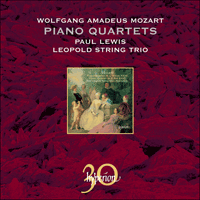

Mozart at his most fetching! Neither Beethoven in his maturity nor Haydn wrote for the piano quartet—piano with string trio—yet this oddly neglected instrumental combination inspired Mozart to pen these mature works that were to be the first masterpieces of the genre. Mozart delights in having richer textures than in the more common piano trio and the wider variety of sonorities than in the string quartet. Indeed, so much did he enjoy himself in the composition that he lost the commission to write the last two of the three works here after the publisher Hoffmeister found the first too intricate and difficult for the amateur market! (Hoffmeister did at least let the composer keep the advance he had received!) But his enthusiasm pushed him to write them anyway and what has come down to us makes a wonderful compendium of Mozart's genius, his resourceful technical felicity as well as that deft kaleidoscope of emotional narrative.
Following the Leopold Trio's acclaimed renderings of the great String Divertimento (CDA67246), this release will for many be a revelation and for all of us a source of deep gratification. Paul Lewis, a pupil of Alfred Brendel and here making his Hyperion debut, is by training and temperament steeped in the Viennese classics, bringing to these special works both the authority and youthfulness they merit.

If Don Giovanni was ‘too difficult to be sung’, the G minor Piano Quartet K478, completed on 16 October 1785, was apparently too difficult to be played. According to the biography of Mozart by Georg Nissen (second husband of Constanze Mozart), the work was to be the first of three piano quartets commissioned by the composer and publisher Franz Anton Hoffmeister. But, not surprisingly given its scale and technical and expressive complexity, the quartet proved unpopular with the amateur market; and, in Nissen’s words, Hoffmeister ‘made Mozart a present of the advance payment he had already received, on condition that he should not write the other two quartets contracted for’.
Mozart, though, evidently relished the challenge of what was then a novel medium, without significant precedents (though by a strange coincidence the fourteen-year-old Beethoven had composed three piano quartets earlier that same year, 1785). And during the first run of Figaro in May 1786 he composed a second piano quartet, in E flat, completed on 3 June and published the following year by the firm of Artaria. Like many of Mozart’s initially ‘difficult’ works, both quartets overcame early resistance and made their way in France, England and Germany. And on 30 November 1791, five days before Mozart’s death, the critic of the Musikalische Korrespondenz der Teutschen Filarmonischen Gesellschaft noted that the E flat Quartet was ‘written with that fire of the imagination and that correctness which has won for Herr M. the reputation of one of the best composers in Germany’.
In the G minor Piano Quartet eighteenth-century players and listeners had to contend not only with an unfamiliar and technically demanding medium (both string and keyboard parts would have been beyond most amateurs), but also with one of Mozart’s most complex and passionate first movements, permeated by its implacable unison opening gesture. Though Mozart sometimes treats the keyboard part in the virtuoso style of his great Viennese piano concertos, the dialogues and contrapuntal interplay between keyboard and strings—above all in the strenuous development—are in the spirit of true chamber music. After the first movement’s turbulent coda, the B flat Andante, with its sensuous chromaticism and delicately ornate passagework (shared between all four instruments), brings necessary balm. Unusually for a Mozart work in the minor key, the finale sets out immediately in a blithe, unclouded G major. Formally this is an expansive sonata rondo (a design found in many of Mozart’s Viennese piano concertos) with one hummable tune after another, a couple of which could have come straight from the mouth of Papageno. But there is drama here as well as hedonistic delight. And the central development recalls the spirit of the first movement, firstly in exchanges between imperious piano and beseeching strings, and then in a passage of stormy dialogue based on a fragment of the main theme.
Typically of Mozart in E flat, the Quartet K493 is a far more mellow and genial work with, in the first movement, something of the relaxed grandeur of the recently composed E flat Piano Concerto, K482. As in the concerto, the first movement has an almost reckless profusion of lyrical themes, which expand and proliferate at leisure. Most pervasive and influential is the theme that establishes the dominant key, B flat, initiated by the piano and immediately echoed by the violin. This idea fertilises the whole of the widely modulating development (moving from B flat minor and D flat major as far afield as D minor), where strings engage in close imitative dialogue against a background of rapid keyboard scales and arpeggios—a common texture in Mozart’s piano concertos. When this theme reappears in the recapitulation on violin and viola, with the cello following in imitation, it again starts in B flat—all wrong for this point in the movement—before the piano smoothly restores the home key of E flat. This ‘wrong key’ entry in the recapitulation demands a resolution in the coda, where the strings reiterate the theme in three-part canon with the simplest tonic and dominant harmony.
The A flat Larghetto, in full sonata form, shares the warmth and chromatic richness of the G minor Quartet’s Andante. But it is a more intense, less decorative, movement, with an impassioned development that begins with a dramatic re-interpretation of the opening phrase—a moment echoed, with another new twist, at the start of the coda. Mozart’s sketches reveal that he discarded two drafts of the finale’s gavotte-like theme before arriving at a version that satisfied him. Again there is an abundance of graceful and piquant melody, though the movement’s chief protagonist is an idea that at first seems to be merely transitional: a brusque unison for the three strings answered by a pleading syncopated phrase on the piano. This idea is rarely absent for long, chromatically expanded just before the initial return of the main theme and, in an echo of the first movement, sounded in close canonic imitation in the coda.
Richard Wigmore © 2003
Si Don Giovanni était «trop difficile à chanter», le Quatuor pour piano et cordes en sol mineur K.478, achevé le 16 octobre 1785 était apparemment trop difficile à jouer. Selon la biographie de Mozart de Georg Nissen (le second époux de Constanze Mozart), l’œuvre devait être la première de trois quatuors avec piano commandité par le compositeur et éditeur Franz Anton Hoffmeister. Mais du fait de ses proportions, de ses difficultés techniques et de la complexité expressive, le Quatuor se trouva, naturellement être impopulaire pour le marché amateur. Selon Nissen, Hoffmeister «fit cadeau à Mozart de l’avance qu’il avait déjà reçue à la condition qu’il renonçât à écrire les deux autres quatuors pour lesquels il était lié par contrat.»
Mozart, bien entendu, appréciait la confrontation et l’exploration d’un genre alors nouveau, sans aucun précédents significatifs (étrange coïncidence, le jeune Beethoven de quatorze ans avait écrit trois quatuors avec piano durant cette même année, 1785). Et durant la première production de Figaro en mai 1786, il écrivit un second Quatuor pour piano, en mi bémol majeur, qu’il acheva le 3 juin et fit paraître l’année suivante chez l’éditeur Artaria. Comme de nombreuses œuvres réputées «difficiles» de Mozart, les quatuors finirent par vaincre les résistances initiales et s’ouvrirent la voie de la France, de l’Angleterre et de l’Allemagne. Le 30 novembre 1791, cinq jours avant la mort de Mozart, le critique du Musikalische Korrespondenz der Teutschen Filarmonische Gesellschaft notait que le Quatuor en mi bémol majeur était «écrit avec ce feu d’imagination et cette correction qui ont donné à Herr M. la réputation d’être un des meilleurs compositeurs d’Allemagne.»
Avec le Quatuor avec piano en sol mineur, les exécutants et auditeurs du 18e siècle ont dû faire face à un genre techniquement exigeant qu’ils ne connaissaient pas—les parties des cordes et du clavier outrepassaient largement le niveau de la plupart des amateurs. Ils ont dût aussi affronter un des premiers mouvements parmi les plus complexes et passionnés que Mozart ait écrits, mouvement que marque un grand élan initial en un unisson implacable. Si Mozart traite parfois la partie de clavier dans le style virtuose de ses grands concertos pour piano viennois, les dialogues et le jeu contrapuntique entre le clavier et les cordes—en particulier dans le développement vigoureux—sont en fait dans le plus pur esprit de musique de chambre. Après la coda turbulente du premier mouvement, une accalmie bien nécessaire est apportée par l’Andante en si bémol majeur, avec son chromatisme sensuel et ses traits délicatement ornés que se partagent les quatre instruments. Fait rare parmi les œuvres en mineur de Mozart, le finale débute directement en un sol majeur radieux. Du point de vue de la forme, il s’agit d’un rondo de sonate (une coupe que Mozart exploita à de nombreuses reprises dans ses concertos viennois) avec un flot de mélodies mémorables qui semblent s’enchaîner, certaines d’entre elles pourraient d’ailleurs venir tout droit de Papageno. Mais en plus du plaisir hédoniste, on y trouve aussi du drame. Le développement central rappelle l’esprit du premier mouvement, d’abord entre les échanges entre le piano impérieux et les cordes implorantes, puis dans un passage de dialogue orageux élaboré sur un fragment du thème principal.
Caractéristique du Mozart de mi bémol majeur, le Quatuor K.493 est une œuvre bien plus chaleureuse et géniale avec, dans le premier mouvement, un peu de cette grandeur détendue du Concerto pour piano en mi bémol majeur K.482 qu’il venait de composer. Comme dans ce concerto, le premier mouvement fait preuve d’une profusion quasiment imprudente de thèmes lyriques qui s’élargissent et prolifèrent à l’envi. Initié par le piano et immédiatement repris en écho par le violon, le thème qui établit la dominante, si bémol majeur est plus pénétrant et influent. Cette idée fertilise tout le développement largement modulant (allant de si bémol mineur et ré bémol majeur jusque dans des contrées aussi éloignées que ré mineur) où les cordes engagent un dialogue en imitations serrées avec en toile de fond les gammes et arpèges rapides du clavier—le genre de texture que l’on trouve souvent dans les concertos pour piano contemporains de Mozart. Si ce thème réapparaît dans la réexposition au violon et à l’alto puis repris en imitation au violoncelle, c’est à nouveau en si bémol majeur qu’il débute alors qu’il s’agit d’une tonalité totalement incorrecte pour l’endroit où en est le mouvement. Le piano restaure ensuite avec doigté la tonalité principale, mi bémol majeur. L’entrée de la réexposition dans la «mauvaise tonalité» nécessite une résolution dans la coda où les cordes énoncent à nouveau le thème sous la forme d’un canon à trois voix dans une harmonie des plus simples de tonique et dominante.
De coupe sonate, le Larghetto en la bémol majeur partage la chaleur et la richesse chromatique de l’Andante du Quatuor en sol mineur. Mais il s’agit d’un mouvement plus intense, moins décoratif, avec un développement passionné qui débute par une réinterprétation dramatique de la phrase initiale—que l’on retrouve en écho, avec un tour nouveau, au début de la coda. Les esquisses de Mozart révèlent que pour son finale, il avait rejeté deux ébauches du thème aux allures de gavotte avant d’arriver à une version qui le satisfasse. A nouveau, on y perçoit une abondance de mélodie gracieuse et piquante, même si le protagoniste du mouvement est une idée qui donne initialement l’impression de n’être que transitionnelle: un brusque unisson des trois cordes auquel répond une phrase syncopée suppliante du piano. Cette idée est rarement absente, longuement élargie chromatiquement juste avant la reprise initiale du thème principal et, faisant écho au premier mouvement, un énoncé en imitation canonique serrée dans la coda.
Richard Wigmore © 2003
Français: Isabelle Battioni
War Don Giovanni angeblich zu schwierig zu singen, so scheint das am 16. Oktober 1785 vollendete Klavierquartett in g-Moll allzu schwer spielbar gewesen zu sein. Der Mozart-Biographie von Georg Nikolaus Nissen (dem zweiten Ehemann von Konstanze Mozart) zufolge war das Werk ursprünglich als erstes von drei Klavierquartetten gedacht, die der Komponist und Verleger Franz Anton Hoffmeister bei Mozart in Auftrag gab. Aber in Anbetracht seines Umfangs sowie der technischen und expressiven Komplexität kann es nicht überraschen, dass das Quartett sich am Markt für Amateurmusiker nicht durchsetzen konnte, und Nissen zufolge soll Hoffmeister dem Komponisten das vorausbezahlte Honorar sogar zum Geschenk gemacht haben, unter der Bedingung, dass er von den weiteren in Auftrag gegebenen Kompositionen Abstand nähme.
Mozart fand jedoch offenbar Gefallen an der Herausforderung einer damals völlig neuen Gattung ohne bedeutende Vorläufer (obwohl der vierzehnjährige Beethoven, wie der Zufall es wollte, zu Beginn des gleichen Jahres—1785—drei Klavierquartette komponiert hatte). Und während der ersten Spielzeit des Figaro im Mai 1786 schrieb Mozart ein zweites Klavierquartett, diesmal in Es-Dur, das am 3. Juni fertig vorlag und im Jahr darauf vom Verlag Artaria veröffentlicht wurde. Wie viele seiner ursprünglich als „schwierig“ eingestuften Werke überwanden beide Quartette die anfänglichen Widerstände und setzten sich in Frankreich, England und Deutschland durch. Und am 30. November 1791, fünf Tage vor Mozarts Tod, stellte der Ktitiker der Musikalischen Korrespondenz der Teutschen Filarmonischen Gesellschaft fest, das Es-Dur-Quartett sei „mit dem Feuer der Einbildungskraft und Korrektheit geschrieben, wodurch sich Hr. M. schon längst den Ruhm eines der besten Tonsezer in Deutschland erworben hat.“
Mit dem g-Moll-Klavierquartett sahen sich Interpreten wie Publikum des achtzehnten Jahrhunderts nicht nur mit einer ungewohnten und technisch anspruchsvollen Gattung konfrontiert (sowohl die Streicherstimmen als auch der Klavierpart hätten die allermeisten Amateure überfordert), sondern auch mit einem von Mozarts komplexesten und leidenschaftlichsten Kopfsätzen, durchdrungen von seiner unerbittlichen, unisono geführten Eröffnungsgeste. Obwohl Mozart den Klavierpart teils im virtuosen Stil seiner großen Wiener Klavierkonzerte anlegt, stehen die Dialoge und das kontrapunktische Zusammenspiel von Tasteninstrument und Streichern—vor allem in der energischen Durchführung—ganz im Geiste wahrer Kammermusik. Nach der turbulenten Coda des ersten Satzes bringt das B-Dur-Andante mit seiner sinnlichen Chromatik und dem feinsinnig verzierten Passagenwerk (aller vier Instrumente) die erforderliche Linderung. Ungewöhnlicherweise für ein Mozart-Werk in Moll setzt das Finale sogleich in unbekümmertem und ungetrübtem G-Dur ein. Formal handelt es sich hierbei um ein leicht zugängliches Sonatenrondo (wie es sich auch in vielen von Mozarts Wiener Klavierkonzerten findet), mit einer eingängigen Melodie nach der anderen, von denen einige geradewegs aus dem Munde Papagenos stammen könnten. Aber hier findet sich nicht nur hedonistische Freude, sondern auch Dramatik. Und die zentrale Durchführung erinnert an den Geist des ersten Satzes, erst im Austausch zwischen herrischem Klavier und flehenden Streichern, dann in einer stürmischen Dialogpassage, die auf einem Fragment des Hauptthemas beruht.
Wie es für Mozart typisch ist, wenn er in Es-Dur schreibt, handelt es sich beim Quartett KV 493 um ein wesentlich abgeklärteres, liebenswürdigeres Werk, das im Kopfsatz etwas vom gelassenen Glanz des kurz zuvor entstandenen Es-Dur-Klavierkonzerts KV 482 hat. Wie im Konzert weist der erste Satz eine fast tollkühne Überfülle an lyrischen Themen auf, die sich ohne Hast ausbreiten und erweitern. Am weitesten verbreitet und einflussreichsten ist das vom Klavier eingeführte und unmittelbar von der Geige aufgenommene Thema, das die dominante Tonart B-Dur etabliert. Dieses Motiv befruchtet die ganze ausgiebig modulierende Durchführung (die von b-Moll und Des-Dur bis hin nach d-Moll ausgreift), in der die Streicher sich vor dem Hintergrund schneller Klavierskalen und Arpeggien in eng imitierendem Dialog ergehen—eine Textur, wie sie in Mozarts Klavierkonzerten jener Zeit oft anzutreffen ist. Wenn dieses Thema in der Reprise erneut von Geige und Bratsche zu hören ist, denen das Cello imitierend folgt, setzt es wieder in B-Dur ein—was an diesem Punkt des Satzes völlig falsch wirkt—, ehe das Klavier geschmeidig die Grundtonart Es-Dur wiederherstellt. Dieser Einsatz in der „falschen“ Tonart in der Reprise verlangt eine Auflösung in der Coda, wo die Streicher das Thema erneut vortragen, diesmal in dreistimmigem Kanon mit schlichtester Harmonisierung in Tonika und Dominante.
Das As-Dur-Larghetto in vollständiger Sonatensatzform teilt die Wärme und chromatische Vielfalt des Andante aus dem g-Moll-Quartett. Doch handelt es sich um einen intensiveren, weniger dekorativen Satz, der mit einer dramatischen Neuinterpretation der Eröffnungsphrase einsetzt—ein Moment, der sich zu Beginn der Coda unter Einbeziehung einer weiteren Neuerung widerspiegelt. Mozarts Skizzen lassen erkennen, dass er zwei Entwürfe für das Finalthema im Stil einer Gavotte verwarf, ehe er eine Fassung fand, die ihn zufrieden stellte. Wiederum gibt es eine Vielfalt an eleganten und pikanten Melodien, obwohl der zentrale Einfall des Satzes ein Motiv ist, das anfangs nur als Übergang zu dienen scheint: ein brüskes Unisono der drei Streicher, dem eine flehentlich synkopierte Phrase des Klaviers antwortet. Dieses Motiv verstummt selten für längere Zeit, wird kurz vor der ersten Wiederkehr des Hauptthemas chromatisch erweitert und ist in einem Anklang an den ersten Satz in der Coda in enger kanonischer Imitation zu hören.
Richard Wigmore © 2003
Deutsch: Anne Steeb/Bernd Müller
