Welcome to Hyperion Records, a British classical label devoted to presenting high-quality recordings of music of all styles and from all periods from the twelfth century to the twenty-first.
Hyperion offers both CDs, and downloads in a number of formats. The site is also available in several languages.
Please use the dropdown buttons to set your preferred options, or use the checkbox to accept the defaults.
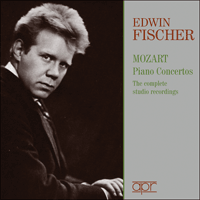


This is a recording from Appian Publications & Recordings Ltd (to quote the full title)—the label invariably more familiarly known simply as "APR".
Since its foundation in 1986, APR has won an enviable reputation as a quality label devoted predominantly—though not exclusively—to historic piano recordings. In particular APR has won countless laurels for the high standard of its 78rpm restoration work—"Transfers of genius" to quote one critic—as well as the detail and content of its booklets.

By the 1920s Fischer was one of Europe’s leading pianists, celebrated in the romantic repertoire and already exploring the works of Bach and Mozart with which he came to be particularly associated. But this was only part of his wide-ranging and innovative musical career. He was also a conductor, directing the Lübeck Musikverein, the Munich Bachverein and his own chamber orchestra; an editor of works by Bach, Mozart and Beethoven; a composer of songs, piano pieces and cadenzas; and an esteemed teacher, first at the Stern Conservatory and later at the Berlin Hochschule für Musik.
In 1943 he returned to Switzerland, where he taught at the Lucerne Conservatory. He continued working and recording in the LP era, but deteriorating health forced him to give up recording and regular public appearances after 1954. He died on 24 January 1960.
To understand Fischer’s place in the development of Mozart interpretation, we have to recall Mozart’s status in the early decades of the twentieth century. Everyone knew his name, yet his work was little known and poorly understood. Ernest Newman likened his music to ‘the prattling of a child’, and as late as the 1950s Gieseking could write that ‘the ease and perfection of his writing put his works beyond all human frailties, all human cares’. For Fischer, writing in 1929, Richard Strauss and Ferruccio Busoni ‘first proclaimed to our generation the true meaning of Mozart’. Fischer, Schnabel, Kleiber and Walter were among the greatest of that younger generation who came to see in Mozart the profoundly human and expressive figure whom we revere today:
One feels that at the age of 20 he had experienced more than most others at 50. He had a bird-like capacity for swift reaction; he sensed more, felt more than an ordinary person. Like Shakespeare he lifts tragedy in to the light in which the gods see it dispassionately. The art of restraint, of merely suggesting, this ‘play’ with human passions … raises him to the highest levels of spiritual maturity which a human being can attain. This is why he is so hard to interpret, despite his apparent simplicity. He transcended his world, not just by his miraculous talent, as so many people believe, but by dedicated work.
Fischer served Mozart’s cause in many capacities. As a performer he brought this unfamiliar music to concert audiences throughout Europe, and his were among the first recordings. He formed his chamber orchestra at least partly to realize his overall conception of the concertos and to conduct the symphonies. He edited a number of Mozart’s piano sonatas, seeking (as always in his editorial work) to restore the Urtext, and composed cadenzas for some of the concertos. In his teaching and writing, too, he sought to convey his insights, insisting on clarity and spontaneity:
Mozart’s light, aristocratic hand loved to scatter passage work, trills, fioriture, ‘delicate petals on an airy garland’. You, too, should scatter them, and: con grazia.
Fischer’s disciples, including Badura-Skoda, Brendel and Barenboim, have been among the most distinguished advocates of the concertos and sonatas, in the concert hall and on record. A measure of their success is that it is now startling to read Fischer urging pianists to play, among other works, ‘the rarely heard piano concerti: K414, 271, 453, 503’. If today we find it hard to imagine that these works were ever rarely heard, much of the credit lies with Edwin Fischer.
Piano Concerto No 20 in D minor K466
Fischer’s interpretation of this concerto, at the time Mozart’s best-known, is classical, symphonic and in many ways strikingly modern. His pianism was at its peak in these years, and this is a typical example of his darting, energetic playing. His dual role as soloist and conductor seems to impose no strain; the London Philharmonic follows his lead in a fully worked and integrated interpretation, revealed with unprecedented clarity by this digital transfer. Unusually for the period there is almost no string portamento (this version is far less tonally sumptuous than its main rival on 78s, Bruno Walter with the Vienna Philharmonic). The first movement varies little in tempo, the marked relaxation in ‘second subject’ material being achieved almost entirely by legato. Only in passages for piano solo, brief digressions from the main argument, does Fischer reduce the tempo significantly. Fischer’s cadenza characteristically quotes material which Mozart gave to the orchestra rather than the piano; the lead-back is taken from Beethoven’s cadenza.
The Romanze is courtly. Fischer seeks clarity rather than Gothic atmosphere in the ‘stormy’ middle section. He structures his reading of the whole movement to accumulate a tension which is released only at the end, in the tender slowing for the last statement of the main theme. The finale is again classical, its vigorous Allegro assai sustained without effort. The cadenza refers back to the first tutti from this movement, then to the first movement of the concerto.
Piano Concerto No 22 in E flat major K482
For Fischer, as for many visiting soloists, Barbirolli (not yet ‘Sir John’ in 1935) was the accompanist of first choice; here he conducts an unidentified orchestra probably assembled for the session. In contrast to the D minor, this concerto is discursive, even rhapsodic, and Fischer’s interpretation is accordingly elastic in tempo and phrasing. The first movement gains gradually in power and tension, culminating in the recapitulation delivered with terrific drive. The cadenza again quotes from the tuttis.
Fischer begins and ends the second movement very slowly and expansively, building up to and down from the marked Andante tempo as the movement unfolds. This reading lasts nine minutes, nearly two minutes less than in his later live versions (1946 and 1954). The difference is due mainly to his faster speed in the piano-led variation from bar 93, which may have been necessary to fit the concerto on eight 78 sides; if so, this is the only such compromise in these recordings. The coda, with the piano slowing for its brief transition to the major, is particularly beautiful.
In the final Allegro Fischer, in line with the latest musicological thinking of his day, varies the theme, plays semiquaver arpeggio figurations in passages where Mozart sketched in only crotchets, and fills in chords to support the printed single notes in the andante cantabile episode (218–264).
Rondo for piano and orchestra in D K382
Fischer’s recordings with his own chamber orchestra illustrate his ideas on Mozart style in their purest form. The ensemble here is smaller than the full orchestra heard in the D minor and E flat concertos; it comprises 6 first and 5 second violins, 3 violas, 3 cellos and 2 double-basses, plus double woodwinds. Yet there is nothing academic or small-scale about this nonchalant and amusingly characterized performance. There are no repeats.
Piano Concerto No 17 in G major K453
This concerto and the Rondo K382 are the only concertante works of Mozart that Fischer recorded with his own chamber orchestra. The small ensemble (strings 6, 5, 3, 3, 1 and double winds) reflects a historical awareness unusual in the 1930s, yet the interpretation is natural, even playlful, in a way that seems to elude latter-day performers using authentic forces. The first movement is taken unusually fast, with the graceful 16-bar opening, the bustling principal material of the exposition and the hushed re-entry of the orchestra after the cadenza all realized at essentially the same tempo. There is a tangible, improvisatory excitement towards the end of the exposition, the ensemble driving urgently forward. Fischer’s own playing derives its momentum not from forceful delivery but a relaxed, buoyant rhythm. The Andante’s restless, transient moods and half-lights exemplify what Brendel has defined as Fischer’s gift for emotional differentation. Comedy predominates in the final Allegretto, nowhere more so than in the knockabout exchanges among the woodwinds and horns in the coda. (A radio recording of Fischer and these soloists in the Quintet, K452, remains unissued.) Even the commonplace Alberti bass figurations on the piano take on a cheerful, bubbling life of their own.
Piano Concerto No 24 in C minor K491
Like the D minor and E flat concertos on CD 1, this recording was made in London with a full orchestra (strings 8, 6, 4, 4, 2). Lawrance Collingwood (1887–1982) was a musical factotum, conductor, chorus-master, organist and composer, but is best remembered nowadays as an HMV producer. He had rehearsed the orchestra for the D minor Concerto in 1933 and Fischer asked him to prepare in the same way for this session, giving him detailed instructions on the interpretation beforehand. It was planned that Fischer would direct the recording from the keyboard, but in the event Collingwood conducted, no doubt to avoid problems with the orchestra in this complex and as yet unfamiliar work. The whole conception, however, is unquestionably Fischer’s own. The clarity and tragic intensity of the first movement – in both piano and orchestra – remind us that he welcomed Toscanini’s purifying influence on performance. The musicologist Arthur Hutchings wrote in his Companion to Mozart’s Piano Concertos that ‘I had not heard a single pianist play the opening phrase with control of time and touch until I got the Fischer recording’. The terse opening of the finale and its subsequent lyrical expansion can also be heard in live performances from 1951 and 1954 in which Fischer conducted from the piano. Throughout, the woodwind parts are prominent; in approving the discs for issue, Fischer singled out the bassoon and oboe soloists for special praise.
Fantasia in C minor K396
HMV planned to record Fischer in all four of Mozart’s fantasias for solo piano, but only made the two in C minor. K396 had been part of Fischer’s core repertoire since the start of his career, and here he plays it with apparently effortless mastery. Yet this was his third attempt at a recording, earlier sessions in 1928 and May 1934 having failed to satisfy him.
Piano Sonata No 11 in A major K331
Mozart was represented in Fischer’s solo recital repertoire principally by the sonatas K330, 331, 545 and 576 and the fantasias K396, 397 and 475. In these pieces, which were even less familiar than the concertos, he was forced to be original; whereas his Beethoven interpretations built on the legacy of predecessors such as d’Albert and Anton Rubinstein, there was no tradition of Mozart performance and the only possible influence was that of Busoni. These records are feline – elegant, sensuous, inquisitive. As in the concertos his tempi within movements vary little, and even the episodic Andante grazioso maintains a classical balance and continuity. The Rondo alla turca, rhythmically brilliant and lit up with a ferocious joy, is a touchstone of Mozart style.
Piano Concerto No 25 in C major K503
HMV planned to record Fischer conducting this concerto from the keyboard in the 1930s, but war intervened and the honour of the gramophone premiere went to Kathleen Long and Boyd Neel. When Fischer returned to the studios in 1947, Walter Legge had introduced a new conception of recording based on the Philharmonia and a roster of superior conductors including that great Mozartian Josef Krips. Fischer and Krips had previously toured together, and though they had never before collaborated on this concerto their reading has the cohesion of a regular partnership. Under Legge’s supervision they briskly set down two takes of each of the eight sides, and there was enough time left for Krips to record Johann Strauss I’s Radetzky March (Columbia DB 2458) and Johann Strauss II’s Tales of the Vienna Woods (Columbia DX 1503).
From this magnificent performance, Fischer’s pupil Marcella Barzetti cited the finale – a true Allegretto – as a model of his pianism: ‘It is not perfect, but infinitely alive. Each note has the resiliency of a coiled spring. Nothing is merely pretty or pleasing, but exploding with vitality, and the melodic design flows smoothly, without coyness.’ Krips’s conducting, as in the classic Decca Don Giovanni and his cycle of the Symphonies 21–41 with the Concertgebouw, is urgent, lucid and inimitably stylish. (The present transfer reveals the sonic beauty of the recording, and the orchestral contribution in particular, more clearly than ever before.) Fischer went on to work frequently with the Philharmonia, which became one of his favourite orchestras. We can only regret that pre-war plans for Concertos Nos 9 and 21 (K271 and 467) were never revived, and apart from a late remake of the D minor concerto this set brought Fischer’s Mozart series to an end.
Piano Sonata No 10 in C major K330
Fischer takes the outer movements fast – faster, it is reported, than in his latter-day recitals – and in the Allegretto in particular he seems to be swept along by his own enthusiasm. His tempi are flexible, now dashing through a busy passage, now relaxing for a melodic phrase, but the overall pace is steady and the overt speed fluctuations of a previous generation are absent. The greatest inspiration comes in the Andante cantabile: hear, for example, the tonal shading of the repeated notes at the modulations into the minor.
Fantasia in C minor K475
For Fischer this enigmatic Fantasia stands alone; he never combined it with the K457 Sonata as modern scholarship dictates. He conceives it on a vast scale and in sombre colours, heightening its restlessness, the constant changes of mood and pace. In the closing tempo primo bars he takes the initial pianissimo close to inaudibility before moving implacably to the piece’s final, unanswered question.
Romance in A flat major KAnh205
Fischer’s 1929 essay on Mozart shows that he knew of the doubts about the attribution of this vignette, but he continued to play it, no doubt feeling that its charm did not depend on its authorship. He recorded it three times; this version dates from 1941.
Haydn Concerto in D major Hob XVIII:11
Fischer did not champion Haydn as comprehensively as Mozart, but he recorded the Symphony No 104 with his chamber orchestra and, in wartime Vienna, this astonishing set. The first movement’s speed and energy are electrifying, yet there is no harshness or hammering – Fischer points up the rhythm with remarkable relaxation and delicacy, and the orchestra is equally nonchalant. The cadenza is omitted, no doubt to get the work on four sides. The Adagio, in this impassioned reading, shows why Fischer loved the Vienna Philharmonic’s string sound; the blistering Rondo all’Ungherese testifies to their mastery of the dance idiom. This is a masterpiece of the early Haydn discography.
Roger Smithson © 2000
Dès les années 1920 Fischer faisait partie des pianistes européens de premier plan, renommé pour ses interprétations du répertoire romantique, et il avait commencé à explorer les œuvres de Bach et de Mozart qui deviendraient ses pièces maîtresses. Mais le piano n’était qu’une des multiples facettes de son talent de musicien novateur. Chef d’orchestre, il dirigea la Musikverein de Lübeck, la Bachverein de Munich et son propre ensemble de musique de chambre; il édita des œuvres de Bach, de Mozart et de Beethoven; il composa des chansons, des pièces pour piano et cadences; enfin il fut un professeur très estimé, tout d’abord au conservatoire Stern puis à la Hochschule für Musik de Berlin.
En 1943 il rentra en Suisse où il enseigna au conservatoire de Lucerne. Il continua à travailler et à enregistrer à l’avènement du 33 tours mais sa santé chancelante le força à abandonner l’enregistrement et les concerts publics réguliers après 1954. Il s’étint le 24 janvier 1960.
Pour comprendre le rôle de Fischer dans le développement de l’interprétation de Mozart, il faut savoir quelle place était accordée à Mozart dans les premières décennies du XXe siècle. Tout le monde savait qui il était mais sa musique restait très peu connue et mal comprise. Ernest Newman la compara au «babil d’un enfant», et même à la fin des années 1950 Gieseking écrivait: «La facilité et la perfection de ses œuvres les placent au-delà de la fragilité humaine et des soucis de notre monde.» Quant à Fischer, il écrivit en 1929 que c’étaient Richard Strauss et Ferruccio Busoni qui «les premiers ont révélé à notre génération le sens véritable de la musique de Mozart». Fischer, Schnabel, Kleiber et Walter appartenaient à l’élite de cette jeune génération qui reconnut en Mozart l’être foncièrement humain et expressif que nous vénérons aujourd’hui:
A 20 ans il semblait avoir plus d’expérience de la vie que la plupart des gens à 50. Il avait la vivacité de l’oiseau; il pressentait plus de choses, ressentait plus de choses que le commun des mortels. Comme Shakespeare, il élève la tragédie à un niveau où les dieux l’observent sans émotion. Par son art de la retenue, par ses simples allusions, par sa façon de «jouer» avec les passions humaines … il atteint le plus haut degré de maturité spirituelle qu’un être humain puisse atteindre. C’est pourquoi nous avons tant de mal à l’interpréter, malgré son apparente simplicité. Il transcenda ce monde non seulement par son talent miraculeux, que tant lui reconnaissent, mais par son travail acharné.
Fischer servit la cause de Mozart de plusieurs façons. En concert, l’interprète qu’il était fit découvrir cette musique mal connue aux publics de toute l’Europe, et il fut l’un des premiers à l’enregistrer. Il fonda son orchestre de chambre en partie pour réaliser sa conception d’ensemble des concertos et pour diriger les symphonies. Il édita plusieurs sonates pour piano de Mozart, cherchant comme à son habitude à restituer l’Urtext, et il composa des cadences pour certains concertos. Dans son enseignement comme dans ses écrits, il chercha à transmettre ses idées, insistant sur la clarté et la spontanéité de l’interprétation:
La main légère et noble de Mozart aimait semer à la volée des ornements de détail, des trilles, des fioritures, «pétales délicats sur une couronne de fleurs impalpable». A vous maintenant de les semer à la volée, et con grazia.
Les disciples de Fischer, Badura-Skoda, Brendel et Barenboim entre autres, se sont inscrits parmi les plus illustres défenseurs des concertos et des sonates, en concert comme sur disque. Et si l’on est sidéré aujourd’hui de lire que Fischer encourageait les pianistes à jouer entre autres «ces concertos pour piano que l’on entend si rarement: KV414, 271, 453, 503», c’est tout à la mesure du succès des défenseurs de Mozart. Et si nous avons du mal à nous imaginer que ces œuvres aient jamais pu être négligées, c’est grâce en grande partie à Edwin Fischer.
Concerto no20 en ré mineur KV466
Fischer nous donne de ce concerto, qui à l’époque était le plus populaire de Mozart, une interprétation à la fois classique, symphonique et par certains côtés d’une modernité remarquable. Le pianiste était alors à l’apogée de son talent, et cet exemple est typique de son jeu vif et énergique. Il assume son double rôle de soliste et de chef d’orchestre sans effort; le London Philharmonic Orchestra le suit dans une interprétation unie, bien travaillée et d’une clarté sans précédent grâce au report numérique. Les cordes n’emploient pas de portamento, contrairement aux habitudes de l’époque (cette version est beaucoup moins somptueuse sur le plan sonore que sa principale rivale sur 78 tours, la version de Bruno Walter et de la Philharmonie de Vienne). Le tempo reste quasiment constant tout au long du premier mouvement, le relâchement manifeste du «second sujet» étant obtenu presque entièrement par l’usage du legato. Fischer ne se permet de réduire le tempo de façon notable que dans les passages pour piano seul, lorsqu’il s’écarte brièvement de l’argument principal. La cadence de Fischer reprend un matériau que Mozart avait confié à l’orchestre plutôt qu’au piano; elle emprunte sa conclusion à la cadence de Beethoven.
La Romanze est élégante. Fischer se concentre sur la clarté plutôt que sur l’atmosphère gothique dans la section centrale «orageuse». Tout au long du mouvement, il vise dans son jeu à accumuler une tension qui ne sera libérée qu’à la fin, dans la douce décélération précédant l’ultime exposition du thème principal. Le finale quant à lui est classique, l’Allegro assai n’y perd à aucun moment de sa vigueur. La cadence renvoie au premier tutti du mouvement, puis au premier mouvement du concerto.
Concerto no22 en mi bémol majeur KV482
Pour Fischer, comme pour tant d’autres solistes, Barbirolli (il n’était pas encore «Sir John» en 1935) était l’accompagnateur de choix; on le retrouve ici à la tête d’un orchestre non identifié, sans doute mis sur pied pour cette séance d’enregistrement. A l’opposé de celui en ré mineur, ce concerto est discursif, voire rapsodique, et Fischer choisit donc de rester souple sur le plan du phrasé et du tempo. Le premier mouvement devient peu à peu plus tendu, plus puissant, culminant en une réexposition d’une énergie formidable. La cadence là encore emprunte son matériau aux tutti.
Fischer commence et finit le second mouvement d’un geste large et lent, retrouvant après un passage plus rapide et plus tendu l’Andante indiqué au début. Cette version dure neuf minutes, près de deux minutes de moins que les enregistrements publics qu’il réaliserait plus tard (1946 et 1954). Une différence due avant tout à la vitesse supérieure qu’il adopte pour la variation démarrée par le piano à la mesure 93, une accélération sans doute nécessaire pour que le concerto tienne sur huit faces de 78 tours; ce compromis, si c’en est un, est le seul de ces enregistrements. La coda, marquée par le ralentissement du piano pour la brève transition au majeur, est particulièrement belle.
Dans l’Allegro final, en accord avec les idéees de ses contemporains musicologues, Fischer varie le thème, joue des arpèges en doubles-croches là où Mozart n’avait prévu que des noires, et ajoute des accords en renfort des notes individuelles de la partition dans l’andante cantabile (218–264).
Rondo en ré majeur KV382
Les enregistrements que Fischer réalisa avec son propre orchestre de chambre sont l’illustration la plus pure de ses idées sur le style mozartien. L’ensemble que l’on entend ici est plus petit que l’orchestre complet du concerto en ré mineur ou de celui en mi bémol; il comprend six premiers violons, cinq seconds violons, trois altos, trois violoncelles et deux contrebasses, ainsi que des bois par deux. Et pourtant cette version nonchalante et divertissante n’est en rien étriquée ou intellectuelle. Il n’y a pas de reprises.
Concerto no17 en sol majeur KV453
Ce concerto et le Rondo KV382 sont les seules œuvres concertantes de Mozart que Fischer ait enregistrées avec son propre orchestre de chambre. La composition de ce petit ensemble (6, 5, 3, 3, 1 pour les cordes, et deux vents par pupitre) témoigne d’une conscience historique exceptionnelle pour les années 1930, mais l’interprétation conserve un naturel, une espièglerie même, qui aujourd’hui semblent échapper aux interprètes d’instruments d’époque. Le tempo du premier mouvement est exceptionnellement rapide, les gracieuses mesures 1–16, les themes trépidants de l’exposition et le retour étouffé de l’orchestre après la cadenza étant prises essentiellement dans le même tempo. L’excitation spontanée qui jaillit vers la fin de l’exposition est quasiment palpable alors que l’ensemble poursuit sa marche en avant pleine d’instance. Quant au jeu de Fischer, il doit son impulsion non pas à la force doigté mais à un rhythme plein d’allant et fort décontracté. Les impressions passagères et les demis-jours de l’Andante sont un exemple de ce que Brendel définit comme le talent de Fischer à différencier les sentiments. C’est la comédie qui domine l’Allegretto final, particulièrement dans les échanges turbulents entre les bois et les cors dans la coda. (Il existe un enregistrement radiophonique, inédit à ce jour, du Quintette KV452 par Fischer et les solistes que l’on entend ici.) Même la basse d’Alberti au piano, si courante à l’époque, déborde d’entrain.
Concerto no24 en ut mineur KV491
Tout comme les concertos en ré mineur et en mi bémol du CD1, ce concerto fut enregistré à Londres avec un grand orchestre (8, 6, 4, 4, 2 pour les cordes). Lawrance Collingwood (1887–1982), homme à tout faire du monde musical, chef d’orchestre, chef de chœur, organiste et compositeur, reste avant tout célèbre pour son travail de directeur artistique à HMV. C’est lui qui s’était chargé des répétitions orchestrales pour le concerto en ré mineur en 1933 et Fischer lui demanda de faire un travail identique pour cette séance, lui donnant auparavant des instructions détaillées sur l’interprétation recherchée. Il était prévu que Fischer dirige l’enregistrement depuis le piano, mais finalement ce fut Collingwood qui se chargea de la direction, certainment pour éviter qu’il y ait des problèmes avec l’orchestre dans cette œuvre complexe et encore mal connue. Néanmoins la vision d’ensemble reste incontestablement celle de Fischer. La clarté et l’intensité tragique du premier mouvement – à l’orchestre comme au piano – nous rappellent qu’il accueillit l’influence purifiante de Toscanini sur l’interprétation. Le musicologue Arthur Hutchings confia dans son étude sur les concertos pour piano de Mozart: «Jamais avant l’enregistrement de Fischer n’avais-je entendu un seul pianiste capable de jouer la première phrase avec contrôle du tempo et du toucher.» L’ouverture laconique du finale et son développement plein de lyrisme caractérisent aussi les enregistrements publics de 1951 et 1954 dans lesquels Fischer dirigea depuis le piano. Tout au long de l’œuvre, les bois jouent en rôle prépondérant; lorsqu’il autorisa la publication de ces disques, Fischer loua en particulier le travail des solistes au basson et hautbois.
Fantaisie en ut mineur KV396
HMV envisageait d’enregistrer Fischer dans les quatre fantaisies pour piano seul de Mozart, mais il ne grava que les deux en ut mineur. KV396 était au centre de son répertoire depuis le début de sa carrière et il maîtrise cette œuvre avec une aisance en apparence fort naturelle. Il avait pourtant déjà tenté à deux reprises de l’enregistrer, mais les séances précédentes de 1928 et de mai 1934 ne lui avaient pas donné satisfaction.
Sonate no11 en la majeur KV331
Mozart était representé dans le repertoire de récital de Fischer surtout par les sonates KV330, 331, 545 et 576 et les fantaisies KV396, 397, 475. Dans ces pages, encore moins connues que les concertos, il ne pouvait qu’être original: en effet, alors que ses interprétations de Beethoven étaient basées sur les visions antérieures d’artistes comme d’Albert et Anton Rubinstein, il n’y avait aucune tradition pour l’interprétation de Mozart et la seule influence possible était celle de Busoni. Ces enregistrements ont une qualité toute féline – ils sont élégants, sensuels, fouineurs. Comme dans les concertos, ses tempos ne varient guère à l’intérieur d’un mouvement et même l’Andante grazioso épisodique maintient un équilibre et une continuité fort classiques. Le Rondo alla turca, feu d’artifice rhythmique qu’illumine une joie féroce, est un pierre de touche du style de Mozart.
Piano Concerto no25 en ut majeur KV503
HMV avait prévu d’enregistrer Fischer dirigeant ce concerto depuis le piano dans les années 1930, mais la guerre éclata et l’honneur de graver le tout premier disque de cette œuvre revint à Kathleen Long et Boyd Neel. Lorsque Fischer retrouva le chemin des studios en 1947, il trouva en place un nouveau concept élaboré par Walter Legge basant les enregistrements sur le Philharmonia et une liste d’excellents chefs d’orchestre parmi lesquels Josef Krips, le grand spécialiste de Mozart. Fischer et Krips n’avaient jamais collaboré à ce concerto auparavant, mais ils avaient eu l’occasion de faire des tournées ensemble, et leur interprétation est celle de deux partenaires habitués l’un à l’autre. Sous la direction de Legge, ils firent sans tarder deux prises de chacune des huit faces, ce qui laissa à Krips le temps de graver la Marche de Radetzky (Columbia DB 2458) et les Légendes de la forêt viennoise de Strauss père et fils (Columbia DX 1503).
Selon Marcella Barzetti, élève de Fischer, le finale – un véritable Allegretto – de cette superbe version est un excellent exemple de la technique pianistique de son maître: «Il n’est pas sans faute, mais il est tellement vivant! Chaque note a la souplesse des spirales d’un ressort. Rien n’y est simplement ravissant ou plaisant, tout y explose de vitalité, et les mélodies s’y développent en douceur, sans timidité mal placée.» La direction de Krips, tout comme dans sa version classique de Don Juan pour Decca et dans le cycle des Symphonies nos21 à 41 qu’il grava à la tête du Concertgebouw, se caractérise par son urgence, sa grande lucidité et son élégance unique. Le report que voici met en valeur, avec une clarté inégalée, l’acoustique de l’enregistrement, particulièrement dans la contribution de l’orchestre. Fîscher travaillerait encore fréquemment avec le Philharmonia qui devint l’un de ses orchestres préférés. Il est dommage que les projets d’avant-guerre d’enregistrement des Concertos no9 et 21 (KV271 et 467) n’aient jamais été relancés. A l’exception d’un nouvel enregistrement plus tardif du concerto en ré mineur, il s’agit là du dernier enregistrement mozartien de Fischer.
Sonate no10 en ut majeur KV330
Fischer choisit d’aborder les mouvements extérieurs dans un tempo rapide – plus rapide, dit-on, que dans ses tout derniers récitals – et dans l’Allegretto en particulier, il semble emporté par son propre enthousiasme. Il reste très flexible en matière de tempo, tantôt filant à toute allure dans un passage animé, tantôt se détendant sur une phrase mélodique, mais dans l’ensemble le pas reste constant et on est loin des fluctuations manifestes d’allure de la génération précédente. L’Andante cantabile reste la page la plus inspirée: écoutez par exemple les nuances de ton des notes répétées lors des modulations en mineur.
Fantaisie en ut mineur KV475
Fischer joua toujours cette fantaisie énigmatique seule; jamais il ne l’associa à la Sonate KV457 comme le recommandent les spécialistes modernes. Il y déploie une vision d’envergure toute en teintes sombres, mettant en valeur la nervosité et les changements constants d’humeur et d’allure du passage. Dans les mesures finales tempo primo, après un pianissimo initial quasiment inaudible, il avance, implacable, vers l’ultime question de l’œuvre qui restera sans réponse.
Romance en la bémol majeur KVAnh205
Dans son essai de 1929 sur Mozart, Fischer reconnut que l’authenticité de cette page restait discutable, mais il la conserva à son répertoire, estimant sûrement que son charme ne reposait pas sur le nom de son créateur. Il l’enregistra à trois reprises; la version que voici date de 1941.
Haydn Concerto en ré majeur Hob XVIII:11
Fischer n’interpréta pas autant de Haydn que de Mozart, mais il enregistra la Symphonie no104 avec son orchestre de chambre et, durant la guerre, à Vienne, il grava le coffret époustouflant que l’on entend ici. L’énergie et la vitesse du premier mouvement sont tout à fait électrisantes, mais les notes n’y sont ni martelées, ni heurtées – Fischer fait ressortir le rythme avec une délicatesse et une décontraction remarquables, et l’orchestre est tout aussi nonchalant. La cadence est omise, certainement pour que l’œuvre tienne sur quatre faces. L’Adagio exalté nous explique pourquoi Fischer aimait tant les sonorités des cordes de la Philharmonie de Vienne; le Rondo all’Ungherese cinglant prouve la maîtrise de cet ensemble dans la musique de danse. Parmi les premiers enregistrements de la musique de Haydn, celui-ci tient lieu de chef d’œuvre.
Roger Smithson © 2000
Français: Nicole Valencia
In den Zwanziger Jahren war Fischer einer der führenden europäischen Pianisten, im romantischen Repertoire gefeiert, und er erkundete bereits die Werke Bachs und Mozarts, mit denen er besonders verbunden sein sollte. Doch war dies nur ein Teil seiner weit gefächerten und innovativen musik-alischen Karriere. Er war auch Dirigent, leitete den Lübecker Musikverein, den Münchner Bachverein und sein eigenes Kammerorchester; er gab die Werke von Bach, Mozart und Beethoven heraus; er komponierte Lieder, Klavierstücke und Kadenzen; er war ein geschätzter Lehrer, zunächst am Sternschen Konservatorium, später dann an der Berliner Hochschule für Musik.
Im Jahre 1943 kehrte er in die Schweiz zurück, wo er am Luzerner Konservatorium lehrte. Er spielte weiterhin und machte Aufnahmen bis in die Zeit der Langspielplatte hinein, doch zwang ihn seine sich verschlechternde Gesundheit, die Aufnahmetätigkeit und die öffentlichen Konzerte nach 1954 aufzugeben. Er starb am 24. Januar 1960.
Um Fischers Rolle für die Entwicklung der Mozart-Interpretation zu verstehen, muss man sich des Ranges Mozarts während der frühen Jahrzehnte des zwanzigsten Jahrhunderts entsinnen. Jedermann kannte seinen Namen, doch war seine Musik wenig bekannt und kaum verstanden. Ernest Newman verglich seine Musik mit dem „Plappern eines Kindes“, und noch in den 50er Jahren konnte Gieseking schreiben: „… die Leichtigkeit und Vollendung seines Komponierens rücken seine Werke über menschliche Schwächen, über irdische Mühen hinaus …“. Für Fischer, wie er 1929 schrieb, waren es Richard Strauss und Ferruccio Busoni, die „unserer Generation zum ersten Mal die wahre Bedeutung Mozarts verkündeten“. Fischer, Schnabel, Kleiber und Walter waren unter den Bedeutendsten dieser jungen Generation, die in Mozart die zutiefst humane und expressive Gestalt wahrnahmen, die wir heute verehren:
[Man] hat das Gefühl, er war mit zwanzig Jahren weiter als ein anderer Mensch mit fünfzig. Einem Vogel vergleichbar, besass er schnelle Reaktionsfähigkeit, hatte mehr Sinneseindrücke, mehr Gefühlswandlungen in einer Zeit als ein normaler Mensch. Gleich Shakespeare erhebt er das Tragische in jenes Licht, in dem die Götter es sehen, unbeschwert. Die Kunst des Masses, des nur Andeutens – dieses „Spielen“ mit den grossen menschlichen Leidenschaften … hebt ihn zu jenen Sphären letzter geistiger Reife, die einem Irdischen überhaupt erreichbar sind. Deshalb die Schwierigkeit seiner Darstellung bei aller Einfachheit des Gewandes. Er hatte das Irdische wirklich überwunden und nicht allein durch Gnade, Wunder, wie die Leute meinen, sondern durch heilige Arbeit an sich und seiner Kunst.
Fischer diente Mozart in vielfältiger Form. Als Interpret stellte er diese unvertraute Musik dem Konzertpublikum in ganz Europa vor, seine Aufnahmen gehörten zu den ersten. Er gründete sein Kammerorchester wenigstens teilweise, um seine Gesamtkonzeption der Klavierkonzerte zu verwirklichen und die Symphonien zu dirigieren. Er gab eine Reihe von Mozarts Klaviersonaten heraus und war bemüht (wie stets bei seinen Editionen), den Urtext wieder herzustellen und komponierte Kadenzen zu einigen Konzerten. Als Lehrer und auch in seinen Schriften war er bestrebt, seine Einsichten zu vermitteln, wobei er auf Klarheit und Spontaneität bestand:
Mozarts leichte, aristokratische Hand streute gern Passagen, Triller, Fiorituren hin, „leichte Blätter auf ein luftig Band“. Also streue auch du, und: con grazia.
Fischers Schüler, zu denen Badura-Skoda, Brendel und Barenboim gehören, zählen im Konzertsaal wie auch auf Schallplatten zu den herausragendsten Interpreten der Klavierkonzerte und Sonaten. Ein Mass ihres Erfolges ist es, wenn man heutzutage mit Überraschung liest, wie Fischer die Pianisten dazu anhielt, neben anderen Werken, „die selten gehörten Konzerte KV 414, 271, 453 und 503“ zu spielen. Wenn wir uns heute kaum vorstellen können, dass diese Werke jemals selten zu hören waren, ist dies in vieler Hinsicht Edwin Fischers Verdienst.
Klavierkonzert Nr. 20 in d-Moll KV 466
Fischers Interpretation dieses Konzerts, zu jener Zeit Mozarts bekanntestes, ist klassisch, symphonisch und in mancher Hinsicht überraschend modern. Seine Pianistik war in jenen Jahren auf dem Gipfelpunkt, und die Aufnahme ist ein Beispiel für sein zupackendes, energisches Spiel. Seine Doppelrolle als Solist und Dirigent scheint keine Anstrengung zu sein; die Londoner Philharmoniker folgen seiner Leitung in einer ausgearbeiteten und bündigen Interpretation, was die digitale Bearbeitung in nie gehörter Klarheit enthüllt. Ungewöhnlich für jene Zeit, gibt es kaum Streicher-Portamento (die Aufnahme ist klanglich von weit geringerer Fülle als ihr Haupt-Rivale auf 78ern, Bruno Walter mit den Wiener Philharmonikern). Der erste Satz schwankt im Tempo nur geringfügig, die spürbare Entspannung im Bereich des „zweiten Themas“ wird fast ausschliesslich durch legato erreicht. Nur in Passagen für das Klavier allein, kurzen Abweichungen vom zentralen Geschehen, bremst Fischer das Tempo spürbar. Fischers Kadenz zitiert charakteristischerweise Material, das Mozart eher dem Orchester als dem Klavier anvertraut hat; die Rückführung ist der Kadenz Beethovens entnommen.
Die Romanze ist artig. Fischer sucht im „stürmischen“ Mittelteil eher Klarheit als barbarische Atmosphäre. Er gliedert seine Interpretation des gesamten Satzes als ein Sammeln von Spannung, die erst am Ende im zarten Verlangsamen für das letzte Auftreten des Hauptthemas gelöst wird. Das Finale ist wiederum klassisch, sein kraftvolles Allegro assai wird ohne Anstengung durchgehalten. Die Kadenz bezieht sich auf das erste Tutti dieses Satzes, dann auf den ersten Satz.
Klavierkonzert Nr. 22 in Es-Dur KV 482
Für Fischer, wie für so viele andere Gastsolisten, war Barbirolli (1935 noch nicht „Sir John“) der Begleiter erster Wahl; hier leitet dieser ein nicht näher bezeichnetes Orchester, das wahrscheinlich für die Sitzung zusammengestellt worden war. Im Kontrast zum Konzert in d-Moll ist dieses diskursiv, rhapsodisch sogar, und Fischers Interpretation ist dementsprechend elastisch in Tempo und Phrasierung. Der erste Satz gewinnt nach und nach an Kraft und Spannung und gipfelt in einer mit ungeheurem Schwung gespielten Reprise. Die Kadenz zitiert erneut aus den Tutti.
Fischer beginnt und endet den zweiten Satz sehr langsam und ausladend, baut im Verlauf des Satzes diesen zum vorge-schriebenen Andante-Tempo auf und wieder ab. Diese Interpretation dauert neun Minuten, beinahe zwei Minuten weniger als seine späteren Konzertmitschnitte (1946 und 1954). Der Unterschied ist hauptsächlich in der grösseren Geschwindigkeit der vom Klavier bestimmten Variation ab Takt 93 begründet, was notwendig gewesen sein mag, um das Konzert auf acht 78er-Seiten unterzubringen; falls dies stimmt, ist es der einzige Kompromiss bei diesen Aufnahmen. Die Coda, in der das Klavier langsamer für die kurze Wendung ins Dur wird, ist besonders schön.
Im Schluss-Allegro verändert Fischer das Thema, ganz im Sinne der neuesten musikologischen Überlegungen jener Tage, spielt Achtelfigurationen in Passagen, bei denen Mozart nur Viertel skizziert hat und fügt Akkorde im Andante cantabile (218–264) ein, um die gedruckten Einzelnoten zu unterstützen.
Rondo in D-Dur KV 382
Fischers Aufnahmen mit seinem eigenen Kammerorchester verdeutlichen seine Ideen zu Mozarts Stil in ihrer reinsten Form. Hier ist das Ensemble kleiner als das volle Orchester in den Klavierkonzerten d-Moll und Es-Dur; es besteht aus 6 ersten und 5 zweiten Geigen, 3 Bratschen, 3 Violoncelli und 2 Kontrabässen nebst doppelten Holzbläsern. Dennoch ist nichts Akademisches oder Eingeschränktes in dieser lässigen und amüsant charakterisierten Aufnahme zu finden. Die Wiederholungen werden nicht berücksichtigt.
Klavierkonzert Nr. 17 in G-Dur KV 453
Dieses Konzert und das Rondo KV 382 sind die einzigen konzertanten Werke Mozarts, die Fischer gemeinsam mit seinem eigenen Kammerorchester aufgenommen hat. Das kleine Ensemble (Streicher 6, 5, 3, 3, 1 und doppelte Bläser) spiegelt ein für die dreissiger Jahre ungewöhnliches historisches Bewusstsein wider, doch ist die Interpretation natürlich, sogar spielerisch, in einer Art, die aktuellen Vertretern historischer Aufführungspraxis zu entgehen scheint. Der erste Satz wird ungewöhnlich schnell genommen, wobei die 16 Takte der graziösen Einleitung, die geschäftig daherkommende Exposition und der gedämpfte Wiedereintritt des Orchesters nach der Kadenz im Wesentlichen im gleichen Tempo gespielt werden. Am Ende der Exposition, wo das Ensemble drängend vorwärtsstürmt, wird improvisatorische Erregung spürbar. Fischers eigenes Spiel schöpft sein Momentum nicht aus forciertem Vortrag, sondern aus entspanntem und schwungvollem Rhythmus. Die rastlosen, flüchtigen Stimmungen und verschatteten Stellen des Andante zeigen das, was Brendel als Fischers Gabe der emotinalen Differenzierung definiert hat. Komödienhaftes dominiert im abschliessenden Allegretto, nirgendwo mehr als im clownesken Wechselspiel von Holzbläsern und Hörnern in der Coda. (Eine Rundfunkaufnahme des Quintetts KV 452 mit Fischer und diesen Solisten ist bislang unveröffentlicht.) Sogar die gemeinplätzigen Alberti-Bässe des Klaviers nehmen ein eigenes, heiteres, sprudelndes Leben an.
Klavierkonzert Nr. 24 in c-Moll KV 491
Wie die Konzerte in d-moll und Es-Dur in CD1, ist diese Aufnahme mit einem vollen Orchester in London entstanden (Streicher 8, 6, 4, 4, 2). Lawrance Collingwood (1887–1982), ein musikalisches Faktotum, war Dirigent, Chorleiter, Organist und Komponist, doch kennt man ihn heute am besten als Produzent vei HMV. Er hatte 1933 das Konzert in d-Moll mit dem Orchester einstudiert, und Fischer bat ihn, dies für diese Sitzung gleichermassen zu tun, wobei er ihm im voraus detaillierte Interpretations-anweisungen gab. Es war vorgesehen, dass Fischer vom Klavier aus dirigieren sollte, doch schliesslich dirigierte Collingwood, zweifellos, um Probleme mit dem Orchester bei diesem komplexen und noch unvertrauten Werk zu vermeiden. Die Gesamtkonzeption ist allerdings fraglos Fischers eigene. Die Klarheit und tragische Intensität des ersten Satzes – im Klavier wie im Orchester – erinnert uns daran, dass er Toscaninis reinigenden Einfluss auf die Interpretation begrüsste. In seinem Companion to Mozart’s Piano Concertos schrieb der Musikwissenschaftler Arthur Hutchings: „Ich hatte noch keinen einzigen Pianisten gehört, der die eröffnende Phrase mit Kontrolle über Zeit und Anschlag spielte, bis mir Fischers Aufnahme in die Hände fiel.“ Den markigen Beginn des Finale und seine folgende lyrische Ausweitung kann man auch in den Konzertmitschnitten von 1951 und 1954 hören, bei denen Fischer vom Klavier aus dirigierte. Die Bläser sind durchwegs hervorragend; als Fischer die Platten vor der Veröffentlichung abhörte, sprach er den Solisten des Fagotts und der Oboe besonderes Lob aus.
Fantasie in c-Moll KV 396
HMV plante, mit Fischer alle vier Klavier-Fantasien von Mozart aufzunehmen, doch es wurden nur die beiden Werke in c-Moll. KV 396 war ein Teil von Fischers Grundrepertoire seit Beginn seiner Karriere, und hier spielt er das Werk mit offensichtlich müheloser Meisterschaft. Indessen war dies sein dritter Aufnahmeversuch, die früheren Sitzungen im Jahre 1928 und im Mai 1934 hatten ihn nicht zufriedengestellt.
Sonate Nr. 11 in A-Dur KV 331
In Fischers Solo-Repertoire war Mozart hauptsächlich mit den Sonaten KV 330, 331, 545 und 576 und den Fantasien KV 396, 397 und 475 präsent. In diesen Stücken, die sogar noch weniger bekannt waren also die Konzerte, war er auf die Originale verwiesen; während seine Beethoven-Interpretationen auf dem Erbe der Vorläufer, wie d’Albert und Anton Rubinstein, aufbauten, gab es keine Tradition der Mozart-Aufführung, und der einzige mögliche Einfluss war der von Busoni. Diese Aufnahmen sind katzengleich – elegant, sinnenfreudig, neugierig. Wie in den Konzerten variieren seine Tempi innerhalb der Sätze nur wenig, und selbst das episodische Andante grazioso behält klassische Balance und Kontinuität. Das Rondo alla turca, rhythmisch brilliant und mit wilder Freude aufgeladen, ist ein Prüfstein Mozartschen Stils.
Klavierkonzert Nr. 25 in C-Dur KV 503
HMV plante in den dreissiger Jahren bei einer Aufnahme dieses Konzerts Fischer vom Klavier aus dirigieren zu lassen, doch kam der Krieg dazwischen, und die Ehre der Schallplattenpremiere ging an Kathleen Long und Boyd Neel. Als Fischer 1947 in die Studios zurückkehrte, hatte Walter Legge ein neues Aufnahmekonzept eingeführt, das auf dem Philharmonia Orchestra und einer Reihe vorzüglicher Dirigenten basierte, einschliesslich des grossen Mozart-Dirigenten Josef Krips. Fischer und Krips waren früher gemeinsam auf Tournee gewesen, und obwohl sie nie zuvor bei diesem Konzert zusammengewirkt hatten, hat ihr Spiel den Zusammenhalt regulärer Partnerschaft. Unter Legges Aufsicht fertigten sie geschwind zwei Takes von jeder der acht Seiten, und für Krips war genügend Zeit übrig, um den Radetzky-Marsch (Columbia DB 2458) und die G’schichten aus den Wienerwald der beiden Strausse aufzunehmen (Columbia DX 1503).
Aus dieser herrlichen Aufnahme zitiert Fischers Schülerin Marcella Barzetti das Finale – ein echtes Allegretto – als Modell seiner Pianistik: ,,Es ist nicht perfekt, aber von unbegrenzter Lebendigkeit. Jede Note hat die Spannkraft einer aufgezogenen Feder. Nichts ist nur hübsch oder gefällig, sondern birst vor Vitalität, und die melodische Bildung fliesst geschmeidig und ohne Sprödigkeit.“ Das Dirigat von Krips ist drängend, klar und unnachahmlich stilvoll wie im klassischen Don Giovanni der Decca und seinem Sinfonien 21–41 mit dem Concertgebouw-Orchester. Die vorliegende Überspielung enthüllt mehr als je zuvor die tonliche Schönheit der Aufnahme und den Beitrag des Orchesters im besonderen. Fischer arbeitete weiterhin regelmässig mit dem Philharmonia, das ihm eines der liebsten Orchester wurde. Wir können nur bedauern, dass Vorkriegspläne zur Aufnahme der Klavierkonzerte Nr. 9 und Nr. 21 (KV 271 und 467) nie wiederbelebt wurden. Neben einer späten Wiedereinspielung des Klavierkonzerts in d-Moll war dieses Album das Ende von Fischers Mozart-Serie.
Sonate Nr. 10 in C-Dur KV 330
Fischer nimmt die Aussensätze schnell – schneller als in seinen damaligen Klavierabenden, wie berichtet wird – und besonders im Allegretto scheint er von seiner eigenen Begeisterung mitgerissen zu werden. Seine Tempi sind biegsam, mal jagt er durch eine betriebsame Passage, mal hält er sich für eine melodische Linie zurück, doch ist der Gesamtpuls stetig, und die ausgeprägten Temposchwankungen einer früheren Generation fehlen. Die grösste Begeisterung erweckt das Andante cantabile: man höre, als Beispiel, die tonliche Schattierung der repetierten Noten bei den Modulationen nach Moll.
Fantasie in c-Moll KV 475
Für Fischer steht diese rätselhafte Fantasie allein; er verknüpfte sie niemals mit der Sonate KV 457, wie dies die moderne Forschung diktiert. Er fasst sie in grossem Massstab und in düsteren Farben auf, erhöht damit die Ruhelosigkeit und den beständigen Wechsel von Stimmung und Puls. In den abschliessenden Takten tempo primo spielt er das anfängliche pianissimo nahezu unhörbar, bevor er sich unerbittlich zur letzten, unbeantworteten Frage des Stückes bewegt.
Romanze in As-Dur KV Anh. 205
Fischers Essay über Mozart von 1929 zeigt, dass er die Zweifel bei der Zuschreibung dieser Vignette kannte, doch er spielte sie weiterhin in dem Gefühl, dass ihr Charm nicht von der Autorschaft abhing. Er nahm sie dreimal auf; die vorliegende Fassung stammt aus dem Jahre 1941.
Haydn Klavierkonzert in D-Dur Hob XVIII:11
Fischer setzte sich für Haydn nicht so umfassend ein wie für Mozart, doch nahm er die Sinfonie Nr. 104 mit seinem Kammerorchester auf und im Wien der Kriegsjahre dieses erstaunliche Album. Das Tempo und die Energie des ersten Satzes sind elektrisierend, doch gibt es keine Härten und kein Hämmern – Fischer betont den Rhythmus mit bemerkenswerter Entspannung und Delikatesse, und das Orchester ist gleichermassen lässig. Die Kadenz wurde weggelassen, zweifellos um das Werk auf vier Seiten zu bekommen. In dieser leidenschaftlichen Interpretation zeigt das Adagio, warum Fischer den Streicherklang der Wiener Philharmoniker liebte; das prickelnde Rondo all’Ungherese zeugt von ihrer Meisterschaft im Tanz-Idiom. Es ist dies ein Meisterwerk der frühen Haydn-Diskographie.
Roger Smithson © 2000
Deutsch: Peter Sulman