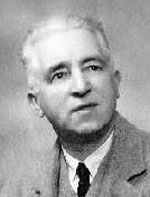
The son of pottery workers (the eldest survivor of seven children, of whom four died in infancy), Havergal Brian was born in Dresden, Staffordshire, now part of Stoke-on-Trent. A child chorister, he left school at the age of eleven but gained a thorough tuition in harmony and counterpoint. He had been christened William Brian, but adopted the name Havergal, after the Victorian hymn-collector W H Havergal, in his early twenties when seeking to make a career as a church organist. As a composer Brian was essentially self-taught, his early influences being the great Midlands choral festivals and brass bands, the Hallé Orchestra under Hans Richter, the splendour of Handel, Beethoven, Berlioz and Richard Strauss, and the new British music of Edward Elgar. The young Brian was one of Elgar’s earliest champions in the Midlands, and Elgar in his turn was encouraging about Brian’s first works. During the 1900s Brian gained recognition as a promising figure among the new generation of British composers, began a lifelong friendship with Granville Bantock, was acclaimed for orchestral works performed by Henry Wood at the Queen’s Hall Proms, and gained the temporary patronage of a wealthy Staffordshire pottery magnate.
These early successes were evaporating by 1913, when Brian moved to London after the collapse of his first marriage. During World War I, after a brief spell of soldiering, he was employed listing the effects of Canadian troops killed in France; the experience helped trigger his burlesque anti-war opera The Tigers (1916–18). Supporting a growing second family by hack-work, music-copying and journalism, he followed this with The Gothic (1919–27), but by the late 1920s he was largely a ‘forgotten composer’. Nevertheless he was very active as a critic and advocate of new music throughout the inter-war period, especially as deputy editor of Musical Opinion, while he continued to compose large-scale works without immediate hope of performance. After World War II (during which he worked as a clerk for the Ministry of Supply) Brian experienced an unprecedented ‘Indian summer’ of creativity, composing four operas and no fewer than twenty-seven symphonies (out of a lifetime total of thirty-two) after the age of seventy. In 1958 he moved from Harrow to Shoreham, Sussex, where he died as a result of a fall at the age of ninety-six.
In addition to symphonies and operas Brian wrote other orchestral works, concertos, choral music, some piano pieces and many songs. Starting in the 1950s, when he was befriended by the BBC producer Robert Simpson, interest in Brian’s music revived. His music has always been difficult to characterize: he developed from the stylistic basis of the late Romantics, but a pronounced streak of scepticism led him to question their heroic assumptions and to counterbalance their harmonic opulence with a muscular, ‘objective’ polyphony and ironic juxtapositions of contrasted and mutually subversive kinds of music, continually undercutting the listener’s expectations. Contrary to legend, few of his works are for outsize forces or are unusually long; but their use of apparently traditional idioms in a profoundly untraditional way makes them more challenging—even disconcerting—on first hearing than those of his British contemporaries.
from notes by Calum MacDonald © 2011
Fils d’ouvriers potiers (il est l’aîné de sept enfants, dont quatre moururent en bas âge), Havergal Brian naquit à Dresden (Staffordshire), qui fait aujourd’hui partie de Stoke-on-Trent. Il fut enfant de chœur et, bien qu’ayant quitté l’école à onze ans, il acquit une profonde connaissance de l’harmonie et du contrepoint. Baptisé William Brian, il changea son prénom en Havergal à un peu plus de vingt ans, alors qu’il cherchait à devenir organiste d’église, en référence à W. H. Havergal, collecteur d’hymnes victorien. Il fut un compositeur foncièrement autodidacte, d’abord influencé par les grands festivals choraux des Midlands, mais aussi par les fanfares, le Hallé Orchestra dirigé par Hans Richter, la splendeur de Haendel, Beethoven, Berlioz et Richard Strauss, sans oublier la nouvelle musique britannique d’Edward Elgar—dans sa jeunesse, il fut d’ailleurs un des tout premiers à le défendre, dans les Midlands, et Elgar, en retour, encouragea ses débuts de compositeur. Dans les années 1900, reconnu comme un des espoirs de la nouvelle génération britannique, Brian noua une indéfectible amitié avec Granville Bantock, fut acclamé pour ses pages orchestrales dirigées par Henry Wood aux Queen’s Hall Proms et fut un temps patronné par un riche magnat de la poterie du Staffordshire.
Ces premiers succès s’évanouirent en 1913, quand Brian s’installa à Londres, après le délabrement de son premier mariage. Durant la Première Guerre mondiale, il passa un court temps sous les drapeaux puis fut employé à inventorier les effets des troupes canadiennes tuées en France—une expérience qui concourut à lui inspirer The Tigers (1916–18), son opéra anti-guerre et burlesque. Se faisant écrivaillon, copiste musical et journaliste pour nourrir une seconde famille qui s’agrandissait, il signa ensuite The Gothic (1919–27) mais, à la fin des années 1920, il était surtout un «compositeur oublié». Dans l’entre-deux-guerres, il n’en fut pas moins un critique et un défenseur de la nouvelle musique fort actif (surtout en sa qualité d’éditeur adjoint de Musical Opinion), qui poursuivit la rédaction d’œuvres à grande échelle, sans espoir immédiat d’interprétation. À l’issue de la Seconde Guerre mondiale (durant laquelle il travailla aux services de l’Intendance), Brian connut une «heureuse vieillesse» placée sous le signe d’une créativité sans précédent: passé soixante-dix ans, il composa quatre opéras et pas moins de vingt-sept de ses trente-deux symphonies. En 1958, il quitta Harrow pour Shoreham, dans le Sussex, où il mourut des suites d’une chute, à quatre-vingt-seize ans.
Brian écrivit des symphonies, des opéras, mais aussi d’autres pièces orchestrales, des concertos, de la musique chorale, des partitions pianistiques et maints chants. Né dans les années 1950—Brian s’était alors lié d’amitié avec le producteur de la BBC Robert Simpson—, l’intérêt pour sa musique a connu un renouveau. Il s’agit là, depuis toujours, d’une musique difficile à caractériser: Brian développa son idiome à partir de la base stylistique des romantiques tardifs, mais une forte période de scepticisme l’amena à remettre en cause leurs principes héroïques et à contrebalancer leur opulence harmonique par une polyphonie vigoureuse, «objective», ainsi que par d’ironiques juxtapositions de musiques contrastées et mutuellement subversives, amenuisant sans cesse les attentes de l’auditeur. Contrairement à la légende, rares sont ses œuvres inhabituellement longues ou adressées à des effectifs colossaux; mais de leurs idiomes en apparence traditionnels, il fait un usage tout sauf traditionnel, qui les rend plus exaltantes—voire plus déconcertantes—à découvrir que celles de ses contemporains britanniques.
extrait des notes rédigées par Calum MacDonald © 2011
Français: Hypérion
Havergal Brian wurde in Dresden/Staffordshire—heute ein Stadtteil von Stoke-on-Trent—in eine Familie von Keramikarbeitern geboren. (Er war das älteste überlebende von sieben Kindern, vier seiner Geschwister starben im Säuglingsalter.) Mit elf Jahren verließ der Chorknabe die Schule, erhielt aber eine gründliche Ausbildung in Harmonielehre und Kontrapunkt. Obwohl auf William Brian getauft, nahm er mit Anfang zwanzig den Namen Havergal an—in Anlehnung an den viktorianischen Kirchenliedsammler W. H. Havergal, da er eine Laufbahn als Kirchenorganist anstrebte. Als Komponist war Brian im Grunde Autodidakt, wobei zu seinen frühen Einflüssen die großen Chorfeste und Blaskapellen der englischen Midlands, das Hallé Orchestra unter Hans Richter, die prächtige Musik von Händel, Beethoven, Berlioz und Richard Strauss sowie die neuere britische Musik von Edward Elgar zählten. Der junge Brian war einer der frühesten Verfechter von Elgar in den Midlands, und Elgar seinerseits fand ermutigende Worte zu Brians ersten Werken. In den Anfangsjahren des 20. Jahrhunderts machte sich Brian als vielversprechendes Mitglied der neueren britischen Komponistengeneration einen Namen, schloss Freundschaft mit Granville Bantock, erntete Beifall für Orchesterwerke, die von Henry Wood bei den Proms in der Queen’s Hall aufgeführt wurden, und sicherte sich vorübergehend die Unterstützung eines reichen Keramikindustriellen aus Staffordshire.
Diese frühen Erfolge begannen 1913 bereits zu schwinden, als Brian nach dem Scheitern seiner ersten Ehe nach London zog. Während des Ersten Weltkriegs war er nach kurzem Wehrdienst dazu angestellt, die Habseligkeiten kanadischer Soldaten zu erfassen, die in Frankreich gefallen waren; diese Erfahrung war einer der Anstöße zu seiner burlesken Antikriegsoper The Tigers (1916–1918). Während er mit Brotarbeiten, als Notenkopist und Journalist seine wachsende Zweitfamilie unterhielt, ließ er diesem Werk die Gotische (1919– 1927) folgen, doch war er Ende der 1920er Jahre bereits ein weitgehend „vergessener Komponist“. Trotzdem war er in der Zwischenkriegszeit unablässig als Kritiker und Verfechter zeitgenössischer Musik aktiv, vor allem als stellvertretender Herausgeber von Musical Opinion, und komponierte weiterhin großangelegte Werke ohne konkrete Aussicht auf Aufführung. Nach dem Zweiten Weltkrieg (den er als Büroangestellter im Versorgungsministerium verbrachte) erlebte Brians Schaffen einen beispiellosen „zweiten Frühling“, und mit über 70 Jahren schrieb er noch vier Opern und ganze 27 Sinfonien (von insgesamt 32). 1958 zog er von Harrow nach Shoreham in Sussex, wo er mit 96 Jahren an den Folgen eines Sturzes starb.
Neben Sinfonien und Opern schrieb Brian weitere Orchesterwerke, Konzerte, Chorwerke, einige Klavierstücke und zahlreiche Lieder. Seit den 1950er Jahren, als der BBC-Produzent Robert Simpson Freundschaft mit ihm schloss, hat das Interesse an Brians Schaffen wieder zugenommen. Seine Musik war immer schon schwer zu beschreiben: Stilistische Grundlage seiner Entwicklung waren die Spätromantiker, aufgrund seines ausgeprägten Skeptizismus hinterfragte er jedoch ihre heroischen Vorstellungen und milderte ihren harmonischen Überfluss durch eine robuste und „objektive“ Kontrapunktik sowie durch ironische Gegenüberstellung von kontrastierenden und sich gegenseitig durchkreuzenden Klängen, so dass die Erwartungen des Hörers unablässig unterwandert werden. Gerüchten zum Trotz sind nur wenige seiner Werke übergroß besetzt oder außergewöhnlich lang; die ganz und gar unkonventionelle Verwendung scheinbar konventioneller Stilelemente macht Brians Musik jedoch beim ersten Hören anspruchsvoller—oder gar beunruhigender—als die seiner britischen Zeitgenossen.
aus dem Begleittext von Calum MacDonald © 2011
Deutsch: Arne Muus