Hide player

Hyperion Records

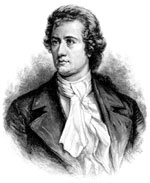
Johann Wolfgang von Goethe

born: 28 August 1749
died: 22 March 1832
country: Germany

'I was born at Frankfurt on the 28th August 1749, at midday, on the stroke of twelve. The position of the stars was favourable; the sun was in the sign of Virgo … Jupiter and Venus were friendly, Mercury not in opposition.” Thus begins Goethe's autobiography Dichtung und Wahrheit ('Poetry and Truth'), although it would be dangerous for our limited purposes to allow him to continue his own tale, so embroidered and revised is truth with inevitable poetry. The grandfather was a tailor who had done well enough to enable his son, Goethe's father, to buy a civic title and a comfortable house. From his father the poet inherited a tendency to formulate and theorise, and a passion for collecting – a love of order. From his mother's side he had practical good sense and humour, and above all her sense of fantasy. Her fairy stories were part of a haphazard education which was luckily attuned to his unique gifts. Painting and drawing, experiments with a puppet theatre and the study of various languages were all to bear fruit, but cello and piano lessons were never to give him a real understanding of music. Nevertheless Goethe was proud to have seen the child prodigy Mozart perform in Frankfurt in 1763; Mozart was seven, Goethe fourteen.

At the age of sixteen Goethe was sent to Leipzig University to study law. His first poems were published anonymously in the same issue of a Leipzig newspaper which announced Telemann's death and his replacement in Hamburg by C P E Bach. It was also in Leipzig that Goethe's words were first set to music by his friend Bernhard Breitkopf. An innkeeper's daughter called Annette Schönkopf was the first of the many love affairs which were to divide his life into chapters. As Richard Capell writes, 'Goethe's career is rather like Henry VIII's, in that it is chronicled according to the brief reign of a succession of queens'. Nicholas Boyle has pointed out that for Goethe in his early life 'the fixity of a commitment was incompatible with the only poetry he could write, a poetry of continuing desire'.

In 1768 Goethe returned seriously ill to Frankfurt. During his recuperation, drawings of nudes by Boucher were removed from his room on doctor's orders. He took up alchemy and theology instead. Father Goethe was losing patience with these dilettante attitudes – little could he know that it was all these various interests which were turning his son into a visionary polymath. From this period dates the poem Am Flusse.

In 1770, the year of Beethoven's birth, Goethe was packed off to the University of Strasbourg. It was there that he met Johann Gottfried Herder who introduced him to the works of Homer, Shakespeare and Ossian – and above all to folk poetry. Herder, who was the first writer of comparable intelligence that Goethe had befriended, taunted the young poet into thinking more deeply. The famed relationship with the country pastor's daughter Friederike Brion who lived in Sesenheim some thirty miles from Frankfurt dates from this time. This gave rise to the poems Mailied and Mit einem gemalten Band set by Beethoven, as well as Heidenröslein and Wilkommen und Abschied.

The Strasbourg idyll lasted only ten months and, with what would be something of a pattern in his emotional life, the poet took flight before he became too deeply involved, leaving Friederike heart-broken. In 1772, after a short period studying at Wetzlar where he met Charlotte Buff (who was to inspire Die Leiden des jungen Werthers), Goethe returned to Frankfurt where he established his reputation as a young firebrand in the Sturm und Drang manner. From this time dates his play Götz von Berlichingen. Plays and novels about medieval knights and ladies became all the rage, but the young poet aspired to even bigger canvases; Mohammed, Socrates, Caesar, Christ were all grist to his imaginative mill. Mahomets Gesang is surprisingly contemporary with the much shyer poem Das Veilchen set by Mozart. Ganymed, Prometheus, An Schwager Kronos, Bundeslied and Wonne der Wehmuth were all written in these four Frankfurt years. Geistes-Gruss was written during a holiday journey down the Rhine in 1774 during which Goethe met the poet Jacobi, seven of whose poems were to be set by Schubert. It was also during this Frankfurt period that Goethe began to get to grips with turning the Faust legend into verse-drama. In their Ur-Faust versions the poems for Gretchen am Spinnrade, Gretchens Bitte, Der König in Thule and Szene aus Faust all date from this time – slightly less than forty years before Schubert was to set them. The love affair of this period was with Lili Schönemann to whom Goethe even became engaged. She was of high birth and her parents thought the match unsuitable; in any case he had his habitual fear of commitment. A visit to Switzerland was a temporary escape (Auf dem See was written there in 1775) but the poet knew that he had to be on the move once more. He was at the height of his creative powers, but pirated editions of his works cheated him of money and he felt the need for financial security. Princes from all over Germany were on the look-out for advisers and gifted, interesting men who would be a credit to their employers. A way out of his problems, both personal and financial, was an invitation to the court of Karl August, Duke of Weimar. Goethe arrived in Weimar in November 1775. One of the first poems he wrote there, remembering Lili Schönemann, was Jägers Abendlied.

Weimar was to be the poet's home for the rest of his life. It was not a rich state, nor a big one, but thanks to the Duke's mother, Duchess Anna Amalia (who was, among other things, a composer), foundations had been laid for a remarkably cultural court of which Goethe himself was to be the star attraction. Within six months of coming to Weimar Goethe was a privy councillor. Although he wrote poetry continually, he published nothing for the next ten years; his energies were given over to a list of administrative tasks which no ivory-tower artist could ever have contemplated and which led to his well-deserved reputation as both artist and scientist. Goethe's work on behalf of the state's mining industry, for example, was to lead to his passionate interest in geological and mineralogical studies. Charlotte von Stein, wife of the Duke's Master of Horse, was among the few at the court who almost immediately perceived Goethe's greatness. She was half Scottish by birth and was already a mature, married woman by the time she met the young poet. She was a serious woman of great decorum who deplored the rowdy side of his nature. 'Make something worthy of me', he wrote to her, and she educated, groomed and governed him. She taught him how to dance, and equipped him with the social graces needed for a life of mixing with princes. In return he put her on a pedestal; he courted her as a knight might have wooed a paragon of medieval virtue. Goethe wrote over 1700 letters to Charlotte which were as likely to be accompanied by the latest produce from his garden as by an immortal lyric written for her alone. Protected and guided by her love the fiery young poet grew up and found, for a number of years at least, a core of inner tranquillity. He became much occupied with the court theatre (a number of lyrics we know as songs are actually taken from small plays) and began work on his novel Wilhelm Meisters Lehrjahre which was also to be a rich mine of song lyrics for Schubert and others.

After more than a decade in Weimar Goethe experienced what would now be termed a mid-life crisis. He had been ennobled in 1782 and was famous and respected, but he felt that his life in Germany was stultifying. Once again he needed to escape. The idealism and refinement of Charlotte von Stein had to be replaced by something more vital and earthy. Like his character Mignon he looked to the south, and there he sought rejuvenation and artistic rebirth. On 3 September 1786 he slipped away from Karlsbad where he had visited Charlotte; without telling her he left with only a knapsack and an assumed name.

Whilst in Italy (1786-1788) Goethe 'discovered himself'; some scholars even believe that he lost his virginity there and that his former exploits with women had been cerebral at the expense of physical release (judging from the Römische Elegien it would be more accurate to say that his poetry lost its virginity). This turning point in Goethe's creative and emotional life was rich in poetry inspired by classical metre, and largely unsuitable for musical setting. He was particularly busy as a playwright during this period. Egmont – from which the text 'Freudvoll und leidvoll' (Die Liebe) is taken – was completed in Italy, also the final version of his 'Schauspiel mit Gesang', Claudine von Villa Bella which Schubert and a number of other composers were to turn into opera.

The return to Weimar in 1788 (very much on the poet's terms with a much lightened work load at court) marked the end of Goethe's relationship with Charlotte who was not unnaturally mortified that the Italian adventure was planned without her knowledge. This intellectual relationship was replaced by something utterly different: the poet set up house with a 23-year-old girl (he was nearly sixteen years older) named Christiane Vulpius. She was scarcely literate, but her simple joyful earthiness provided Goethe with the background he needed to work calmly and productively. The after-effects of the French Revolution meant that the poet was forced to visit the battlefield in the Duke's entourage from time to time (Der Rattenfänger and Die Spinnerin were written during this period) but this did not really interrupt Goethe's re-awakened interest in scientific research. Indeed most of this phase of his life (1788-1793) was given over to it. He took particular issue with Newton's laws and had his own very different (and misguided) theories about the nature of light. At more or less the same time he met the poet Schiller who had moved to Jena some time before. What might have been a relationship of deadly rivalry turned into the most fruitful collaborative friendship in Goethe's life; it was just what he needed to return his energies to poetry. Schiller galvanised Goethe into finishing such works as Wilhelm Meister, and it was also thanks to Schiller that work on Faust was resumed. In return Goethe encouraged Schiller in his writing of Wallenstein and Wilhelm Tell. They soon saw each other as ideal colleagues, fighting for the same lofty ideals of classicism in art. After the tell-it-all style of the Venetian Epigrams a new mood of Arcadian euphemism can be found in Goethe's writing. The two poets collaborated together on various collections (notably the Musenalmanach – Almanac of the Muses – of 1797 and 1798) where new poems, ballads and epigrams regularly appeared, some of them ideally suited for musical setting. Dramatic or barnstorming poems now appear less often than lyrics of antique poise and pastoral delight. The following is a chronological list of poems which were written in the 'Schiller years' between 1794 and 1805: Meeresstille, Heiss mich nicht reden, An die Türen will ich schleichen, Nähe des Geliebten, Wer kauft Liebesgötter?, So lasst mich scheinen, Der Schatzgräber, An Mignon, Der Gott und die Bajadere, Der Musensohn, Tischlied, Schäfers Klagelied, Nachtgesang, Sehnsucht, Trost in Thränen.

The sudden death of Schiller in 1895 robbed Goethe of his greatest colleague, the only man whom the poet regarded as an equal. In 1806 the Napoleonic wars made themselves felt in Weimar. After the defeat of Prussian troops at Jena, marauding French troops broke into Goethe's house and threatened him. Christiane bravely repelled them, and in gratitude Goethe married her after sixteen years of life together. By this time the poet was a celebrity and visitors came from all over the world to pay him court: he met Napoleon twice, as befitted a man of his renown. He was pursued by the pushy Bettina von Arnim who wished to have his child. Christiane was determined to be the only mother of the poet's children, but Bettina, summarily put in her place by Frau Goethe, managed to engineer a famous, if not entirely successful, meeting between Goethe and Beethoven in Teplitz. Song texts from this period are: Die Liebende schreibt, Der Goldschmiedsgesell, Johanna Sebus and Schweizerlied.

Goethe was now to turn his gaze towards the east. Soldiers from Weimar had been stationed in Spain and brought back exquisite examples of Arabic calligraphy. A Russian regiment of Bashkirs was stationed in Weimar and the hall of the Protestant grammar school resounded with the Koran. The newly translated works of Hafiz inspired the poet to enter into the spirit of oriental love poetry. He invented a new persona for himself – the sage and potentate, Hatem. In this game of oriental symbolism Goethe cast Marianne von Willemer, a young woman who lived outside Frankfurt with an older husband, as his Suleika. Marianne was probably the most gifted of the poet's lovers (it is very possible that their relationship was purely literary) and she wrote poetry in reply to his which was so skilful, so much like Goethe's own, that he absorbed it unacknowledged into his own writings. Schubert was never to know of the part that Marianne had played in the poetry of the West-östlicher Divan as it was only revealed after the composer's death. The poems written in 1814 and 1815 in the eastern manner were the last of Goethe's poems, in terms of the chronology of the poet's life, that Schubert was to set. They were: Versunken, Im Gegenwärtigen Vergangenes, Geheimes and the two Suleika songs.

The poet spent his last birthday, his eighty-second, in August 1831, with his grandchildren in Ilmenau. In the fir-woods of that mountainous region there was a lonely wooden hut. On the wall of the hut fifty-one years before (in September 1780) he had written the following poem:

Über allen Gipfeln ist Ruh, (Over all the peaks there is peace;)
In allen Wipfeln spürest du (in all the tree-tops you feel)
Kaum einen Hauch; (Scarcely a breath of air;)
Die Vögelein schweigen im Walde. (The little birds in the forest are silent.)
Warte nur, balde ruhest du auch. (Wait! Soon you too will be at rest.)

We are told that Goethe read these few lines and tears ran down his cheeks. He slowly drew his snow-white handkerchief from the pocket of his coat, dried his eyes and said in a sad and gentle voice: 'Yes: wait, you too shall rest before long.'

from notes by Graham Johnson © 1995

Albums
'Schubert: Der Wanderer & other songs' (CDA68010)
Schubert: Der Wanderer & other songs
CDA68010  To be issued soon February 2014 Release  
'Beethoven: Early Cantatas' (CDA66880)
'Beethoven: Songs' (CDA67055)
'Beethoven: Songs' (GAW21055)
'Brahms & Schumann: Voices of the Night' (CDA66053)
'Brahms: Songs' (CDA66444)
'Brahms: The Complete Songs, Vol. 1 – Angelika Kirchschlager' (CDJ33121)
'Brahms: The Complete Songs, Vol. 2 – Christine Schäfer' (CDJ33122)
'Brahms: The Complete Songs, Vol. 3 – Simon Bode' (CDJ33123)
'Brahms: Zigeunerlieder' (CDA67775)
'Britten, Finzi & Tippett: Songs' (CDA67459)
'Britten: Songs & Proverbs of William Blake' (CDA67778)
'Britten: The Red Cockatoo & other songs' (CDA66823)
'Cornelius: The Three Kings & other choral works' (CDA67206)
'Duparc: Songs' (CDA66323)
'Finzi, Tippett & Britten: Songs' (CDA67459)
'Gounod: Songs' (CDA66801/2)
'Grieg: Songs' (CDA67670)
'Ives: Romanzo di Central Park & other songs' (CDA67644)
'Liszt: The Complete Songs, Vol. 2 – Angelika Kirchschlager' (CDA67934)
'Loewe: Songs & Ballads' (CDA67866)
'Mendelssohn: Lieder' (CDH55360)
'Mendelssohn: On wings of song' (CDH55150)
'Mendelssohn: Songs and Duets, Vol. 2' (CDA67137)
'Mendelssohn: Songs and Duets, Vol. 3' (CDA67388)
'Mendelssohn: Songs and Duets, Vol. 5' (CDA67753)
'Mozart: Songs' (CDH55371)
'Musorgsky: Song Cycles' (CDA66775)
'My Garden' (CDA66937)
'Of ladies and love' (CDA67315)
'Russian Images, Vol. 1' (CDA67105)
'Schubert: The Complete Songs' (CDS44201/40)
'Schubert: The Hyperion Schubert Edition, Vol. 1 – Janet Baker' (CDJ33001)
'Schubert: The Hyperion Schubert Edition, Vol. 10 – Martyn Hill' (CDJ33010)
'Schubert: The Hyperion Schubert Edition, Vol. 11 – Brigitte Fassbaender' (CDJ33011)
'Schubert: The Hyperion Schubert Edition, Vol. 12 – Adrian Thompson' (CDJ33012)
'Schubert: The Hyperion Schubert Edition, Vol. 13 – Marie McLaughlin' (CDJ33013)
'Schubert: The Hyperion Schubert Edition, Vol. 18 – Peter Schreier' (CDJ33018)
'Schubert: The Hyperion Schubert Edition, Vol. 19 – Felicity Lott' (CDJ33019)
'Schubert: The Hyperion Schubert Edition, Vol. 2 – Stephen Varcoe' (CDJ33002)
'Schubert: The Hyperion Schubert Edition, Vol. 20' (CDJ33020)
'Schubert: The Hyperion Schubert Edition, Vol. 21 – Edith Mathis' (CDJ33021)
'Schubert: The Hyperion Schubert Edition, Vol. 23 – Christoph Prégardien' (CDJ33023)
'Schubert: The Hyperion Schubert Edition, Vol. 24' (CDJ33024)
Schubert: The Hyperion Schubert Edition, Vol. 24
MP3 £6.00
FLAC £6.00
ALAC £6.00
Buy by post £13.99 (ARCHIVE SERVICE)
CDJ33024  Archive Service; also available on CDS44201/40   Download currently discounted
'Schubert: The Hyperion Schubert Edition, Vol. 26 – Christine Schäfer, John Mark Ainsley & Richard Jackson' (CDJ33026)
'Schubert: The Hyperion Schubert Edition, Vol. 28 – Maarten Koningsberger & John Mark Ainsley' (CDJ33028)
'Schubert: The Hyperion Schubert Edition, Vol. 29 – Marjana Lipovšek' (CDJ33029)
'Schubert: The Hyperion Schubert Edition, Vol. 34' (CDJ33034)
'Schubert: The Hyperion Schubert Edition, Vol. 5 – Elizabeth Connell' (CDJ33005)
'Schubert: The Hyperion Schubert Edition, Vol. 6 – Anthony Rolfe Johnson' (CDJ33006)
'Schubert: The Hyperion Schubert Edition, Vol. 7 – Elly Ameling' (CDJ33007)
'Schubert: The Hyperion Schubert Edition, Vol. 8 – Sarah Walker' (CDJ33008)
'Schubert: The Hyperion Schubert Edition, Vol. 9 – Arleen Auger' (CDJ33009)
'Schubert: The Songmakers' Almanac Schubertiade' (CDD22010)
Schubert: The Songmakers' Almanac Schubertiade
MP3 £6.00
FLAC £6.00
ALAC £6.00
Buy by post £27.98 (ARCHIVE SERVICE)
CDD22010  2CDs Dyad (2 for the price of 1) — Archive Service Only   Download currently discounted
'Schumann & Brahms: Voices of the Night' (CDA66053)
'Schumann: Songs' (CDH55275)
'Schumann: The Complete Songs' (CDS44441/50)
'Schumann: The Complete Songs, Vol. 1 – Christine Schäfer' (CDJ33101)
'Schumann: The Complete Songs, Vol. 2 – Simon Keenlyside' (CDJ33102)
'Schumann: The Complete Songs, Vol. 4 – Oliver Widmer & Stella Doufexis' (CDJ33104)
'Schumann: The Complete Songs, Vol. 7 – Dorothea Röschmann & Ian Bostridge' (CDJ33107)
'Schumann: The Complete Songs, Vol. 8 – Christopher Maltman, Jonathan Lemalu & Mark Padmore' (CDJ33108)
'Schumann: The Complete Songs, Vol. 9 – Ann Murray & Felicity Lott' (CDJ33109)
'Songs by Schubert's contemporaries' (CDJ33051/3)
'Strauss: Songs' (CDH55202)
'Strauss: The Complete Songs, Vol. 4 – Christopher Maltman & Alastair Miles' (CDA67667)
'The Ballad Singer' (CDA67830)
'Tippett, Britten & Finzi: Songs' (CDA67459)
'Wolf: Goethe & Mörike Songs' (CDA66590)
'Wolf: Goethe Lieder' (CDA67130)
'Women's lives and loves' (CDA67563)
'Le Bestiaire' (A66149)
Le Bestiaire
Buy by post £13.99 (ARCHIVE SERVICE)
A66149  Archive Service (LP transfer)   This album is not available for download
'Schubert: An introduction to The Hyperion Schubert Edition' (HYP200)
'The Essential Hyperion 2' (HYP20)
The Essential Hyperion 2
This album is not yet available for download HYP20  2CDs Super-budget price sampler — Deleted  
'Hyperion monthly sampler – April 2013' (HYP201304)
Hyperion monthly sampler – April 2013
MP3 £0.00
FLAC £0.00
ALAC £0.00
FREE DOWNLOAD HYP201304  Download-only monthly sampler  
On other labels
'Brahms: Alto Rhapsody; Mahler: Das Lied von der Erde' (APR5579)
Complete works available for download
LUDWIG VAN BEETHOVEN  (1770-1827)
Aus Goethes Faust, Op 75 No 3 Gerald Finley (baritone), Julius Drake (piano)
Aus Goethes Faust, Op 75 No 3 Stephan Genz (baritone), Roger Vignoles (piano)
Maigesang, Op 52 No 4 Stephan Genz (baritone), Roger Vignoles (piano)
Meeresstille und glückliche Fahrt, Op 112 Corydon Singers, Corydon Orchestra, Matthew Best (conductor)
Neue Liebe, neues Leben, Op 75 No 2 Stephan Genz (baritone), Roger Vignoles (piano)
Sehnsucht, Op 83 No 2 Stephan Genz (baritone), Roger Vignoles (piano)
Wonne der Wehmut, Op 83 No 1 Michael Schade (tenor), Malcolm Martineau (piano)
Wonne der Wehmut, Op 83 No 1 Stephan Genz (baritone), Roger Vignoles (piano)
JOHANNES BRAHMS  (1833-1897)
Rhapsody, Op 53 Kathleen Ferrier (mezzo-soprano), Oslo Philharmonic Chorus, Oslo Philharmonic Orchestra, Erik Tuxen (conductor)
BENJAMIN BRITTEN  (1913-1976)
Um Mitternacht Mark Padmore (tenor), Roger Vignoles (piano)
Um Mitternacht Gerald Finley (baritone), Julius Drake (piano)
Um Mitternacht Ian Bostridge (tenor), Graham Johnson (piano)
PETER CORNELIUS  (1824-1874)
Trost in Tränen, Op 14 Colin Campbell (bass), Polyphony, Stephen Layton (conductor)
MORITZ VON DIETRICHSTEIN  (1775-1864)
Wonne der Wehmut Stella Doufexis (soprano), Graham Johnson (piano)
HENRI DUPARC  (1848-1933)
Romance de Mignon Sarah Walker (mezzo-soprano), Roger Vignoles (piano)
MAXIMILIAN EBERWEIN  (1775-1831)
Rastlose Liebe Gerald Finley (baritone), Graham Johnson (piano)
CHARLES GOUNOD  (1818-1893)
Mignon Dame Felicity Lott (soprano), Graham Johnson (piano)
FERDINAND HILLER  (1811-1885)
Wandrers Nachtlied, Op 129 No 11 Susan Gritton (soprano), Graham Johnson (piano)
JOHANN NEPOMUK HUMMEL  (1778-1837)
Zur Logenfeier Mark Padmore (tenor), Graham Johnson (piano)
CHARLES IVES  (1874-1954)
Ilmenau Gerald Finley (baritone)
NIKOLAUS VON KRUFFT  (1779-1818)
Lied aus Wilhelm Meisters Lehrjahre 'Kennst du das Land?' Stella Doufexis (soprano), Graham Johnson (piano)
FRANZ LISZT  (1811-1886)
Der du von dem Himmel bist, S279 First version Angelika Kirchschlager (mezzo-soprano), Julius Drake (piano)
Der du von dem Himmel bist, S279 Third version Angelika Kirchschlager (mezzo-soprano), Julius Drake (piano)
Es war ein König in Thule, S278 Second version Angelika Kirchschlager (mezzo-soprano), Julius Drake (piano)
Freudvoll und leidvoll, S280 First setting, second version Angelika Kirchschlager (mezzo-soprano), Julius Drake (piano)
Über allen Gipfeln ist Ruh', S306 Third version Angelika Kirchschlager (mezzo-soprano), Julius Drake (piano)
CARL LOEWE  (1796-1869)
Der du von dem Himmel bist 'Wandrers Nachtlied', Op 9 Book I No 3b Florian Boesch (baritone), Roger Vignoles (piano)
Die wandelnde Glocke, Op 20 No 3 Gerald Finley (baritone), Julius Drake (piano)
Die wandelnde Glocke, Op 20 No 3 Florian Boesch (baritone), Roger Vignoles (piano)
Erlkönig, Op 1 No 3 Gerald Finley (baritone), Graham Johnson (piano)
Erlkönig, Op 1 No 3 Florian Boesch (baritone), Roger Vignoles (piano)
Gesang der Geister, Op 88 Susan Gritton (soprano), Ann Murray (mezzo-soprano), Mark Padmore (tenor), Gerald Finley (baritone), Graham Johnson (piano)
Im Vorübergehen, Op 81 No 1 Florian Boesch (baritone), Roger Vignoles (piano)
Lynceus, der Thürmer, auf Fausts Sternwarte singend, Op 9 Book VIII No 3 Florian Boesch (baritone), Roger Vignoles (piano)
Über allen Gipfeln ist Ruh' 'Wandrers Nachtlied', Op 9 Book I No 3a Florian Boesch (baritone), Roger Vignoles (piano)
FANNY MENDELSSOHN  (1805-1847)
Dämmrung senkte sich von oben Susan Gritton (soprano), Eugene Asti (piano)
WOLFGANG AMADEUS MOZART  (1756-1791)
Das Veilchen, K476 Joan Rodgers (soprano), Roger Vignoles (piano)
MODEST MUSORGSKY  (1839-1881)
Pesnya Mefistofelya o blokhe 'Mephistopheles' song of the flea' Anatoli Safiulin (bass), Nikolai Demidenko (piano)
Pesnya Mefistofelya o blokhe 'Mephistopheles' song of the flea' Vassily Savenko (bass), Alexander Blok (piano)
SIGISMUND NEUKOMM  (1778-1858)
Trost in Tränen Stella Doufexis (soprano), Graham Johnson (piano)
BENEDICT RANDHARTINGER  (1802-1893)
Suleika Susan Gritton (soprano), Graham Johnson (piano)
JOHANN FRIEDRICH REICHARDT  (1752-1814)
Erlkönig Gerald Finley (baritone), Graham Johnson (piano)
Monolog der Iphegenia Susan Gritton (soprano), Graham Johnson (piano)
Rastlose Liebe Mark Padmore (tenor), Graham Johnson (piano)
Sehnsucht Susan Gritton (soprano), Gerald Finley (baritone), Graham Johnson (piano)
FRANZ SCHUBERT  (1797-1828)
Am Flusse, D160 Martyn Hill (tenor), Graham Johnson (piano)
Am Flusse, D766 Stephen Varcoe (baritone), Graham Johnson (piano)
Am Flusse, D766 Maarten Koningsberger (baritone), Graham Johnson (piano)
An den Mond, D259 Sarah Walker (mezzo-soprano), Graham Johnson (piano)
An den Mond, D296 Dame Janet Baker (mezzo-soprano), Graham Johnson (piano)
An die Entfernte, D765 Peter Schreier (tenor), Graham Johnson (piano)
An die Entfernte, D765 Maarten Koningsberger (baritone), Graham Johnson (piano)
An Mignon, D161 First version Christine Schäfer (soprano), Graham Johnson (piano)
An Mignon, D161 Second version Martyn Hill (tenor), Graham Johnson (piano)
An Schwager Kronos, D369 Simon Keenlyside (baritone), Graham Johnson (piano)
Auf dem See, D543 Dame Felicity Lott (soprano), Graham Johnson (piano)
Bundeslied, D258 John Mark Ainsley (tenor), Simon Keenlyside (baritone), Michael George (bass), Graham Johnson (piano)
Der Fischer, D225 Dame Janet Baker (mezzo-soprano), Graham Johnson (piano)
Der Goldschmiedsgesell, D560 Simon Keenlyside (baritone), Graham Johnson (piano)
Der Gott und die Bajadere, D254 Christine Schäfer (soprano), John Mark Ainsley (tenor), Michael George (bass), Graham Johnson (piano)
Der König in Thule, D367 Brigitte Fassbaender (soprano), Graham Johnson (piano)
Der Musensohn, D764 Christine Schäfer (soprano), Graham Johnson (piano)
Der Rattenfänger, D255 Simon Keenlyside (baritone), Graham Johnson (piano)
Der Sänger, D149 Martyn Hill (tenor), Graham Johnson (piano)
Der Schatzgräber, D256 Michael George (bass), Graham Johnson (piano)
Die Liebe 'Clärchens Lied', D210 Elly Ameling (soprano), Graham Johnson (piano)
Die Liebende schreibt, D673 Marjana Lipovšek (mezzo-soprano), Graham Johnson (piano)
Die Post/Die Wahlverwandtschaften Angelika Kirchschlager (reader), Graham Johnson (piano)
Die Spinnerin, D247 Elly Ameling (soprano), Graham Johnson (piano)
Erlkönig, D328 Gerald Finley (baritone), Julius Drake (piano)
Erlkönig, D328 Sarah Walker (mezzo-soprano), Graham Johnson (piano)
Erlkönig, D328 Christine Schäfer (soprano), John Mark Ainsley (tenor), Michael George (bass), Graham Johnson (piano)
Erster Verlust, D226 Dame Janet Baker (mezzo-soprano), Graham Johnson (piano)
Ganymed, D544 Elizabeth Connell (soprano), Graham Johnson (piano)
Ganymed, D544 Christine Schäfer (soprano), Graham Johnson (piano)
Geheimes, D719 John Mark Ainsley (tenor), Graham Johnson (piano)
Geistes-Gruss, D142 Sixth version Michael George (bass), Graham Johnson (piano)
Geistes-Gruss, D142 Third version Michael George (bass), Graham Johnson (piano)
Gesang der Geister über den Wassern, D484 Michael George (bass), Graham Johnson (piano)
Gesang der Geister über den Wassern, D705 The London Schubert Chorale, Stephen Layton (conductor), Graham Johnson (piano)
Gesänge aus 'Wilhelm Meister', D877 Christine Schäfer (soprano)
Gesänge des Harfners, D478 Christoph Prégardien (tenor), Graham Johnson (piano)
Grenzen der Menschheit, D716 Neal Davies (bass), Graham Johnson (piano)
Gretchen am Spinnrade, D118 Marie McLaughlin (soprano), Graham Johnson (piano)
Gretchens Bitte 'Gretchen im Zwinger', D564 Marie McLaughlin (soprano), Graham Johnson (piano)
Harfenspieler 'Wer sich der Einsamkeit ergibt', D325 Martyn Hill (tenor), Graham Johnson (piano)
Heidenröslein, D257 Patricia Rozario (soprano), Graham Johnson (piano)
Heiss mich nicht reden 'Mignon I', D726 Christine Schäfer (soprano), Graham Johnson (piano)
Hin und wieder fliegen die Pfeile, D239 No 3 Arleen Auger (soprano), Graham Johnson (piano)
Hoffnung, D295 Michael George (bass), Graham Johnson (piano)
Im gegenwärtigen Vergangenes, D710 John Mark Ainsley (tenor), The London Schubert Chorale, Stephen Layton (conductor), Graham Johnson (piano)
Jägers Abendlied, D215 Simon Keenlyside (baritone), Graham Johnson (piano)
Jägers Abendlied, D368 Simon Keenlyside (baritone), Graham Johnson (piano)
Johanna Sebus, D728 John Mark Ainsley (tenor), Graham Johnson (piano)
Liebe schwärmt auf allen Wegen, D239 No 6 Arleen Auger (soprano), Graham Johnson (piano)
Liebhaber in allen Gestalten, D558 Edith Mathis (soprano), Graham Johnson (piano)
Mahomets Gesang, D549 John Mark Ainsley (tenor), Graham Johnson (piano)
Mahomets Gesang, D721 Michael George (bass), Graham Johnson (piano)
Meeres Stille, D215a Elly Ameling (soprano), Graham Johnson (piano)
Meeres Stille, D216 Florian Boesch (baritone), Roger Vignoles (piano)   February 2014 Release
Meeres Stille, D216 Dame Janet Baker (mezzo-soprano), Graham Johnson (piano)
Mignons Gesang 'Kennst du das Land?', D321 Elly Ameling (soprano), Graham Johnson (piano)
Nachtgesang, D119 Adrian Thompson (tenor), Graham Johnson (piano)
Nähe des Geliebten, D162 The Songmakers' Almanac, Anthony Rolfe Johnson (tenor), Graham Johnson (piano)
Nähe des Geliebten, D162 Dame Janet Baker (mezzo-soprano), Graham Johnson (piano)
Nur wer die Sehnsucht kennt 'Sehnsucht' 'Lied der Mignon', D481 Christine Schäfer (soprano), Graham Johnson (piano)
Nur wer die Sehnsucht kennt 'Sehnsucht', D310 Elly Ameling (soprano), Graham Johnson (piano)
Nur wer die Sehnsucht kennt 'Sehnsucht', D310a Elly Ameling (soprano), Graham Johnson (piano)
Nur wer die Sehnsucht kennt 'Sehnsucht', D359 Christine Schäfer (soprano), Graham Johnson (piano)
Nur wer die Sehnsucht kennt 'Sehnsucht', D656 The London Schubert Chorale, Stephen Layton (conductor)
Prometheus, D674 Simon Keenlyside (baritone), Graham Johnson (piano)
Rastlose Liebe, D138 John Mark Ainsley (tenor), Graham Johnson (piano)
Schäfers Klagelied, D121 First version Dame Janet Baker (mezzo-soprano), Graham Johnson (piano)
Schäfers Klagelied, D121 Second version John Mark Ainsley (tenor), Graham Johnson (piano)
Schweizerlied, D559 Edith Mathis (soprano), Graham Johnson (piano)
Sehnsucht, D123 Adrian Thompson (tenor), Graham Johnson (piano)
So lasst mich scheinen 'Mignon II', D727 Brigitte Fassbaender (soprano), Graham Johnson (piano)
So lasst mich scheinen 'Mignon, 1. Weise', D469 I Christine Schäfer (soprano), Graham Johnson (piano)
So lasst mich scheinen, D469 II Christine Schäfer (soprano), Graham Johnson (piano)
Suleika I, D720 Dame Felicity Lott (soprano), Graham Johnson (piano)
Suleika II, D717 Dame Felicity Lott (soprano), Graham Johnson (piano)
Szene aus Faust, D126 Marie McLaughlin (soprano), Thomas Hampson (baritone), The New Company, Graham Johnson (piano)
Tischlied, D234 Simon Keenlyside (baritone), Graham Johnson (piano)
Trost in Tränen, D120 Adrian Thompson (tenor), Graham Johnson (piano)
Versunken, D715 John Mark Ainsley (tenor), Graham Johnson (piano)
Wandrers Nachtlied I, D224 Florian Boesch (baritone), Roger Vignoles (piano)   February 2014 Release
Wandrers Nachtlied I, D224 The Songmakers' Almanac, Ann Murray (mezzo-soprano), Graham Johnson (piano)
Wandrers Nachtlied I, D224 Dame Janet Baker (mezzo-soprano), Graham Johnson (piano)
Wandrers Nachtlied II, D768 Florian Boesch (baritone), Roger Vignoles (piano)   February 2014 Release
Wandrers Nachtlied II, D768 Christopher Maltman (baritone), Graham Johnson (piano)
Wer kauft Liebesgötter?, D261 Elly Ameling (soprano), Graham Johnson (piano)
Wer nie sein Brot mit Tränen ass 'Gesang des Harfners', D478 No 2b John Mark Ainsley (tenor), Graham Johnson (piano)
Wer nie sein Brot mit Tränen ass 'Harfenspieler III', D478 No 2 John Mark Ainsley (tenor), Graham Johnson (piano)
Willkommen und Abschied, D767 First version The Songmakers' Almanac, Anthony Rolfe Johnson (tenor), Graham Johnson (piano)
Willkommen und Abschied, D767 First version Anthony Rolfe Johnson (tenor), Graham Johnson (piano)
Willkommen und Abschied, D767 Second version John Mark Ainsley (tenor), Graham Johnson (piano)
Wonne der Wehmut, D260 Dame Janet Baker (mezzo-soprano), Graham Johnson (piano)
CLARA SCHUMANN  (1819-1896)
Das Veilchen Stephan Loges (baritone), Eugene Asti (piano)
ROBERT SCHUMANN  (1810-1856)
Der Fischer, WoO19 Mark Padmore (tenor), Christopher Maltman (baritone), Graham Johnson (piano)
Vier Duette, Op 78 Dorothea Röschmann (soprano), Ian Bostridge (tenor), Graham Johnson (piano)
LOUIS SPOHR  (1784-1859)
Erlkönig, Op 154 No 4 Gerald Finley (baritone), Marianne Thorsen (violin), Graham Johnson (piano)
Mignons Lied 'Kennst du das Land?', Op 37 No 1 Susan Gritton (soprano), Graham Johnson (piano)
RICHARD STRAUSS  (1864-1949)
Erschaffen und Beleben, Op 87 No 2 Alastair Miles (bass), Roger Vignoles (piano)
VÁCLAV JAN KRTITEL TOMÁŠEK  (1774-1850)
Heidenröslein, Op 53 No 1 Susan Gritton (soprano), Graham Johnson (piano)
Meeres Stille, Op 60 No 3 Susan Gritton (soprano), Ann Murray (mezzo-soprano), Gerald Finley (baritone), Graham Johnson (piano)
JOHANN VESQUE VON PÜTTLINGEN  (1803-1883)
Der Fischer Stella Doufexis (soprano), Graham Johnson (piano)
HUGO WOLF  (1860-1903)
Gretchen vor dem Andachtsbild der Mater dolorosa Geraldine McGreevy (soprano), Graham Johnson (piano)
CARL FRIEDRICH ZELTER  (1758-1832)
Erlkönig Gerald Finley (baritone), Graham Johnson (piano)
Erster Verlust Susan Gritton (soprano), Graham Johnson (piano)
Klage Harfenspieler III Gerald Finley (baritone), Graham Johnson (piano)
Rastlose Liebe Mark Padmore (tenor), Graham Johnson (piano)
Um Mitternacht Ann Murray (mezzo-soprano), Graham Johnson (piano)
Alphabetical listing of all musical works
Am Flusse, D160 (Schubert)
Am Flusse, D766 (Schubert)
An den Mond, D259 (Schubert)
An den Mond, D296 (Schubert)
An die Entfernte, D765 (Schubert)
An Mignon, D161 First version (Schubert)
An Mignon, D161 Second version (Schubert)
An Schwager Kronos, D369 (Schubert)
Auf dem See, D543 (Schubert)
Aus Goethes Faust, Op 75 No 3 (Beethoven)
Bundeslied, D258 (Schubert)
Dämmrung senkte sich von oben (Mendelssohn)
Das Veilchen (Schumann)
Das Veilchen, K476 (Mozart)
Der du von dem Himmel bist 'Wandrers Nachtlied', Op 9 Book I No 3b (Loewe)
Der du von dem Himmel bist, S279 First version (Liszt)
Der du von dem Himmel bist, S279 Third version (Liszt)
Der Fischer (Vesque von Püttlingen)
Der Fischer, D225 (Schubert)
Der Fischer, WoO19 (Schumann)
Der Goldschmiedsgesell, D560 (Schubert)
Der Gott und die Bajadere, D254 (Schubert)
Der König in Thule, D367 (Schubert)
Der Musensohn, D764 (Schubert)
Der Rattenfänger (Wolf)
Der Rattenfänger, D255 (Schubert)
Der Sänger, D149 (Schubert)
Der Schatzgräber, D256 (Schubert)
Die Liebe 'Clärchens Lied', D210 (Schubert)
Die Liebende schreibt, D673 (Schubert)
Die Post/Die Wahlverwandtschaften (Schubert)
Die Spinnerin, D247 (Schubert)
Die wandelnde Glocke, Op 20 No 3 (Loewe)
Erlkönig (Reichardt)
Erlkönig (Zelter)
Erlkönig, D328 (Schubert)
Erlkönig, Op 1 No 3 (Loewe)
Erlkönig, Op 154 No 4 (Spohr)
Erschaffen und Beleben, Op 87 No 2 (Strauss)
Erster Verlust (Zelter)
Erster Verlust, D226 (Schubert)
Es war ein König in Thule, S278 Second version (Liszt)
Freudvoll und leidvoll, S280 First setting, second version (Liszt)
Fünf Lieder, Op 47 (Brahms)
Ganymed, D544 (Schubert)
Geheimes, D719 (Schubert)
Geistes-Gruss, D142 Sixth version (Schubert)
Geistes-Gruss, D142 Third version (Schubert)
Gesang der Geister über den Wassern, D484 (Schubert)
Gesang der Geister über den Wassern, D705 (Schubert/Asti)
Gesang der Geister, Op 88 (Loewe)
Gesänge aus 'Wilhelm Meister', D877 (Schubert)
Gesänge des Harfners, D478 (Schubert)
Grenzen der Menschheit, D716 (Schubert)
Gretchen am Spinnrade, D118 (Schubert)
Gretchen vor dem Andachtsbild der Mater dolorosa (Wolf)
Gretchens Bitte 'Gretchen im Zwinger', D564 (Schubert/Britten)
Harfenspieler 'Wer sich der Einsamkeit ergibt', D325 (Schubert)
Heidenröslein, D257 (Schubert)
Heidenröslein, Op 53 No 1 (Tomásek)
Heiss mich nicht reden 'Mignon I', D726 (Schubert)
Hin und wieder fliegen die Pfeile, D239 No 3 (Schubert)
Hoffnung, D295 (Schubert)
Ilmenau (Ives)
Im gegenwärtigen Vergangenes, D710 (Schubert)
Im Vorübergehen, Op 81 No 1 (Loewe/Schneider)
Jägers Abendlied, D215 (Schubert)
Jägers Abendlied, D368 (Schubert)
Johanna Sebus, D728 (Schubert/Hoorickx)
Klage Harfenspieler III (Zelter)
Liebe schwärmt auf allen Wegen, D239 No 6 (Schubert)
Liebhaber in allen Gestalten, D558 (Schubert)
Lied aus Wilhelm Meisters Lehrjahre 'Kennst du das Land?' (Krufft)
Lieder nach Gedichten von J W von Goethe (Wolf)
Lieder und Gesänge aus Wilhelm Meister, Op 98a (Schumann)
Lieder und Gesänge II, Op 51 (Schumann)
Lieder und Gesänge IV, Op 96 (Schumann)
Lieder und Gesänge, Op 59 (Brahms)
Lieder-Album für die Jugend, Op 79 (Schumann)
Lynceus, der Thürmer, auf Fausts Sternwarte singend, Op 9 Book VIII No 3 (Loewe)
Mahomets Gesang, D549 (Schubert/Hoorickx)
Mahomets Gesang, D721 (Schubert/Hoorickx)
Maigesang, Op 52 No 4 (Beethoven)
Meeres Stille, D215a (Schubert)
Meeres Stille, D216 (Schubert)
Meeres Stille, Op 60 No 3 (Tomásek)
Meeresstille und glückliche Fahrt, Op 112 (Beethoven)
Mignon (Gounod)
Mignons Gesang 'Kennst du das Land?', D321 (Schubert)
Mignons Lied 'Kennst du das Land?', Op 37 No 1 (Spohr)
Monolog der Iphegenia (Reichardt)
Myrthen, Op 25 (Schumann)
Nachtgesang, D119 (Schubert)
Nähe des Geliebten, D162 (Schubert)
Neue Liebe, neues Leben, Op 75 No 2 (Beethoven)
Nur wer die Sehnsucht kennt 'Sehnsucht' 'Lied der Mignon', D481 (Schubert)
Nur wer die Sehnsucht kennt 'Sehnsucht', D310 (Schubert)
Nur wer die Sehnsucht kennt 'Sehnsucht', D310a (Schubert)
Nur wer die Sehnsucht kennt 'Sehnsucht', D359 (Schubert)
Nur wer die Sehnsucht kennt 'Sehnsucht', D656 (Schubert)
Pesnya Mefistofelya o blokhe 'Mephistopheles' song of the flea' (Musorgsky)
Prometheus, D674 (Schubert)
Rastlose Liebe (Eberwein)
Rastlose Liebe (Reichardt)
Rastlose Liebe (Zelter)
Rastlose Liebe, D138 (Schubert)
Rhapsody, Op 53 (Brahms)
Romance de Mignon (Duparc)
Schäfers Klagelied, D121 First version (Schubert)
Schäfers Klagelied, D121 Second version (Schubert)
Schweizerlied, D559 (Schubert)
Sechs Gedichte von Scheffel, Mörike, Goethe und Justinus Kerner (Wolf)
Sechs Lieder und Romanzen, Op 93a (Brahms)
Sechs Lieder, Op 48 (Grieg)
Sechs Lieder, Op 56 (Strauss)
Sehnsucht (Reichardt)
Sehnsucht, D123 (Schubert)
Sehnsucht, Op 83 No 2 (Beethoven)
Sieben Lieder, Op 48 (Brahms)
Six Songs, Op 1 (Mendelssohn)
Six Songs, Op 7 (Mendelssohn)
Six Songs, Op 86 (Mendelssohn)
Six Songs, Op 99 (Mendelssohn)
So lasst mich scheinen 'Mignon II', D727 (Schubert)
So lasst mich scheinen 'Mignon, 1. Weise', D469 I (Schubert)
So lasst mich scheinen, D469 II (Schubert)
Suleika (Randhartinger)
Suleika I, D720 (Schubert)
Suleika II, D717 (Schubert)
Szene aus Faust, D126 (Schubert)
Tischlied, D234 (Schubert)
Trost in Tränen (Neukomm)
Trost in Tränen, D120 (Schubert)
Trost in Tränen, Op 14 (Cornelius)
Twelve Songs, Op 8 (Mendelssohn)
Über allen Gipfeln ist Ruh' 'Wandrers Nachtlied', Op 9 Book I No 3a (Loewe)
Über allen Gipfeln ist Ruh', S306 Third version (Liszt)
Um Mitternacht (Britten)
Um Mitternacht (Zelter)
Versunken, D715 (Schubert)
Vier Duette, Op 78 (Schumann)
Vier Gesänge, Op 70 (Brahms)
Wandrers Nachtlied I, D224 (Schubert)
Wandrers Nachtlied II, D768 (Schubert)
Wandrers Nachtlied, Op 129 No 11 (Hiller)
Wer kauft Liebesgötter?, D261 (Schubert)
Wer nie sein Brot mit Tränen ass 'Gesang des Harfners', D478 No 2b (Schubert)
Wer nie sein Brot mit Tränen ass 'Harfenspieler III', D478 No 2 (Schubert)
Willkommen und Abschied, D767 First version (Schubert)
Willkommen und Abschied, D767 Second version (Schubert)
Wonne der Wehmut (Dietrichstein)
Wonne der Wehmut, D260 (Schubert)
Wonne der Wehmut, Op 83 No 1 (Beethoven)
Zur Logenfeier (Hummel)
Show: MP3 FLAC ALAC
   English   Français   Deutsch
over £20 for 10% discount on whole order
over £40 for 15% discount on whole order
over £59 for 25% discount on whole order
over £200 for 35% discount on whole order
(P&P free on almost all orders.)
Your basket:
There are no items in your basket.
Use the Buy buttons across the site.

The following discounts will be applied for CD purchases:
ms'); ' %>