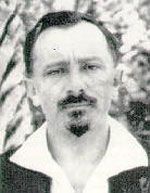
Nikolay Andreyevitch Roslavets has emerged as one of the most fascinating figures in Russian music in the first half of the twentieth century. Unlike most of his composer contemporaries in the early Soviet period, he genuinely came from a peasant background. In autobiographical jottings dating from 1924, he described his birthplace—Dushatino in the Ukraine, where he first drew breath on 4 January 1881 (Old Style 23 December 1880)—as ‘a godforsaken, half-Ukrainian, half-Byelorussian hole’. At first self-taught, Roslavets began to study music during the 1890s by attending classes in Kursk, the nearest large city, and was eventually accepted as a student at the Moscow Conservatory, where he studied violin as well as composition under Sergei Vassilenko and Mikhail Ippolitov-Ivanov. He graduated in 1912, gaining the Grand Silver Medal for his cantata
Heaven and Earth, inspired by Lord Byron’s poetic drama. Even this early Roslavets was associated, along with Alexander Mossolov and Vincent Lourié, with Russia’s artistic avant-garde. He engaged in the vigorous artistic debates occasioned by Futurism, Symbolism and other new ideas, and was close to visual artists such as Malevich.
Roslavets welcomed the revolutions of 1917 and after the Bolshevik Revolution in October he was made director of Kharkov Conservatory, remaining until 1924, when he returned to Moscow and took up a position in the State Publishing House. Describing himself as ‘extreme left-wing’ and ‘an intellectually creative proletarian’, Roslavets directed its Political Department, edited the journal Muzykalnaya Kultura, and was one of the leaders (with his contemporary and friend Nikolay Miaskovsky) of the most progressive of the various new musical bodies competing for attention in the USSR, the Association for Contemporary Music. His colleagues included Miaskovsky, Mossolov, Popov and Shostakovich. The tenth anniversary of the October Revolution was celebrated in 1927 with a concert featuring the premiere of Roslavets’s cantata October in the same programme as that of Shostakovich’s Symphony No 2, ‘Dedication to October’, and Mossolov’s Iron Foundry.
Nevertheless Roslavets was a committed modernist. The direction of his artistic sympathies is apparent from his support for performances of music by the Second Viennese School and his authorship of articles including one entitled ‘On pseudo-proletarian music’. For several years already his works had been under attack from the adherents of ‘proletarian music’, especially members of the RAPM (the Russian Association of Proletarian Musicians), who claimed them as counter-revolutionary and bourgeois art for art’s sake. The endless political warfare sapped Roslavets’s strength. In 1929 he was denounced as an ‘enemy of the People’ and in 1930 was forced to publicly repent of his former artistic convictions. He spent some years in Tashkent, Uzbekistan, as musical adviser of the Opera and Ballet Theatre. However he returned to Moscow in 1933 where he lectured at the Polytechnic Institute and was later required to train military band leaders. He made a living out of this and other comparatively menial tasks until he was finally admitted to the Composers’ Union in 1940. He suffered a severe stroke in the same year and was semi-invalid until his death from a second stroke in 1944.
from notes by Calum MacDonald © 2008
Nikolaï Andreïevitch Roslavets fut l’une des plus fascinantes figures de la musique russe de la première moitié du XXe siècle. Contrairement à la plupart de ses confrères de l’ère soviétique naissante, il venait d’un authentique milieu paysan—dans ses notes autobiographiques de 1924, il décrira Douchatino, le village d’Ukraine où il poussa son premier cri le 4 janvier 1881 (vieux style 23 décembre 1880), comme «un trou paumé, moitié ukrainien moitié biélorusse». D’abord autodidacte, il commença sa formation musicale dans les années 1890 à Koursk, la grande ville la plus proche, avant de finalement intégrer le Conservatoire de Moscou, où il étudia le violon et la composition avec Sergueï Vassilenko et Mikhail Ippolytov-Ivanov. Diplômé en 1912, il remporta la Grande médaille d’argent avec sa cantate
Le ciel et la terre, inspirée du drame poétique de Lord Byron. Ce Roslavets-là était déjà lié à l’avant-garde artistique russe, aux côtés d’Alexandre Mossolov et de Vincent Lourié. Il prit part aux vifs débats soulevés par les idées nouvelles, tels le futurisme et le symbolisme, en fut proche de plasticiens comme Malevitch.
Roslavets salua les révolutions de 1917; après la Révolution bolchevique d’Octobre, il fut nommé directeur du conservatoire de Kharkov et le resta jusqu’en 1924, date de son retour à Moscou où l’attendait un poste aux Éditions d’État. Se décrivant lui-même comme un «prolétaire d’extrême-gauche, intellectuellement créatif», il prit la tête du département politique, dirigea la rédaction du journal Mouzykalnaïa kultura et fut parmi les chefs de file (avec son ami Nikolaï Miaskovski) de l’Association pour la musique contemporaine, le plus progressiste des nouveaux organismes musicaux alors rivaux en URSS. Il eut notamment pour collègues Miaskovski, Mossolov, Popov et Chostakovitch. En 1927, le dixième anniversaire de la Révolution d’Octobre fut célébré par un concert où furent créées sa cantate Octobre, la Symphonie no 2 («dédiée à Octobre») de Chostakovitch et Fonderie d’acier de Mossolov.
Roslavets n’en fut pas moins un moderniste convaincu. L’orientation de ses sympathies artistiques transparaît bien dans le soutien qu’il apporta aux exécutions d’œuvres de la seconde École viennoise et dans les articles qu’il signa, dont un intitulé «De la musique pseudo-prolétarienne». Depuis plusieurs années déjà, ses compositions étaient attaquées par les tenants d’une «musique prolétarienne», surtout les membres de l’ARMP (Association russe des musiciens prolétariens), qui les jugeaient contre-révolutionnaires, ressortissant à l’art pour l’art bourgeois. Ces interminables querelles politiques sapèrent ses forces. Dénoncé comme «ennemi du Peuple» en 1929, il fut contraint, en 1930, de se repentir publiquement de ses anciennes convictions artistiques. Il passa quelques années à Tachkent, comme conseiller musical de Théâtre de l’Opéra et du Ballet. En 1933, cependant, il rentra à Moscou, où il enseigna à l’Institut polytechnique avant d’être appelé à former des chefs de fanfare militaire. Il vécut de cette fonction, et d’autres tâches relativement ingrates, jusqu’à ce qu’on l’admît enfin à l’Union des compositeurs, en 1940. Mais cette année-là, une grave attaque d’apoplexie le laissa à demi invalide—il mourra en 1944, des suites d’une seconde attaque.
extrait des notes rédigées par Calum MacDonald © 2008
Français: Hypérion
Nikolaj Andrejewitsch Roslawez ist als eine der faszinierendsten Gestalten in der russischen Musik der ersten Hälfte des 20. Jahrhunderts hervorgetreten. Anders als die meisten seiner Komponisten-Zeitgenossen der frühen sowjetischen Periode stammte er tatsächlich von einem bäuerlichen Hintergrund. In autobiographischen Skizzen von 1924 beschrieb er seinen Geburtsort Duschatino in der Ukraine, wo er am 4. Januar 1881 (oder 23. Dezember 1880 nach dem alten Kalender) das Licht der Welt erblickte, als „ein gottverlassenes, halb ukrainisches, halb weißrussisches Nest“. Roslawez studierte zuerst autodidaktisch Musik, besuchte dann in den 1890er Jahren Klassen in Kursk, der nächsten größeren Stadt, und wurde schließlich als Schüler am Moskauer Konservatorium aufgenommen, wo er Violine und Komposition bei Sergei Wassilenko und Michail Ippolitow-Iwanow studierte. Er graduierte 1912 und gewann die Silbermedaille für seine von Byrons poetischem Drama inspirierte Kantate
Himmel und Erde. Selbst so früh schon war Roslawez neben Alexander Mossolow und Vincent Lourié mit Russlands neuer Avantgarde assoziiert. Er nahm an den lebhaften vom Futurismus, Symbolismus und anderen neuen Ideen angeregten künstlerischen Debatten teil und stand bildenden Künstlern wie Malewitsch nahe.
Roslawez hieß die Revolutionen von 1917 willkommen, und nach der bolschewikischen Revolution im Oktober wurde er zum Direktor des Konservatoriums von Charkow ernannt, wo er bis 1924 blieb, als er nach Moskau zurückkehrte und eine Position im Staatlichen Musikverlag einnahm. Der nach seiner eigenen Beschreibung „extrem linke“ und „intellektuell kreative Proletarier“ Roslawez leitete die Politische Abteilung des Verlags, gab die Zeitschrift Muzykalnaya Kultura heraus und war (zusammen mit seinem Zeitgenossen und Freund Nikolaj Mjaskowski) einer der Leiter der progressivsten unter den verschiedenen neuen musikalischen Organisationen, die in der UdSSR um Aufmerksamkeit heischten: der Assoziation zeitgenössischer Musik. Zu seinen Kollegen gehörten Mjaskowski, Mossolow, Popow und Schostakowitsch. Der Zehnte Jahrestag der Oktoberrevolution wurde 1927 mit einem Konzert gefeiert, das die Uraufführung von Roslawez’ Kantate Oktober im gleichen Programm mit Schostakowitschs Symphonie Nr.2 „An den Oktober“ und Mossolows Die Eisengießerei erlebte.
Aber Roslawez war dennoch ein engagierter Modernist. Die Ausrichtung seiner künstlerischen Sympathien wird durch seine Unterstützung von Aufführungen der Musik der Zweiten Wiener Schule und seine Autorschaft von Artikeln, darunter einem mit dem Titel „Über pseudoproletarische Musik“ offensichtlich. Seine Werke hatten schon mehrere Jahre lang unter dem Angriff der Anhänger der „proletarischen Musik“ gestanden, besonders den Mitgliedern des RAPM (Russischer Verband der proletarischen Musiker), die sie für gegenrevolutionär und spießbürgerliche Kunst um der Kunst willen hielten. Die endlose politische Kriegsführung laugte Roslawez aus. 1929 wurde als „Volksfeind“ denunziert und 1930 wurde er gezwungen, für seine früheren künstlerischen Überzeugungen öffentlich Buße zu tun. Er verbrachte einige Jahre in Taschkent in Usbekistan als Musikberater des Musiktheaters, kehrte aber 1933 nach Moskau zurück, wo er am Polytechnischen Institut Vorlesungen hielt und später Dirigenten von Militärkapellen trainieren musste. Er verdiente sich damit und mit anderen relativ niedrigen Aufgaben seinen Lebensunterhalt bis er 1940 endlich in den Komponistenverband aufgenommen wurde. Im gleichen Jahr erlitt er einen schweren Schlaganfall und war bis zu seinem Tode 1944 nach einem zweiten Schlaganfall Halbinvalide.
aus dem Begleittext von Calum MacDonald © 2008
Deutsch: Renate Wendel