Welcome to Hyperion Records, a British classical label devoted to presenting high-quality recordings of music of all styles and from all periods from the twelfth century to the twenty-first.
Hyperion offers both CDs, and downloads in a number of formats. The site is also available in several languages.
Please use the dropdown buttons to set your preferred options, or use the checkbox to accept the defaults.
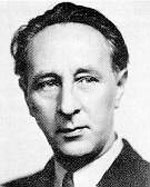
He emigrated to the United States in 1941 after the invasion of France, where he became, after Antonín Dvořák, especially with his symphonies and instrumental concerts (piano, harpsichord, violin etc.), the most significant Czech symphonic composer earning global prestige. There he joined intonated Czech music with his homesickness for his native country, to which he could never return. His chamber as well as choral works (the cantata Gilgameš, Polní mše (Field Mass), Songs, Chorales) are prolific. He wrote 15 operas (including Three Wishes, Miracles of Mary, Julietta, and The Greek Passion), and 14 ballets.