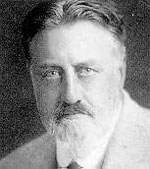
Granville Ransome Bantock was the son of a distinguished surgeon and gynaecologist, and thus came from a comfortable Victorian family background. Born in 1868, Bantock’s youthful world was one of privilege, quality, servants—but also of parental control. As with many other young composers from nineteenth-century middle-class families, Bantock was intended for one of the secure professions, and to satisfy his father he started to study for the Indian Civil Service. It did not work out and he later changed to chemical engineering, but music constantly intervened and at the age of twenty-one he became a student at London’s Royal Academy of Music, and was soon awarded the Macfarren scholarship for composition.
Bantock had huge energy and a vivid imagination and his student output was enormous and overwhelmingly ambitious. His energy and persistence resulted in student performances of his orchestral works, his overture The Fire Worshippers being played in an Academy concert in December 1890, later given by August Manns at Crystal Palace. Various other scores were heard at RAM concerts, including a Suite de ballet and Wulstan, a scena for baritone and orchestra. In July 1892 he enjoyed a concert entirely of his own music, ending with his one-act opera Caedmar.
Bantock also achieved publication from an early date, one suspects with parental financial support, as not only piano pieces and songs but extended works such as his Symphonic Overture Saul (published in 1894), The Fire Worshippers (1892), the operas Caedmar (1892) and The Pearl of Iran (1894), and the ballet suite Rameses II (1894) were published by the likes of Breitkopf & Härtel of Leipzig, whose London office had only recently opened.
For all his wealthy family, Bantock faced an uphill task on leaving the Academy, when, not being equipped to make a living as an instrumentalist or a virtuoso, he had to establish a musical career. In his case the solution lay in conducting musical comedies, culminating in the offer of a conducting appointment with one of the celebrated George Edwardes companies on a world tour. Sidney Jones’s celebrated show A Gaiety Girl was the star production. Not only did this provide paid work, for a trip Bantock himself later calculated to have lasted 431 days, but it gave him a wealth of practical music-making and experience, and it also allowed him to see the world at an impressionable age. However, all too soon reality intruded: back in England on 5 December 1895 work was still hard to find. So it was back to conducting light music and theatre shows including a provincial tour of Stanford’s Irish comic opera Shamus O’Brien.
Despairing of ever making an impact with his music, Bantock promoted an orchestral concert at Queen’s Hall on 15 December 1896, including music by five of his contemporaries at the RAM: William Wallace, Arthur Hinton, Stanley Hawley, Reginald Steggall and Erskine Allon. Of these only William Wallace and Arthur Hinton are remembered at all today. The concert included three of Bantock’s recent works and saw the first performance of The Funeral from The Curse of Kehama, the earliest score recorded here (under its later title Processional). Bantock prefaced the programme with a strongly worded manifesto, and while he was not rewarded with a good house, he stimulated a large critical coverage which went a long way towards putting him on the musical map.
Eventually Bantock obtained an appointment as Musical Director of the Tower Orchestra, New Brighton, then a fashionable resort across the Mersey from Liverpool. Like Dan Godfrey at Bournemouth, Bantock soon expanded his modest resort orchestra and its repertoire, and made New Brighton a noted centre for new music and British music in particular.
Bantock was married in 1898 to Helena von Schweizer, and the newly weds had Edward and Alice Elgar (not yet Sir and Lady) to stay in the summer of 1899, for Elgar to conduct a very early performance of the Enigma Variations on 16 July. But in the nineties perhaps Bantock’s principal musical enthusiasm was for Tchaikovsky, as can be seen from his first orchestral tone poem Thalaba the Destroyer (which, in fact, is dated the day after Elgar’s performance, so Elgar may well have been shown the score).
Bantock still did not have a regular source of income. It was as a teacher and educationalist that he was soon to make his living, when his reputation at New Brighton, coupled with Elgar’s recommendation, led to his appointment as Principal of the new Midland Institute School of Music in Birmingham in 1900. Later, in 1907, Bantock succeeded Elgar as Peyton Professor of Music at the University of Birmingham, going on to hold the appointment for twenty-seven years. Later he became associated with the Trinity College of Music in London, and in the 1930s he undertook several world examination tours, incidentally also conducting his own music along the way.
Bantock evolved his mature style at the turn of the century, and his most successful music was largely written in the first decade of the twentieth century. This included a succession of large-scale orchestral, and vocal and orchestral scores on exotic subjects, such as the song cycle Sappho, six tone poems including The Witch of Atlas, Dante and Beatrice and Fifine at the Fair, all crowned by his enormous setting of the whole of Edward Fitzgerald’s Omar Khayyám, which runs for just under three hours. Later there came other big choral works including his two-and-a-half-hour setting of The Song of Songs and orchestral music such as the Hebridean and Pagan symphonies. He wrote to the end, though latterly in an idiom then regarded by commentators as increasingly out of date. Viewed from a perspective of over fifty years this is no longer a bar to the proper appreciation of Bantock’s vivid and colourful art.
from notes by Lewis Foreman © 2007
Né en 1868 dans un milieu victorien aisé—son père était un éminent chirurgien-gynécologue—, Granville Ransome Bantock passa sa jeunesse dans un univers de privilèges, d’excellence, de domestiques, mais aussi d’autorité parentale. Comme tant d’autres jeunes compositeurs issus de la bourgeoisie du XIXe siècle, il avait une carrière toute tracée: pour contenter son père, il entreprit la formation de l’Indian Civil Service, qui tomba à l’eau. Puis il se tourna vers des études de génie chimique. Mais la musique revenait sans cesse et, à vingt et un ans, il intégra la Royal Academy of Music de Londres, bientôt récompensé par la bourse de composition Macfarren.
Doué d’une immense énergie et d’une vive imagination, il produisit durant ses études une quantité impressionnante d’œuvres extrêmement ambitieuses. À force d’énergie et de persévérance, il fit jouer ses pièces orchestrales par des étudiants—son ouverture The Fire Worshippers, interprétée lors d’un concert de l’Academy en décembre 1890, sera même reprise par August Manns au Crystal Palace. Plusieurs autres de ses partitions furent exécutées pendant des concerts de la RAM, notamment une Suite de ballet et Wulstan, une scena pour baryton et orchestre. En juillet 1892, il eut la joie de voir tout un concert consacré à sa musique avec, en clôture, son opéra en un acte, Caedmar.
Bantock publia également très tôt grâce, on imagine, au soutien financier de ses parents: des éditeurs comme Breitkopf & Härtel (Leipzig), qui venaient d’ouvrir une filiale à Londres, firent paraître des pièces pour piano, des chants, mais aussi de vastes œuvres comme l’ouverture symphonique Saul (parue en 1894), The Fire Worshippers (1892), les opéras Caedmar (1892) et The Pearl of Iran (1894), ainsi que la suite de ballet Rameses II (1894).
Au sortir de l’Academy, et malgré sa riche famille, Bantock dut affronter une tâche ardue: bien mal armé pour vivre comme instrumentiste ou comme virtuose, il lui fallut se forger une carrière musicale. Il trouva une issue dans la direction de comédies musicales et reçut, en apothéose, une proposition de tournée mondiale avec l’une des célèbres troupes de George Edwardes et son fameux spectacle: A Gaiety Girl de Sidney Jones. Ainsi obtint-il un travail rémunéré tout en effectuant un voyage qui, calculera-t-il, dura quatre cent trente et un jours; mais cela lui donna aussi maintes occasions de faire de la musique, d’accumuler de l’expérience et de voir le monde à un âge où l’on est encore impressionnable. La réalité ne tarda cependant pas à se rappeler à lui: une fois rentré en Angleterre, le 5 décembre 1895, il eut toujours autant de mal à trouver du travail. Il se remit donc à diriger de la musiquette et des spectacles de théâtre, partant en tournée provinciale avec Shamus O’Brien, l’opéra-comique irlandais de Stanford.
Désespérant de se faire jamais remarquer avec sa propre musique, Bantock organisa un concert orchestral au Queen’s Hall, le 15 décembre 1896, avec notamment des œuvres de cinq de ses condisciples à la RAM: William Wallace, Arthur Hinton, Stanley Hawley, Reginald Steggall et Erskine Allon—aujourd’hui, seuls les deux premiers n’ont pas sombré dans l’oubli. Ce concert proposait aussi trois ouvrages récents de Bantock, dont la création de The Funeral, tiré de The Curse of Kehama—la plus ancienne partition du présent enregistrement, jouée sous son titre ultérieur, Processional. Le compositeur préfaça le programme en rédigeant un manifeste bien senti et, s’il ne fit pas salle comble, il fut largement couvert pas la critique, ce qui contribua beaucoup à lui faire une place sur l’échiquier musical.
Bantock fut finalement nommé directeur musical du Tower Orchestra de New Brighton, une station balnéaire alors à la mode, sur la Mersey, en face de Liverpool. À l’instar de Dan Godfrey à Bournemouth, il développa bientôt son modeste orchestre balnéaire et en étoffa le répertoire jusqu’à faire de New Brighton un centre réputé en matière de musique nouvelle, surtout britannique.
En 1898, Bantock épousa Helena von Schweizer; à l’été de 1899, les jeunes mariés accueillirent chez eux Alice et Edward Elgar (qui n’étaient pas encore Lady et Sir), lequel devait diriger, le 16 juillet, une des toute premières exécutions de ses Enigma Variations. Mais dans les années 1890, Bantock s’enthousiasma peut-être avant tout pour Tchaïkovsky, comme en témoigne son premier poème symphonique orchestral, Thalaba the Destroyer, daté du lendemain du concert d’Elgar—à qui il put donc fort bien le montrer.
À cette époque, Bantock n’avait toujours aucune source de revenus régulière. Bientôt, ce fut comme professeur et comme pédagogue qu’il gagna sa vie: en 1900, sa réputation à New Brighton, ajoutée à la recommandation d’Elgar, lui valut d’être nommé à la tête de la nouvelle Midland Institute School of Music de Birmingham. En 1907, il succéda à Elgar comme Peyton Professor of Music à l’université de cette même ville—une fonction qu’il occupera pendant vingt-sept ans. Également lié, par la suite, au Trinity College of Music de Londres, il entreprit, dans les années 1930, plusieurs tournées mondiales comme examinateur—des voyages dont, pour la petite histoire, il profita pour diriger sa propre musique.
Bantock développa le style de sa maturité au tournant du siècle et ses plus grands succès datent, pour l’essentiel, des années 1900–1910: citons, entre autres, une série de partitions orchestrales et choralo-orchestrales à grande échelle sur des sujets exotiques, comme le cycle mélodique Sappho, les six poèmes symphoniques (dont The Witch of Atlas, Dante and Beatrice et Fifine at the Fair) et, brochant sur le tout, la colossale mise en musique de l’Omar Khayyám d’Edward Fitzgerald (près de trois heures). Plus tard vinrent d’autres grandes pages chorales, telle The Song of Songs (deux heures trente), et d’autres pièces orchestrales comme les symphonies Hebridean et Pagan. Bantock ne cessa jamais d’écrire, même si, sur sa fin, les commentateurs jugèrent son style toujours plus démodé. Aujourd’hui, avec un bon demi-siècle de recul, cela n’empêche plus d’apprécier à sa juste valeur son art plein de verve et de couleurs.
extrait des notes rédigées par Lewis Foreman © 2007
Français: Hypérion
Granville Ransome Bantock war der Sohn eines bekannten Chirurgen und Gynäkologen und kam somit aus einer bemittelten viktorianischen Familie. Er wurde 1868 geboren und wuchs in einer privilegierten und materiell sorgenfreien Atmosphäre auf, umgeben von Dienern, aber auch der Kontrolle seiner Eltern. Wie viele andere junge Komponisten des 19. Jahrhunderts aus gutbürgerlichen Verhältnissen war auch Bantock für eine der gesicherten Berufslaufbahnen vorgesehen. Den Wünschen seines Vaters Folge leistend nahm Bantock eine Stelle im staatlichen Verwaltungswesen Indiens an. Das ging nicht gut aus, und er begann chemischen Ingenieurbau zu studieren. Aber Musik kam immer dazwischen. Im Alter von 21 wurde er Student der Royal Academy of Music (London) und erhielt schon bald das Macfarren-Stipendium für Komposition.
Bantock verfügte über Unmengen an Energie und eine lebhafte Vorstellungsgabe. Seine Studentenarbeiten waren riesig und überwältigend ehrgeizig. Seine Energie und Beharrlichkeit führten zu Aufführungen seiner Orchesterwerke durch seine Kommilitonen: seine Ouvertüre The Fire Worshippers wurde im Dezember 1890 in einem Academy-Konzert gespielt und erneut im November 1893 unter August Manns im Londoner Crystal Palace aufgeführt. Auch diverse andere Werke Bantocks waren in RAM-Konzerten zu hören, wie zum Beispiel die Suite de ballet und Wulstan, eine Scena für Bariton und Orchester. Im Juli 1892 konnte Bantock sogar auf ein Konzert verweisen, das ausschließlich seiner Musik gewidmet war und mit seiner einaktigen Oper Caedmar endete.
Bantock fand auch schon früh einen Verleger für seine Werke. Die Vermutung liegt nahe, dass dies durch die finanzielle Unterstützung seiner Eltern ermöglicht wurde, da nicht nur seine Klavierstücke und Lieder im Druck erschienen. Kein Geringerer als Breitkopf & Härtel in Leipzig, der erst kurz zuvor eine Zweigstelle in London eröffnet hatte, nahm sich zum Beispiel auch solch umfangreicher Werke wie der sinfonischen Ouvertüren Saul (veröffentlicht 1894) und The Fire Worshippers (1892) sowie der Opern Caedmar (1892) und The Pearl of Iran (1894) als auch der Ballettsuite Rameses II (1894) an.
Trotz der finanziellen Unterstützung seiner Familie sah sich Bantock nach Verlassen der Academy mit der schwierigen Aufgabe konfrontiert, als Berufsmusiker Fuß zu fassen, war er doch nicht in der Lage, sich als Orchestermusiker oder Solist seinen Lebensunterhalt zu verdienen. In seinem Fall bestand die Lösung im Dirigieren von musikalischen Lustspielen. Den Höhepunkt dieser Zeit bildete das Angebot, die Dirigate für eine der gefeierten Theatertruppen von George Edwardes auf deren internationalen Gastspielreise zu übernehmen, bei der Sidney Jones’ A Gaiety Girl als zentrales Stück gegeben wurde. Dieses Engagement bot Bantock nicht nur eine bezahlte Arbeit für eine Reise, von der er selbst behauptete, sie habe 431 Tage gedauert, sondern auch reichlich Gelegenheit zum Musizieren und Erfahrungsaustausch. Nicht zuletzt gestattete ihm die Tournee, die Welt in einem Alter zu sehen, in dem man für Eindrücke leicht empfänglich ist. Doch all zu früh brach die Wirklichkeit wieder ein. Als Bantock am 5. Dezember 1895 wieder nach England zurückkehrte, fand er es wieder schwer, Arbeit zu finden, und er fuhr fort, leichte Musik und Theatershows zu dirigieren. Zum Beispiel übernahm er ein Gastspiel von Stanfords irischer komischer Oper Shamus O’Brien.
Bantock machte sich zu jener Zeit ernsthafte Sorgen, ob er jemals den Durchbruch als Musiker schaffen würde. Aus diesem Grund organisierte er am 15. Dezember 1896 ein Orchesterkonzert in der Queen’s Hall (London). Auf dem Programm standen Werke von fünf seiner Mitstudenten an der Academy: William Wallace, Arthur Hinton, Stanley Hawley, Reginald Steggall und Erskine Allon. Von diesen Komponisten sind heute nur noch William Wallace und Arthur Hinton bekannt. Auch drei Werke Bantocks aus jüngerer Zeit wurden aufgeführt, wie zum Beispiel The Funeral aus The Curse of Kehama, seine früheste auf dieser CD eingespielte Partitur, die hier unter ihrem späteren Titel, Processional, aufgeführt ist. Als Einleitung zum Programm schrieb der Komponist ein aufrüttelndes Manifest, und obwohl das Konzert schlecht besucht war, rief es doch zahlreiche Reaktionen in der Presse hervor, die nicht unwesentlich dazu beitrugen, dass Bantock ins allgemeine Bewusstsein der Musikwelt drang.
Schließlich sicherte sich Bantock die Stelle des musikalischen Leiters des Tower Orchestra in New Brighton, damals ein eleganter Erholungsort am Ufer der Mersey gegenüber von Liverpool. Wie Dan Godfrey in Bournemouth erweiterte auch Bantock bald sein bescheidenes Kurorchester und dessen Repertoire und verwandelte New Brighton in ein anerkanntes Zentrum für neue und besonders britische Musik.
Bantock heiratete 1898 Helena von Schweizer, und im Sommer 1899 hatten die jungen Eheleute Edward und Alice Elgar (zu jenem Zeitpunkt noch nicht Sir und Lady) zu Besuch, da Elgar am 16. Juli eine (sehr frühe) Aufführung seiner Enigma Variations dirigierte. In den 1890er Jahren begeisterte sich Bantock vielleicht am meisten für Tschaikowsky, wie das in seiner ersten Tondichtung für Orchester, Thalaba the Destroyer, zum Ausdruck kommt. Dieses Werk wurde übrigens ein Tag nach Elgars Aufführung abgeschlossen. So kann es wohl sein, dass Elgar die Partitur vorgelegt bekam.
Bantock hatte noch immer keine regelmäßige Einkommensquelle. Bald sollte er sich aber seinen Lebensunterhalt als Lehrer und Pädagoge verdienen. 1900 führte nämlich sein guter Ruf aus New Brighton, zusammen mit Elgars Empfehlung, zu seiner Ernennung als Direktor der neuen Midland Institute School of Music in Birmingham. Später, 1907, wurde Bantock Elgars Nachfolger als Peyton Professor of Music an der University of Birmingham. 27 Jahre lang sollte er diese Position bestreiten. In seinen fortgeschrittenen Jahren ging er auch eine Verbindung mit dem Trinity College of Music in London ein, in dessen Auftrag er in den 1930er Jahren einige Weltreisen zu Prüfungszwecken unternahm und dabei übrigens auch nebenbei seine eigene Musik dirigierte.
Bantock entwickelte seinen reifen Stil um die Jahrhundertwende, und seine erfolgreichste Musik wurde größtenteils im ersten Jahrzehnt des 20. Jahrhunderts geschrieben. Dazu gehört eine Reihe groß angelegter Vokalwerke mit Orchester sowie reiner Orchesterstücke über exotische Themen, wie zum Beispiel der Liederzyklus Sappho und die sechs Tondichtungen (z. B. The Witch of Atlas, Dante and Beatrice und Fifine at the Fair) sowie die enorme, alles krönende Vertonung von Edward Fitzgeralds gesamter Ruba’iyat of Omar Khayyám mit einer Länge von knapp unter drei Stunden. Später kamen noch andere große Chorwerke hinzu, einschließlich der zweieinhalbstündigen Vertonungen des Song of Songs und solcher Orchesterstücke wie die Hebridean Symphony und Pagan Symphony. Bantock komponierte bis ans Lebensende, auch wenn sein Stil in den letzten Jahren zunehmend von den Rezensenten als überholt bezeichnet wurde. Aber mit einem Abstand von 50 Jahren nach seinem Tod ist dieses Kriterium kein Maßstab mehr für eine richtige Einschätzung von Bantocks lebendiger und farbenreicher Kunst.
aus dem Begleittext von Lewis Foreman © 2007
Deutsch: Elke Hockings