British music in the last quarter of the nineteenth century was dominated, until the emergence of Elgar at the end of Queen Victoria’s reign, by five composers: Stanford, Parry, Mackenzie, Sullivan and Cowen. Sullivan has always been recognized as the composer of the Savoy operas, and over the last couple of decades his other music is being revived. Parry and Stanford had been long-remembered for their church music and have enjoyed a growing revival over the last twenty years or so. Mackenzie, too, has been heard again (his ‘Scottish’ Concerto—a notable precursor to Somervell—can be heard on
Hyperion CDA67023), but the once-popular and widely played music by Sir Frederic Hymen Cowen has largely remained unheard, silenced by that sudden dramatic change of aesthetic and idiom after the First World War.
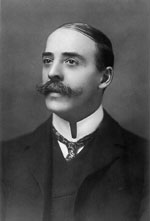
Frederic Cowen had the good fortune to be the son of the private secretary to the Earl of Dudley, who was also the Treasurer of the Italian Opera at Her Majesty’s Theatre. Thus the boy moved in very musical circles and even as a child his musical gifts were encouraged with the best teachers and with every opportunity to play with leading musicians of the day. Cowen was actually born in Jamaica but came to England when he was four. As a wunderkind child pianist he first appeared in public at the age of ten and played the Mendelssohn D minor Piano Concerto when twelve. He subsequently studied in Germany, first in Leipzig and later in Berlin. He met Liszt and Brahms and was launched on a career as a piano virtuoso in his teens. A life touring with various artists took him round the UK and to Europe and the USA. He emerged as one of the leading British conductors of his day and became the regular conductor of the Philharmonic Society in 1888. He achieved some celebrity when he was appointed conductor of the Melbourne Centennial Exhibition, also in 1888, for the unheard of fee of £5000.
Cowen’s Third Symphony, the Scandinavian of 1880 (the first two are lost), did much to establish British Victorian music on the European stage. He went on to write six symphonies. His choral works were widely heard at festivals. His ambition to write operas saw five presented on the London stage, but his D’Oyly Carte commission to produce a successor to Sullivan’s Ivanhoe, the verismo Signa, failed because it was not ready when the run of Ivanhoe ended earlier than expected.
from notes by Lewis Foreman © 2011
Dans le dernier quart du XIXe siècle—en fait, jusqu’à l’émergence d’Elgar, à la fin du règne de la reine Victoria—, cinq compositeurs dominèrent la musique britannique: Stanford, Parry, Mackenzie, Sullivan et Cowen. Sullivan a longtemps survécu comme compositeur d’opérettes dites «Savoy operas» et, depuis vingt ans, ses autres œuvres connaissent une résurrection—un regain d’intérêt qui touche également Parry et Stanford, longtemps restés dans les mémoires pour leur musique d’église. On réentend aussi Mackenzie (son «Scottish» Concerto, remarquable devancier de celui de Somervell, est à découvrir sur le disque
Hyperion CDA67023), mais la musique, autrefois populaire et fort jouée, de Sir Frederic Hymen Cowen a été largement passée sous silence, la faute au brusque et spectaculaire changement d’esthétique et de style survenu après la Première Guerre mondiale.
Fils du secrétaire du comte de Dudley, par ailleurs trésorier de l’opéra italien au Her Majesty’s Theatre, Frederic Cowen eut la chance d’evoluer, enfant, dans des cercles très musicaux. Très tôt, on encouragea ses dons en lui offrant les meilleurs professeurs de musique et toutes les occasions de se produire avec les grands musiciens de l’époque. Cet enfant pianiste prodige, né en Jamaïque mais débarqué en Angleterre à l’âge de quatre ans, fit sa première apparition publique à dix ans et exécuta à douze ans le Concerto pour piano en ré mineur de Mendelssohn. Il partit ensuite étudier en Allemagne, à Leipzig puis à Berlin. Il rencontra Liszt et Brahms et entama, à l’adolescence, une carrière de pianiste virtuose. Il partit alors en tournées avec divers artistes au Royaume-Uni, en Europe et aux États-Unis. Il devint ensuite l’un des grands chefs d’orchestre de son temps et fut nommé à la tête de la Philharmonic Society en 1888. La même année, il tira aussi quelque célébrité de sa nomination (moyennant la somme inouïe de cinq mille livres) comme chef d’orchestre de l’exposition organisée pour le centenaire de Melbourne.
La troisième Symphonie de Cowen, dite Scandinavian (1880; les deux premières sont perdues), contribua largement à installer la musique britannique victorienne sur les scènes européennes. Cowen en écrivit six. Ses œuvres chorales furent énormément jouées dans les festivals et cinq de ses opéras furent montés sur les scènes londoniennes mais quand la D’Oyly Carte lui commanda un successeur à l’Ivanhoe de Sullivan, il ne put terminer à temps son vériste Signa, Ivanhoe ayant été retiré de l’affiche plus tôt que prévu.
extrait des notes rédigées par Lewis Foreman © 2011
Français: Hypérion
Bis zu Elgars Erscheinen am Ende der Regentschaft von Königin Viktoria dominierten fünf Komponisten die britische Musik im letzten Viertel des 19. Jahrhunderts: Stanford, Parry, Alexander Mackenzie, Arthur Sullivan und Cowen. Sullivan hielt sich lange Zeit als Komponist der sogenannten Savoy-Opern, und im Laufe der letzten zwei Jahrzehnte wurden auch seine anderen Werke wieder zum Leben erweckt. An Parry und Stanford erinnerte man sich wegen ihrer Kirchenmusik noch lange Zeit, und seit rund 20 Jahren erfreuen sie sich wieder wachsender Beliebtheit. Auch Mackenzie kam wieder zu Gehör (sein „Schottisches“ Konzert—ein wichtiger Vorläufer von Somervell—liegt auf
Hyperion CDA67023 vor), doch die einst beliebte und vielgespielte Musik von Sir Frederic Hymen Cowen erklingt nach wie vor nur selten, nachdem der plötzliche dramatische Wandel in Ästhetik und Tonsprache sie nach dem Ersten Weltkrieg zum Verstummen brachte.
Frederic Cowen war Sohn des Privatsekretärs des Earl of Dudley—ein Glücksfall für ihn, denn der Earl war gleichzeitig Schatzmeister der italienischen Oper am Londoner „Theater Ihrer Majestät“, Her Majesty’s Theatre. So verkehrte Cowen früh in überaus musikalischen Kreisen, und schon als Kind wurden seine musikalischen Talente durch die besten Lehrer und durch zahlreiche Gelegenheiten gefördert, bei der er mit führenden Musikern der Zeit auftrat. Cowen wurde in Jamaika geboren, kam aber mit vier Jahren nach England. Als pianistisches Wunderkind trat er im Alter von zehn Jahren erstmals öffentlich auf, und mit zwölf spielte er Mendelssohns Klavierkonzert d-Moll. Später setzte er seine Ausbildung in Deutschland fort, zunächst in Leipzig, dann in Berlin. Er lernte Liszt und Brahms kennen und begann im Jugendalter eine Laufbahn als Klaviervirtuose. In Begleitung verschiedener Künstlern führte ihn sein Tourneeleben durch ganz Großbritannien sowie auf das europäische Festland und in die USA. Er avancierte zu einem der führenden britischen Dirigenten seiner Zeit und wurde 1888 zum ständigen Dirigenten der Philharmonic Society ernannt. Zu einer gewissen Berühmtheit gelangte er, als man ihn ebenfalls 1888 gegen eine beispiellose Gage von £5000 zum Dirigenten der Jahrhundert-Ausstellung in Melbourne berief.
Cowens Sinfonie Nr. 3, die Skandinavische, aus dem Jahr 1880 (die ersten beiden sind verschollen) trug entscheidend dazu bei, die britische Musik der viktorianischen Zeit auf europäischer Ebene zu etablieren. Insgesamt schrieb er sechs Sinfonien. Seine Chorwerke erklangen bei zahlreichen Musikfesten. Seine Ambitionen auf dem Gebiet der Opernkomposition resultierten in fünf Werken, die in London auf die Bühne kamen—der Versuch, im Auftrag von D’Oyly Carte mit der Verismo-Oper Signa einen Nachfolger zu Sullivans Ivanhoe zu liefern, scheiterte jedoch, da das Werk noch nicht fertig war, als Ivanhoe
aus dem Begleittext von Lewis Foreman © 2011
Deutsch: Arne Muus