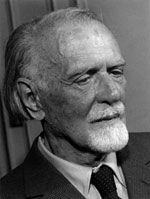
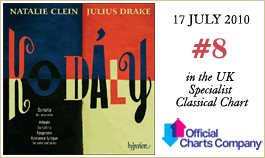
Zoltán Kodály occupied a position in Hungary much like that of Vaughan Williams in the United Kingdom: as the great national composer who, by his discovery and creative use of his folk-music heritage, and the role he must play in society as an educator and fulfiller of cultural needs, forged the standard by which twentieth-century Hungarian music should be judged. He was a protégé and colleague of Erno Dohnányi and a lifelong friend of Béla Bartók (in the early 1900s they went on prospecting expeditions together, to collect folksongs in the remotest villages of Hungary). But he was more concerned than them to bring home the reality of Hungary’s musical heritage to Hungarians, rather than to place it on the European or transatlantic stage. As he himself said: ‘One can approach what belongs to all humanity only through one’s own national characteristics’—and paradoxically Kodály’s music is known and loved all over the world; he seems to speak to every audience in a language they can understand. Most celebrated as a choral composer, he created an entire repertoire of small-scale choral pieces for teaching and concert-giving. This output is punctuated, however, by notable chamber, orchestral and choral works which testify to a powerful mastery.
For Liszt or Brahms, ‘Hungarian’ music wasn’t the songs and dances of the peasantry, but the cosmopolitan music that had been developed by gypsy violinists and entertainers: the pseudo-folk verbunkos style, which amalgamated features from various traditions (nineteenth-century courtship and recruiting dances, for instance), its characteristic measure being the fiery or sentimental csárdás. Bartók and Kodály, as professional ethnomusicologists, uncovered the older, more authentic Hungarian folk music by going into the countryside with a phonograph and recording the actual melodies people sang and danced to. It was a discovery of enormous significance—the recovery of a national heritage, a national identity, just when Hungary was seeking liberty from the dying Austrian Empire.
In 1906, the year they published their first joint collection of Hungarian folksongs, Kodály composed his graduation piece from the Budapest Academy of Music: the orchestral poem Summer Evening, already infused with the modal melodies, the florid arabesques and characteristic rhythms of Hungarian folk music. This lush, delicately evocative nature-impression is a symphonic poem comparable to early orchestral works of Dohnányi or the more contemplative movements of Bartók’s contemporary orchestral suites. But rather than pursuing orchestral music after Summer Evening Kodály—after a decisive encounter with the music of Debussy and appointment as professor of composition at the Budapest Royal Academy—took an entirely different path, with an astonishing succession of chamber works for string instruments which focused his creative energies for over a decade. Through them he became a mature artist. All are conceived on a heroic scale; all push the techniques of their chosen instruments to the limit. In abstract forms—quartet, sonata, duo—they show a unique and original fusion of classical formal principles with the new harmonic and melodic resources Kodály and Bartók had assimilated on their folksong-collecting expeditions.
from notes by Calum MacDonald © 2010
Zoltán Kodály fut à la Hongrie ce que Vaughan Williams fut au Royaume-Uni: le grand compositeur national qui, par sa découverte et par son utilisation créative de la musique populaire, mais aussi par le rôle d’éducateur et de pourvoyeur de biens culturels qu’il assuma dans la société, forgea les standards à l’aune desquels on doit juger la musique hongroise du XXe siècle. Il fut le protégé et le collègue d’Erno Dohnányi ainsi que l’ami indéfectible de Béla Bartók (au début des années 1900, ils entreprirent des expéditions de prospection pour collecter des chants populaires dans les villages hongrois les plus reculés). Mais, plus qu’eux, il s’attacha à restituer aux Hongrois la réalité de leur héritage musical, sans chercher à le projeter sur la scène européenne au transatlantique. Comme il le déclara lui-même: «On ne peut appréhender ce qui appartient à toute l’humanité qu’à travers nos propres caractéristiques nationales»—et, paradoxalement, sa musique est connue et aimée dans le monde entier, comme s’il parlait une langue intelligible à chaque auditoire. Surtout célèbre pour ses partitions chorales, il créa tout un répertoire de pièces à petite échelle pour l’enseignement et le concert, ponctué, cependant, de remarquables musiques de chambre, d’œuvres orchestrales et chorales témoignant d’une puissante maîtrise.
Par musique «hongroise», Liszt ou Brahms n’entendaient pas les chants et les danses des paysans mais la musique cosmopolite développée par les violonistes et les artistes tziganes: le style verbunkos pseudo-folklorique, qui amalgamait des traits issus de diverses traditions (les danses de cour et de recrutement du XIXe siècle, par exemple) et dont la mesure caractéristique était la csárdás, farouche ou sentimentale. Ethnomusicologues professionnels, Bartók et Kodály découvrirent la musique folklorique hongroise plus ancienne, plus authentique, en battant la campagne armés d’un phonographe pour enregistrer les vraies mélodies, celles que les gens chantaient et sur lesquelles ils dansaient. Ce fut une découverte capitale, la récupération d’un héritage national, d’une identité nationale, alors que la Hongrie, affranchie de l’empire autrichien moribond, venait de recouvrer la liberté.
En 1906, année où il publia, conjointement avec Bartók, son premier recueil de chants populaires hongrois, Kodály composa pour son diplôme de l’Académie de musique de Budapest Soir d’été, un poème orchestral déjà baigné des mélodies modales, des arabesques fleuries et des rythmes typiques du folklore hongrois. Ce tableau impressionniste de la nature, touffu et subtilement évocateur, est un poème symphonique comparable aux premières pages orchestrales de Dohnányi ou aux mouvements, davantage contemplatifs, des suites orchestrales alors composées par Bartók. Mais au lieu de poursuivre dans cette veine orchestrale, Kodály—après sa décisive découverte de la musique debussyste et sa nomination comme professeur de composition à l’Académie royale de Budapest—bifurqua et enchaîna avec une étonnante série d’œuvres de chambre pour instruments à cordes, qui accapara son énergie créatrice pendant plus de dix ans, le faisant accéder à la maturité artistique. Toutes sont conçues à une échelle héroïque et toutes repoussent les limites des instruments. Leurs formes abstraites—quatuor, sonate, duo—donnent à voir une fusion unique et originale entre les principes formels classiques et les nouvelles ressources harmonico-mélodiques que Kodály et Bartók avaient assimilées pendant leurs collectes de chants populaires.
extrait des notes rédigées par Calum MacDonald © 2010
Français: Hypérion
Zoltán Kodály nahm in Ungarn eine Stellung ein, die vergleichbar mit der von Vaughan Williams in England ist, und zwar als großer Komponist von nationaler Bedeutung, der durch seine Entdeckung und kreative Verwendung des Volksmusikerbes seiner Heimat sowie sein Selbstverständnis als Pädagoge und Kulturträger Maßstäbe für die Beurteilung der ungarischen Musik des 20. Jahrhunderts setzte. Er war Förderer und Kollege von Erno Dohnányi und lebenslanger Freund von Béla Bartók, mit dem er in den ersten Jahren des 20. Jahrhunderts auf Ausflügen in die entferntesten Dörfer Ungarns Volkslieder sammelte. Dabei ging es ihm allerdings mehr darum, seinen Landsleuten ihr musikalisches Erbe bewusst zu machen, als um europäische oder transatlantische Aufmerksamkeit. Obgleich Kodály selbst sagte, dass „man sich dem Eigentum der gesamten Menschheit nur durch Kenntnis der eigenen nationalen Eigenschaften nähern kann“, ist seine Musik in aller Welt bekannt und beliebt, da er in einer jedem Publikum verständlich scheinenden Sprache spricht. Am meisten gefeiert ist er als Komponist eines kompletten Repertoires von kleineren Chorwerken für Unterricht und Konzerte. Dieses Werk ist jedoch durchsetzt mit bemerkenswerten Kammermusik-, Orchester- und Chorwerken, die von kraftvoller Meisterschaft zeugen.
Liszt und Brahms verstanden unter „ungarischer“ Musik nicht die Lieder und Tänze der Bauernschaft, sondern die großstädtische Musik im pseudofolkloristischen Verbunkos-Stil, der von Zigeunergeigern und Unterhaltern aus verschiedenen Traditionen von Werbe- und Rekrutierungsmusik entwickelt worden war und von den sentimentalen und feurigen Tempi des Csárdás gekennzeichnet ist. Als professionelle Musikethnologen entdeckten Bartók und Kodály die ältere, authentische ungarische Volksmusik und zeichneten die von der tanzenden Landbevölkerung gesungenen Lieder mit einem Phonographen auf. Diese Wiederentdeckung eines nationalen Erbes, einer nationalen Identität war von hoher Bedeutung zu einem Zeitpunkt, als Ungarn nach Befreiung von der Vorherschaft des untergehenden Habsburger Reiches strebte.
1906 erschien die erste Ausgabe der von Bartók und Kodály gesammelten ungarischen Volkslieder. Im selben Jahr komponierte Kodály sein Prüfungswerk für die Königlich-Ungarische Musikakademie in Budapest, und zwar das Orchestergedicht Sommerabend, das bereits die modale Melodik, die blumigen Arabesken und die charakteristische Rhythmik der ungarischen Volksmusik verarbeitet. Diese üppige, verhalten evokative Naturimpression ist ein sinfonisches Gedicht, das sich mit frühen Orchesterwerken von Dohnányi oder den nachdenklicheren Sätzen von Bartóks zeitgenössischen Orchestersuiten vergleichen lässt. Doch nach dem Sommerabend blieb Kodály nicht bei der Orchestermusik, sondern ging nach einer entscheidenden Begegnung mit der Musik von Debussy und nach seiner Einstellung als Professor für Komposition an der Musikakademie ganz andere Wege mit einer erstaunlichen Folge von Kammermusikwerken für Streicher, die seine kreative Energie ein ganzes Jahrzehnt lang beanspruchten und mit denen er zum Künstler reifte. Alle diese Werke haben heroische Ausmaße und treiben die technischen Schwierigkeiten an die Grenzen des Möglichen. In abstrakten Formen wie Quartett, Sonate oder Duo verschmelzen sie auf einzigartige und originelle Weise klassische formale Prinzipien mit den neuen harmonischen und melodischen Quellen, die Kodály and Bartók auf ihren Folklore-Expeditionen gesammelt hatten.
aus dem Begleittext von Calum MacDonald © 2010
Deutsch: Henning Weber