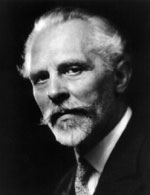
In a biographical pamphlet published by J & W Chester in 1922, Lord Berners described Joseph Jongen as a composer whose music had ‘remarkable lyric charm and dramatic power’. That acute summary of his musical language makes his neglect all the more puzzling. If Jongen is known at all, it is largely through his finely crafted organ music, rather than his substantial output for orchestra or his chamber music (including three fine string quartets). Born in Liège on 14 December 1873, his father was a cabinet-maker and wood-carver who specialized in church furnishings. But he was also a keen amateur musician (he had studied the trombone in his youth), who had encountered the best music Paris had to offer when he spent six months there in 1867. Jongen began to study the piano when he was seven years old, and his teacher (who was organist of Saint-Jacques in Liège) soon encouraged him to take up the organ as well. Jongen continued his studies at the Conservatoire in Liège while still singing in the choirs of several churches. His time at the Liège Conservatoire was formative, with his first chance to hear Eugène Ysaÿe, and visits to the city by composer–conductors such as Vincent d’Indy and Richard Strauss.
Jongen was a brilliant student and had already started to demonstrate his gifts as a composer in his early teens. In 1897 he won the Belgian Prix de Rome, which gave him the chance to study in Italy and to travel. He made the most of this opportunity, setting out first for Berlin in 1898, where the concerts conducted by Arthur Nikisch and Felix Weingartner made a lasting impression, as did performances of Strauss’s Heldenleben (conducted by the composer) and Jongen’s first hearing of Brahms’s Violin Concerto, played by Joseph Joachim. One of his grandest works from this period was a symphony, written under the influence of Strauss’s tone poems. He took it to Strauss and was delighted to be welcomed warmly and taken seriously, recalling later that Strauss’s comments were ‘like beams of light, as if a thick curtain had been lifted from my eyes’.
from notes by Nigel Simeone © 2015
Dans une brochure biographique parue chez J. & W. Chester en 1922, Lord Berners prêta à la musique de Joseph Jongen «un charme lyrique et une puissance dramatique remarquables». Ce résumé pénétrant rend d’autant plus surprenant l’oubli dans lequel ce compositeur a sombré. Quand les gens le connaissent, c’est bien plus pour sa musique d’orgue finement ciselée que pour sa large production orchestrale ou pour sa musique de chambre (dont trois beaux quatuors à cordes). Il naquit à Liège le 14 décembre 1873, d’un père ébéniste et sculpteur sur bois (spécialisé dans le mobilier d’église), mais aussi fervent musicien amateur, qui avait étudié le trombone dans sa jeunesse et découvert, durant six mois de l’année 1867 passés à Paris, la meilleure musique que la capitale avait à offrir. Jongen commença le piano à sept ans et son professeur (organiste de Saint-Jacques, à Liège) l’encouragea bientôt à se mettre à l’orgue. Il poursuivit ses études au Conservatoire de Liège, sans cesser de chanter dans divers chœurs d’église. Pendant ses formatrices années de Conservatoire, il eut la chance d’entendre pour la première fois Eugène Ysaÿe et, lors de leur passage à Liège, des compositeurs–chefs d’orchestre comme Vincent d’Indy et Richard Strauss.
Élève brillant, Jongen montra des talents de compositeur dès sa prime adolescence. En 1897, il remporta le prix de Rome belge, qui lui permit d’aller étudier en Italie et de voyager. Une possibilité qu’il exploita à fond: en 1898, il se rendit d’abord à Berlin, où les concerts dirigés par Arthur Nikisch et Felix Weingartner l’impressionnèrent durablement, tout comme les représentations de Heldenleben (sous la baguette de Strauss en personne) et la découverte du Concerto pour violon de Brahms, sous l’archet de Joseph Joachim. L’une de ses plus grandes œuvres fut alors une symphonie rédigée sous l’influence des poèmes symphoniques de Strauss, à qui il la montra. Ravi d’avoir été accueilli chaleureusement et pris au sérieux, il se rappellera que les remarques de Strauss avaient été «comme des traits de lumière, comme un lourd rideau qui se soulevait devant [ses] yeux».
extrait des notes rédigées par Nigel Simeone © 2015
Français: Hypérion
In einem von J & W Chester veröffentlichten biographischen Aufsatz von 1922 wird Joseph Jongen von Lord Berners als ein Komponist beschrieben, dessen Musik „bemerkenswerten lyrischen Charme und dramatische Kraft“ besaß. Diese scharfsinnige Charakterisierung seiner musikalischen Sprache lässt die Vernachlässigung seines Oeuvres umso rätselhafter erscheinen. Wenn der Name Jongen überhaupt geläufig ist, so wird er überwiegend mit seiner feingearbeiteten Orgelmusik in Verbindung gebracht, und nicht so sehr mit seinem beträchtlichen Korpus an Orchester- und auch Kammermusik (worunter sich etwa drei sehr schöne Streichquartette befinden). Er wurde am 14. Dezember 1873 in Lüttich als Sohn eines Tischlers und Holzschnitzers geboren, der sich auf Kirchenmobiliar spezialisiert hatte. Jongen Senior war jedoch auch ein passionierter Laienmusiker (in seiner Jugend hatte er Posaune gelernt), der mit der besten Musik in Berührung gekommen war, die Paris zu bieten hatte, als er dort im Jahre 1867 sechs Monate verbrachte. Sein Sohn erhielt ab dem Alter von sieben Jahren Klavierunterricht und sein Lehrer (der Organist der Jakobskirche in Lüttich) ermutigte ihn bald dazu, auch Orgel zu lernen. Später besuchte Jongen das Konservatorium in Lüttich und sang gleichzeitig in mehreren Kirchenchören. Es war dies eine prägende Phase für ihn, in der er zudem erstmals Eugène Ysaÿe hörte und Künstler wie Vincent d’Indy und Richard Strauss erlebte.
Jongen war ein brillanter Student und bewies bereits in jungen Jahren Kompositionstalent. 1897 wurde ihm der belgische Prix de Rome verliehen, der ihm ein Studium in Italien ermöglichte und es ihm zudem erlaubte, Reisen zu unternehmen. Diese Gelegenheit machte er sich zunutze und fuhr 1898 zunächst nach Berlin, wo Konzerte unter der Leitung von Arthur Nikisch und Felix Weingartner großen Eindruck auf ihn machten. Aufführungen des Heldenleben von Strauss (unter der Leitung des Komponisten) sowie des Violinkonzerts von Brahms, gespielt von Joseph Joachim, waren ebenfalls prägend für Jongen. Von den Werken, die er in dieser Zeit komponierte, war eine Symphonie besonders gewaltig, deren Inspirationsquelle Strauss’ Tondichtungen waren. Er legte sie Strauss vor und freute sich darüber, herzlich begrüßt und ernst genommen zu werden—später erinnerte er sich daran, dass Strauss’ Kommentare wie „Lichtstrahlen [waren], als ob ein schwerer Vorhang vor meinen Augen aufgezogen würde“.
aus dem Begleittext von Nigel Simeone © 2015
Deutsch: Viola Scheffel