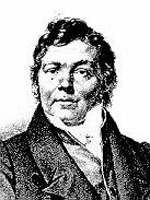
Rarely has a composer seemed so assured of immortality as Johann Nepomuk Hummel (1778–1837), so overrated in his own time, so underrated in ours. Born in Pressburg (Bratislava) just inside the Czech border on 14 November 1778, Hummel was a child prodigy who, when he was only eight, went to live and study with Mozart in Vienna for two years. Returning to the city in 1793 he had lessons in counterpoint and composition with Salieri and Clementi, and studied organ with Haydn. By his teens Hummel was rated as one of the top pianists of the day. His concert tours took him all over Europe (including England, Scotland, Poland and Russia). Among his friends and acquaintances were Beethoven (the two later fell out), Cramer, Dussek, Moscheles, Weber, Mendelssohn, Schumann and Chopin; he himself taught Hiller, Henselt, Pauer, Pixis, Thalberg and many other virtuosos of the succeeding generation.
As a keyboard improviser Hummel was held to be the equal of Beethoven, and a significant number of their contemporaries held him to be Beethoven’s equal as a composer as well. His piano works certainly had a remarkable influence on the young Romantics: Mendelssohn, Schumann and Liszt all revered him and Chopin was captivated by his music. It is hard to escape the similarities between the openings of Hummel’s A minor (1821) and Chopin’s E minor (1830) concertos, while Hummel’s B minor concerto (1819), a work frequently played by the young Liszt, contains some remarkable anticipations of the Polish composer. Hummel’s 24 Préludes, Op 67 (1815) and 24 Etudes, Op 125 (1828), both covering all the major and minor keys, starting with C major, were surely models for Chopin’s Opus 28 Préludes (1839) and Etudes, Opp 10 and 25 (1829–34), respectively. Of even greater importance and influence was Hummel’s Ausführliche theoretisch-practische Anweisung zum Piano-Forte-Spiel (‘A Complete Theoretical and Practical Course of Instruction on the Art of Playing the Piano Forte’); published in Vienna in 1828 in three volumes, it contains over 2200 technical exercises and musical examples (most of them a few measures in length). For the remainder of the nineteenth century it was regarded as the guide on fingering, playing of trills and related ornaments.
The New Grove lists over 175 compositions by Hummel comprising stage works, church music, orchestral works, piano and orchestra works, chamber music, a host of music for solo instruments with piano, and an impressive number of piano solos. Among his most popular pieces was his celebrated Septet which Czerny reported, when it was first heard in Vienna in about 1820, ‘created such a sensation by virtue of its novelty and brilliance that men would stop each other on the streets to talk about it as they would some great national event’.
Only forty years after his death, Hummel’s standing in the Pantheon had been eroded so far that the cloth-eared Edward Dannreuther (a pupil of Moscheles and the man who introduced the Liszt, Grieg and Tchaikovsky concertos to England) could write confidently of him: ‘Endowed with curiously little inventive power, rarely warm, and quite incapable of humour and passion, but fully equipped with every musical virtue that can be acquired by steady plodding, he appears expressly cut out for the hero of respectable mediocrity.’ Sixty or so years ago, distinguished commentators on the piano’s literature remained remarkably sniffy. Here is Albert Lockwood: ‘… it is interesting to turn his musty pages once in a while. They show an inventive, fluent, sophisticated, attitudinising, and somewhat shallow mind which planned compositions on a pretentious scale’ (Notes on the Literature of the Piano, University of Michigan Press, 1940). And Ernest Hutcheson: ‘Chopin seems in his teaching to have favoured the concertos above those of Beethoven. Together with the tawdry Bella Capricciosa and the surpassingly dull Piano Septet they have passed into the limbo of forgotten things’ (The Literature of the Piano, Hutchinson & Co, 1947).
Until well into the 1950s only two works by Hummel had ever been recorded: Emmy Destinn (in 1908) and Rosette Anday (1929) singing his Hallelujah; and the Rondo favori in E flat, Op 11, committed to shellac by Benno Moiseiwitsch, Lubka Kolessa, Ignaz Friedman, Galina Werschenka and, in an arrangement for violin and piano, Jascha Heifetz with Arpad Sandor.
from notes by Jeremy Nicholas © 2003
Rares ont été les compositeurs aussi certains de leur immortalité que Johann Nepomuk Hummel (1778–1837), une personnalité tellement sur-faite en son temps et tellement sous-estimée à notre époque. Né le 14 novembre 1778 à Presbourg (Bratislava) juste en deçà de la frontière tchèque, Hummel fut un enfant prodige qui, à peine âgé de huit ans, partit vivre à Vienne pendant deux années afin d’étudier auprès de Mozart. Il y revint en 1793 pour prendre des leçons de contrepoint et de composition avec Salieri et Clementi tout en étudiant l’orgue avec Haydn. Dans son adolescence, Hummel était considéré comme l’un des meilleurs pianistes de son époque. Ses tournées le menèrent dans toute l’Europe (notamment l’Angleterre, l’Ecosse, la Pologne et la Russie). Parmi ses amis et ses relations on comptait Beethoven (même si les deux se fâchèrent ensuite), Cramer, Dussek, Moscheles, Weber, Mendelssohn, Schumann et Chopin. Lui-même enseigna à Hiller, Henselt, Pauer, Pixis, Thalberg et bien d’autres virtuoses encore de la génération suivante.
Comme improvisateur au clavier, Hummel était tenu pour l’égal de Beethoven. Comme compositeur, un nombre significatif de musiciens le considérait même comme son égal. Ses œuvres pour le piano exercèrent certainement une influence remarquable sur les jeunes romantiques : Mendelssohn, Schumann et Liszt le révéraient, Chopin était captivé par sa musique. On peut d’ailleurs difficilement échapper aux similarité entre l’ouverture du Concerto en la mineur de Hummel (1821) et celui en mi mineur de Chopin (1830), alors que le Concerto en si mineur de Hummel (1819), une œuvre fréquemment jouée par le jeune Liszt, contient certaines anticipations remarquables du compositeur polonais. Les 24 Préludes opus 67 (1815) et les 24 Etudes opus 125 (1828) de Hummel couvrent à la fois les tonalités majeures et mineures à partir de do majeur. Il ne fait sans aucun doute que ces deux ouvrages servirent respectivement de modèles aux Préludes opus 28 (1839) et aux Etudes Opp. 10 et 25 (1829–34) de Chopin. D’une importance et d’une influence encore plus grandes fut l’Ausführliche theoretisch-practisch Anweisung zum Piano-Forte-Spiel [Un cours théorique et pratique complet pour instruire sur l’art de jouer du piano forte] de Hummel, un ouvrage pédagogique en trois volumes. Publié à Vienne en 1828, il contient plus de 2200 exercices techniques et exemples musicaux (généralement de quelques mesures). Pour le restant du 19e siècle, il fut considéré comme le guide du doigté, de l’exécution de trilles et ornements associés.
Le New Grove dresse une liste de 175 œuvres de Hummel comprenant des ouvrages pour la scène, de la musique liturgique, des compositions orchestrales, d’autres pour piano et orchestre, de la musique de chambre et une pléthore pour instruments solos avec accompagnement de piano, sans oublier un nombre impressionnant d’œuvres pour piano seul. Parmi ses œuvres les plus populaires figurent le célèbre Septuor qui, selon le récit que Czerny en fit lorsqu’il l’entendit à Vienne vers 1820, « créa une sensation telle par vertu de sa nouveauté et de son brio que les hommes s’arrêtaient dans les rues pour en parler comme s’il s’agissait d’un événement national ».
Environ quarante ans après sa mort, la position de Hummel au Panthéon était sérieusement érodée au point que Edward Dannreuther (un élève de Moscheles qui fit connaître les concertos de Liszt, Grieg et Tchaïkovsky en Angleterre) pouvait écrire avec assurance à son propos : « doté d’une puissance inventive curieusement ténue, rarement chaleureux et tout à fait incapable d’humour et de passion, mais complètement pourvu de toutes les vertus musicales qui peuvent être acquises à travers un labeur régulier, il semblait conçu expressément pour être le héros d’une médiocrité respectable. » Il y a environ soixante ans, les éminents commentateurs de la littérature de piano demeuraient remarquablement dédaigneux. Selon Albert Lockwood : « … Il est intéressant de tourner ses pages poussiéreuses de temps à autre. Elles illustrent un esprit inventif, conversant, sophistiqué, poseur et parfois creux qui concevait ses compositions sur une échelle prétentieuse » (Notes on the Literature of the Piano [Notes sur la littérature pour piano] University of Michigan Press, 1940). Et Ernest Hutcheson : « Chopin semble dans son enseignement avoir préféré ses concertos à ceux de Beethoven. Avec le clinquant Bella Capricciosa et l’incomparablement terne Septuor avec piano, ils sont passés dans les limbes des choses oubliées » (The literature of the Piano [La littérature pour piano] Hutchinson & Co, 1947).
Jusque dans les années 1950, seules deux œuvres de Hummel avaient été enregistrées : Emmy Destinn (en 1908) et Rosette Anday (1929) chantaient son Alléluia tandis que le Rondo favori en mi bémol majeur opus 11 avait été gravé sur disque de shellac par Benno Moiseivitsch, Lubka Kolessa, Ignaz Friedman, Glina Werschenka, et dans une version pour violon et piano, par Jasha Heifetz avec Arpad Sandor.
extrait des notes rédigées par Jeremy Nicholas © 2003
Français: Isabelle Battioni
Johann Nepomuk Hummel (1778–1837), der zu seiner Zeit stark überschätzt wurde und heutzutage sehr unterbewertet wird, war selbst derart von seiner Unsterblichkeit überzeugt, wie sonst kaum ein Komponist. Am 14. November 1778 wurde er im tschechischen Pressburg (Bratislava) geboren. Hummel war ein Wunderkind und zog schon im Alter von acht Jahren nach Wien, um dort zwei Jahre lang bei Mozart Unterricht zu nehmen. Im Jahre 1793 kehrte er in die Stadt zurück und studierte Kontrapunkt und Komposition bei Salieri und Clementi und nahm Orgelunterricht bei Haydn. Bereits als Jugendlicher galt Hummel als einer der besten Pianisten seiner Zeit. Seine Konzertreisen führten ihn quer durch Europa (unter anderem auch nach England, Schottland, Polen und Russland). Zu seinem Freundes- und Bekanntenkreis gehörten Beethoven (mit dem er sich später zerstritt), Cramer, Dussek, Moscheles, Weber, Mendelssohn, Schumann und Chopin; er selbst unterrichtete Hiller, Henselt, Pauer, Pixis, Thalberg und viele andere Virtuosen der folgenden Generation.
Als Improvisator am Klavier wurde er mit Beethoven gleichgestellt und viele Musiker hielten Beethoven und Hummel auch als Komponisten für ebenbürtig. Hummels Klavierwerke beeinflussten die jungen Romantiker zweifellos: Mendelssohn, Schumann und Liszt verehrten ihn und Chopin war von seiner Musik geradezu gefesselt. Die Ähnlichkeit der Anfänge von Hummels a-Moll Konzert (1821) und Chopins e-Moll Konzert (1830) ist kaum zu übersehen. Das h-Moll Konzert (1819) von Hummel wurde hingegen häufig von Liszt gespielt und antizipiert den polnischen Komponisten auf bemerkenswerte Weise. Hummels 24 Préludes, op. 67 (1815) und 24 Etudes, op. 125 (1828), die beide, von C-Dur ausgehend, alle Dur- und Molltonarten bedienen, waren sicherlich Inspirationsquellen für Chopins Préludes, op. 28 (1839) und Etudes, op. 10 und 25 (1829–34). Noch wichtiger und einflussreicher jedoch war Hummels dreibändige Ausführliche theoretisch-practische Anweisung zum Piano-Forte-Spiel, die 1828 in Wien veröffentlicht wurde und in der mehr als 2200 technische Übungen und Musikbeispiele aufgeführt sind (von denen die meisten jedoch nur einige Takte lang sind). Was Fingersatz und die Ausführung von Trillern und ähnlichen Verzierungen anbelangte, wurde sie zu dem Standardwerk des 19. Jahrhunderts.
Im New Grove sind mehr als 175 Kompositionen von Hummel verzeichnet, darunter Bühnenwerke, Kirchenmusik, Werke für Orchester und Klavier und Orchester, Kammermusik, viele Werke für Soloinstrumente mit Klavier und eine beachtliche Anzahl von Werken für Soloklavier. Zu seinen beliebtesten Stücken gehörte das populäre Septett, das Czerny zufolge nach der Uraufführung in Wien (ca. 1820) „aufgrund seiner Neuheit und Brillanz für eine solche Sensation sorgte, dass man sich auf der Straße daraufhin ansprach und darüber redete, als sei es ein großes nationales Ereignis“.
Bereits vierzig Jahre nach seinem Tod jedoch war Hummels Stellung im Pantheon schon so gesunken, dass der unmusikalische Edward Dannreuther (ein Schüler Moscheles’ und derjenige, der die Klavierkonzerte von Liszt, Grieg und Tschaikowsky in England vorgestellt hatte) selbstbewusst über ihn schreiben konnte: „Er verfügt über eine merkwürdig kleine Erfindungsgabe, ist selten warm und innig, zu Humor und Leidenschaft völlig unfähig, jedoch mit all jenen musikalischen Tugenden ausgestattet, die durch stetiges, zähes Arbeiten erreicht werden können: so erscheint er als maßgeschneiderter Held respektabler Mediokrität.“ Noch vor etwa sechzig Jahren äußerten sich namhafte Klaviermusik-Experten auffällig negativ über ihn. So zum Beispiel Albert Lockwood: „… es ist ganz interessant, seine staubigen Werke ab und zu durchzublättern. Sie bringen einen einfallsreichen, flüssigen, anspruchsvollen, anmaßenden und etwas oberflächlichen Geist zum Vorschein, der auf einem hochtrabenden Niveau komponierte“ (s. Notes on the Literature of the Piano, University of Michigan Press, 1940). Und Ernest Hutcheson: „Chopin scheint, wenn er unterrichtete, Hummels Konzerte den Konzerten von Beethoven vorgezogen zu haben. Zusammen mit dem geschmacklosen Bella Capricciosa und dem außerordentlich geistlosen Klavierseptett schweben sie nun in der Vergessenheit“ (s. The Literature of the Piano, Hutchinson & Co, 1947).
Bis in die 1950er Jahre hinein waren lediglich zwei Werke Hummels als Aufnahmen erhältlich: das Hallelujah mit Emmy Destinn (1908) und Rosette Anday (1929) und das Rondo favori in Es-Dur, op. 11, das mit Benno Moiseiwitsch, Lubka Kolessa, Ignaz Friedman, Galina Werschenka und, in einer Bearbeitung für Violine und Klavier, mit Jascha Heifetz und Arpad Sandor als Schellack-Platte gepresst wurde.
aus dem Begleittext von Jeremy Nicholas © 2003
Deutsch: Viola Scheffel