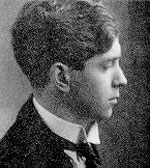
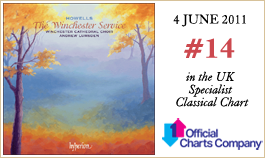
In the history of twentieth-century English music, the composer Herbert Howells (1892–1983) still presents something of an enigma. The youngest of eight children of a bankrupt builder in the Forest of Dean whose musical talent, spotted and nurtured by the local landed gentry, turned out to be musical genius; the articled pupil of a provincial cathedral organist who won a scholarship to study with Parry, Stanford and Wood at the Royal College of Music, and picked up most of that institution’s glittering prizes along the way; the promising young composer of chamber music, orchestral works and songs whose fluency was admired, whose handwriting was even envied and emulated, and of whom greatness was expected. At the beginning of the 1920s it seemed as if Howells was one of the golden boys of English music, destined to rank as one of this country’s leading composers, to be mentioned alongside Elgar, Vaughan Williams, Holst and Delius. Yet by the end of the 1930s all this promise seemed to have fizzled out. The great works were not flowing from Howells’ pen and he was beginning to be esteemed more as a teacher than as a creative artist.
Move forward to our own day, and it is not so much the earlier instrumental and orchestral music that we associate with Howells (though many of those early works have been revived to acclaim), but the extraordinary outpouring of church music that dominated his output after the Second World War, and on which his considerable reputation largely rests. As you would expect, there is a whole complex of reasons for this. Hyper-sensitivity to criticism was certainly part of it, as was Howells’ disinclination to promote his own music. Personal tragedy also played a part—the death of his son Michael from polio in 1935 was something that he never came to terms with—and so too did a fear of financial insecurity. His father’s bankruptcy and the social exclusion that resulted, together with a life-threatening illness in 1917 that forced Howells to give up his first job as sub-organist of Salisbury Cathedral (and the salary that went with it) were among the factors that made him reluctant to relinquish the teaching appointment at the Royal College of Music that he held well into his eighties, or to decline requests to examine or adjudicate. All of this activity paid the bills, but it left him with precious little time for composition.
But creative genius cannot be totally blocked or suppressed and perhaps it is not so surprising that in the end Howells’ creativity was channelled into church music. His potential in this area had been spotted early on in his career. Eric Milner-White, Dean of King’s College, Cambridge, and one of the Church of England’s more visionary priests, heard an early performance of A Spotless Rose in the college chapel in 1920 and immediately wrote to Howells to encourage him to do more for the liturgy of the Church of England. It was Milner-White again who, twenty-five years later, sowed the seed of an idea that bore fruit in the Collegium Regale settings made specially for King’s in the 1940s.
In the meantime, Howells had rediscovered the organ loft. During the Second World War he was acting organist of St John’s College, Cambridge, deputizing for Robin Orr who was on active service with the RAF, and he entered fully into the musical life both of the chapel and of the college. Howells’ relationship with St John’s was to last to the end of his life. Here he discovered that there was a need and a desire for new music in the Anglican liturgy, music of the highest quality that only someone of his ability could write, and music that would be sought after, welcomed and performed. Thus began the body of work for which Howells is best known and which is justly celebrated. But although the last thirty years of his working life saw him compose more than twenty settings of the Magnificat and Nunc dimittis, several Te Deums, communion settings and many anthems, it is on the frequent performance of a relatively small proportion of that total output that his reputation rests. It is in fact mainly the earlier music of the 1940s and ’50s, music that includes the Collegium Regale, Gloucester and St Paul’s settings, and the Four Anthems (including ‘Like as the hart’) that people think of when they think of Howells. These are the pieces that are regularly sung in cathedrals and college chapels. Relatively little of the music written in the 1960s and ’70s has achieved a place in the regular repertoire. Much of this may well be due to the music’s difficulty and the demands it places on tight rehearsal schedules.
from notes by Paul Andrews © 2011
Dans l’histoire de la musique anglaise du XXe siècle, Herbert Howells (1892–1983) demeure une manière d’énigme: fils d’un entrepreneur ruiné, dans la forêt de Dean, ce benjamin de huit enfants vit son talent musical (qui s’avéra être du génie) remarqué et encouragé par la noblesse terrienne; élève d’un organiste de cathédrale provincial, il décrocha une bourse pour étudier avec Parry, Stanford et Wood au Royal College of Music, dont il rafla au passage la plupart des prix prestigieux; prometteur compositeur dont on attendait de grandes choses, il signa des musiques de chambre, des œuvres orchestrales et des chants d’une aisance admirée, à la calligraphie même jalousée et imitée. Au début des années 1920, Howells semblait l’un des enfants prodiges de la musique anglaise, appelé à devenir l’un des grands compositeurs du pays aux côtés d’Elgar, de Vaughan Williams, de Holst et de Delius. Mais à la fin des années 1930, toutes ces attentes avaient été comme deçues: il ne produisit pas de grandes œuvres et devint davantage estimé comme professeur que comme créateur.
Aujourd’hui, nous n’associons pas tant Howells à ses premières partitions instrumentales et orchestrales (quoiqu’elles aient été largement ressuscitées avec succès) qu’à l’extraordinaire épanchement de musique liturgique qui domina sa production après la Seconde Guerre mondiale et qui fait l’essentiel de son immense réputation. Bien sûr, cet état d fait s’explique par tout un ensemble de circonstances comme, notamment, une hypersensibilité à la critique et un manque d’enthousiasme pour promouvoir sa musique. Sans oublier une tragédie personnelle—la mort de son fils Michael, emporté par la polio en 1935, fut une chose qu’il n’arriva jamais à accepter—et la crainte d’une précarité financière. La faillite paternelle et l’exclusion sociale qui s’ensuivit—associée à une maladie potentiellement mortelle qui, en 1917, le contraignit à abandonner son premier travail d’organiste remplaçant (et le salaire qui allait avec) à la cathédrale de Salisbury—concourent à expliquer pourquoi il répugna à quitter son poste de professeur au Royal College of Music, qu’il occupa jusqu’à quatre-vingts ans passés, et à refuser d’être examinateur ou juré. Toute cette activité payait les factures, mais elle lui laissa peu de temps précieux pour composer.
Mais le génie créatif est impossibe à arrêter, à éradiquer et, chose peut-être naturelle, sur la fin, la créativité de Howells se resserra sur la musique liturgique, un domaine où son potentiel avait été décelé dès le début de sa carrière. En 1920, Eric Milner-White, doyen du King’s College de Cambridge et prêtre parmi les plus visionnaire de l’Église anglicane, entendit A Spotless Rose dans la chapelle collégiale; immédiatement, il écrivit à Howells pour l’encourager à davantage œuvrer pour la liturgie anglicane. Et ce sera lui encore qui, vingt-cinq ans plus tard, fournira à Howells une idée qui germera dans les Collegium Regale conçus à l’intention du King’s, dans les années 1940.
Entre-temps, Howells avait redécouvert la tribune d’orgue. Durant la Seconde Guerre mondiale, il remplaça l’organiste de St John’s College (Cambridge), Robin Orr, parti servir dans la Royal Air Force, et intégra pleinement la vie musicale du collège et de la chapelle—une relation qui devait durer jusqu’à sa mort. Là, il découvrit combien la liturgie anglicane attendait une musique nouvelle, une musique de la plus haute tenue que seul quelqu’un de sa trempe pouvait écrire, une musique à même d’être prisée, saluée et jouée. Ainsi naquit le corpus d’œuvres, célèbre à juste titre, pour lequel Howells est le plus connu. Mais, même si les trente dernières années de sa vie active furent marquées par plus de vingt Magnificat et Nunc dimittis, plusieurs Te Deum, des chants de communion et maints anthems, c’est sur la fréquente exécution d’une part relativement modeste de ce corpus que repose sa réputation. En fait, quand les gens pensent à Howells, ils pensent surtout à sa musique des années 1940 et 1950, où figurent les Collegium Regale, les pièces pour Gloucester et Saint Paul, ainsi que les Four Anthems (dont «Like as the hart»)—toutes œuvres régulièrement chantées dans les cathédrales et les chapelles des collèges. Ses compositions des années 1960 et 1970 se sont assez rarement fait une place dans le répertoire courant, la faute, surtout, à leur difficulté et à leur exigence d’un calendrier serré en matière de répétition.
extrait des notes rédigées par Paul Andrews © 2011
Français: Hypérion
In der Geschichte der englischen Musik im 20. Jahrhundert ist die Figur des Komponisten Herbert Howells (1892–1983) immer noch etwas rätselhaft. Er war das jüngste von acht Kindern eines insolventen Handwerkers im Forest of Dean, dessen musikalisches Talent, das vom örtlichen Landadel erkannt und gefördert wurde, sich als genial entpuppte. Als Schüler wurde er in der Provinz von einem Kathedralorganisten ausgebildet und erhielt danach ein Stipendium für das Royal College of Music in London, um bei Parry, Stanford und Wood studieren zu können, wo er dann die meisten der glänzenden Preise dieser Einrichtung gewann. Er war ein vielversprechender junger Komponist von Kammermusik, Orchesterwerken und Liedern, deren Gewandtheit bewundert wurde, dessen Handschrift sogar nachgeahmt und ihm geneidet wurde und von dem Großartiges erwartet wurde. Zu Beginn der 1920er Jahre schien es, als sei Howells ein goldener Knabe der englischen Musik, dazu ausersehen, sich zu den führenden Komponisten des Landes zu gesellen und dasselbe Niveau wie Elgar, Vaughan Williams, Holst und Delius zu erreichen. Gegen Ende der Dreißigerjahre schienen sich diese Aussichten jedoch verflüchtigt zu haben. Es flossen keine großen Werke aus Howells’ Feder und er machte sich zusehends einen Namen als Lehrer anstatt als schöpferischer Künstler.
Heutzutage wird Howells nicht so sehr mit seinen früheren Instrumental- und Orchesterwerken in Verbindung gebracht (obwohl viele dieser Frühwerke inzwischen erfolgreich wiederbelebt worden sind), sondern mit seinem außerordentlichen Korpus an geistlichen Werken, die sein Schaffen nach dem Zweiten Weltkrieg dominierten und die hauptsächlich für seinen beachtlichen Ruf verantwortlich sind. Naturgemäß spielte hierbei eine ganze Reihe von Gründen eine Rolle. Eine Überempfindlichkeit gegenüber Kritik gehörte dazu, wie auch Howells’ Abneigung, seine eigene Musik voranzutreiben. Ein tragischer Vorfall in seinem Privatleben—den Tod seines Sohnes Michael, der 1935 an Polio starb, überwand er nie—sowie seine Angst vor finanzieller Unsicherheit, kamen ebenfalls hinzu. Aufgrund der Insolvenz seines Vaters und der damit zusammenhängenden sozialen Ausgrenzung, wie auch einer lebensbedrohlichen Krankheit, die ihn 1917 dazu zwang, seine erste Anstellung als stellvertretender Organist an der Kathedrale zu Salisbury (sowie das Gehalt, das er dafür bezog) aufzugeben, waren Gründe dafür, dass er sich dagegen sträubte, seine Lehrstelle am Royal College of Music (die er bis in seine Achtziger hinein behielt) aufzugeben und er kam auch stets Anfragen nach, Prüfungen abzunehmen oder Jurys beizuwohnen. Zwar gewährleisteten alle diese Tätigkeiten finanzielle Sicherheit, doch blieb ihm nebenher nur sehr wenig Zeit zum Komponieren.
Doch lässt sich ein schöpferisches Genie nicht völlig unterdrücken oder blockieren, so dass es vielleicht nicht überraschend ist, dass Howells Kreativität letztendlich in Richtung Kirchenmusik gelenkt wurde. Sein Potenzial auf diesem Gebiet war schon früh in seiner Laufbahn entdeckt worden. Eric Milner-White, der Dekan des King’s College in Cambridge und ein fortschrittlicher anglikanischer Priester, hörte 1920 eine frühe Aufführung von A Spotless Rose in der Kapelle des Colleges und schrieb umgehend an Howells und ermutigte ihn dazu, noch mehr für die anglikanische Liturgie zu komponieren. Es war wiederum Milner-White, der 25 Jahre später eine Idee säte, die in Form der Collegium Regale-Vertonungen aufging, die in den 40er Jahren speziell für das King’s College angefertigt wurden.
In der Zwischenzeit hatte Howells die Orgelempore wiederentdeckt. Während des Zweiten Weltkriegs vertrat er Robin Orr—der der britischen Luftwaffe diente—als amtierender Organist am St John’s College in Cambridge und trat dann völlig in das Musikleben sowohl der Kapelle als auch des Colleges ein. Howells’ Verbindung zu St John’s sollte bis zu seinem Lebensende erhalten bleiben. Hier stellte er fest, dass es Bedarf und Wunsch nach neuer Musik für die anglikanische Liturgie gab, Musik von höchster Qualität, die nur jemand mit seinen Fähigkeiten schreiben konnte, und Musik, die begehrt und willkommen sein und aufgeführt werden würde. So entstand das Korpus an Werken, für die Howells am bekanntesten und zu Recht berühmt ist. Doch obwohl er während der letzten 30 Jahre seines Berufslebens mehr als 20 Magnificat- und Nunc dimittis-Vertonungen, mehrere Te Deums, Communio-Vertonungen und viele Anthems vertonte, beruht sein Ruf auf regelmäßigen Aufführungen eines relativ kleinen Teils seines Oeuvres. Tatsächlich sind es die älteren Werke der 1940er und 50er Jahre, darunter das Collegium Regale, die Services für Gloucester und St Paul’s [es handelt sich dabei um einen Gottesdienst mit Chorgesang, wobei die musikalische Komposition bestimmter Liturgie-Bestandteile, ebenso wie der eigentliche Gottesdienst, als „service“ bezeichnet wird; Anm. d. Ü.] und die Four Anthems (einschließlich des „Like as the hart“), die zumeist mit Howells in Verbindung gebracht werden. Diese sind die Werke, die regelmäßig in Kathedralen und College-Kapellen gesungen werden. Von den Werken, die er in den 60er und 70er Jahren komponierte, haben nur relativ wenige einen Platz im regulären Repertoire errungen. Das mag wohl hauptsächlich daran liegen, dass die Musik schwierig ist und die begrenzte Probenzeit stark beansprucht.
aus dem Begleittext von Paul Andrews © 2011
Deutsch: Viola Scheffel