Hide player

Hyperion Records

Holst, Gustav (1874-1934)  

Gustav Holst

born: 21 September 1874
died: 25 May 1934
country: United Kingdom

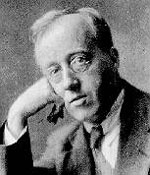
Gustav Holst, until nearly the end of the First World War known as ‘von Holst’, came from a refugee Latvian-Russian musical family that had arrived in England in the early nineteenth century and settled in Cheltenham. His great-grandfather had actually served at the Imperial Russian court. However, that had been over half a century before Holst’s birth, and in the 1880s and early 1890s the young Gustav was infused with the spirit of the Gloucestershire countryside, and as a teenager was organist or choirmaster at local churches, notably at Wyck Rissington and Bourton, and wrote music for local performance, particularly a well-received operetta, Landsdown Castle. We can imagine all too well the impact on an impressionable imagination of walking the stretch of hills between Wyck Rissington and Bourton-on-the-Water in all seasons, before the arrival of the petrol engine. One member of the Bourton Choral Society remembered a rehearsal of the choir in 1892 taken by Holst, who arrived carrying ‘an old-fashioned stable lantern which he had borrowed at Wyck Rissington to light him on the road to Bourton … and would catch the last train to Cheltenham’.

Holst’s father taught him the piano, violin and trombone, and the young musician went on to study with Stanford at the Royal College of Music from 1893 to 1898. But even when young he began to be troubled by neuritis in his right arm, which curtailed his keyboard skills. He was not well-off, unlike so many of his musical contemporaries, and he first earned his living as a professional trombone player, touring with the Carl Rosa Opera Company and later joining the Scottish Orchestra. This was of enormous value to him as a composer, as he gained a practical understanding of the orchestra from the inside, experience which characterized his flair and brilliance for orchestral writing throughout his life.

Becoming a school music teacher, he was appointed to the newly established St Paul’s Girls’ School in Hammersmith, going there in 1905, at first to teach singing, and remaining until 1934. So good were his relations with the school, and Frances Ralph Gray, the pioneering first High Mistress, that they soon built him a special sound-proofed room in which to compose. And it was at the school that he was surrounded by a team of able and willing young female admirers whose practical help in getting his music down on paper and copied, played a huge role in the evolution of The Planets in particular.

What is particularly notable, despite producing a large catalogue of music, is that Holst was in his forties before he achieved recognition—or even extensive performance—as a composer. Established after the First World War, particularly with The Planets, which became one of the most successful British orchestral works of all time, Holst’s mature career was cut short by his early death at the age of fifty-nine.

from notes by Lewis Foreman ©

Albums
Cover of 'Holst: Choral Ballets' (CDA66784)
Cover of 'Holst: The Evening Watch & other choral works' (CDH55170)
Cover of 'Holst: The Planets; Matthews: Pluto' (CDH55350)
Cover of 'Christmas at St John's Cambridge' (CDA67576)
Cover of 'Epiphany at St Paul's' (CDH55443)
Cover of 'Holst: Choral Symphony' (CDH55104)
Cover of 'Holst: Savitri' (CDH55042)
Cover of 'Holst: This have I done for my true love' (CDH55171)
Cover of 'Lie strewn the white flocks' (CDH55050)
Cover of 'Matthews: Pluto; Holst: The Planets' (CDH55350)
Cover of 'Panis angelicus' (CDA66669)
Cover of 'The English Anthem, Vol. 3' (CDA66618)
Cover of 'The English Hymn, Vol. 1 – Christ Triumphant' (CDP12101)
Cover of 'The Music of Westminster Cathedral' (WCC100)
Cover of 'The Power of Love' (CDA67888)
Cover of 'Music for Brass & Percussion' (CDA66189)
Alphabetical listing of all musical works
A Choral Fantasia, H177 Op 51 (Holst)
A Moorside Suite (Holst)
Ave Maria, H49 (Holst)
Bring us in good ale, H131 (Holst)
Choral Hymns from the Rig Veda. Group 3, H99 Op 26 No 3 (Holst)
Choral Symphony No 1, H155 Op 41 (Holst)
Diverus and Lazarus, H137 (Holst)
Four Old English Carols, H82 (Holst)
In youth is pleasure, H76 (Holst)
King Estmere, H70 (Holst)
Light leaves whisper, H20 (Holst)
Lullay my liking, H129 (Holst)
Lyric Movement, H191 (Holst)
Nunc dimittis, H127 (Holst)
O spiritual pilgrim, H188 (Holst)
Of one that is so fair and bright, H130 (Holst)
Savitri, H96 Op 25 (Holst)
Seven Partsongs, H162 Op 44 (Holst)
Six Choral Folksongs, H136 (Holst)
Six Choruses, H186 Op 52 (Holst)
Songs from The Princess, Op 20a (Holst)
Thaxted (Holst)
The Dream-City (Holst/Matthews)
The Evening Watch, H159 Op 43 No 1 (Holst)
The Golden Goose, H163 (Holst)
The Morning of the Year, H164 (Holst)
The Planets, H125 Op 32 (Holst)
The Planets, H125 Op 32 (Holst/Matthews)
This have I done for my true love, H128 (Holst)
Three Hymns for Chorus and Orchestra (Holst)
Twelve Songs, H174 (Holst)
Twelve Welsh Folk Songs, H183 (Holst)
Two Carols, H91 (Holst)
Two Eastern Pictures, H112 (Holst)
Two Psalms, H117 (Holst)
   English   Français   Deutsch
over £20 for 10% discount on whole order
over £40 for 15% discount on whole order
over £59 for 25% discount on whole order
over £200 for 35% discount on whole order
(P&P free on almost all orders.)
Your basket:
There are no items in your basket.
Use the Buy buttons across the site.

The following discounts will be applied for CD purchases:
ms'); ' %>