Hide player

Hyperion Records

Gurney, Ivor (1890-1937)  

Ivor Gurney

born: 28 August 1890
died: 26 December 1937
country: United Kingdom

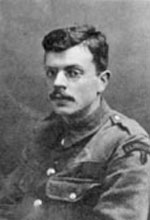
Ivor Bertie Gurney was born on 28 August 1890 at No 3 Queen Street, Gloucester—a house whose cramped quarters served both as home and workshop for his father’s tailoring business. Though the family lived in modest comfort, work inevitably took precedence over any pretensions to culture. It was therefore a singular stroke of good fortune that a local curate volunteered to stand as godfather at the boy’s christening. That curate, Alfred Hunter Cheesman, took his duties seriously and actively encouraged the young boy as he began to discover artistic gifts that inevitably estranged him from the rest of the Gurney family. He watched over him when he became a chorister of Gloucester Cathedral, allowed him the run of his extensive library and supported him when, in 1906, he enrolled as an articled pupil of the cathedral organist, Dr Herbert Brewer, thereby announcing his intention to make music his career. In 1911 an open scholarship of £40 per annum (plus a matching sum from Cheesman) enabled him to attend the Royal College of Music as a composition pupil of Sir Charles Stanford. In due course he obtained his diploma and had war not broken out in August 1914 would have begun to carve out a career. Instead, he immediately volunteered for army service—only to be turned down because of poor eyesight. In 1915, however, the army was less inclined to pick and choose. On 9 February he was drafted into the 2nd/5th Gloucesters Battalion. By May 1916 he was in France, serving as a private.

Letters from the trenches show that he endured the dangers and discomforts of front-line service with remarkable cheerfulness. Buoyed up by the comradeship of his fellow soldiers, he seems to have felt a sense of ‘belonging’—of no longer being an odd man out. He was, if anything, at peace with himself for the first time in his life. He was even able to write songs in the trenches—though poetry now became a more practical means of self-expression. Severn and Somme, his first volume of poems, was published in 1917. But in that same year, on Good Friday, he sustained a minor bullet wound, and in September, on or about the 10th, inhaled poisoned gas. The actual amount seems not to have been large, but when added to a degree of shell-shock it was sufficient to invalid him back to Blighty. Deprived of the comradeship of the trenches, his progress under the care of the various war hospitals in which he was placed was marked by increasing mood swings, culminating in June 1918 with a serious threat of suicide. Even so, he was soon deemed fit enough to be discharged and in October 1918 he returned to Gloucester to pick up the threads of his career as best he could.

He resumed his scholarship at the Royal College in January 1919, studying this time under Vaughan Williams. Songs and poems (a second volume, War’s Embers, appeared in 1919) now began to pour from him—but, even as they did, his behaviour became increasingly erratic and unpredictable, so that in April 1921 he was obliged to abandon his studies. He returned to Gloucester, but was unable to hold down any job, musical or otherwise. His behaviour now grew so alarming that in September 1922 his family felt obliged to commit him, for his own safety, to the care of the local asylum. In December he was transferred to the City of London Mental Hospital, Dartford, Kent, where his ability to compose music, or write poems, gradually crumbled into incoherence. He died, from pulmonary tuberculosis, on 26 December 1937.

Much ink has been spilled over the nature and cause of Ivor Gurney’s mental deterioration. At first it was thought that his wartime experiences were wholly to blame. Later commentators favoured an inherited tendency to paranoid schizophrenia as the explanation. The most recent research, however, suggests that the origin of his decline is most likely to be found in a sexual indiscretion during his student days, almost exactly mirroring the circumstances that brought about the premature deaths of Schubert, Schumann, and Hugo Wolf!

from notes by Michael Hurd © 2001

Albums
'Gurney: Ludlow and Teme & The Western Playland; Vaughan Williams: On Wenlock Edge' (CDH55187)
'Gurney: Severn Meadows & other songs' (CDA67243)
'English Orchestral Songs' (CDA67065)
'On this Island' (CDA67227)
'Songs by Finzi & his friends' (CDH55084)
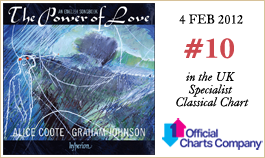
'The Power of Love' (CDA67888)
'Vaughan Williams: On Wenlock Edge; Gurney: Ludlow and Teme & The Western Playland' (CDH55187)
'War's Embers' (CDH55237)
'War's Embers' (CDD22026)
'A Treasury of English Song' (HYP30)
A Treasury of English Song
This album is not yet available for download HYP30  Super-budget price sampler — Deleted  
Complete works available for download
A cradle song Paul Agnew (tenor), Julius Drake (piano)
All night under the moon Paul Agnew (tenor), Julius Drake (piano)
An Epitaph Paul Agnew (tenor), Julius Drake (piano)
Black Stitchel Michael George (bass), Clifford Benson (piano)
Blaweary Michael George (bass), Clifford Benson (piano)
Bread and cherries Paul Agnew (tenor), Julius Drake (piano)
By a bierside Paul Agnew (tenor), Julius Drake (piano)
By a bierside Michael George (bass), Clifford Benson (piano)
By a bierside Christopher Maltman (baritone), BBC Scottish Symphony Orchestra, Martyn Brabbins (conductor)
Cathleen ni Houlihan Michael George (bass), Clifford Benson (piano)
Desire in Spring Paul Agnew (tenor), Julius Drake (piano)
Down by the salley gardens Paul Agnew (tenor), Julius Drake (piano)
Down by the salley gardens Stephen Roberts (baritone), Clifford Benson (piano)
Edward, Edward Michael George (bass), Clifford Benson (piano)
Epitaph in Old Mode Paul Agnew (tenor), Julius Drake (piano)
Epitaph in Old Mode Michael George (bass), Clifford Benson (piano)
Even such is time Paul Agnew (tenor), Julius Drake (piano)
Even such is time Michael George (bass), Clifford Benson (piano)
Five Elizabethan Songs Martyn Hill (tenor), Clifford Benson (piano)
Five Elizabethan Songs Paul Agnew (tenor), Julius Drake (piano)
Goodnight to the meadow Alice Coote (mezzo-soprano), Graham Johnson (piano)
Goodnight to the meadow Michael George (bass), Clifford Benson (piano)
Ha'nacker Mill Paul Agnew (tenor), Julius Drake (piano)
Ha'nacker Mill Michael George (bass), Clifford Benson (piano)
Hawk and Buckle Stephen Roberts (baritone), Clifford Benson (piano)
Hawk and Buckle Michael George (bass), Clifford Benson (piano)
I will go with my father a-ploughing Paul Agnew (tenor), Julius Drake (piano)
In Flanders Paul Agnew (tenor), Julius Drake (piano)
In Flanders Stephen Varcoe (baritone), Clifford Benson (piano)
In Flanders Christopher Maltman (baritone), BBC Scottish Symphony Orchestra, Martyn Brabbins (conductor)
Last hours Michael George (bass), Clifford Benson (piano)
Ludlow and Teme Adrian Thompson (tenor), Delmé Quartet, Iain Burnside (piano)
Most Holy Night Paul Agnew (tenor), Julius Drake (piano)
Most Holy Night Michael George (bass), Clifford Benson (piano)
Nine of the clock Paul Agnew (tenor), Julius Drake (piano)
Nine of the clock Michael George (bass), Clifford Benson (piano)
Severn Meadows Paul Agnew (tenor), Julius Drake (piano)
Severn Meadows Stephen Varcoe (baritone), Clifford Benson (piano)
The boat is chafing Alice Coote (mezzo-soprano), Graham Johnson (piano)
The boat is chafing Michael George (bass), Clifford Benson (piano)
The cloths of heaven Paul Agnew (tenor), Julius Drake (piano)
The fiddler of Dooney Michael George (bass), Clifford Benson (piano)
The fields are full Paul Agnew (tenor), Julius Drake (piano)
The folly of being comforted Paul Agnew (tenor), Julius Drake (piano)
The night of Trafalgar Michael George (bass), Clifford Benson (piano)
The ship Michael George (bass), Clifford Benson (piano)
The singer Paul Agnew (tenor), Julius Drake (piano)
The twa corbies Michael George (bass), Clifford Benson (piano)
The Western Playland Stephen Varcoe (baritone), Delmé Quartet, Iain Burnside (piano)
Thou didst delight my eyes Michael George (bass), Clifford Benson (piano)
To violets Michael George (bass), Clifford Benson (piano)
You are my sky Paul Agnew (tenor), Julius Drake (piano)
You are my sky Michael George (bass), Clifford Benson (piano)
GERALD FINZI  (1901-1956)
Only the wanderer, Op 13b No 4 Ian Partridge (tenor), Clifford Benson (piano)
Alphabetical listing of all musical works
A cradle song (Gurney)
All night under the moon (Gurney)
An Epitaph (Gurney)
Black Stitchel (Gurney)
Blaweary (Gurney)
Bread and cherries (Gurney)
By a bierside (Gurney)
By a bierside (Gurney/Howells)
Cathleen ni Houlihan (Gurney)
Desire in Spring (Gurney)
Down by the salley gardens (Gurney)
Edward, Edward (Gurney)
Epitaph in Old Mode (Gurney)
Even such is time (Gurney)
Five Elizabethan Songs (Gurney)
Five Elizabethan Songs (Gurney/Finzi)
Goodnight to the meadow (Gurney)
Ha'nacker Mill (Gurney)
Hawk and Buckle (Gurney)
I will go with my father a-ploughing (Gurney)
In Flanders (Gurney)
In Flanders (Gurney/Howells)
Last hours (Gurney)
Lights Out (Gurney)
Ludlow and Teme (Gurney)
Most Holy Night (Gurney)
Nine of the clock (Gurney)
Only the wanderer, Op 13b No 4 (Finzi)
Severn Meadows (Gurney)
The boat is chafing (Gurney)
The cloths of heaven (Gurney)
The fiddler of Dooney (Gurney)
The fields are full (Gurney)
The folly of being comforted (Gurney)
The night of Trafalgar (Gurney)
The ship (Gurney)
The singer (Gurney)
The twa corbies (Gurney)
The Western Playland (Gurney)
Thou didst delight my eyes (Gurney)
To violets (Gurney)
You are my sky (Gurney)
Show: MP3 FLAC ALAC
   English   Français   Deutsch
over £20 for 10% discount on whole order
over £40 for 15% discount on whole order
over £59 for 25% discount on whole order
over £200 for 35% discount on whole order
(P&P free on almost all orders.)
Your basket:
There are no items in your basket.
Use the Buy buttons across the site.

The following discounts will be applied for CD purchases:
ms'); ' %>