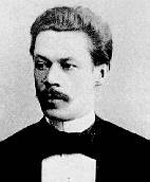
Anton Stepanovich Arensky was a brief but brilliant meteor over the musical world of pre-revolutionary Russia. Although he died at the early age of forty-five he composed, in a career that spanned barely twenty-five years, three operas, a ballet, several orchestral works (including a piano concerto, a violin concerto and two symphonies), chamber music, many songs, and a large body of choral work, in addition to an extensive, though now sadly neglected, catalogue of works for his own instrument, the piano. He never married and, for the most part, the details of his personal life are unrecorded, yet he moved in the highest musical circles and was accorded many honours in his lifetime.
Arensky was born in Novgorod on 12 July 1861 and became one of the most successful composers and pianists in nineteenth-century Russia. Initially taught by his mother, an amateur pianist, and encouraged by his father, a doctor and keen cellist, he entered the St Petersburg Conservatory in 1879.
His composition teacher at the Conservatory was Rimsky-Korsakov who must have been impressed by the young Arensky as he entrusted his student with a share of preparing his vocal score of The Snow Maiden. In later years he revised his opinion of Arensky’s talent, and unfortunately it is Rimsky-Korsakov’s cold pronouncement in his memoirs My Musical Life that ‘he will soon be forgotten’ which has lent ammunition to Arensky’s detractors. In fact Arensky was enormously successful and respected in his lifetime and it was probably this very success which soured relations with his former teacher.
Nineteenth-century musical Russia was full of cliques and intrigues. In 1883 Balakirev took over the immensely important and well-paid post of Director of the Imperial Chapel, and Rimsky-Korsakov became his assistant. Meanwhile the young Arensky, having graduated with the Gold Medal for composition from St Petersburg Conservatory, was appointed Professor of Harmony and Counterpoint at the Moscow Conservatory. All might have been well had not Rimsky-Korsakov later fallen out with Balakirev. Rimsky-Korsakov became so unhappy at the Imperial Chapel that in November 1893 he resigned his position. The stress of working with the overbearing Balakirev had made him depressed and ill; also his daughter had died only a few months before, and this period marked one of the lowest points in the composer’s life. The following year, however, Balakirev retired as Director and on his recommendation Arensky was offered the post. It is from this point that Rimsky-Korsakov seems to have decided that Arensky was second-rate!
Whilst a Professor at the Moscow Conservatory Arensky won many friends and admirers, notably Tchaikovsky and Taneyev. Among his pupils were Rachmaninov, Scriabin, Glière and Gretchaninov. As a composer he had a steady stream of successes, most notably his first opera Son na Volge (A Dream on the Volga). His appointment as Director of the Imperial Chapel lent him prestige, and on his retirement in 1901 he was given a special pension of 6000 roubles a year. The rest of his life was spent composing and giving concerts; he was successful as both a pianist and a conductor. For most of his life he had been a heavy drinker and gambler. Finally, in February 1906, with his health undermined, he contracted tuberculosis and died at Terioki in Finland.
from notes by Stephen Coombs © 1994
Anton Stepanovich Arensky passa comme une météore aussi brillante que brève au-dessus du monde musical de la Russie pré-révolution-naire. Bien qu’il mourût à l’age précoce de quarante-cinq ans, il composa, en une carrière de vingt-cinq ans à peine, trois opéras, un ballet, plusieurs œuvres pour orchestre (qui incluent un concerto pour piano, un concerto pour violon et deux symphonies) de la musique de chambre, beaucoup de chansons et un large corps d’œuvres chorales, qui s’ajoutent à une liste de compositions pour son propre instrument, le piano. Il ne se maria jamais et et sa vie privée nous est largement inconnue, bien qu’il fréquentât les cercles musicaux les plus distingués et qu’il fut couvert d’honneurs pendant sa vie.
Arensky naquit à Novgorod le 12 juillet 1861. Il devait devenir l’un des compositeurs et des pianistes les plus en vogue de la Russie du dix-neuvième siècle. Eduqué d’abord par sa mère, qui était pianiste amateur, et encouragé par son père, docteur et violoncelliste passionné, il entra au Conservatoire de Saint-Pétersbourg en 1879.
Son professeur de composition au Conservatoire fut Rimsky-Korsakov, qui pensait sans doute hautement de son élève, puisqu’il lui confia une partie de la préparation de sa partition chorale de Snegourotchka. Plus tard, Rimky-Korsakov changea d’opinion au sujet du talent d’Arensky, et c’est malheureusement son froid commentaitre, «On l’oubliera bientôt», dans ses mémoires, Ma vie musicale, qui a servi les détracteurs d’Arensky. De fait, Arensky jouit d’un succès et d’un prestige énormes de son vivant, et c’est peut-être ce succès même qui aigrit ses rapports avec son ancien professeur.
Le monde musical de la Russie au dix-neuvième siècle était plein de côteries et d’intrigues. En 1883, Balakirev succéda au poste de Directeur de la Chapelle Impériale, une position très élevée et lucrative, et Rimsky-Korsakov devint son assistant. Pendant ce temps le jeune Arensky, ayant obtenu son diplôme et la médaille d’or de composition musicale du Conservatoire de Saint-Pétersbourg, fut nommé Professeur d’Harmonie et Contrepoint au Conservatoire de Moscou. Tout aurait pu aller pour le mieux si Rimsky-Korsakov ne s’était pas brouillé avec Balakirev. Rimsky-Korsakov devint si mécontent à la Chapelle Impériale qu’en novembre 1893 il démissiona de son poste. La difficulté de travailler avec l’impérieux Balakirev le rendit malade et déprimé. Sa fille était morte à peine cinq mois auparavant, et ce fut là une des périodes les plus sombres de la vie de Rimsky-Korsakov. L’année suivante, cependant, Balakirev lui-même prit sa retraite et son poste fut offert à Arensky sur sa recommandation. C’est à cette époque que, semblerait-il, Rimsky-Korsakov retira son admiration à Arensky.
Une fois Professeur au Conservatoire de Moscou, Arensky se fit beaucoup d’amis et d’admirateurs, notamment Tchaikovsky et Taneyev. Il eut parmi ses élèves Rachmaninov, Scriabine, Glière et Gretchaninov. En tant que compositeur, il avait déjà connu une série de succès, tout particulièrement son premier opéra Son na Volge (Un rêve sur la Volga). Sa nomination au poste de Directeur de la Chapelle Impériale l’auréola de prestige, et lorsqu’il prit sa retraite en 1901, il reçut une pension spéciale de 6000 roubles par an. Il passa le reste de sa vie à composer et à donner des concerts, et connut le succès à la fois comme pianiste et comme directeur d’orchestre. Mais il avait eu un penchant précoce pour l’alcool et le jeu et, sa santé fragile cédant à la tuberculose, il mourut en février 1901 à Terioki, en Finlande.
extrait des notes rédigées par Stephen Coombs © 1994
Français: Luisella Simpson
Anton Stepanowitsch Arensky leuchtete zwar nur kurz, aber dafür um so heller am Firmament der musikalischen Welt des vorrevolutionären Rußlands auf. Obwohl er schon im Alter von nur fünfundvierzig Jahren starb, hatte er bereits in einer knapp fünfundzwanzigjährigen Laufbahn drei Opern, ein Ballett, mehrere Orchesterwerke (darunter ein Klavierkonzert, ein Geigenkonzert und zwei Sinfonien), Kammermusik, zahlreiche Lieder, ein umfangreiches Oeuvre von Choralwerken, sowie ein heute leider vernachlässigtes Repertoire von Stücken für Klavier, seinem eigentlichen Instrument, komponiert. Er hat nie geheiratet; die wenigsten persönlichen Einzelheiten seines Lebens wurden je aufgezeichnet, und dennoch hielt er sich in den einflußreichsten musikalischen Kreisen auf und wurde mehrfach mit hohen Ehren bedacht.
Arensky wurde am 12. Juli 1861 in Novgorod geboren und entwickelte sich später zu einem der erfolgreichsten russischen Komponisten und Pianisten des neunzehnten Jahrhunderts. Er war zunächst von seiner Mutter, einer Amateurin des Klavierspiels, unterrichtet und von seinem Vater, einem Arzt und begeisterten Cellisten, unterstützt worden bevor er 1879 an das Konservatorium in St. Petersburg ging.
Dort war Rimsky-Korssakoff sein Kompositionslehrer, der von dem jungen Mann sehr beeindruckt gewesen sein muß, da er ihm einen Teil der Chorpartitur des Schneeflöcken zur Bearbeitung anvertraute. Später änderte er jedoch seine Meinung über Arenskys Begabung, wodurch dessen Gegner sich durch die kühle Aussagen in den Memoiren von Rimsky-Korssakoff Chronik meines musikalischen Lebens, er werde „bald in Vergessenheit geraten“, unterstützt sahen. Tatsächlich war Arensky jedoch sein ganzes Leben lang äußerst erfolgreich und genoß großen Respekt. Wahrscheinlich war es eben dieser Erfolg, der wesentlich dazu beitrug, das Verhältnis zu seinem ehemaligen Lehrer zu verschlechtern.
Das Leben im Rußland des neunzehnten Jahrhunderts war überhaupt stark von Cliquen und Intrigen geprägt. 1883 wurde Balakirew zum Direktor der Kaiserlichen Kappelle ernannt—dieser Posten war von größter Bedeutung und außerdem gut bezahlt. Rimsky-Korssakoff wurde sein Assistent. Mittlerweile war der junge Arensky zum Professor für Harmonie und Kontrapunkt am Moskauer Konservatorium avanciert, nachdem er das Petersburger Konservatorium mit der Goldmedaille für Komposition absolviert hatte. Es hätte auch alles gut gehen können, wenn sich Rimsky-Korssakoff nicht später mit Balakirew überworfen hätte. Rimsky-Korssakoff war an der Kaiserlichen Kappelle so unglücklich daß er im November 1893 kündigte. Die Belastung der Arbeit mit dem herrischen Balakirew führte zu Depressionen und Krankheit; außerdem war seine Tochter vor wenigen Monaten gestorben, sodaß diese Zeit einen Tiefpunkt für den Komponisten war. Im folgenden Jahr trat Balakirew jedoch selber in den Ruhestand und die Position wurde auf seine Empfehlung hin Arensky angeboten. Diese Tatsache scheint Rimsky-Korsakoff bewegt zu haben, Arensky fortan als zweitrangigen Künstler abzutun.
Während seiner Professur am Moskauer Konservatorium schloß Arensky viele Freundschaften und gewann eine Menge Verehrer, worunter er Tschaikowsky und Taneyew zählen durfte. Seine Schüler waren unter anderem Rachmaninow, Skrjabin, Glière und Gretschaninow. Auch als Komponist genoß er eine Reihe großer Erfolge, da vor allem seine erste Oper Son na Volge (Ein Traum auf der Wolga) reüssierte. Die Ernennung zum Direktor der Kaiserlichen Kappelle brachte ihm Ansehen und führte bei seiner Pensionierung zu einer besonderen jährlichen Rente von 6000 Rubeln. Er verbrachte den Rest seines Lebens mit Komposition und Konzertauftritten und war als Pianist und Dirigent gleichermaßen erfolgreich. Er hatte allerdings auch einen Großteil seines Lebens als Alkoholiker und Spieler vertan und starb 1906 in sehr angezehrtem Gesundheitszustand an Tuberkulose im finnischen Terioki.
aus dem Begleittext von Stephen Coombs © 1994
Deutsch: Robert Claus