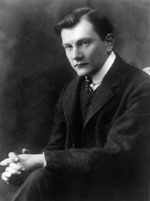
The name of Ernest Dohnányi (born Hungary, 1877, died USA, 1960) hardly rings a bell today except in Hungary. Even those who remember him are likely to be familiar with only one of his works, his
Variations on a Nursery Song for piano and orchestra (1914). His stage works, orchestral compositions including symphonies, concerti etc., vocal compositions such as the
Stabat mater (1953), as well as his numerous chamber music and piano compositions are now seldom played. One would search long to find his music in any concert programme. Yet at his peak he was one of the most versatile and influential musicians of his time. His youthful Piano Quintet (1895) was so highly esteemed by Brahms at its first performance that he personally made arrangements for it to be performed in the Vienna Tonkünstlerverein.
It was his cellist father and Károly Förstner, a cathedral organist, who gave Dohnányi his first lessons in piano and theory. Having completed his secondary education he went to Budapest from his native town Pozsony (now Bratislava) in order to study at the Budapest Academy. (His school friend Béla Bartók followed suit.) There he studied piano with Thomán and composition with Koessler. After receiving his diploma in 1897 he spent the summer of the same year with composer and pianist Eugen d’Albert (Glasgow-born but of German-French-Italian origins) to whom, in 1898, Dohnányi eventually dedicated his First Piano Concerto, a work which received the Bösendorfer Prize.
It was in 1898 that Hans Richter, one of the leading conductors of the time, asked Dohnányi to join him in London as the soloist in Beethoven’s Fourth Piano Concerto. This tour, during which he gave 32 concerts in two months, established him as a concert pianist of the first rank. His interpretative power in the Austro-German classics, above all Mozart, Beethoven and Schubert, as well as his dedicated involvement in chamber music playing, made him one of the most sought-after performers of his time. His pianistic ability combined with improvisational panache was such that when later his memory deserted him from time to time it was a popular pleasure among connoisseurs to hear how he wriggled out of trouble by stylishly improvising passages that led back to the original notes. It was Richter, too, who in 1902 introduced Dohnányi’s Symphony No 1 in D minor, in Manchester.
The great violinist Joachim, friend of Brahms, was also friend to Dohnányi whom he invited to Berlin where the composer was offered a professorship at the Hochshule in 1905. Ten years there were paralleled and followed by various prestigious appointments not only at the Budapest Academy but also as chief conductor of the Philharmonic Orchestra, a position which he held for the best part of 25 years from 1919. In 1931 he became the musical director of Hungarian Radio where he worked until 1944. With all these involvements he found time not only for composition but also for selecting concert repertoire with the aim of raising musical standards in Hungary. He gave as many as 120 performances there in one year. No wonder that Bartók saw in him a leading provider of Hungarian musical life. For four decades Dohnányi dominated the musical scene in his home country and beyond. It is to Dohnányi’s credit that although his musical temperament and outlook were very different from Bartók’s and Kodály’s he put his phenomenal performing ability to their service. In fact he recognised Bartók’s genius well before others and gave him practical support while his own countrymen were predominantly hostile. His long-standing relationship with America made him a welcome refugee when, after a few years stay in Austria (1944-1948), he decided to leave Europe for the New World. There he indefatigably continued his musical activities, not only in his capacity as pianist/composer-in- residence at Florida State University, but also as a touring performer. One of his last concerts was in 1956 at the Edinburgh Festival. Working to the very end of his life, he died during a recording session at the age of 83.
from notes by Otto Karolyi © 1993
Le nom d’Ernst Dohnányi (né en Hongrie en 1877 et mort aux Etats-Unis en 1960) n’évoque aujourd’hui pas grand-chose au delà des frontières de la Hongrie. Même ceux qui se souviennent de lui ne connaissent généralement qu’une seule de ses œuvres, ses
Variations sur «Ah, vous dirai-je maman» pour piano et orchestre (1914). De nos jour, ses pièces pour la scène, ses compositions orchestrales (parmi lesquelles des symphonies, des concertos, etc.), ses compositions vocales comme son
Stabat mater (1953), et ses nombreuses pièces de piano et de musique de chambre sont rarement jouées. Il faut chercher longtemps avant de trouver sa musique dans un programme de concert. Il s’imposa pourtant comme l’un des musiciens les plus talentueux et les plus influents de son temps. Brahms fut si impressionné par son quintette pour piano (une œuvre de jeunesse écrite en 1895) lors de sa première représentation qu’il veilla en personne à ce qu’il soit exécuté au Tonkünstlerverein de Vienne.
Ce furent son père, un violoncelliste, et Károly Förstner, un organiste de cathédrale, qui lui donnèrent ses premières leçons de piano et de théorie. Une fois ses études secondaires achevées, il quitta sa ville natale de Pozsony (aujourd’hui Bratislava) pour aller étudier au conservatoire de Budapest. (Son camarade d’école Béla Bartók en fit de même). Il y étudia le piano avec Thomán et la composition avec Koessler. Après avoir reçu son diplôme en 1897, il passa l’été de la même année en compagnie du compositeur et pianiste Eugen d’Albert (né à Glasgow mais d’origine germano-franco-italienne), à qui Dohnániy devait dédier son Premier concerto pour piano en 1898, une œuvre récompensée du prix Bösendorfer.
C’est en 1898 que Hans Richter, l’un des plus grands chefs d’orchestre de l’époque, invita Dohnányi à aller le rejoindre à Londres en tant que soliste pour interpréter le Quatrième concerto pour piano de Beethoven. Cette tournée, durant laquelle il donna trente-deux concerts en deux mois, établit sa réputation de pianiste de concert de premier plan. Sa puissance d’interprétation des grandes œuvres classiques du répertoire austro-allemand, en particulier celles de Mozart, Beethoven et Schubert, ainsi que son profond intérêt pour la musique de chambre, en firent l’un des solistes les plus demandés de son époque. Tels étaient ses talents pianistiques et son panache dans l’improvisation que lorsque sa mémoire commença à l’abandonner, ce devint une joie pour les connaisseurs de l’écouter se sortir d’affaire en improvisant d’élégants passages pour revenir aux notes originales. Ce fut encore Richter qui présenta la Première symphonie en ré mineur de Dohnányi à Manchester en 1902.
Le grand violoniste Joachim, un ami de Brahms, s’était également lié d’amitié avec Dohnányi, qu’il invita à Berlin où le compositeur se vit offrir un poste de professeur à la Hochshule en 1905. Il devait y rester dix ans, pendant et après lesquels il occupa d’autres postes prestigieux, non seulement au conservatoire de Budapest, mais aussi, à partir de 1919, en tant que chef attitré de l’orchestre philharmonique, qu’il dirigea pendant près de 25 ans. En 1931, il fut nommé directeur musical de la radio hongroise, où il travailla jusqu’en 1944. Malgré toutes ces fonctions, il trouva le temps non seulement de composer, mais encore de concevoir un répertoire de concert ayant pour objectif d’élever le niveau musical en Hongrie. Il y donna jusqu’à 120 représentations en une seule année. Il est donc peu surprenant que Bartók ait vu en lui l’un des principaux chefs de file de la vie musicale hongroise. Pendant quatre décennies, Dohnányi domina la scène musicale nationale et internationale. Bien que son approche et sa conception de la musique fussent très différentes de celles de Bartók ou de Kodály, Dohnányi eut le mérite de mettre ses formidables talents d’interprète à leur service. Il sut en effet reconnaître le génie de Bartók bien avant d’autres, et lui offrit un soutien pratique alors que ses propres compatriotes lui étaient encore hostiles. L’attirance qu’il avait toujours exprimée vis-à-vis de l’Amérique lui valut d’y être cordialement accueilli en tant que réfugié lorsqu’il décida, au terme d’un séjour de plusieurs années en Autriche (de 1944 à 1948), de quitter l’Europe pour gagner le Nouveau Monde. Il y poursuivit inlassablement ses activités musicales, non seulement en sa qualité de pianiste/compositeur résident de Florida State University, mais aussi en tant que concertiste. Il donna l’un de ses derniers concerts au festival international d’Edimbourg en 1956. Travaillant jusqu’à la fin de sa vie, il mourut pendant une session d’enregistrement à l’âge de 83 ans.
extrait des notes rédigées par Otto Karolyi © 1993
Français: Jean-Paul Metzger
Der Name Ernst Dohnányi (1877 in Ungarn geboren, 1960 in den USA gestorben) ist heute kaum noch bekannt außer in Ungarn. Selbst diejenigen, die sich seiner entsinnen, kennen wahrscheinlich nur eines seiner Werke, seine
Variationen eines Kinderliedes für Klavier und Orchester (1914). Seine Bühnenwerke, Kompositionen für Orchester einschließlich Sinfonien, Konzerten usw., vokale Kompositionen wie z.B.
Stabat mater (1953) sowie seine zahlreichen Kammermusik- und Klavierkompositionen werden heute nur noch selten gespielt. Man müßte lange suchen, um seine Musik in irgendeinem Konzertprogramm zu finden. Dennoch war er zu seiner Glanzzeit einer der vielseitigsten und einflußreichsten Musiker seiner Zeit. Sein jugendliches Klavierquintett (1895) wurde bei seiner ersten Aufführung derart hoch von Brahms geschätzt, daß er persönlich dafür sorgte, daß es im Wiener Tonkünstlerverein gespielt wurde.
Es war sein Vater, ein Cellist, und Károly Förstner, ein Domorganist, die ihm die ersten Klavier- und Theoriestunden gaben. Nach seiner Schulausbildung verließ er seine Heimatstadt Pozsony (heute Bratislava) und ging nach Budapest, um dort an der Akademie zu studieren. (Sein Schulfreund Béla Bartók folgte seinem Beispiel.) Hier studierte er Klavier unter Thomán und Komposition unter Koessler. Nachdem er 1897 sein Diplom erhielt, verbrachte er den Sommer desselben Jahres mit dem Komponisten und Pianisten Eugen d’Albert (in Glasgow geboren, jedoch deutsch-französischitalienischer Abstammung), dem er 1898 schließlich sein Erstes Klavierkonzert widmete, ein Werk, das den Bösendorfer Preis gewann.
Es war im Jahre 1898, als Hans Richter, einer der führenden Dirigenten der damaligen Zeit, Dohnányi bat, als Solist in Beethovens Viertem Klavierkonzert zum ihm nach London zu kommen. Diese Gastspielreise, während der er 32 Konzerte innerhalb von 2 Monaten gab, etablierte ihn als einen Konzertpianisten ersten Ranges. Seine interpretative Fähigkeit bei den österreichisch-deutschen Klassikern, vor allem Mozart, Beethoven und Schubert, ebenso wie seine Hingebung zur Kammermusik, machten ihn zu einem der begehrtesten Künstler seiner Zeit. Sein pianistisches Können verbunden mit einem improvisatorischen Elan war derat, daß, als ihn später sein Erinnerungsvermögen zeitweise verließ, es ein beliebtes Vergnügen seitens der Kennern war, zu hören, wie er sich aus solchen Schwierigkeiten durch elegantes Improvisieren von Passagen herauswand, die ihn zu den Originalnoten zurückführten. Es war gleichfalls Richter, der 1902 Dohnányis Sinfonie Nr. 1 in d-Moll in Manchester vorstellte.
Der große Violinist Joachim, ein Freund Brahms’, war ebenfalls mit Dohnányi befreundet und lud ihn nach Berlin ein, wo dem Komponisten 1905 eine Professur an der Hochschule angeboten wurde. Seine zehn Jahre dort waren vergleichbar mit anschließenden verschiedenen hochgeschätzten Ernennungen nicht nur zur Akademie in Budapest, sondern auch als Hauptdirigent des Philharmonischen Orchesters, eine Position, die er für den größten Teil von 25 Jahren von 1919 an innehielt. 1931 wurde er Musikdirektor beim ungarischen Rundfunk, wo er bis 1944 arbeitete. Trotz all dieser Engagements fand er dennoch Zeit nicht nur zum Komponieren, sondern auch zum Auswählen von Konzertrepertoires, mit dem Ziel, das musikalische Niveau in Ungarn zu heben. Er gab mindestens 120 Konzerte dort in einem Jahr. Kein Wunder, daß Bartók in ihm einen führenden Erschaffer des musikalischen Lebens in Ungarn sah. Vier Jahrzehnte lang beherrschte Dohnányi die musikalische Szene in seinem Heimatland und darüber hinaus. Es spricht für Dohnányi, daß, obgleich sich sein musikalisches Talent und seine Einstellung stark von denen Bartóks und Kodálys unterschieden, er ihnen seine phenomenale Vorführungsfähigkeit zu Diensten stellte. Er war es, zum Beispiel, der Bartóks Schöpferkraft weit vor den anderen erkannte und ihm praktische Unterstützung gab, während ihm seine eigenen Landsleute überwiegend feindlich gegenüberstanden. Seine langjährigen Beziehungen zu Amerika ermöglichten es ihm, dort als Flüchtling willkommen geheißen zu werden, nachdem er einige Jahre in Österreich (1944–1948) verbracht hatte und sich entschloß, Europa zugunsten der Neuen Welt zu verlassen. Dort fuhr er unermüdlich mit seinen musikalischen Aktivitäten fort, nicht nur in seiner Kapazität als ansässiger Pianist/Komponist an der Staatsuniversität von Florida, sondern auch als ein reisender Künstler. Eines seiner letzten Konzerte fand 1956 bei den Festspielen in Edinburgh statt. Er arbeitete bis zum allerletzten Moment seines Lebens und starb während einer Aufnahme im Alter von 83 Jahren.
aus dem Begleittext von Otto Karolyi © 1993
Deutsch: Gunhild Thompson