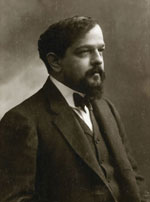
Claude-Achille Debussy was born above a china shop owned by his father. The date was 22 August 1862; the place was Saint-Germain-en-Laye—some twenty kilometres from Paris. There were no musicians in the family. His father Manuel had been in the military, and married a seamstress, Victorine Manoury. There was an uncle who moved to Manchester in 1872 and who taught music, but Debussy never met him or his three English cousins. As a boy he was called Claude. During his adolescence he switched to Achille, even going as far as signing his name Achille de Bussy. When he was thirty he reverted to Claude, and stuck with it.
His childhood was troubled and Debussy himself never spoke of it, while admitting that he hadn’t forgotten anything. When Claude was five the family moved to Paris, where his father became a travelling salesman. After the outbreak of the Franco-Prussian War in 1870 Manuel joined the National Guard. When the Commune was defeated he was sentenced to four years in prison, but only served one—an incident that was covered up in Debussy’s lifetime. His mother didn’t care much for bringing up children, and left the job mostly to her husband’s sister, Clémentine. Claude in fact never went to school—something he never quite overcame. His spelling remained faulty until the end.
The family moved house four times in five years, and they were always broke. Manuel Debussy (‘the old vagabond’, as his son later called him) did occasionally take his son to hear the operettas of Offenbach (which Debussy loved all his life) but decided that Claude was to be a sailor. In 1870 a pregnant Victorine took her children to Cannes where they stayed with Clémentine and her friend, the banker Achille-Antoine Arosa. It was there that Debussy received his first piano lessons, paid for by Arosa, with a certain Jean Cerutti (who seems to have been more of a violinist than a pianist). They returned to Paris the following year, in 1871, and took a small apartment in the Rue Pigalle. Manuel, while in a prison camp, made the acquaintance of Charles de Sivry, whose mother, Antoinette Mauté, was a piano teacher from whom Debussy took lessons. Although her claim to be a student of Chopin was probably far-fetched, Debussy’s did acquire his love for Chopin’s music from her. More importantly, perhaps, she was the mother-in-law of the poet Paul Verlaine, who wrote La bonne chanson for her daughter, Mathilde. She looked after her young pupil with great affection—something which Debussy later in life remembered with gratitude.
It was after only a few months of her tuition, at the age of eleven, that the gifted boy took the entrance exam at the Paris Conservatoire, and passed. His classmates later recalled that when he turned up for it he was wearing a sailor’s cap with a tassel. Debussy spent the next eleven years trying to be himself within an institution that didn’t want him to be anything of the sort. He started off by intending to prove himself as a pianist, but this didn’t work out as planned, much to the chagrin of his parents. He probably had a very personal idea of how the classical repertoire should be played. We know that Ambroise Thomas, the Director, very much disliked his interpretation of the F minor Prelude from Book II of Bach’s Well-Tempered Clavier, saying that he had the presumptuousness to consider it a piece of music rather than just a simple exercise. His teacher, Marmontel, appreciated his gifts and predicted a great future for the boy who had ‘a true temperament of an artist’. He won certificates for playing Chopin’s Piano Concerto No 2 before he was twelve, and for one of the Ballades a year later. But despite his attempts, he never received a Premier Prix in piano. Perhaps his aversion to competitions accounted for his lack of success.
In the harmony class of Émile Durand, which he entered when he was fifteen, things were not much better. When Debussy refused to follow the rules, Durand would purposely keep his homework for the end of the class and then ravage it with corrections. There’s a story that once, when the teacher was getting ready to leave the room, Debussy went to the piano and brought forth cascades of his favourite chords, much to the delight of the students. Durand slammed the lid on his fingers. Twenty-five years later Debussy, who by then had revolutionized the language of music, admitted that he ‘didn’t do much in harmony class’.
He did finally get a Premier Prix in piano accompaniment and this allowed him to enter the composition class of Ernest Guiraud when he was eighteen. However, two other events from that same year were important to his formation. The first was an invitation from Nadezhda von Meck, the Russian businesswoman most famous for her friendship with and patronage of Tchaikovsky, to spend the summer with her family as piano teacher and accompanist. This he did three years in a row, forming a great attachment to them (and almost marrying one of the daughters). Madame von Meck called him ‘my little pianist’ and nicknamed him Bussyk, sending one of his compositions to Tchaikovsky for his opinion. (He found it very nice but lacking in unity.) Debussy travelled all over Europe with them, and of course stayed in Moscow where he became familiar with the Russian School. All of this opened his eyes to the wider world.
The second event was his meeting with the amateur singer Blanche-Adélaïde Vasnier—a married woman thirteen years his senior. She attended a singing class where Debussy was the accompanist—a job he had taken on to earn some money. He soon became a daily visitor to the Vasnier household where a room and piano were put at his disposal, living there more than with his parents. And of course he fell desperately in love. His first important compositions were the songs he dedicated to Madame Vasnier and with which he made his debut as a composer.
Debussy got along well with his composition professor, who socialized with his students outside of class, even playing billiards with them. In 1883 he competed for the famous Prix de Rome but was unsuccessful. He tried again the following year, and while waiting for the results on a bridge overlooking the Seine, a friend tapped him on the shoulder and said: ‘You got the prize!’. Debussy writes that at this moment ‘… my heart sank! I saw clearly the irritations and worries the smallest official position brings in its wake.’ As Jean Barraqué wrote in his excellent biography of the composer: ‘Every hindrance, every obligation was not only intolerable to him but undermined his vital forces. His pauses, his lazing around, his dreams—all were an integral part of his creativity. He wanted to decide at each instant what to do with his life.’
His years at the Villa Médicis in Rome, where the winners of the prize were sent, were for him a drag. He hated the place. He managed to escape several times (once meeting Mme Vanier in Dieppe without her husband’s knowledge) and finally left before the three years were up. Back in Paris, he was given a cold reception by the Vasniers (remarkably the husband had stayed a close friend and confidant throughout the affair with his wife), no doubt partly due to their disapproval of his leaving Rome. The subsequent ‘période bohème’ saw him frequenting cafés, travelling to Bayreuth to hear the operas of Wagner (paid for by a friend), hearing Javanese gamelan music at the Exposition Universelle in 1889, and frequenting the literary milieu—especially that of the symbolist poets. He didn’t get too involved with musical establishments. When asked to be a witness at a friend’s wedding, he wrote his profession in the register as ‘gardener’.
Compositions now started to be published. It is interesting to see that, although a pianist, the greatest advances in his early works were in the field of song (as seen in his beautiful Ariettes oubliées, for instance, to poems by Verlaine). They are much more advanced than his piano pieces of the same period. The latter include the Deux Arabesques, Danse, and the Suite bergamasque.
from notes by Angela Hewitt © 2012
Claude-Achille Debussy naquit le 22 août 1862, au-dessus d’un magasin de faïence que possédait son père, à Saint-Germain-en-Laye, à une vingtaine de kilomètres de Paris. Il n’y avait aucun musicien dans la famille. Son père Manuel avait été militaire et avait épousé une couturière, Victorine Manoury. Il y avait un oncle qui s’était installé à Manchester en 1872 et qui enseignait la musique, mais Debussy ne le rencontra jamais, pas plus que ses trois cousins anglais. Dans son enfance, il s’appelait Claude. Au cours de son adolescence, il passa à Achille, allant même jusqu’à signer Achille de Bussy. À l’âge de trente ans, il reprit le prénom de Claude et s’y tint.
Son enfance fut agitée mais Debussy n’en a lui-même jamais parlé, tout en admettant qu’il n’avait rien oublié. Claude avait cinq ans lorsque sa famille s’installa à Paris, où son père devint voyageur de commerce. En 1870, lorsqu’éclata la guerre entre la France et la Prusse, Manuel s’engagea dans la Garde nationale. À la défaite des communards, il fut condamné à quatre ans de prison, mais n’en fit qu’un—incident qui fut étouffé du vivant de Debussy. Sa mère ne s’intéressait guère à l’éducation de ses enfants et confia cette tâche en majeure partie à la sœur de son mari, Clémentine. En fait, Claude n’alla jamais à l’école—ce qu’il ne parvint jamais à vraiment surmonter. Son orthographe s’en ressentit jusqu’à la fin de sa vie.
La famille déménagea quatre fois en cinq ans et était toujours à court d’argent. Manuel Debussy («le vieux galvaudeux» comme son fils devait l’appeler plus tard) emmenait parfois celui-ci écouter des opérettes d’Offenbach (que Debussy aima toute sa vie durant), mais il décida que Claude devait être marin. En 1870, Victorine enceinte conduisit ses enfants à Cannes où ils restèrent avec Clémentine et son ami, le banquier Achille-Antoine Arosa. C’est là que Debussy reçut ses premières leçons de piano d’un certain Jean Cerutti (qui semble avoir été davantage violoniste que pianiste), leçons payées par Arosa. Ils rentrèrent à Paris l’année suivante, en 1871, et prirent un petit appartement rue Pigalle. En prison, Manuel fit la connaissance de Charles de Sivry dont la mère, Antoinette Mauté, était professeur de piano et donna des leçons à Debussy. Elle se prétendait élève de Chopin, ce qui est sans doute tiré par les cheveux, mais c’est elle qui transmit à Debussy son amour pour la musique de Chopin. Peut-être plus important encore, elle était la belle-mère du poète Paul Verlaine, qui écrivit La bonne chanson pour sa fille Mathilde. Elle s’occupa de son jeune élève avec beaucoup d’affection—ce dont Debussy allait se souvenir par la suite avec gratitude.
Après quelques mois seulement de travail avec elle, à l’âge de onze ans, l’enfant très doué passa avec succès l’examen d’entrée au Conservatoire de Paris. Ses camarades de classe se souvinrent par la suite qu’il portait alors un béret de marin à pompon. Debussy passa les onze années suivantes à essayer d’être lui-même au sein d’une institution qui ne voulait rien de tel. Il commença par vouloir faire ses preuves comme pianiste sans parvenir au résultat escompté, au grand dépit de ses parents. Il avait sans doute une idée très personnelle de la façon dont il fallait jouer le répertoire classique. On sait que le directeur du Conservatoire, Ambroise Thomas, détesta son interprétation du Prélude en fa mineur du Livre II du Clavier bien tempéré de Bach, disant qu’il avait l’audace de le considérer comme un morceau de musique et non comme un simple exercice. Son professeur, Marmontel, appréciait ses dons et prédit «beaucoup d’avenir» à ce jeune garçon doté d’un «véritable tempérament d’artiste». Il n’avait pas encore douze ans lorsqu’il obtint des accessits en jouant le Concerto pour piano nº 2 de Chopin et un an plus tard l’une des Ballades. Mais malgré ses tentatives, il ne reçut jamais un premier prix de piano. Son aversion pour les concours explique peut-être son manque de réussite.
Dans la classe d’harmonie d’Émile Durand, où il entra à l’âge de quinze ans, les choses n’allèrent guère mieux. Lorsque Debussy refusait de suivre les règles, Durand gardait intentionnellement ses devoirs pour la fin de la classe puis les criblait de corrections. On raconte qu’un jour, alors que le professeur s’apprêtait à quitter la salle, Debussy se mit au piano et fit jaillir des cascades de ses accords préférés, au grand plaisir des étudiants. Durand ferma brutalement le couvercle sur ses doigts. Vingt-cinq ans plus tard, Debussy, qui avait alors révolutionné le langage de la musique, admit: «Je n’ai pas fait grand-chose en classe d’harmonie.»
Il obtint finalement un premier prix d’accompagnement au piano qui lui permit d’entrer dans la classe de composition d’Ernest Guiraud à l’âge de dix-huit ans. Néanmoins, deux autres événements survenus la même année jouèrent un rôle important pour sa formation. Le premier fut une invitation de Nadejda von Meck, cette femme d’affaires russe très célèbre pour l’amitié et la protection qu’elle prodigua à Tchaïkovski. Elle engagea Debussy à passer l’été avec sa famille comme professeur de piano et accompagnateur. Il tint ce rôle pendant trois années consécutives et s’attacha beaucoup à eux (il faillit épouser l’une de ses filles). Madame von Meck l’appelait «mon petit pianiste» et le surnommait «Bussyk»; elle envoya l’une de ses compositions à Tchaïkovski pour avoir son avis (il la trouva très belle mais manquant d’unité). Debussy voyagea avec eux dans toute l’Europe et séjourna bien sûr à Moscou, où il se familiarisa avec l’École russe. Tout cela ouvrit ses yeux sur un monde plus vaste.
Le deuxième événement fut sa rencontre avec la chanteuse amateur Blanche-Adélaïde Vasnier—une femme mariée de treize ans son aînée. Elle suivait les cours de chant dont Debussy était l’accompagnateur—emploi qu’il avait accepté pour gagner sa vie. Il devint vite un habitué au quotidien de l’appartement des Vasnier où une pièce et un piano furent mis à sa disposition; il y vécut davantage que chez ses parents. Et bien sûr il tomba éperdument amoureux. Ses premières œuvres importantes furent les mélodies qu’il dédia à Madame Vasnier et avec lesquelles il fit ses débuts de compositeur.
Debussy s’entendit bien avec son professeur de composition qui fréquentait ses étudiants en dehors de la classe, allant même jusqu’à jouer au billard avec eux. En 1883, Debussy concourut pour le célèbre prix de Rome mais échoua. L’année suivante, alors qu’il attendait les résultats sur un pont sur la Seine, un ami lui tapa sur l’épaule et lui dit: «Vous avez le prix!». Debussy écrit qu’à ce moment: «… toute ma joie tomba! Je vis nettement les ennuis, les tracas qu’apporte fatalement le moindre titre officiel.» Comme l’écrivit Jean Barraqué dans son excellente biographie du compositeur: «Toute entrave, toute obligation lui étaient non seulement intolérables mais portaient atteinte à ses forces vives les plus secrètes. Ses pauses, ses flâneries, ses rêveries faisaient partie intégrante de sa création. II voulait être le maître d’une vie dont il puisse décider à chaque instant.»
Ses années à la Villa Médicis à Rome, où étaient envoyés les lauréats du prix, furent pour lui une corvée. Il détestait le lieu. Il réussit à s’échapper à plusieurs reprises (rencontrant une fois Mme Vasnier à Dieppe à l’insu de son mari) et partit finalement avant que les trois ans ne soient révolus. De retour à Paris, il reçut un accueil assez froid chez les Vasnier (aussi étonnant que cela puisse paraître, le mari était resté un ami proche et un confident tout au long de la liaison avec sa femme), en partie sans doute parce qu’ils désapprouvaient son départ de Rome. La «période bohème» qui suivit le vit fréquenter les cafés, aller à Bayreuth écouter les opéras de Wagner (grâce à l’aide financière d’un ami), écouter de la musique de gamelan javanais à l’Exposition universelle de 1889 et fréquenter le milieu littéraire—notamment les poètes symbolistes. Il resta relativement à l’écart de l’establishment musical. Lorsqu’on lui demanda d’être témoin au mariage d’un ami, il nota comme profession «jardinier» sur le registre.
Ses compositions commençaient alors à être publiées. Il est intéressant de voir que, tout pianiste qu’il soit, dans ses premières œuvres, ses plus grands progrès se situent dans le domaine de la mélodie (comme en témoignent par exemple ses magnifiques Ariettes oubliées sur des poèmes de Verlaine). Elles sont bien supérieures à ses pièces pour piano de la même époque. Ces dernières comprennent les Deux Arabesques, la Danse et la Suite bergamasque.
extrait des notes rédigées par Angela Hewitt © 2012
Français: Marie-Stella Pâris
Claude-Achille Debussy wurde am 22. August 1862 über einem Porzellanladen, der seinem Vater gehörte, in Saint-Germain-en-Laye geboren, etwa 20 Kilometer westlich von Paris. In seiner Familie gab es keine Musiker. Sein Vater Manuel war beim Militär gewesen und hatte dann eine Näherin, Victorine Manoury, geheiratet. Es gab einen Onkel, der 1872 nach Manchester zog und Musik unterrichtete; Debussy lernte jedoch weder ihn noch seine drei englischen Cousins jemals kennen. Als Kind wurde er Claude genannt. Als Heranwachsender entschied er sich für Achille und unterschrieb sogar als Achille de Bussy. Im Alter von 30 Jahren wechselte er zu Claude zurück und blieb dann auch dabei.
Er hatte wohl eine schwierige Kindheit, über die er aber nie sprach; nichtsdestoweniger muss sie ihm immer gegenwärtig geblieben sein. Als Claude fünf Jahre alt war, zog die Familie nach Paris, wo sein Vater als Handlungsreisender arbeitete. Nach dem Ausbruch des Deutsch-Französischen Kriegs 1870 trat Manuel der Nationalgarde bei. Nach der Niederschlagung der Commune wurde ihm eine Gefängnisstrafe von vier Jahren auferlegt, von der er jedoch nur ein Jahr verbüßte—dieser Vorfall wurde zu Debussys Lebzeiten vertuscht. Seine Mutter war an der Kindererziehung nicht sonderlich interessiert und überließ diese Aufgabe hauptsächlich der Schwester ihres Mannes, Clémentine. Claude besuchte auch nie eine Schule—eine Tatsache, die er nie ganz überwinden konnte. Seine Rechtschreibung war bis zum Schluss fehlerhaft.
Die Familie zog in fünf Jahren viermal um und war stets mittellos. Manuel Debussy („der alte Tunichtgut“, wie sein Sohn ihn später nannte) ging mit seinem Sohn gelegentlich zu Aufführungen der Operetten Offenbachs (die Debussy zeit seines Lebens sehr schätzte), wollte jedoch, dass Claude Matrose würde. 1870 reiste die zu dem Zeitpunkt schwangere Victorine mit ihren Kindern nach Cannes, wo sie bei Clémentine und deren Freund, dem Bankier Achille-Antoine Arosa, wohnten. Hier erhielt Debussy seinen ersten Klavierunterricht—den Arosa finanzierte—bei einem gewissen Jean Cerutti (der offenbar eher Geiger als Pianist war). Im folgenden Jahr, 1871, kehrten sie nach Paris zurück und zogen in eine kleine Wohnung in der Rue Pigalle. Manuel hatte während seines Gefängnisaufenthalts Charles de Sivry kennengelernt, dessen Mutter, Antoinette Mauté, Klavierlehrerin war, bei der Debussy Stunden nahm. Obwohl ihre Behauptung, eine Schülerin Chopins gewesen zu sein, wohl etwas weithergeholt war, lernte Debussy durch sie die Musik Chopins schätzen. Vielleicht noch wichtiger war allerdings die Tatsache, dass sie die Schwiegermutter des Dichters Paul Verlaine war, der für ihre Tochter Mathilde La bonne chanson schrieb. Sie kümmerte sich mit besonderer Zuwendung um ihren jungen Schüler, woran Debussy sich später mit großer Dankbarkeit erinnerte.
Im Alter von 11 Jahren, nach nur wenigen Monaten des Unterrichts bei ihr, trat der begabte Knabe zur Aufnahmeprüfung beim Pariser Conservatoire an—und bestand sie. Seine Klassenkameraden berichteten später, dass er dazu mit einer Matrosenmütze samt Quaste erschienen war. Während der nächsten elf Jahre versuchte Debussy, in einer Institution sich selbst treu zu bleiben, wo das Gegenteil erwartet wurde. Es begann damit, dass er sich als Pianist beweisen wollte, ihm dies jedoch, sehr zur Enttäuschung seiner Eltern, nicht so gelang wie erhofft. Er hatte wahrscheinlich sehr individuelle Vorstellungen davon, wie das klassische Repertoire zu spielen sei. Es ist bekannt, dass dem Direktor, Ambroise Thomas, seine Interpretation des f-Moll Präludiums aus Teil II des Wohltemperierten Klaviers von Bach sehr missfiel, was er damit begründete, dass Debussy die Überheblichkeit besäße, es wie ein Musikstück aufzufassen anstatt es als schlichte Übung zu spielen. Sein Lehrer, Marmontel, schätzte sein Talent und sagte dem Knaben, der „ein wahres Künstlertemperament“ habe, eine bedeutende Zukunft voraus. Noch vor seinem 12. Geburtstag gewann er einen Preis für seine Interpretation des 2. Klavierkonzerts von Chopin und ein Jahr später wurde sein Spiel der Balladen ausgezeichnet. Trotz seiner Bemühungen wurde ihm im Fach Klavier aber nie ein Premier Prix verliehen. Vielleicht war seine Abneigung gegenüber Wettbewerben der Grund für den ausbleibenden Erfolg.
In der Harmonieklasse von Émile Durand, in die er im Alter von 15 Jahren kam, trat keine wesentliche Besserung der Lage ein. Wenn Debussy sich nicht an die Regeln hielt, behielt Durand seine Hausarbeit bis zum Ende der Stunde zurück, um sich dann mit verheerenden Korrekturen darauf zu stürzen. Einer Anekdote zufolge setzte Debussy sich einmal ans Klavier, kurz bevor der Lehrer den Raum verließ, und brachte, sehr zum Vergnügen seiner Kommilitonen, Kaskaden von seinen Lieblingsakkorden hervor. Durand knallte ihm den Klavierdeckel auf die Finger. 25 Jahre später gab Debussy, der in der Zwischenzeit die musikalische Sprache revolutioniert hatte, zu, dass er „in der Harmonieklasse nichts weiter Bemerkenswertes gemacht“ hätte.
Schließlich gewann er einen Premier Prix in Klavierbegleitung, woraufhin er im Alter von 18 Jahren der Kompositionsklasse von Ernest Guiraud beitreten konnte. Doch trugen sich noch im selben Jahr zwei weitere Ereignisse zu, die ihn in seiner Entwicklung wesentlich prägen sollten. Das erste war eine Einladung von Nadeschda von Meck, der russischen Geschäftsfrau, die in erster Linie als Freundin und Gönnerin Tschaikowskys bekannt ist, den Sommer mit ihrer Familie als Klavierlehrer und Begleiter zu verbringen. Das tat er drei Jahre hintereinander und entwickelte eine große Zuneigung zu der Familie (und heiratete fast eine der Töchter). Frau von Meck nannte ihn „meinen kleinen Pianisten“, gab ihm den Spitznamen „Bussyk“ und schickte ihm eine Komposition Tschaikowskys mit der Bitte um seine Meinung. (Er fand sie schön, doch fehle es ihr an Einheitlichkeit.) Debussy reiste mit der Familie durch ganz Europa und hielt sich natürlich auch in Moskau auf, wo er mit der Russischen Schule in Berührung kam. All dies erweiterte enorm seinen Horizont.
Das zweite Ereignis war seine Begegnung mit der Laiensängerin Blanche-Adélaïde Vasnier—eine verheiratete Frau, die 13 Jahre älter war als er. Sie hatte die Gesangsklasse besucht, bei der Debussy begleitete—eine Stelle, die er zum Geldverdienen angenommen hatte. Er hielt sich bald täglich im Vasnier-Haushalt auf, wo ihm ein Zimmer und ein Klavier zur Verfügung standen, und lebte dort mehr als bei seinen Eltern. Und natürlich verliebte er sich Hals über Kopf. Seine ersten wichtigen Kompositionen waren die Lieder, die er Madame Vasnier widmete und mit denen er sein Debüt als Komponist machte.
Debussy verstand sich gut mit seinem Kompositionsprofessor, der auch außerhalb des Unterrichts mit seinen Studenten verkehrte und sogar Billard mit ihnen spielte. 1883 nahm Debussy an dem Wettbewerb um den berühmten Prix de Rome teil, war jedoch nicht erfolgreich. Als er im darauffolgenden Jahr auf das Ergebnis wartete und auf einer Seine-Brücke stand, klopfte ihm ein Freund auf die Schulter und sagte: „Sie haben den Preis!“. In dem Moment, schreibt Debussy, sank sein Mut: „Ich sah deutlich die Unannehmlichkeiten, die Scherereien, die ein noch so geringer offizieller Titel fatalerweise mit sich bringt.“ Jean Barraqué schrieb in seiner hervorragenden Biographie des Komponisten: „Jedes Hindernis, jede Verpflichtung waren ihm nicht nur unerträglich, sondern beeinträchtigten seine geheimsten Lebenskräfte. Seine Pausen, sein Umherschlendern, seine Träumereien waren integrale Bestandteile seiner Kreativität. Er wollte in jedem Augenblick sein Leben selbst bestimmen.“
Seine Jahre in der Villa Medici in Rom, wo die Preisträger untergebracht wurden, waren ihm eine Bürde—er fühlte sich dort äußerst unwohl. Es gelang ihm mehrmals, zu entfliehen (einmal traf er Mme Vasnier in Dieppe, ohne das Wissen ihres Ehemanns) und verließ Rom, bevor die drei Jahre dort um waren. Zurück in Paris wurde er von den Vasniers sehr kühl empfangen (bemerkenswerterweise war M. Vasnier ein enger Freund und Vertrauter Debussys während der Affäre mit seiner Frau geblieben), wohl hauptsächlich deshalb, weil er Rom verfrüht verlassen hatte. Während der darauffolgenden „période bohème“ hielt Debussy sich häufig in Cafés auf, reiste nach Bayreuth um die Opern Wagners zu hören (was von einem Freund finanziert wurde), hörte javanische Gamelanmusik bei der Pariser Weltausstellung im Jahre 1889 und frequentierte das literarische Milieu—besonders das der symbolischen Dichter. An den Musikzirkeln war er nicht sonderlich interessiert. Als er gebeten wurde, bei der Hochzeit eines Freundes als Trauzeuge zu fungieren, gab er im Urkundenbuch als Beruf „Gärtner“ an.
Seine Kompositionen wurden nun zusehends publiziert. Es ist interessant zu beobachten, dass er, obwohl er Pianist war, im Bereich des Lieds am erfolgreichsten war (wie etwa in seinen wunderschönen Ariettes oubliées auf Gedichte von Verlaine deutlich wird). Diese Werke sind deutlich fortgeschrittener als seine Klavierwerke aus derselben Zeit. Zu den letzteren gehören etwa die Deux Arabesques, Danse und die Suite bergamasque.
aus dem Begleittext von Angela Hewitt © 2012
Deutsch: Viola Scheffel