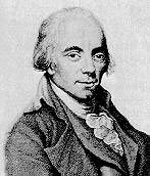
Muzio Clementi (1752–1832) was born into a family of modest means in Rome. When he was fourteen years of age, a visiting Englishman returning from his ‘grand tour’, Sir Peter Beckford, cousin of the novelist William Beckford, took young Clementi with him back to his country estate in Dorset. (Beckford later explained that he had ‘bought him from his father for seven years’.) In this rather isolated place, just north of Blandford Forum, Clementi became a kind of one-person musical establishment. He performed for Beckford’s guests, began to compose, and spent long hours refining the keyboard technique that was one day to be legendary. When the seven years were up he moved to London, which was to be his home base essentially for the rest of his life. He presently became an accompanist at the King’s Theatre, began to publish his earliest keyboard music, and prepared for European tours that occupied most of the years 1780–85. In Paris he apparently played for Queen Marie Antoinette, and in Vienna he and Mozart engaged in a famous ‘piano contest’ staged by the Emperor Joseph II for the entertainment of his guests. Thereafter Clementi spent some months teaching in Lyon, where his attempted elopement with a piano student ended unhappily: the highly placed father put a stop to such an undesirable marriage and Clementi became something of an object lesson in the lowly status of musicians in respectable late eighteenth-century European society.
From 1785 to 1802 Clementi remained in London, participating in the most robust musical life of any city in the world. In 1791 the London Morning Chronicle exclaimed:
So many public Concerts, private Concerts, Operas, Balls, and Music Meetings, as are cut out for the Winter, and such a shoal of eminent performers as are imported from the Continent, will render a motto from Shakespeare’s Tempest highly appropriate to this country:
The Isle is full of noises,
Sounds and sweet airs, that give delight and hurt not.
Sometimes a thousand twangling instruments
Will hum about mine ears.
In the midst of this great crescendo of musical activity Clementi reached the apogee of his career, first as a performer, then as a composer. The only major obstacle to his burgeoning fame was one of that ‘shoal of eminent performers from the Continent’, Joseph Haydn, present in the city in 1791–2 and 1794–5; Londoners consistently preferred him to any local talent. And the comparison with Clementi was not hard to make, as the principal fare offered by both composers at London concerts consisted mainly of symphonies. (Only two of Clementi’s symphonies from this period, published in 1787 as Op 18, have survived.) Until 1790 Clementi also appeared frequently on the London stage as a piano soloist, performing his own sonatas and concertos. Here is a fairly typical review from the Morning Chronicle of 15 February 1790:
But the performance beyond all others to astonish, was Clementi’s concerto on the Piano Forte: what brilliancy of finger, and wonderful execution! The powers of the instrument were never called forth with superior skill, perhaps not equal.
from notes by Leon Plantinga © 2009
Muzio Clementi (1752–1832) naquit à Rome, dans une famille modeste. Quand il eut quatorze ans, un Anglais qui revenait de son «grand tour», Sir Peter Beckford—le cousin du romancier William Beckford—, l’emmena avec lui dans son domaine du Dorset, juste au nord de Blandform Forum. (Plus tard, il expliquera l’avoir «acheté à son père pour sept ans».) Là, assez loin de tout, Clementi devint une manière d’institution musicale à lui seul: il joua pour les invités de Beckford, commença à composer et passa de longues heures à peaufiner cette technique de clavier qui devait un jour devenir légendaire. Au bout des sept ans, il s’installa à Londres, dont il fera à jamais sa base principale. Bientôt, devenu accompagnateur au King’s Theatre, il publia ses toutes premières pièces pour clavier et prépara les tournées européennes qui l’occupèrent de 1780 à 1785. À Paris, on dit qu’il joua pour la reine Marie-Antoinette et, à Vienne, il disputa avec Mozart la fameuse «joute pianistique» organisée par l’empereur Joseph II pour divertir ses invités. Puis il enseigna durant quelques mois à Lyon, où sa tentative de fugue amoureuse avec une élève de piano tourna au vinaigre: le père, haut placé, mit un terme à cette union indésirable et Clementi devint la parfaite illustration de l’humble condition des musiciens dans la respectable société de la fin du XVIIIe siècle.
De 1785 à 1802, Clementi demeura à Londres, participant à l’une des vies musicales les plus florissantes au monde. En 1791, le Morning Chronicle de Londres clamait:
Il y a tant de concerts publics, de concerts privés, d’opéras, de bals, de rencontres musicales qui s’arrêtent pour l’hiver, et on fait venir une telle multitude d’éminents interprètes du Continent que ces vers de la Tempête de Shakespeare seront des mieux appropriés à ce pays:
L’Île est emplie de tintements,
De sons et de doux airs qui délectent et ne meurtrissent pas.
Tantôt mille instruments retentissants
Bourdonneront à nos oreilles.
Au cœur de ce grand crescendo d’activité musicale, Clementi atteignit à l’apogée de sa carrière, d’abord comme interprète, puis comme compositeur. Le seul obstacle majeur à sa renommée naissante vint d’un représentant de cette «multitude d’éminents interprètes du Continent» en la personne de Joseph Haydn, qui séjourna à Londres en 1791–2 et en 1794–5 et que les Londoniens ne cessèrent de préférer à tout autre talent local. Et la comparaison avec Clementi était d’autant plus aisée que tous deux programmaient surtout des symphonies en concert. (Seules deux de celles composées par Clementi à cette époque, et publiées en 1787 sous le numéro d’opus 18, nous ont été conservées.) Jusqu’en 1790, Clementi se produisit souvent comme pianiste solo dans ses propres sonates et concertos. Voici une critique assez représentative de l’accueil qui lui fut réservé (Morning Chronicle du 15 février 1790):
Mais l’interprétation stupéfiante entre toutes fut le concerto de Clementi au pianoforte: quels doigts brillants et quelle merveilleuse exécution! Les capacités de l’instrument n’ont jamais été mises en œuvre avec plus d’art, ni même autant, peut-être.
extrait des notes rédigées par Leon Plantinga © 2009
Français: Hypérion
Muzio Clementi (1752–1832) wurde in Rom in eine Familie mit bescheidenen Mitteln geboren. Als er 14 Jahre alt war, nahm der Engländer Sir Peter Beckford, ein Vetter des Romanschriftstellers William Beckford, auf der Rückreise von seiner „Grand Tour“ Rom zu Besuch, ihn auf seinen Landsitz in Dorset mit. (Beckford erklärte später, dass er ihn „für sieben Jahre von seinem Vater gekauft“ hatte.) In diesem relativ isolierten Ort, nördlich von Blandford Forum, wurde Clementi sozusagen ein Ein-Mann-Musiketablissement. Er spielte für Beckfords Gäste, begann zu komponieren und verbrachte viele Stunden damit, seine Klaviertechnik zu verfeinern, die eines Tages legendär werden sollte. Als die sieben Jahre vorüber waren, ging er nach London, das praktisch für den Rest seines Lebens sein Wohnsitz bleiben sollte. Er wurde schnell Korrepetitor am King’s Theatre, veröffentliche bald seine früheste Klaviermusik und bereitete sich auf Europatourneen vor, die den Großteil der Jahre 1780–85 einnahmen. In Paris spielte er anscheinend für Königin Marie Antoinette, und in Wien unternahmen Mozart und er einen berühmten „Klavierwettstreit“, den Kaiser Joseph II. zur Unterhaltung seiner Gäste arrangiert hatte. Danach verbrachte Clementi einige Monate als Musiklehrer in Lyon, wo der Versuch, mit einer seiner Klavierschülerinnen durchzubrennen, unglücklich ausging: ihr hochrangiger Vater verhinderte eine solch unerwünschte Heirat, und Clementi wurde ein Lehrbeispiel für den niederen Stand von Musikern in der europäischen guten Gesellschaft des 18. Jahrhunderts.
Von 1785 bis 1802 blieb Clementi in London, wo er am solidesten Musikleben in allen Städten der Welt beteiligt war. 1791 proklamierte der Londoner Morning Chronicle:
So viele öffentliche Konzerte, private Konzerte, Opern, Bälle und Musikveranstaltungen sind für den Winter geplant, und eine solche Schar eminenter Interpreten, werden vom Kontinent importiert, dass für unser Land ein Motto aus Shakespeares Sturm angemessen erscheint:
Diese Insel ist voll von Getöse,
Tönen und anmuthigen Melodien, welche belustigen und keinen Schaden thun.
Manchmal sumsen tausend klimpernde Instrumente
um mein Ohr.
Inmitten dieses gewaltigen Crescendos musikalischer Aktivität erreichte Clementi den Gipfelpunkt seiner Karriere, zunächst als Ausführender, dann als Komponist. Das einzige größere Hindernis zu seinem wachsenden Ruhm war Joseph Haydn aus der „Schar eminenter Interpreten vom Kontinent“, der 1791–2 und 1794–5 in London war—die Londoner bevorzugten ihn regelmäßig gegenüber lokalem Talent. Und der Vergleich mit Clementi lag auf der Hand: beide Komponisten baten in ihren Londoner Konzerten hauptsächlich Symphonien an. (Aus dieser Periode haben nur zwei Symphonien von Clementi überlebt, die 1787 als op. 18 veröffentlicht wurden.) Bis 1790 erschien Clementi oft auch als Klaviersolist auf der Londoner Bühne, wo er seine eigenen Sonaten und Konzerte aufführte. Hier folgt eine relativ typische Rezension aus dem Morning Chronicle vom 15. Februar 1790:
Aber die Aufführung, die über allen anderen erstaunte, war Clementis Konzert auf dem Piano Forte: welche Brillanz der Finger, und wunderbare Exekution! Die Macht des Instruments wurde nie zuvor mit größerem, vielleicht nicht einmal gleichem Geschick hervorgerufen.
aus dem Begleittext von Leon Plantinga © 2009
Deutsch: Renate Wendel