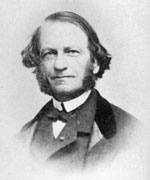
Heinrich Herz was born in Vienna on 6 January 1803 (some sources say 1806), the son of a musician who gave him his first lessons. After further studies in Coblenz with the organist father of the pianist–composer Franz Hünten, Herz entered the Paris Conservatoire. His teachers here were Louis Pradère, Anton Reicha and Victor Dourlen. In his first year, Herz carried off first prize for piano playing. A visit to Paris in 1821 by the great pianist, composer and pedagogue Ignaz Moscheles proved a strong influence on his own style.
Having become a Parisian, Heinrich became Henri. For the rest of his life the French capital remained the base from which he conducted a hugely successful career as a pianist, composer, teacher, inventor and piano manufacturer. From the early 1820s and for the next decade, Herz enjoyed a reputation that is hard to reconcile with the current neglect of his music and low critical reputation. Neither Liszt, Chopin, Thalberg nor any other pianist—with the exceptions of Moscheles and Kalkbrenner—rivalled Herz as the most fashionable and sensational pianist of the day. His music commanded three or four times the price of his nearest rivals, none of whom outsold him until the 1840s. As Sir George Grove observed: ‘Herz found out what the public liked and what would pay, and this he gave to them.’ Besides eight piano concertos, he wrote for the instrument in every recognizable form including an immense number of variations, more than 200 opus numbers in all. ‘Is Herz prejudiced’, asked Mendelssohn, ‘when he says the Parisians can understand nothing but variations?’
Schumann was beside himself at Herz’s success and lost no opportunity to poke fun at him in the pages of his Neue Zeitschrift für Musik. The pages of the Revue et Gazette Musicale, owned by Herz’s sometime publisher Moritz Schlesinger, never referred to Herz except in the most slighting terms. The composer had, it is thought, asked for more money than the wily Schlesinger was willing to pay and the two conducted a lengthy feud. Schlesinger even fought a duel with a fiery Herz loyalist, wounded him and was subsequently fined fifty francs for defamation.
Herz might have restricted himself to playing little but his own music, yet there is no doubt of his prowess as a pianist, underlined by the hugely demanding solo parts of the present concertos written to exploit his particular gifts. He was praised not only for his bravura and power of execution but also for ‘that special kind of sensuously charming touch which differentiated the Parisian school from the brilliant playing of the Viennese and the emotional style of the English’ (Oscar Bie).
In the late 1830s, Herz teamed up with a Parisian piano manufacturer named Klepfa. The venture failed but, despite losing a large amount of money, Herz established a piano factory of his own with instruments that incorporated his valuable improvements on Erard’s revolutionary double-escapement action. He also built a concert hall on the premises in the Rue de la Victoire and though, in the beginning, some performers tried to rent it on condition that they did not have to play a Herz piano, by 1844 the business was a success, producing 400 instruments a year.
In 1845, in order to obtain more capital and recoup some of his earlier losses, Herz undertook the first American tour by an important European pianist, paving the way for Thalberg, Gottschalk (American-born but Paris-trained) and Anton Rubinstein. His journey, entertainingly described in his Mes Voyages en Amérique (published in Paris in 1866), took him through the United States, Mexico and the West Indies. By the time he returned home in 1851 Herz was a wealthy man. He was able to expand his piano factory, winning first prize with one of his instruments at the 1855 Exposition Universelle. In 1874 he relinquished his post as professor of piano at the Paris Conservatoire, one he had held since 1842. He died in 1888.
from notes by Jeremy Nicholas © 2006
Fils d’un musicien qui lui donna ses premières leçons, Heinrich Herz naquit à Vienne le 6 janvier 1803 (1806 selon certaines sources) et étudia à Coblence auprès d’un organiste—le père du pianiste–compositeur Franz Hünten. Puis il entra au Conservatoire de Paris, où ses professeurs furent Louis Pradère, Anton Reicha et Victor Dourlen et où il remporta un premier prix de piano, dès sa première année. En 1821, son style fut fortement influencé par le grand pianiste, compositeur et pédagogue Ignaz Moscheles, de passage à Paris.
Parisien, Heinrich devint Henri et ce fut depuis la capitale française qu’il mena, toute sa vie durant, une fort heureuse carrière de pianiste, de compositeur, de professeur, d’inventeur et de facteur de pianos. À partir du début des années 1820 et pendant toute une décennie, Herz jouit d’une réputation difficilement conciliable avec le faible crédit critique dont sa musique pâtit aujourd’hui, avec l’oubli dans lequel elle a sombré. Pourtant, ni Liszt, ni Chopin, ni Thalberg, ni aucun autre pianiste—hormis Moscheles et Kalkbrenner—ne ravirent à Herz le titre de pianiste le plus en vogue et le plus sensationnel de son temps. Sa musique valait trois à quatre fois plus cher que celle de ses plus proches rivaux, dont les ventes demeurèrent inférieures jusque dans les années 1840. Comme le souligna Sir George Grove: «Herz trouvait ce que le public aimait, ce qui payait, et il le lui donnait.» Outre huit concertos, il écrivit des œuvres pour piano dans toutes les formes reconnaissables, notamment une immense quantité de variations—en tout, plus de deux cents numéros d’opus. Et Mendelssohn de s’interroger: «Herz est-il de parti pris quand il dit que les Parisiens ne peuvent comprendre que les variations?»
Le succès de Herz exaspérait Schumann, qui ne perdait pas une occasion de le moquer dans les pages de sa Neue Zeitschrift für Musik. Quant à la Revue et Gazette musicale, propriété de Moritz Schlesinger (qui fut un temps éditeur de Herz), elle n’évoqua jamais Herz qu’en termes fort offensants. Le compositeur avait, suppose-t-on, demandé plus d’argent que ce que le rusé Schlesinger était prêt à payer et les deux hommes demeurèrent très longtemps à couteaux tirés. Schlesinger en vint même à se battre en duel avec un farouche partisan de Herz, qu’il blessa avant d’être condamné à cinquante francs d’amende pour diffamation.
Herz s’est peut-être borné à ne jouer que sa propre musique, ou presque, mais ses prouesses pianistiques sont indubitables, comme en témoignent les parties solo extrêmement exigeantes des présents concertos, conçues pour exploiter ses dons particuliers. On loua sa bravoure, sa puissance d’exécution, mais aussi «ce toucher tout particulier, d’un charme sensuel, qui distinguait l’école parisienne du jeu brillant des Viennois et du style émotionnel des Anglais» (Oscar Bie).
À la fin des années 1830, Herz collabora avec un facteur de pianos parisien nommé Klepfa. L’aventure tourna court mais, malgré d’immenses pertes financières, Herz fonda une manufacture de pianos d’où sortirent des instruments intégrant les précieuses améliorations qu’il avait apportées au révolutionnaire double échappement d’Erard. Il fit, en outre, bâtir une salle de concerts dans les locaux de la rue de la Victoire, que certains interprètes tentèrent d’abord de louer à condition de ne pas devoir jouer sur un piano Herz. Ce qui n’empêcha pas l’affaire d’être finalement un succès, en 1844, avec une production de quatre cents instruments par an.
En 1845, désireux de réunir plus de capitaux et de renflouer une partie de ses pertes passées, Herz entama la première tournée américaine jamais entreprise par un important pianiste européen, pavant ainsi la voie à Thalberg, à Gottschalk (Américain de naissance, mais formé à Paris) et à Anton Rubinstein. Son périple, décrit avec humour dans Mes Voyages en Amérique (Paris, 1866), le mena à travers les États-Unis, le Mexique et les Antilles. À son retour, en 1851, Herz, devenu riche, put développer sa fabrique de pianos—un de ses instruments remporta d’ailleurs un premier prix lors de l’Exposition Universelle de 1855. En 1874, il abandonna le poste de professeur de piano au Conservatoire de Paris, qu’il occupait depuis 1842. Il mourut en 1888.
extrait des notes rédigées par Jeremy Nicholas © 2006
Français: Hyperion Records Ltd
Heinrich Herz wurde am 6. Januar 1803 (einige Quellen führen 1806 an) in Wien als Sohn eines Musikers geboren, der ihm auch die ersten musikalischen Unterweisungen gab. Nach weiterem Unterricht in Koblenz mit dem Organisten und Vater des Pianisten und Komponisten Franz Hünten begann Herz am Pariser Conservatoire zu studieren. Seine Lehrer waren Louis Pradère, Anton Reicha und Victor Dourlen. In seinem ersten Jahr gewann Herz den ersten Preis für Klavierspiel. Der Besuch des berühmten Pianisten, Komponisten und Pädagogen Ignaz Moscheles 1821 in Paris übte einen starken Einfluss auf Herz’ eignen Stil aus.
Nachdem sich Heinrich in Paris niedergelassen hatte, nannte er sich Henri. Für den Rest seines Lebens blieb die französische Hauptstadt der Ausgangspunkt, von dem aus Herz eine ungeheuer erfolgreiche Laufbahn als Pianist, Komponist, Lehrer, Erfinder und Klavierbauer bestritt. Seit den frühen 1820er Jahren und auch im folgenden Jahrzehnt genoss Herz einen Ruf, der sich schwer mit der Vernachlässigung und Geringschätzung seiner Musik heutzutage vereinbaren lässt. Weder Liszt, noch Chopin, Thalberg oder irgendein anderer Pianist—mit Ausnahme von Moscheles und Kalkbrenner—konnten Herz als berühmtesten und sensationellsten Pianisten seiner Zeit den Rang ablaufen. Seine Musik wurde drei- bis viermal so hoch bezahlt wie die seiner stärksten Rivalen. Bis in die 1840er Jahre blieb Herz ungeschlagen. Sir George Grove bemerkte: „Herz fand heraus, was das Publikum mochte und was sich lohnte, und das gab er ihm.“ Neben acht Klavierkonzerten schrieb er Klavierstücke in allen für das Instrument möglichen Gattungen, einschließlich einer immensen Anzahl von Variationen. Alles zusammen belaufen sie sich auf mehr als 200 Opusnummern. „Ist Herz voreingenommen“, fragte Mendelssohn, „wenn er sagt, die Pariser würden außer Variationen nichts verstehen?“
Schumann war angesichts Herz’ Erfolg außer sich und ließ keine Gelegenheit ungenutzt, sich über ihn in den Seiten seiner Neuen Zeitschrift für Musik lustig zu machen. Das von Herz’ ehemaligem Verleger Moritz Schlesinger besessene Organ Revue et Gazette Musicale erwähnte Herz nie, es sei denn im abschätzigsten Ton. Man nimmt an, der Komponist hatte um mehr Geld gebeten, als der gerissene Schlesinger bereit zu zahlen war, und die zwei führten einen lang anhaltenden Streit. Schlesinger schlug sich sogar in einem Duell mit einem hitzigen Herz-Anhänger, verwundete ihn und wurde wegen Verleumdung zu einer Strafe von 50 Francs verurteilt.
Herz beschränkte sich zwar mehr oder weniger auf das Spielen seiner eigenen Musik, aber es gibt keinen Zweifel an seinem überragenden Können als Pianist. Dieser Umstand wird durch die ungeheuer schwierigen Klavierstimmen in den hier vorgestellten Konzerten bestätigt, die so komponiert wurden, dass sie Herz’ spezielle Talente zur Geltung brachten. Er wurde nicht nur für seine Virtuosität und kraftvolle Interpretation gelobt, sondern auch für „diese spezielle Art des sinnlich charmanten Anschlags, der die Pariser Schule von dem brillanten Spiel der Wiener und dem emotionalen Stil der Engländer unterschied“ (Oscar Bie).
In den späten 1830er Jahren verband sich Herz mit dem Pariser Klavierbauer namens Klepfa. Das Unternehmen scheiterte. Dennoch baute Herz trotz riesiger finanzieller Verluste seine eigene Klavierbaufirma mit Instrumenten auf, die seine wertvollen Verbesserungen an Erards revolutionärer Repetitionsmechanik enthielten. Herz ließ ferner auf dem Grundstück in der Rue de la Victoire einen Konzertsaal bauen. Auch wenn am Anfang einige Interpreten versuchten, den Konzertsaal unter der Bedingung zu mieten, dass sie nicht auf einem Herz-Klavier spielen würden, war die Firma ab 1844 ein Erfolg und baute 400 Instrumente pro Jahr.
1845 unternahm Herz, in einem Versuch, mehr Geld zu verdienen und etwas von seinen früheren Verlusten auszugleichen, die erste amerikanische Konzerttournee eines bedeutenden europäischen Pianisten und bereitete damit den Weg für Thalberg, Gottschalk (der zwar in Amerika geboren, aber in Paris ausgebildet war) und Anton Rubinstein. Herz beschrieb unterhaltsam seine Reise, die ihn durch die Vereinten Staaten, Mexiko und die westindischen Inseln führte, in seinen Mes Voyages en Amérique (veröffentlicht in Paris, 1866). Als er 1851 nach Hause zurückkehrte, war er ein reicher Mann. Er konnte seine Klavierbaufirma ausbauen und gewann mit einem seiner Instrumente den ersten Preis bei der Weltausstellung 1855. 1874 trat er von seiner Position als Professor für Klavier am Pariser Conservatoire zurück, die er seit 1842 innegehabt hatte. Herz starb 1888.
aus dem Begleittext von Jeremy Nicholas © 2006
Deutsch: Elke Hockings