
1 January 1900

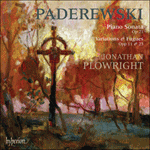
Paderewski: Piano Sonata & Variations
CDA67562 

‘A distinctive and distinguished melodic voice shines through … everywhere there is always a strong sense of forward momentum … in Jonathan Plowright these works have a near-ideal interpreter. Not only does he negotiate Paderewski's dizzying virtuoso demands with evident ease, but also his ability to bring an almost string-like tone to the more lyrical passages constantly fascinates in this excellent recording’ (BBC Music Magazine)

1 January 1900

Paderewski: Piano Sonata & Variations
CDA67562 

‘Jonathan Plowright shines a powerful light on Paderewski … you have a pianist clearly in love with every bar of Paderewski's romantic rhetoric and it would be hard to imagine playing of greater sympathy or a more intimidating visceral strength and cogency. A pianist who excels in music's darker undercurrents and declamations, he clears every daunting hurdle with awe-inspiring ease, making a formidable case for one of music's neglected byways. Finely presented and recorded, this is a valuable and surprising issue’ (Gramophone)
1 January 1900

Paganini: 24 Caprices
CDA67763 

‘If anyone is ever likely to convince you that there is more to Paganini's music than Rossini-in-technical-overdrive melodramatics, it is Tanja Becker-Bender … Becker-Bender gives the Italian's coruscating roulades more room to breathe, characterising each caprice as though it was microcosmic masterpiece of musical expression’ (BBC Music Magazine)
1 January 1900

Paganini: 24 Caprices
CDA67763 

‘This superb new recording … these are marvellous performances, full of freshness and vitality, technically accomplished yet spontaneous sounding and highly expressive … Becker-Bender's imagination really shines through in those of a more picturesque nature … another exceptional release from Hyperion’ (International Record Review)
1 January 1900

Paganini: 24 Caprices
CDA67763 

‘A sparkling, cleaned-up version of Paganini, sounding the more amazing for its polish and clarity, and bringing into focus the poetic, romantic sensibility that enthralled the composer's contemporaries. I can't remember hearing the flute and horn imitations in the Ninth Caprice more persuasively performed, and in No 21, marked amoroso, Becker-Bender manages to retain a tender, intimate tone where many of her rivals equate amorousness with crude intensity. The more brilliant passages are just as successful … I'm sure Paganini himself would have been impressed and delighted’ (Gramophone)
1 January 1900
CD Hotlist, USA
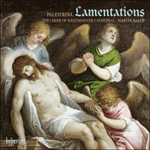
Palestrina: Lamentations
CDA67610 

‘A new Palestrina recording by the Westminster Cathedral Choir is always cause for rejoicing’ (CD Hotlist, USA)
1 January 1900
Fanfare, USA
Palestrina: Lamentations
CDA67610 

‘Beautifully executed … highly recommended’ (Fanfare, USA)
1 January 1900
Cathedral Music
Palestrina: Lamentations
CDA67610 

‘Martin Baker's choir of men and boys show why this is one of the finest choirs around, with impeccable intonation and strength to convey the full majesty of Palestrina's sublime compositions. The men show how versatile they are, interweaving in and out of the aprts, adding to the elegant and polished phrases. This choir is the leading Catholic ensemble in the world and this disc proves it. Quite simply this is glorious music sung by a magnificent choir. There's not much more I can write, except 'most definitely recommended’ (Cathedral Music)
1 January 1900
The Daily Telegraph
Palestrina: Lamentations
CDA67610 

‘So highly charged is the grief-stricken atmosphere of these sets of Lamentations for Maundy Thursday, Good Friday and Holy Saturday that it may be best to listen to them one at a time. This will also allow Palestrina's restrained response to these harrowing texts, which evokes the vision of a devastated landscape and its persecuted people, to make its deepest impression. Flowing polyphony for the introductory Hebrew letters and 'Jerusalem convertere' refrains gives way to a bleaker, largely chordal style for the Lamentation verses. Palestrina avoids graphic wordpainting, creates his effects with carefully placed dissonances, and varied voice-groupings. But it is Westminster Cathedral Choir's beautifully judged dynamics, from hushed horror to violent bitterness as Jerusalem's foes gloat over her destruction, that stand out with searing intensity’ (The Daily Telegraph)
1 January 1900

Palestrina: Lamentations
CDA67610 

‘A pleasing stability of tone … the overall effect … is reverential, moving and warmly recorded’ (BBC Music Magazine)
1 January 1900
Classic FM Magazine
Palestrina: Lamentations
CDA67610 

‘Everything about this disc, from the captivating sound to the sleeve notes, is of the highest quality. A must for choral fans’ (Classic FM Magazine)
1 January 1900

Palestrina: Lamentations
CDA67610 

‘Among the many other things for which the independent record company Hyperion deserves our gratitude is its long-standing engagement of Westminster Cathedral Choir, England's finest Catholic choir, to record the masterpieces of sacred polyphony … Palestrina's third of his four settings of the Lamentations of Jeremiah is marked by sinuous vocal lines, harmonic richness, unpredictable modality and telling passages of homophonic writing … Martin Baker rightly emphasises the classical perfection of Palestrina's polyphony … as usual, Hyperion's engineers have worked miracles with the difficult acoustics of Westminster Cathedral. Jon Dixon contributes a first-rate booklet essay, which helpfully situates the performance of Lamentations within the complex rituals of Holy Week celebrations’ (International Record Review)
More